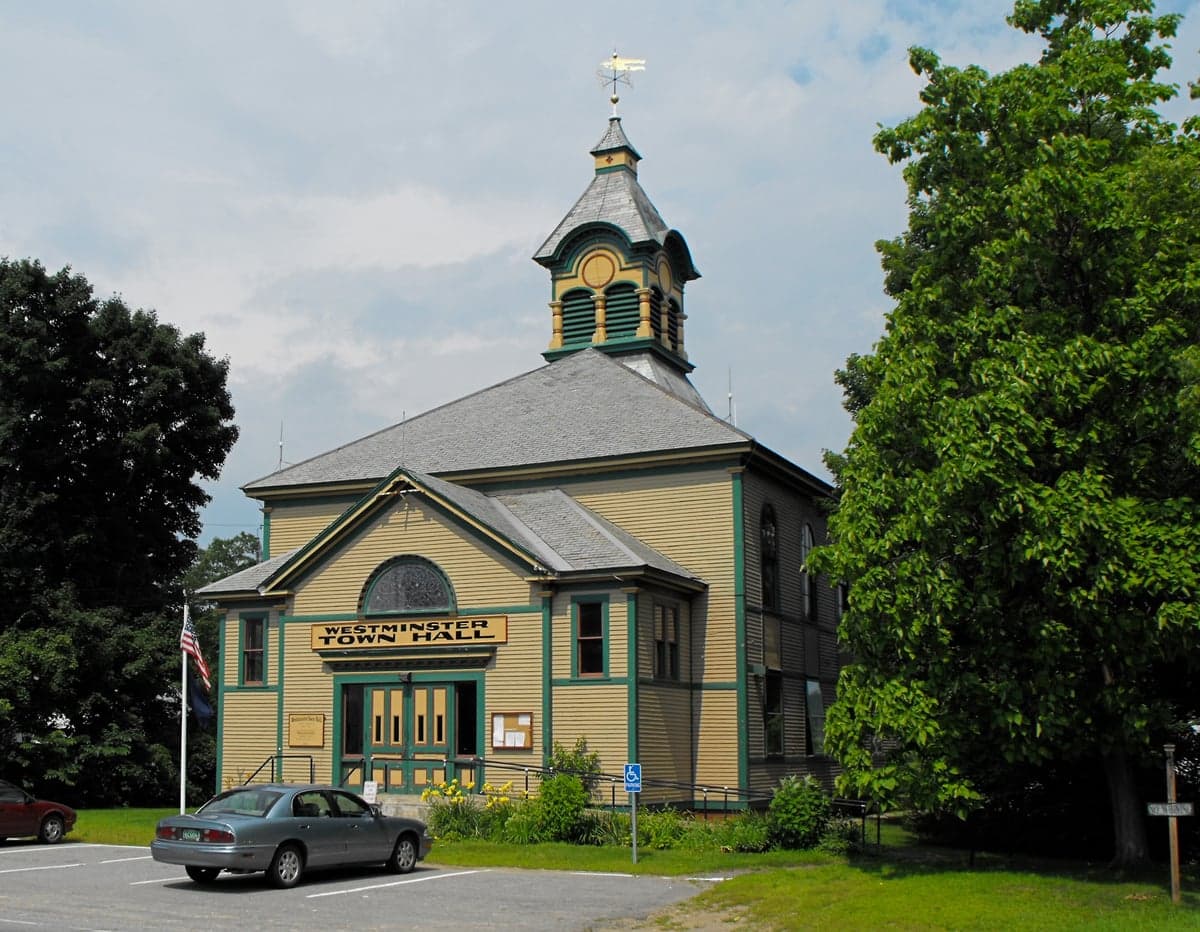
Photo: Wikipedia
Political ClimatePolitical Climate in Westminster, VT
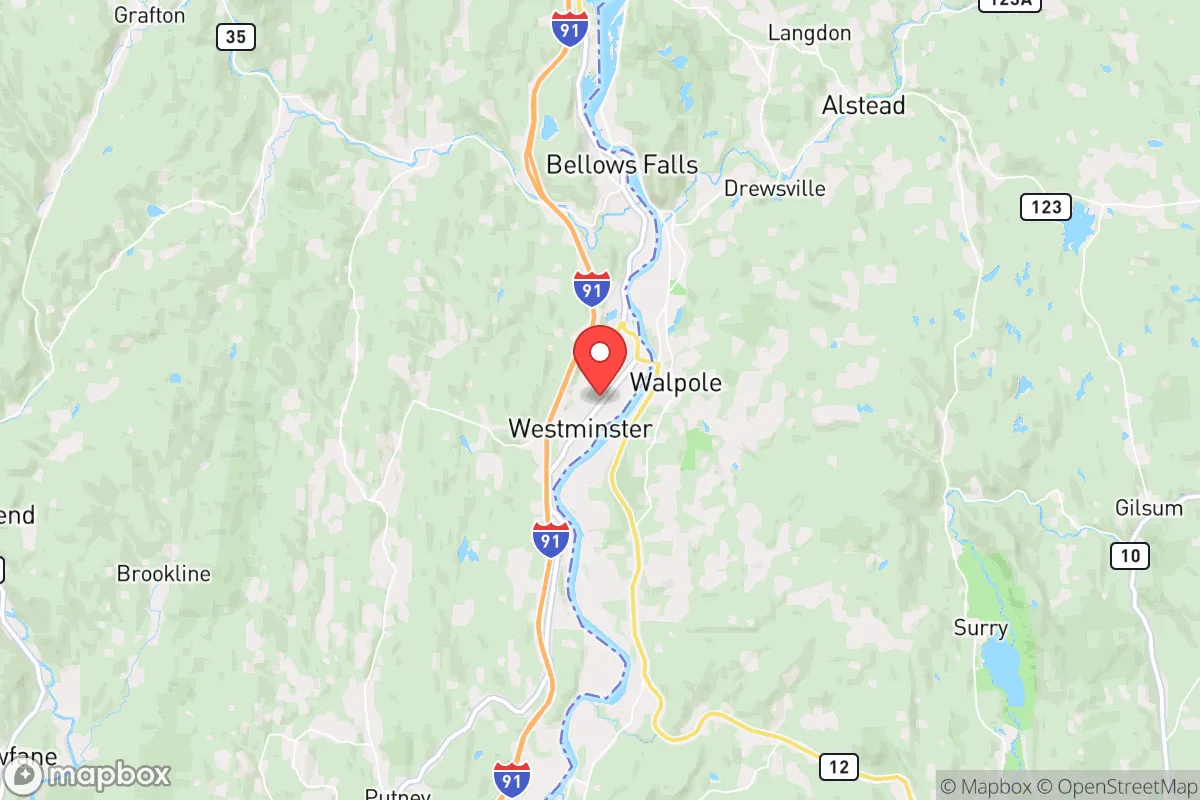
District shown is the primary district for this city’s centroid. Cities may span multiple districts.
Inherited from parent state — no local data available.
Local Political AnalysisPolitical Analysis of Westminster, VT
Westminster, Vermont, leans heavily to the left, with a Cook PVI of D+17 that puts it among the most reliably Democratic towns in Windham County. That wasn’t always the case. I remember when folks here voted more on local character and common sense than on party lines. Now, the shift is unmistakable. The last few election cycles have seen Westminster go blue by margins that would have been unthinkable thirty years ago, and the trajectory feels like it’s only accelerating. If you’re looking for a place where independent thinking still holds sway, you’re going to find that harder to come by here than in towns like Rockingham or even parts of Bellows Falls, where the politics are more of a mixed bag.
How it compares
Drive ten minutes north to Rockingham, and you’ll feel a different political breeze. Rockingham still has a healthy contingent of folks who vote their conscience rather than a straight ticket, and you’ll see more Trump signs in yards there than you will in all of Westminster combined. Head west to Grafton, and it’s a similar story—more libertarian-leaning, more “leave us alone” energy. Westminster, by contrast, has become a stronghold for progressive activism. The town government has embraced policies that feel more like Burlington than rural Vermont: aggressive climate resolutions, diversity equity and inclusion initiatives in the schools, and a general willingness to let Montpelier call the shots on everything from gun laws to land use. It’s a stark contrast to the surrounding towns, where people still grumble about state overreach and value their Second Amendment rights without apology.
What this means for residents
If you value personal freedoms and want to be left alone to live your life, Westminster is going to feel increasingly restrictive. The local school board has pushed curriculum changes that prioritize social justice over traditional academics, and there’s a growing expectation that businesses and residents alike fall in line with the prevailing progressive orthodoxy. Property taxes are high—among the highest in the county—and a lot of that money goes toward programs that many residents never asked for. The town has also been quick to adopt state-mandated energy codes and land-use restrictions that make it harder to build a simple workshop or add a shed without wading through red tape. For a long-time resident like me, it feels like the government is getting into every corner of life, from how you heat your home to what your kids learn in history class.
The cultural shift is the hardest part to swallow. Westminster used to be the kind of place where you could disagree with your neighbor over a fence and still share a beer at the Grange Hall. Now, the political divide feels sharper, and there’s a sense that if you don’t publicly affirm every new progressive cause, you’re seen as out of step. The town’s annual events, like the Westminster West Church fair, still draw a crowd, but the conversation has changed. People are more guarded. I worry that if this trend continues, Westminster will lose the very character that made it a great place to raise a family—the quiet independence, the respect for personal liberty, the willingness to let people live their own lives without a government mandate. For now, it’s still home, but I’m keeping a close eye on the next town meeting.

State Political ClimatePolitical Climate in Vermont
State Political AnalysisPolitical Environment in the State
Vermont has long been a deep blue state, but its political climate is far more complex than a simple label suggests. The state’s dominant coalition is a mix of progressive Burlington-area activists and moderate, fiscally conservative rural Yankees, but the latter group has been losing ground for decades. Over the last 10-20 years, the state has shifted decisively leftward, driven by an influx of out-of-state transplants and a shrinking rural population, with the Democratic Party now holding a supermajority in the legislature and the governor’s office. For a conservative considering a move, the key question is whether the state’s remaining libertarian streak can survive the relentless march of progressive policy.
Urban vs. rural divide
The political map of Vermont is a tale of two landscapes. The urban core is Chittenden County, anchored by Burlington, which is a progressive stronghold where Bernie Sanders cut his teeth. Burlington and its suburbs like South Burlington and Winooski vote 80%+ Democratic and drive the state’s legislative agenda. In contrast, the rural counties—Orleans, Essex, and Franklin in the Northeast Kingdom—are reliably Republican, often voting +20 to +30 points for GOP candidates. The divide is stark: in 2024, Burlington went 85% for Biden, while Newport in Orleans County went 65% for Trump. The suburbs of Montpelier and Middlebury are purple-ish but trending blue as college-educated professionals move in. The real story is the rural exodus: as farms consolidate and young people leave, the remaining rural voters are outnumbered by the growing urban and suburban populations, making the state’s overall lean more lopsided with each cycle.
Policy environment
Vermont’s policy environment is a mixed bag that should raise red flags for conservatives. The state has the highest property tax burden in the nation, with effective rates around 1.8% of home value, and a progressive income tax that tops out at 8.75% on income over $213,000. The regulatory posture is heavy: Act 250, the state’s land-use law, makes even minor construction projects a bureaucratic nightmare, and a new Clean Heat Standard passed in 2023 will impose fees on heating fuel, effectively taxing rural homeowners who rely on oil or propane. Education policy is dominated by the teachers’ union, with school choice limited to a few districts and a statewide school funding system that redistributes tax dollars from rural towns to urban schools. Healthcare is a single-payer dream deferred—Vermont tried and failed to pass it in 2014, but the state-run Green Mountain Care exchange still imposes high premiums. Election laws are among the most liberal: same-day voter registration, universal mail-in ballots, and no voter ID requirement, which critics argue undermines election integrity. For a conservative, the policy environment feels like a slow-motion erosion of local control and fiscal sanity.
Trajectory & freedom
Vermont is becoming less free by any measure that matters to conservatives. The most glaring example is gun rights: in 2023, the legislature passed Act 45, which bans the sale of many semi-automatic firearms, limits magazine capacity to 10 rounds, and raises the purchase age to 21. This came on top of a 2018 red-flag law and universal background checks. Parental rights took a hit with Act 1 (2022), which removed the requirement for schools to notify parents if a child changes their gender identity or pronouns—a direct assault on family autonomy. Medical autonomy is also under fire: Vermont legalized assisted suicide in 2013, but the state’s vaccine mandates for healthcare workers and schoolchildren remain strict, with no religious exemptions. Property rights are squeezed by Act 250 and a new land value tax proposal being debated in 2025 that would tax undeveloped land at higher rates. On the plus side, Vermont has no right-to-work law, but it also has no sales tax, which is a small consolation. The trajectory is clear: each legislative session brings more restrictions on personal liberty, masked as public health or environmental protection.
Civil unrest & political movements
Vermont’s political movements are active but lopsided. The left is well-organized: Rights & Democracy and the Vermont Progressive Party regularly mobilize protests on climate and social justice issues, with large rallies in Montpelier during the 2023 legislative session over the Clean Heat Standard. The right is smaller but vocal, with groups like the Vermont Federation of Sportsmen’s Clubs leading the fight against gun control and the Vermont Republican Party holding annual “Freedom Fest” events in St. Johnsbury. Immigration politics are a flashpoint: Vermont is a sanctuary state, with Burlington’s City Council voting in 2024 to limit cooperation with ICE, which has led to tensions in border towns like Derby Line near the Canadian border. Election integrity controversies are muted but persistent—the 2020 election saw no major fraud allegations, but the lack of voter ID remains a concern for conservatives. The most visible flashpoint for a new resident would be the constant presence of political signage: “Defund the Police” signs in Burlington, “Keep Vermont Free” signs in rural areas, and the occasional “Secede” bumper sticker in the Northeast Kingdom, where a small but serious secessionist movement called the Second Vermont Republic advocates for independence.
Projection
Over the next 5-10 years, Vermont will likely become more progressive and less conservative-friendly. Demographic trends are unforgiving: the state’s population is aging and shrinking, with the under-35 population declining by 10% since 2010, while in-migration from New York and Massachusetts brings younger, left-leaning professionals to Chittenden County and the ski towns of Stowe and Killington. Rural counties will continue to lose population and political clout, making it nearly impossible to flip the legislature or governor’s office. Expect more gun control, higher taxes, and further erosion of parental rights. The only wildcard is a potential backlash: if the Clean Heat Standard drives up heating costs by 30% as projected, rural voters might rally, but they lack the numbers to reverse the trend. Someone moving in now should expect to live in a state where conservative values are a minority position, and where the political culture is increasingly hostile to traditional family structures, gun ownership, and fiscal conservatism.
Bottom line for a new resident: If you’re a conservative, Vermont is a beautiful place to live but a tough place to vote. You’ll find like-minded communities in the Northeast Kingdom and a few rural towns, but you’ll be fighting a losing battle against a progressive supermajority that controls every lever of power. The state’s natural beauty and small-town charm are real, but the political climate is a slow-burn erosion of the freedoms that make those things worth having. Come for the mountains, but be prepared to defend your rights every election cycle.
* Values derived from national, state, county, city and local statistics and may differ in a specific area. Last updated: 2026-04-30T07:01:38.000Z
Narrative content on this page is AI-generated and may contain mistakes. Verify any details that matter before acting on them.
ReloMaps may earn a commission from affiliate links at no extra cost to you.

