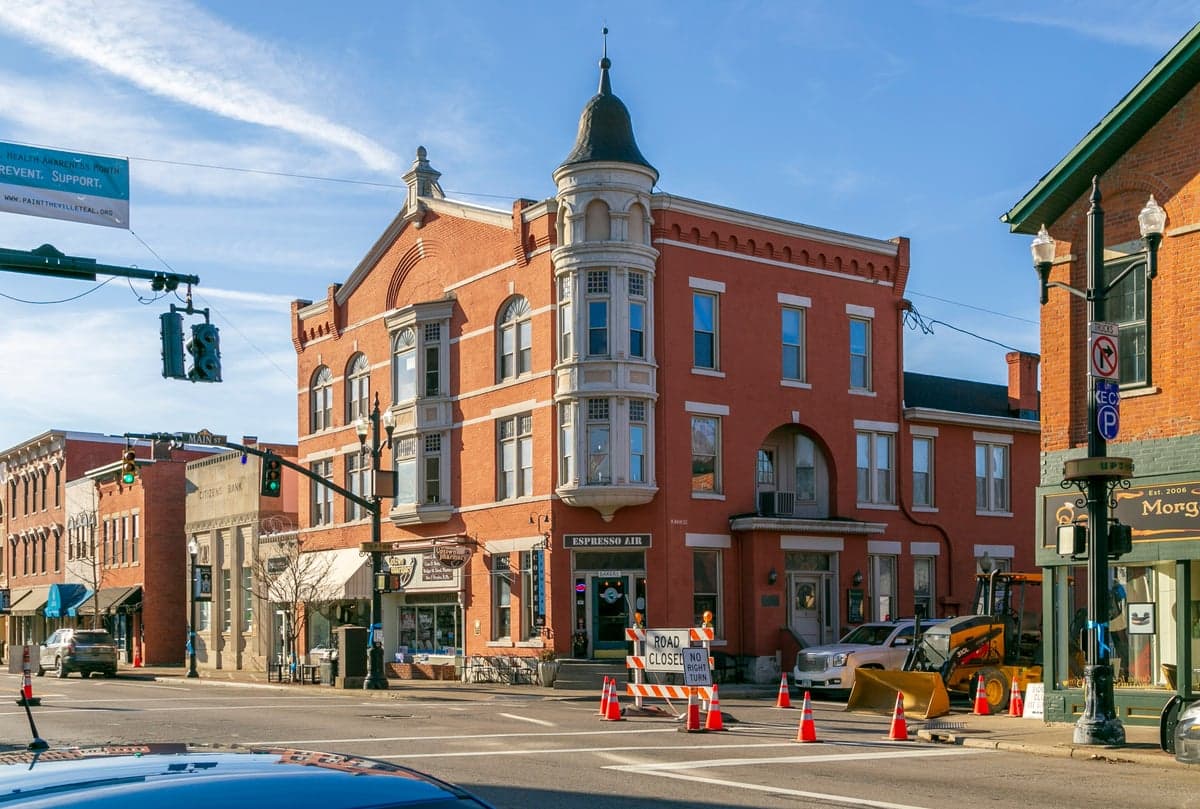
Photo: Wikipedia
Political ClimatePolitical Climate in Westerville, OH
District shown is the primary district for this city’s centroid. Cities may span multiple districts.
Local Political AnalysisPolitical Analysis of Westerville, OH
Westerville, Ohio, leans heavily Democratic, with a Cook PVI of D+21, meaning it votes about 21 points more Democratic than the national average. That wasn't always the case—this town used to be a lot more balanced, a place where neighbors could disagree over a fence and still share a beer. But over the last decade or so, the shift has been dramatic, and it's not slowing down. If you're looking at the political trajectory here, it's a straight line toward progressive dominance, and that raises some real questions about personal freedoms and local government overreach.
How it compares
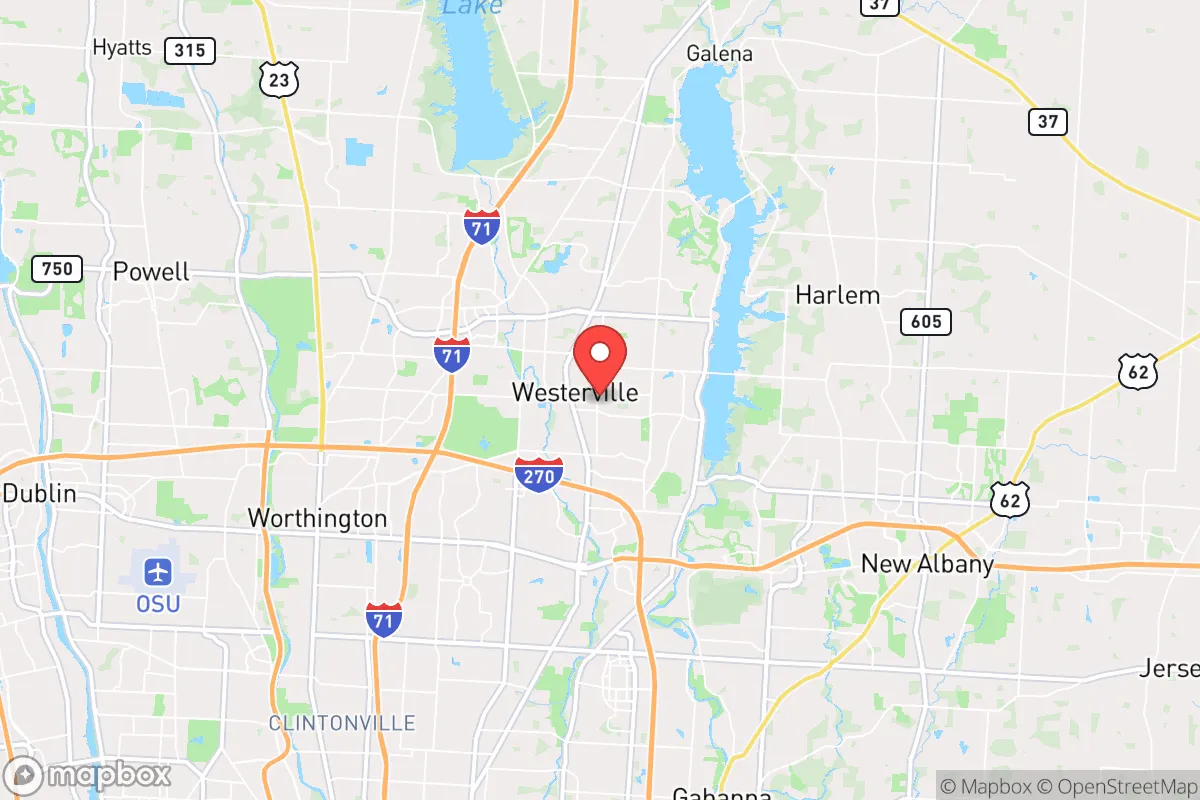
To understand Westerville's politics, you have to look at what's around it. Drive ten minutes east to New Albany, and you'll find a reliably conservative suburb where property rights and lower taxes are still the default. Head north to Delaware, and it's a mixed bag—still plenty of folks who value limited government. But Westerville itself? It's become an island of progressive policy in a sea of more moderate central Ohio. The city council and school board are solidly left-leaning, and the local energy reflects that. Compared to nearby Powell or Gahanna, Westerville feels like a different world—more ordinances, more initiatives, more government involvement in daily life.
What this means for residents
For a long-time resident like me, the biggest concern is how this political tilt affects everyday freedoms. You see it in things like zoning restrictions that get tighter every year, or the push for local tax hikes that fund programs you might not agree with. The school board has become a battleground over curriculum and parental rights—things that used to be settled quietly are now front-page news. If you value the ability to run your home, your business, or your family without a lot of city hall input, Westerville is becoming a tougher place to do that. The trend is toward more regulation, not less, and that's a red flag for anyone who believes government should stay out of your personal choices.
Cultural and policy distinctions
Westerville has a proud history—it was a dry town for over a century, and that independent streak used to mean something. Today, that legacy has been replaced by a different kind of activism. You'll see more local ordinances on environmental mandates, diversity initiatives, and social programs than in surrounding communities. The city's "Uptown" district is charming, but the politics behind it lean heavily into progressive priorities. In the near term, expect more ballot issues on things like housing density mandates and public spending expansions. Long-term, if the current trajectory holds, Westerville will continue to diverge from its neighbors, making it a place where conservative voices feel increasingly isolated. It's still a great town in many ways—good schools, safe streets—but the political climate is something you need to watch closely if you value your personal freedoms.

State Political ClimatePolitical Climate in Ohio
State Political AnalysisPolitical Environment in the State
Ohio has long been the quintessential bellwether state, but over the last decade it has shifted from a true purple battleground to a solidly red-leaning state, with Republicans controlling the governorship, both chambers of the legislature, and the state supreme court. The 2024 presidential election saw Donald Trump win the state by roughly 11 points, a significant rightward shift from the 8-point margin in 2020 and the 8-point margin in 2016, cementing a trajectory that began with the collapse of the old industrial coalition. The dominant coalition today is a mix of working-class voters in the exurbs and small towns, combined with a reliably conservative rural base, while the old Democratic strongholds in the major cities have become increasingly isolated and less influential in statewide races.
Urban vs. rural divide
The political map of Ohio is a stark study in contrasts. The three major metros—Cleveland, Columbus, and Cincinnati—are the engines of Democratic votes, but they are increasingly surrounded by a sea of red. Cuyahoga County (Cleveland) delivered over 66% of its vote to Joe Biden in 2020, but that margin is shrinking as the city's population declines and the inner-ring suburbs like Parma and Strongsville trend rightward. Franklin County (Columbus) is the only major urban county that is still growing, but its Democratic lean is offset by the explosive growth of the outer-ring exurbs like Delaware and Union County, which are now reliably Republican. Hamilton County (Cincinnati) is a true microcosm: the city itself is blue, but the surrounding townships and suburbs like West Chester and Mason are deeply conservative. The real story is the rural and small-town vote. Counties like Mercer, Holmes, and Van Wert routinely vote 75-80% Republican, and these areas have become the backbone of the state's GOP majority. The old "blue wall" of the Mahoning Valley, once anchored by Youngstown, has crumbled; Mahoning County itself flipped to Trump in 2024 after decades of Democratic dominance, a shift driven by working-class voters who feel abandoned by the national party on trade and cultural issues.
Policy environment
Ohio's policy environment is broadly conservative, but with some notable wrinkles. The state has a flat income tax rate of 3.5% as of 2025, down from a top rate of nearly 5% just a few years ago, and the legislature is actively pushing toward full elimination. Property taxes are a mixed bag, with rates varying wildly by county, but the state's homestead exemption and property tax relief programs are modest compared to states like Texas. The regulatory posture is business-friendly, with right-to-work laws not on the books but a generally low regulatory burden. On education, Ohio has a robust school choice program, including the EdChoice voucher system that allows students in underperforming districts to attend private or religious schools, a policy that has been a lifeline for conservative families in urban areas like Cleveland and Akron. Healthcare policy is a battleground: the state expanded Medicaid under the Affordable Care Act, but the legislature has consistently pushed back against abortion access, passing a six-week heartbeat bill in 2019 that was later overturned by a 2023 voter referendum enshrining abortion rights in the state constitution. Election laws have been tightened, with voter ID requirements now in place and early voting windows standardized, though the state still allows no-excuse absentee voting. The overall posture is one of cautious conservatism, with the legislature often more aggressive than the governor on cultural issues.
Trajectory & freedom
The trajectory of freedom in Ohio is a mixed bag, with clear gains in some areas and troubling losses in others. On the positive side, the state has become a national leader in Second Amendment rights, passing constitutional carry in 2022, which allows law-abiding citizens to carry a concealed firearm without a permit. The legislature also passed a "stand your ground" law in 2021, eliminating the duty to retreat in self-defense situations. On parental rights, Ohio has been a battleground: the state passed a Parents' Bill of Rights in 2023 that requires schools to notify parents of any changes in a child's health or well-being, and it banned transgender surgeries and hormone treatments for minors in 2024, overriding a veto from the governor. However, the 2023 abortion rights amendment, known as Issue 1, was a major setback for the conservative movement, enshrining a right to abortion up to viability in the state constitution. This was a direct result of a well-funded progressive campaign and a low-turnout August special election that changed the amendment approval threshold. On medical freedom, Ohio legalized medical marijuana in 2016 and then recreational marijuana in 2023 via another voter initiative, though the legislature has since moved to tighten regulations on home grow and potency. The state's tax burden is trending downward, but the property tax system remains a pain point, especially for retirees on fixed incomes. Overall, the state is becoming more free on gun rights and parental authority, but the progressive ballot initiative machine is a persistent threat to conservative governance.
Civil unrest & political movements
Ohio has seen its share of political flashpoints. The 2020 protests in Columbus and Cincinnati following the George Floyd killing were large but largely peaceful, though there were isolated incidents of property damage and looting. The state has a vibrant and organized conservative movement, with groups like the Ohio Conservative Coalition and the Buckeye Firearms Association wielding significant influence in the legislature. Immigration politics are a growing issue, particularly in the Dayton and Springfield areas, where an influx of legal and illegal immigrants has strained public services and sparked local tensions. In 2024, the city of Springfield became a national flashpoint after claims that Haitian migrants were eating pets, a story that was widely debunked but highlighted the deep cultural anxieties in the region. There is no serious secession or nullification movement in Ohio, but there is a strong strain of "state sovereignty" rhetoric, particularly around gun laws and vaccine mandates. Election integrity remains a hot-button issue: the 2020 election in Ohio was widely seen as secure, but the legislature has passed laws to tighten ballot security, including signature verification requirements and restrictions on ballot drop boxes. The most visible political movement in the state right now is the "parents' rights" movement, which has been particularly active in suburban school board races in places like Dublin and Mason, where fights over curriculum and library books have become a regular feature of local politics.
Projection
Looking ahead five to ten years, Ohio is likely to remain a red-leaning state, but the margin of Republican dominance may narrow as the Columbus metro continues to grow and attract a younger, more diverse population. The in-migration patterns are a double-edged sword: the state is gaining residents from the Northeast and California, but many of these newcomers are retirees or remote workers who lean conservative, while the urban cores are attracting a more progressive demographic. The biggest wildcard is the ballot initiative process. The 2023 abortion rights victory has emboldened progressive groups to push for other measures, including a potential minimum wage hike and a redistricting reform initiative that could break the GOP's supermajority in the legislature. The legislature is likely to respond by making it harder to amend the constitution, possibly by raising the signature threshold or requiring a supermajority vote. On the cultural front, the fight over transgender rights and school curriculum is not going away, and the state will likely see more legislation on these issues. The tax environment will continue to improve, with the flat tax likely to be phased out entirely, making Ohio more competitive with no-income-tax states like Florida and Texas. However, the state's aging population and slow population growth remain headwinds, and the loss of young talent to faster-growing states is a concern. For a conservative moving in now, expect a state that is broadly friendly to your values but requires constant vigilance against progressive ballot initiatives and urban-driven cultural shifts.
For a new resident, the bottom line is that Ohio offers a solidly conservative policy environment with low taxes, strong gun rights, and robust school choice, but it is not a libertarian paradise. The state's constitution is surprisingly easy to amend, meaning that progressive groups can bypass the legislature and enact policies like abortion rights and marijuana legalization directly. If you are moving to the exurbs of Cincinnati or Columbus, or to a rural county like Holmes or Mercer, you will find a community that shares your values and a state government that is largely on your side. But if you settle in the urban core of Cleveland or Columbus, you will be in a blue island where local politics can be frustratingly progressive. The key is to choose your location carefully and to stay engaged in local elections, because the real battles in Ohio are fought at the county commission and school board level. It is a state where your vote matters, and where the trajectory is still being written.
* Values derived from national, state, county, city and local statistics and may differ in a specific area. Last updated: 2026-04-21T19:42:32.000Z
Narrative content on this page is AI-generated and may contain mistakes. Verify any details that matter before acting on them.
ReloMaps may earn a commission from affiliate links at no extra cost to you.

