Photo: Wikipedia
Demographics of Westerville, OH
Affluence Level in Westerville, OH
An upper-middle-class area. Household wealth, education levels, and homeownership run ahead of national benchmarks.
People of Westerville, OH
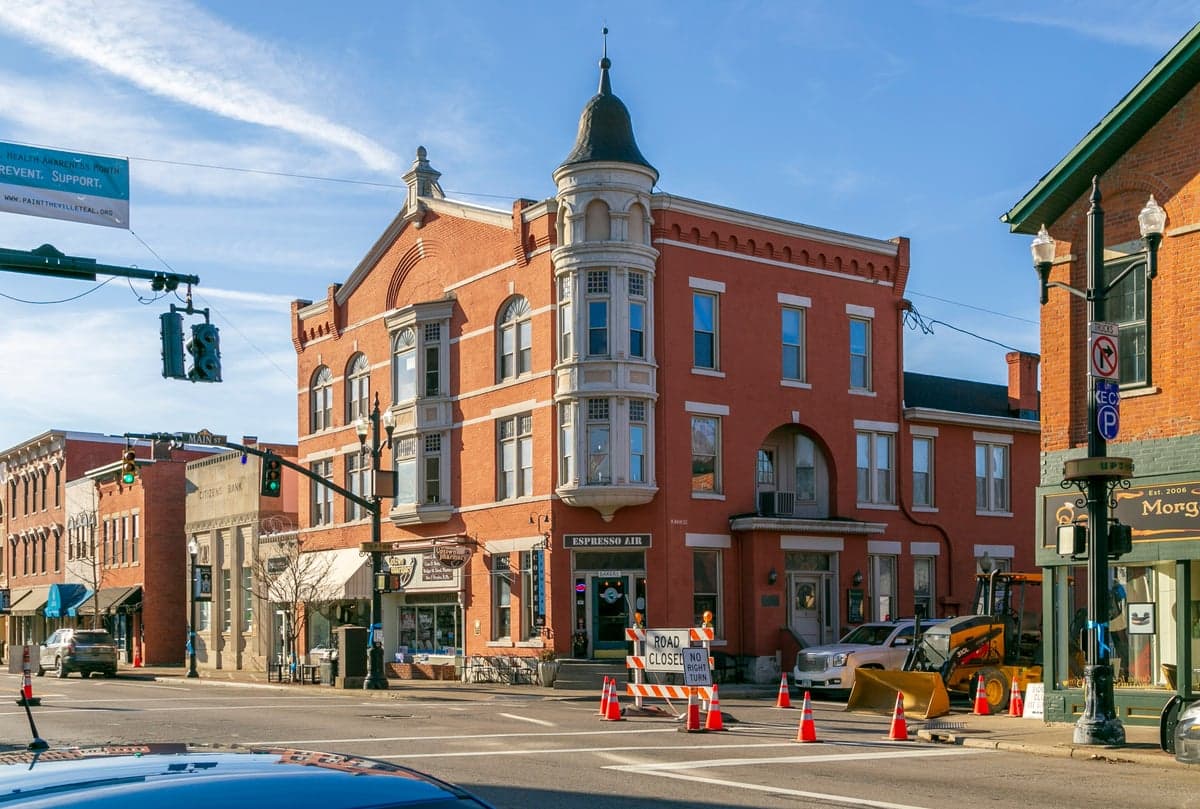
Westerville, Ohio, today is a predominantly white, highly educated suburb of 38,543 residents, where 58.3% of adults hold a bachelor's degree or higher. The city's population is notably less diverse than the Columbus metro area as a whole, with a foreign-born share of just 1.9% and a Black population of 8.3%. Its character is defined by a strong historic downtown, a reputation for top-rated schools, and a family-oriented, politically moderate-to-conservative tilt that has attracted generations of upwardly mobile residents seeking a stable, community-focused environment.
How the city was settled and grew
Westerville's human history began with its founding in 1839 by a group of Methodist settlers who purchased land along the Big Walnut Creek. The city's early identity was shaped by its role as a temperance stronghold—it was a dry town until 2005—and as the home of Otterbein University (founded 1847), which drew faculty, clergy, and reform-minded families. The first major population wave came in the late 19th century with the arrival of German and Irish immigrants who worked in local mills and on the railroad. These groups settled in the Uptown District, building the brick storefronts and churches that still define the historic core, and in the Hanover Park neighborhood, where modest worker cottages were constructed near the rail line. By 1900, Westerville's population had reached roughly 2,000, and it remained a small, overwhelmingly white, Protestant town through the first half of the 20th century.
Modern era (post-1965)
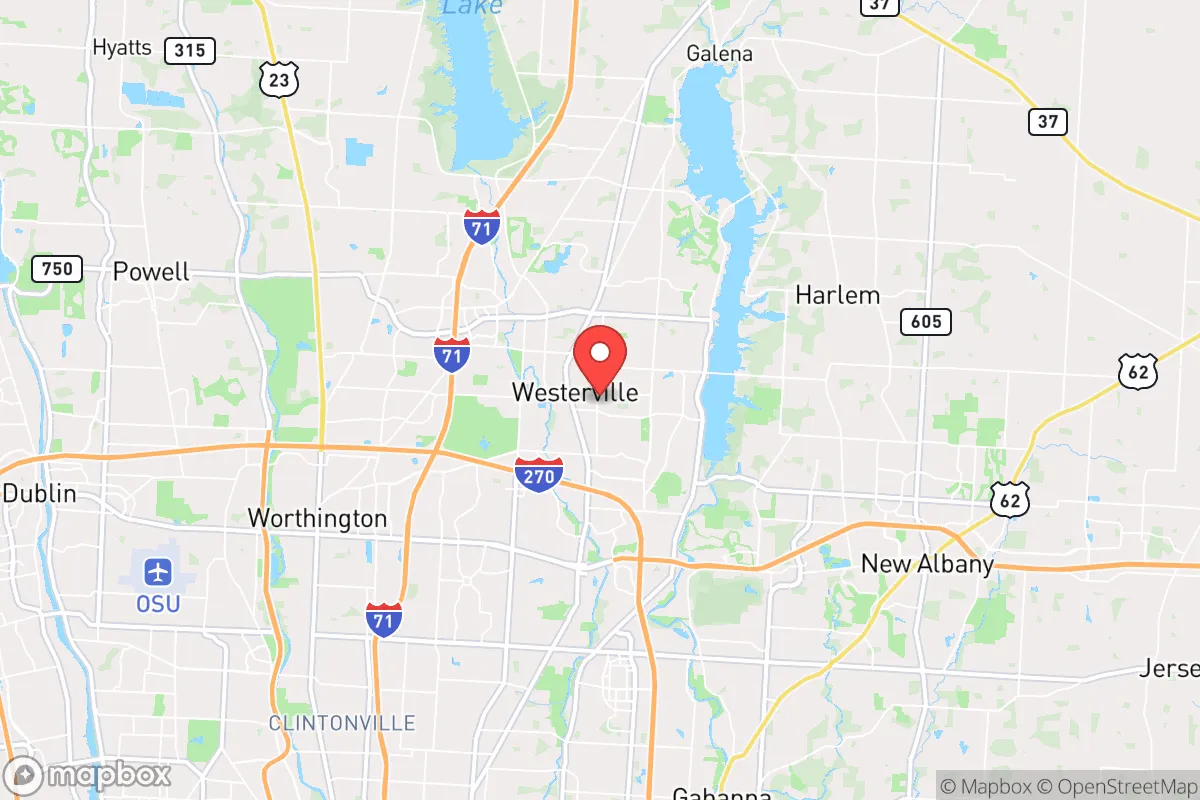
The post-1965 era transformed Westerville from a sleepy village into a booming outer-ring suburb. The completion of Interstate 71 in the 1970s and the expansion of State Route 3 made the city a commuter destination for white-collar workers employed by Columbus-based corporations like Nationwide Insurance, OhioHealth, and JPMorgan Chase. This wave of domestic in-migration—predominantly white, college-educated families from central Ohio and the Midwest—filled new subdivisions such as Brookstone Woods and the Lakes at Westar, which were developed from the 1980s through the 2000s. The city's Black population grew modestly during this period, from under 2% in 1980 to 8.3% today, with many Black families settling in the Northwest Crossing area and the older Collegeview neighborhood near Otterbein. East and Southeast Asian residents (2.1%) and Indian-subcontinent residents (0.7%) began arriving in the 1990s and 2000s, drawn by tech and healthcare jobs in the Columbus region; they tend to concentrate in the newer, higher-priced subdivisions like the Retreat at Hoover near Hoover Reservoir. The Hispanic population (2.3%) remains small and dispersed, with no single ethnic enclave. Overall, Westerville's modern growth has been driven by white domestic migration, not international immigration, which explains its low foreign-born share relative to other Columbus suburbs like Dublin or Hilliard.
The future
Westerville's population is projected to grow slowly, reaching roughly 42,000 by 2040, driven by infill development and the continued appeal of its school district. The city is not homogenizing into a single bloc but is instead tribalizing into distinct enclaves: older, established neighborhoods like Uptown and Hanover Park are seeing a gradual influx of younger families and empty-nesters, while newer subdivisions like the Lakes at Westar remain overwhelmingly white and affluent. The Black and East/Southeast Asian populations are likely to grow slowly as Columbus's diversity spreads outward, but Westerville is unlikely to see the rapid diversification of suburbs closer to the city core. The Indian-subcontinent community, while small, may expand slightly as tech-sector employment in the region grows, but it will remain a minor share. The Hispanic population is expected to plateau at around 3-4% due to limited affordable housing stock and the city's high cost of living. The foreign-born share will likely remain below 3% for the foreseeable future, reinforcing Westerville's identity as a predominantly native-born, white-collar suburb.
For someone moving in now, Westerville is becoming a stable, slow-growth community where demographic change is incremental rather than transformative. It offers a predictable, family-oriented environment with strong schools and low crime, but it is not a place of rapid diversification or international influence. New residents should expect a population that is overwhelmingly white, highly educated, and politically moderate-to-conservative, with a social fabric built around schools, churches, and civic organizations rather than ethnic or cultural institutions.

* Values derived from national, state, county, city and local statistics and may differ in a specific area. Last updated: 2026-04-21T19:42:32.000Z
Narrative content on this page is AI-generated and may contain mistakes. Verify any details that matter before acting on them.
ReloMaps may earn a commission from affiliate links at no extra cost to you.

