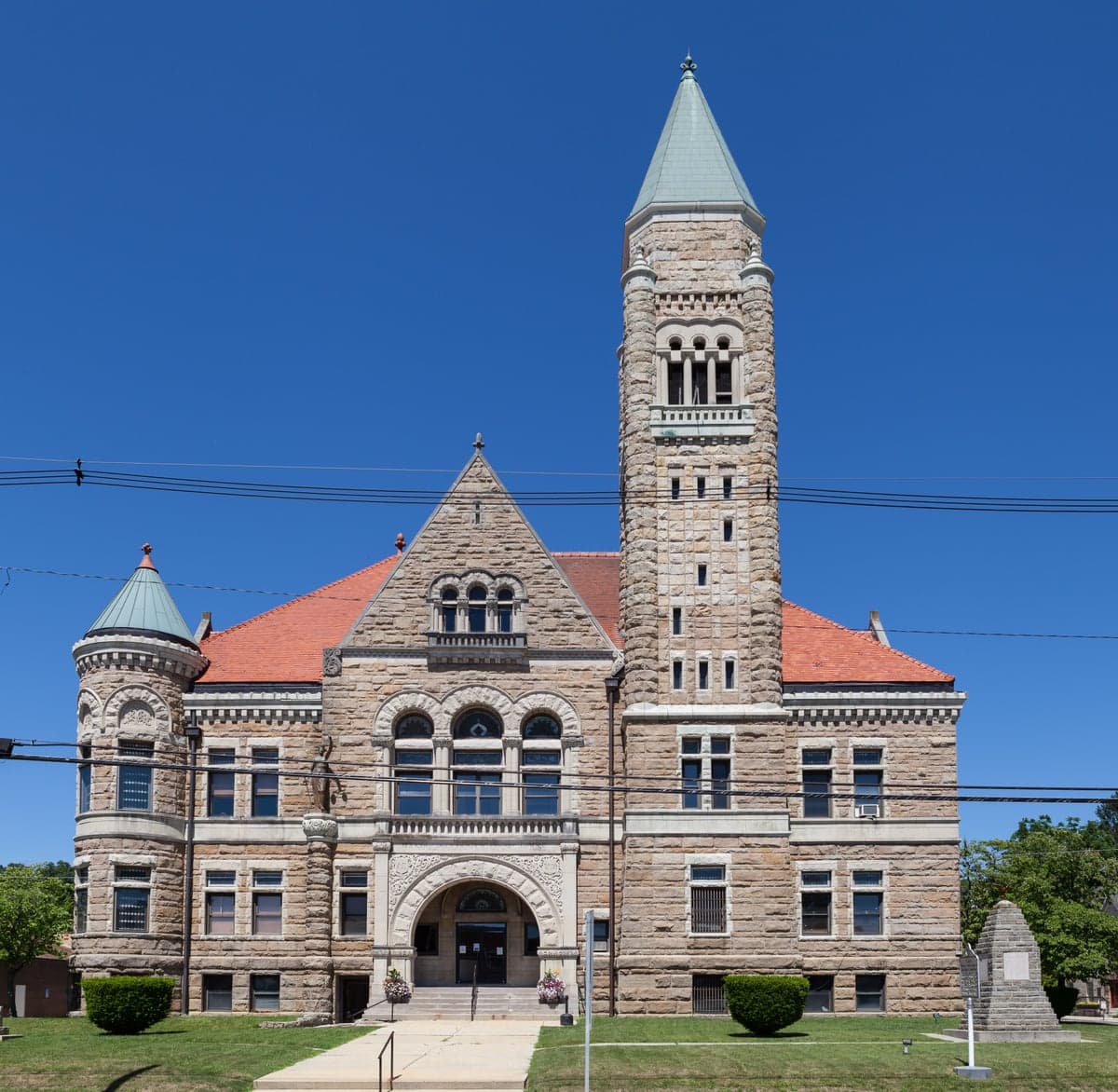
Photo: Wikipedia
Political ClimatePolitical Climate in Randolph County
Showing district-level results — no local-only data available.
Local Political AnalysisPolitical Analysis of Randolph County
Randolph County, West Virginia, is a deeply Republican stronghold with a Cook Partisan Voting Index of R+20, meaning it votes about 20 points more Republican than the national average. This isn't a recent shift; the county has been reliably red for decades, though the margin has widened considerably since the early 2000s. The county's political center of gravity is in Elkins, the county seat, which is slightly more moderate than the surrounding rural areas, but even there, registered Republicans outnumber Democrats by a significant margin. The trajectory is clear: as the national Democratic Party has moved left on cultural and energy issues, Randolph County has moved right, with local Democrats often running as moderates or even conservatives on social issues to remain competitive.
How it compares
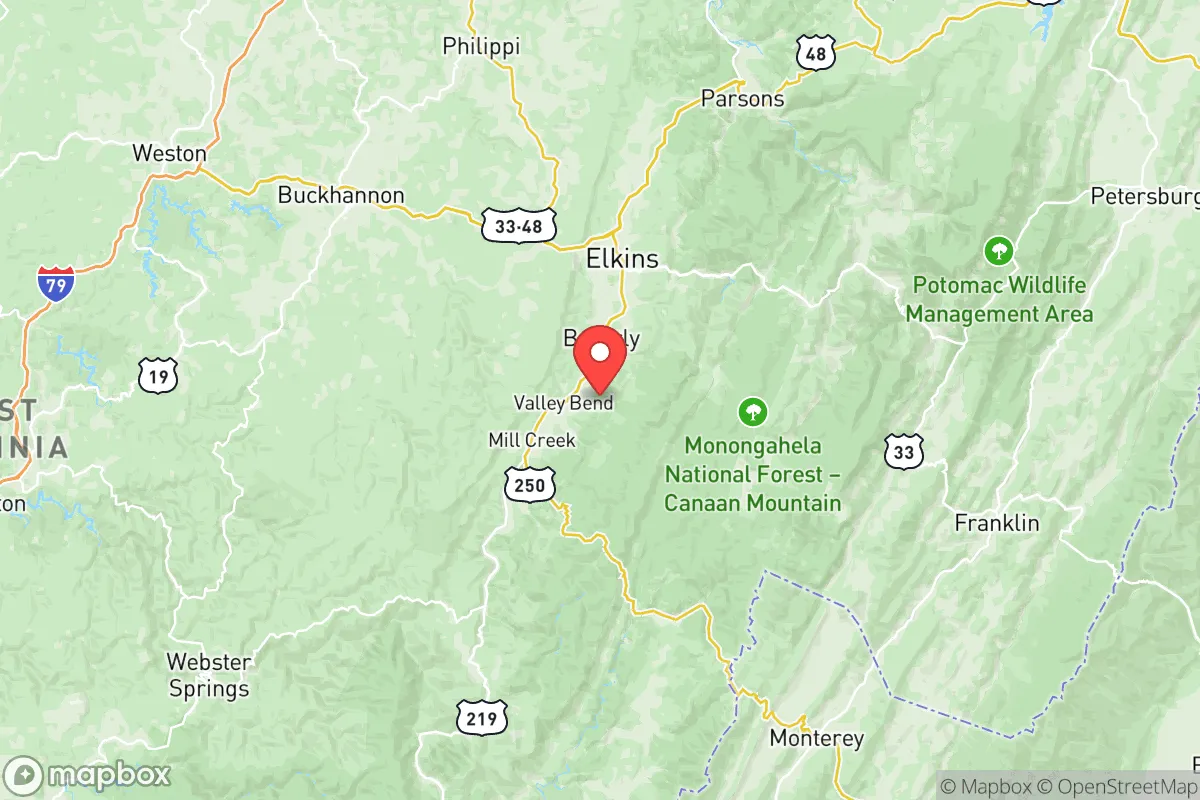
Compared to West Virginia as a whole, Randolph County is more Republican than the state average, but not by a massive margin. West Virginia itself is a deep red state, having voted for Donald Trump by nearly 39 points in 2020. Randolph County's R+20 PVI places it in the upper tier of Republican counties in the state, but it's not an outlier like some of the coal-heavy counties in the southern part of the state, which can hit R+40 or higher. The key difference is that Randolph County's Republicanism is less tied to the coal industry and more to a mix of rural conservatism, gun rights, and opposition to federal land management policies, given the county's proximity to the Monongahela National Forest. The county's political geography is also more varied than the state's southern coalfields: the town of Beverly leans more conservative than Elkins, while Dailey and Valley Head are reliably red, and the small college town of Montrose (home to Davis & Elkins College) shows occasional blue streaks in local elections, though not enough to flip a countywide race.
What this means for residents
For conservative residents, the political climate is comfortable and affirming. Local offices, from the county commission to the school board, are dominated by Republicans, and conservative values are reflected in everything from the local gun culture to the strong opposition to any form of state or federal land-use restrictions. For liberal residents, the reality is more isolating. While Elkins offers a small but active progressive community—often centered around the college and local arts scene—they are a distinct minority. Democratic candidates rarely win countywide races, and when they do, it's usually by running as moderates who emphasize local issues over national party platforms. The practical effect is that liberal residents often feel their voices are marginalized in local governance, though they do find community in specific neighborhoods and social circles within Elkins.
Culturally, Randolph County is distinct from the rest of West Virginia in a few ways. The presence of Davis & Elkins College and the annual Mountain State Forest Festival give Elkins a slightly more cosmopolitan feel than the surrounding coal counties. There's also a stronger environmentalist undercurrent here than in the southern part of the state, driven by the county's reliance on tourism and outdoor recreation in the Monongahela National Forest. This sometimes creates a tension between the pro-business, pro-development conservative majority and a smaller but vocal group of conservation-minded residents, regardless of party affiliation. Policy-wise, this means that while the county is solidly red, there is more room for debate on land-use issues than you'd find in a place like Mingo or Logan County. The long-term outlook is for continued Republican dominance, but with the possibility of more nuanced local debates as the county's economy shifts from traditional resource extraction to tourism and remote work.

State Political ClimatePolitical Climate in West Virginia
State Political AnalysisPolitical Environment in the State
West Virginia has been one of the most reliably Republican states in the nation for over two decades, but that wasn't always the case. As recently as the 1990s, the state was a Democratic stronghold at the local level, voting for Bill Clinton twice and sending a heavily Democratic delegation to Congress. The shift began in earnest around 2000, accelerated by cultural and economic realignment, and by 2024, Donald Trump carried the state by nearly 40 points. The dominant coalition today is a mix of rural, working-class voters, many of whom are former Democrats who switched parties over gun rights, energy policy, and social issues. The state's two U.S. Senators, Joe Manchin (now an independent) and Shelley Moore Capito (R), reflect this tension—Manchin's moderate-to-conservative brand of Democrat is increasingly an outlier, while Capito's Republicanism is more aligned with the national party. The state legislature is supermajority Republican, and the governor's mansion has been held by Republicans since 2017.
Urban vs. rural divide
The political map of West Virginia is starkly divided between its small urban centers and the vast rural expanse. The state's largest city, Charleston, and its surrounding Kanawha County lean Democratic, though even here the margins have tightened. In 2024, Kanawha County voted for Trump by about 12 points, a far cry from the 20+ point margins in rural counties. Huntington (Cabell County) and Morgantown (Monongalia County) are the other notable blue-ish dots. Morgantown, home to West Virginia University, is the state's most liberal area, with a younger, more educated population that votes Democratic by narrow margins. In contrast, the southern coalfields—places like Logan, Mingo, and McDowell counties—are among the most Republican in the nation, often voting 80%+ for Trump. The eastern panhandle, including Martinsburg and Berkeley County, has seen rapid growth from Washington D.C. exurbanites and is now reliably Republican, though with a more moderate, suburban flavor than the deep south. The divide isn't just about party—it's about lifestyle: rural voters prioritize gun rights, energy jobs, and local control, while urban voters in Morgantown and Charleston care more about education funding, healthcare access, and infrastructure.
Policy environment
West Virginia's policy environment is among the most conservative in the country, shaped by a low-tax, low-regulation philosophy. The state has no personal income tax on Social Security benefits and a flat 4.12% income tax rate on other income, with a phase-down to 3.99% by 2026. Property taxes are among the lowest in the nation, capped by the state constitution at 1.5% of assessed value. The regulatory climate is business-friendly, especially for energy extraction—coal, natural gas, and timber. Education policy is a flashpoint: the state passed a school choice law in 2021 allowing charter schools and education savings accounts, though implementation has been slow and controversial. Healthcare is a mixed bag—West Virginia expanded Medicaid under the Affordable Care Act, but the state has some of the highest rates of chronic disease and opioid addiction in the nation. Election laws are moderately restrictive: voter ID is required, early voting is available for 10 days, and absentee voting requires an excuse. The state has no automatic voter registration and no same-day registration. Gun laws are among the most permissive in the country: no permit is needed to carry a concealed firearm, and the state has a "stand your ground" law. There is no red flag law, and firearm preemption is strong, meaning local governments cannot pass their own gun restrictions.
Recent policy direction
Over the past five years, West Virginia has moved decisively to the right on nearly every policy front. In 2023, the legislature passed a near-total abortion ban with exceptions only for rape, incest, and medical emergencies, overriding Governor Jim Justice's veto of a more restrictive version. The state also passed a "Parents' Bill of Rights" in 2022, requiring schools to notify parents about curriculum changes and allowing them to opt their children out of certain materials. On gun rights, the state enacted permitless carry in 2021 and preempted local governments from regulating firearms in 2023. On property rights, the legislature passed a bill in 2024 limiting the use of eminent domain for carbon capture pipelines, a nod to landowner concerns. On voting, the state tightened absentee ballot rules in 2021 and banned ballot drop boxes. On education, the 2021 school choice law was expanded in 2023 to include micro-grants for homeschooling families. On healthcare, the state banned gender-affirming care for minors in 2023. On privacy, West Virginia has no comprehensive data privacy law, but it did pass a bill in 2024 restricting the use of facial recognition technology by law enforcement without a warrant. The overall direction is clear: the state is doubling down on conservative cultural and economic policies, with a particular focus on parental rights, gun rights, and energy independence.
Civil unrest & political movements
West Virginia has a long history of labor activism, but in recent years, political movements have shifted toward cultural and election-related issues. The 2018 teachers' strike, which shut down schools across the state for nine days, was a rare moment of cross-party unity, with teachers demanding higher pay and better benefits. That strike was largely successful, leading to a 5% pay raise, but it also energized conservative backlash against unions. In 2020 and 2022, the state saw small but vocal protests against COVID-19 restrictions, particularly in rural areas like Lewisburg and Elkins. Election integrity has been a persistent theme: in 2021, the legislature passed a bill requiring signature verification for absentee ballots, and in 2024, a group of Republican activists pushed for a hand-count audit of all ballots in the 2024 election, though it was not adopted. Immigration politics are less visible here than in border states, but the state has seen a small uptick in Hispanic and Asian populations in the eastern panhandle, leading to some local tensions. There is no sanctuary city policy anywhere in the state. The most visible political flashpoint in recent years has been the debate over the Mountain Valley Pipeline, which sparked protests from environmental activists and some landowners in Fayette County and Greenbrier County. The pipeline was completed in 2024 after years of legal battles, but the controversy highlighted the tension between energy development and property rights.
Projection
Over the next 5-10 years, West Virginia's political trajectory is likely to remain deeply conservative, but with some demographic wrinkles. The state is losing population overall—down about 3% since 2020—but the eastern panhandle is growing as D.C. exurbanites move in. These newcomers tend to be more moderate Republicans, which could soften the state's hard-right edge in places like Jefferson County and Berkeley County. Meanwhile, the southern coalfields continue to shrink and age, reinforcing their deep-red character. The biggest wildcard is the energy transition: as coal jobs decline, the state is betting on natural gas, carbon capture, and even some solar and wind projects. If those bets pay off, the economy could stabilize; if not, the state could face further population loss and political radicalization. The state's abortion ban and school choice policies are likely to remain in place, but could face legal challenges or ballot initiatives. The 2024 election saw the state's first competitive U.S. House race in years, with Republican Carol Miller winning by a narrower margin than expected in the southern district, suggesting that Democratic voters are not entirely extinct. For a new resident, the bottom line is that West Virginia will remain a deeply Republican state with a strong libertarian streak on guns and property, but with a growing suburban moderate wing in the eastern panhandle. The state's politics are stable but not static—the culture wars are real here, but they play out more in the legislature than on the streets.
For someone moving to West Virginia, the practical takeaway is straightforward: if you're conservative, you'll find a state that aligns with your values on taxes, guns, education, and cultural issues. If you're liberal, you'll be in a clear minority, but you'll find like-minded communities in Morgantown, Charleston, and parts of the eastern panhandle. The state's low cost of living and natural beauty are major draws, but the political climate is not for everyone. The key is to know your county—Monongalia County is a different world from Logan County, and your experience will vary dramatically depending on where you land. The state's trajectory is conservative, but it's not monolithic, and the next decade will test whether that conservatism can adapt to economic and demographic change.
* Values derived from national, state, county, city and local statistics and may differ in a specific area. Last updated: 2026-07-30T14:01:10.000Z
Narrative content on this page is AI-generated and may contain mistakes. Verify any details that matter before acting on them.
ReloMaps may earn a commission from affiliate links at no extra cost to you.

