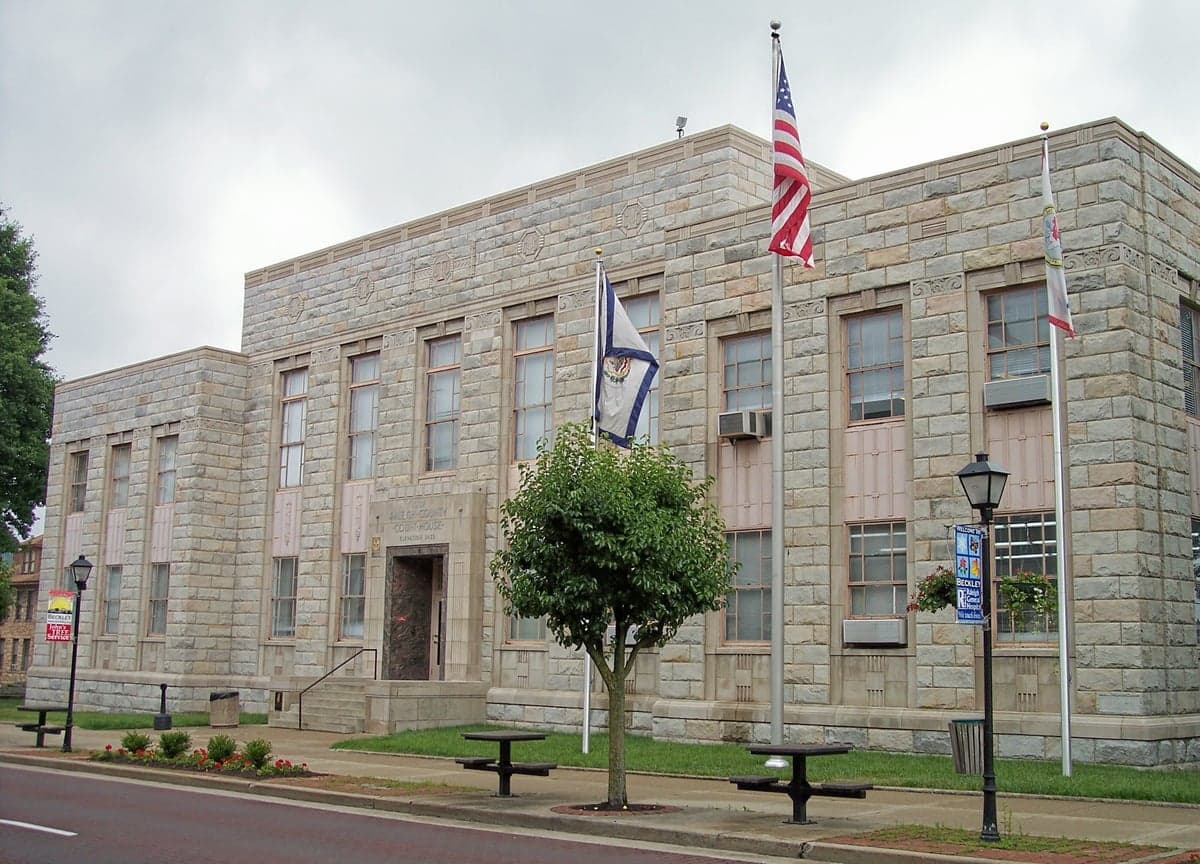
Photo: Wikipedia
Political ClimatePolitical Climate in Raleigh County
Showing district-level results — no local-only data available.
Local Political AnalysisPolitical Analysis of Raleigh County
How it compares
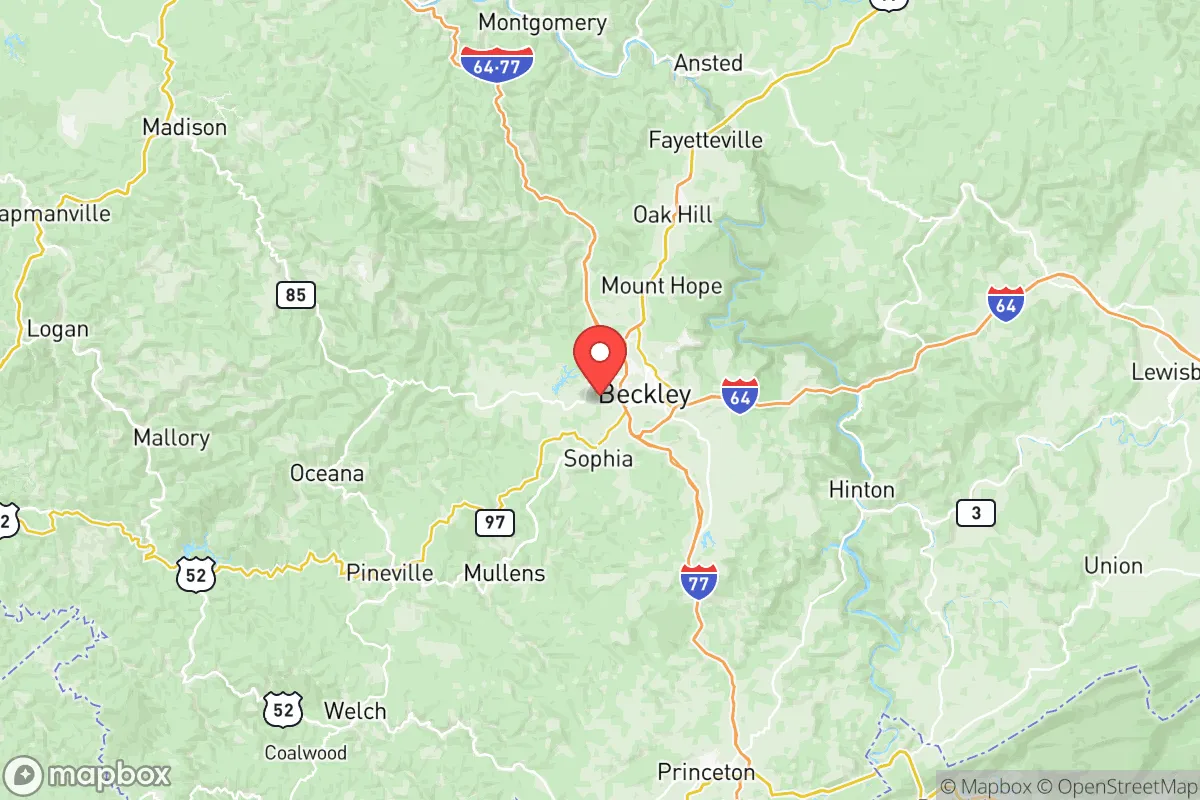
West Virginia as a whole is also deeply red — it was the only state in the nation where every single county voted for Trump in 2024 — but Raleigh County stands out even within that landscape. The county's R+22 rating is actually more Republican than the state average, which sits around R+19. That gap matters because it means Raleigh County is pulling the state further right, not just following along. The county seat, Beckley, is the main exception to the rule: it's the only significant population center where Democrats can still compete, though even there the party's influence has eroded. In the 2024 governor's race, Beckley's precincts around the university and downtown areas voted about 55-45 Republican, while outlying towns like Sophia, Crab Orchard, and Shady Spring hit 80-85% Republican. The swing precincts are mostly in the unincorporated areas between Beckley and the county line — places like Stanaford and MacArthur — where the vote splits about 65-35 Republican, making them the only real battlegrounds left in the county.
What this means for residents
For conservative residents, the political climate is comfortable and affirming. Local offices — from the county commission to the school board to the circuit court judges — are almost entirely held by Republicans, and policy decisions tend to reflect that majority. Tax rates are low, gun laws are permissive, and the county government has been vocal in opposing federal environmental regulations that affect the coal industry. For liberal residents, the reality is more isolating. There's no organized Democratic Party presence to speak of in most of the county, and progressive candidates rarely bother to run for local office. The practical effect is that left-leaning residents often find themselves politically homeless, either voting for the lesser of two Republican evils in primaries or simply sitting out local elections entirely. That said, Beckley does provide a small social bubble — the university, the hospital, and a few downtown coffee shops and bars are where you'll find the county's small but resilient liberal community.
Culturally, Raleigh County is more coal-country traditionalist than the state's eastern panhandle or the college towns of Morgantown and Huntington. The county's politics are deeply tied to the coal industry's decline — the loss of mining jobs since the 1980s has created a sense of economic grievance that fuels the area's populist conservatism. You'll see more "Trump Won" flags and coal-themed bumper stickers here than in any other part of the state outside the northern coalfields. The county also has a notably older population, which amplifies its conservative tilt. One policy distinction worth noting: Raleigh County has been aggressive in pursuing economic diversification through tourism (the New River Gorge National Park is just north), but local politics remain skeptical of anything that might restrict mining or natural gas extraction. That tension — between wanting new jobs and protecting the old industry — defines the county's political identity more than any single election result.

State Political ClimatePolitical Climate in West Virginia
State Political AnalysisPolitical Environment in the State
West Virginia has been one of the most reliably Republican states in the nation for over two decades, a dramatic shift from its historically Democratic roots. The state voted for Donald Trump by nearly 39 points in 2020 and by an even wider margin in 2024, making it the most pro-Trump state in the country. This transformation, which began in earnest around 2000, was driven by cultural realignment over coal, guns, and social issues, leaving the old Democratic machine that once dominated places like Charleston and Morgantown a shadow of its former self.
Urban vs. rural divide
The political map of West Virginia is starkly divided between a handful of small urban islands and a deeply red rural expanse. The state’s largest city, Charleston, and its surrounding Kanawha County lean Democratic but are not reliably blue — the city itself votes Democratic, while the suburbs and exurbs are solidly Republican. Morgantown, home to West Virginia University, is the most liberal pocket in the state, with Monongalia County often voting within single digits of the national average. In contrast, the rural southern coalfields — places like Logan, Mingo, and McDowell counties — have flipped from being some of the most Democratic areas in the country to some of the most Republican, driven by cultural grievances and the decline of the coal industry. The Eastern Panhandle, including Martinsburg and Charles Town, is more competitive due to commuter influence from the D.C. suburbs, but still leans Republican overall.
Policy environment
West Virginia’s policy environment is aggressively conservative by national standards. The state has no personal income tax on Social Security benefits and has been phasing down its personal income tax rate, with a goal of full elimination. Property taxes are among the lowest in the nation, capped by the state constitution. The regulatory posture is business-friendly, with a right-to-work law and a weak collective bargaining environment. Education policy has been a flashpoint: the state passed a universal school choice law in 2021, allowing public funds to follow students to private or homeschool options, and has one of the most permissive charter school laws in the region. Healthcare is a mixed bag — the state expanded Medicaid under the Affordable Care Act, but abortion is heavily restricted, with a near-total ban passed in 2022 with no exceptions for rape or incest. Election laws are restrictive: voter ID is required, early voting is limited to 10 days, and no-excuse absentee voting is not permitted.
Recent policy direction
The last five years have seen a hard rightward turn in state policy. In 2021, the legislature passed a permitless carry law for firearms, allowing any adult who can legally own a gun to carry it concealed without a permit. The same year, the state enacted a "Parental Bill of Rights" that requires schools to notify parents about curriculum changes and allows them to opt their children out of certain materials. On education, the 2021 school choice law was followed by a 2023 law banning the teaching of "divisive concepts" related to race and sex in public schools. Medical marijuana has been legal since 2017, but the program is tightly controlled and does not allow home cultivation. Property rights were strengthened with a 2020 law limiting the use of eminent domain for carbon pipeline projects. On voting, the state passed a 2021 law that shortened the absentee ballot request window and banned ballot drop boxes. There is no state-level data privacy law, and surveillance powers are broad — police do not need a warrant to access cell phone location data from third-party providers.
Civil unrest & political movements
Political activism in West Virginia is intense but localized. The 2018 statewide teachers' strike, which shut down every public school for nine days, was one of the largest labor actions in the country that year and forced a 5% pay raise. The state has a strong Second Amendment movement, with regular rallies at the capitol in Charleston. There is no significant sanctuary city movement — in fact, the legislature passed a law in 2020 requiring local law enforcement to cooperate with federal immigration authorities. Election integrity has been a persistent theme, with the state’s Republican secretary of state launching a widely publicized audit of the 2020 election that found no evidence of widespread fraud. Secession or nullification rhetoric is rare, though there is a small but vocal movement advocating for the state to leave the Union, tied to the broader "State of Jefferson" idea. A new resident would notice the prevalence of political yard signs, especially in rural areas, and the near-total absence of visible left-wing organizing outside of Morgantown and Charleston.
Projection
Over the next 5-10 years, West Virginia is likely to become even more Republican, but with important caveats. The state is losing population — it was one of only three states to lose residents between 2020 and 2024 — and the people leaving tend to be younger and more moderate, while those moving in are often retirees or remote workers seeking low taxes and rural living, a demographic that leans conservative. The coal industry will continue to decline, but the state is investing in natural gas, petrochemicals, and data centers, which may bring new jobs but won't change the cultural politics. The biggest wild card is the Eastern Panhandle, where in-migration from the D.C. area could slowly shift the balance in that region toward competitiveness, but not enough to flip the state. A person moving in now should expect the political environment to remain deeply conservative, with continued emphasis on gun rights, school choice, and tax cuts, and little chance of any liberalizing shift on abortion or voting access.
For a new resident, the practical takeaway is straightforward: if you are conservative, you will find a state that aligns with your values on nearly every issue, from taxes to guns to education. If you are liberal, you will be in a clear minority, especially outside of Morgantown and Charleston, and you should expect to encounter a political culture that is openly hostile to your views. Either way, the state’s politics are stable, predictable, and unlikely to surprise you — what you see now is what you will get for the foreseeable future.
* Values derived from national, state, county, city and local statistics and may differ in a specific area. Last updated: 2026-07-07T19:31:06.000Z
Narrative content on this page is AI-generated and may contain mistakes. Verify any details that matter before acting on them.
ReloMaps may earn a commission from affiliate links at no extra cost to you.

