Photo: Wikipedia
Demographics of Nicholas County
Affluence Level in Nicholas County
A low-income area with significant economic hardship. Household wealth and educational attainment are well below national averages.
People of Nicholas County
Nicholas County, West Virginia is home to roughly 24,400 people, making it one of the state’s more sparsely populated rural counties. The population is overwhelmingly white (96.5%) and native-born, with a foreign-born share of just 0.5% — one of the lowest in the nation. Residents are deeply rooted, with many families tracing their lineage back to the early 19th century, and the county retains a strong Appalachian cultural identity shaped by independent small-scale farming, resource extraction, and a conservative social ethos. This is a place where generational continuity is the norm, not the exception, and where new arrivals are most likely to be domestic migrants seeking a lower cost of living and slower pace of life rather than immigrants from abroad.
Settlement & growth (pre-1960)
Long before European settlers arrived, what is now Nicholas County was part of the vast hunting grounds of the Shawnee and Cherokee nations. These groups used the region seasonally, but there were no permanent Native settlements within the county’s current boundaries. The area remained largely untouched by European contact until the mid-1700s, when French and British traders and frontiersmen began to cross the Alleghenies. Following the American Revolution, the Commonwealth of Virginia began granting land patents to veterans, which sparked the first true wave of settlement.
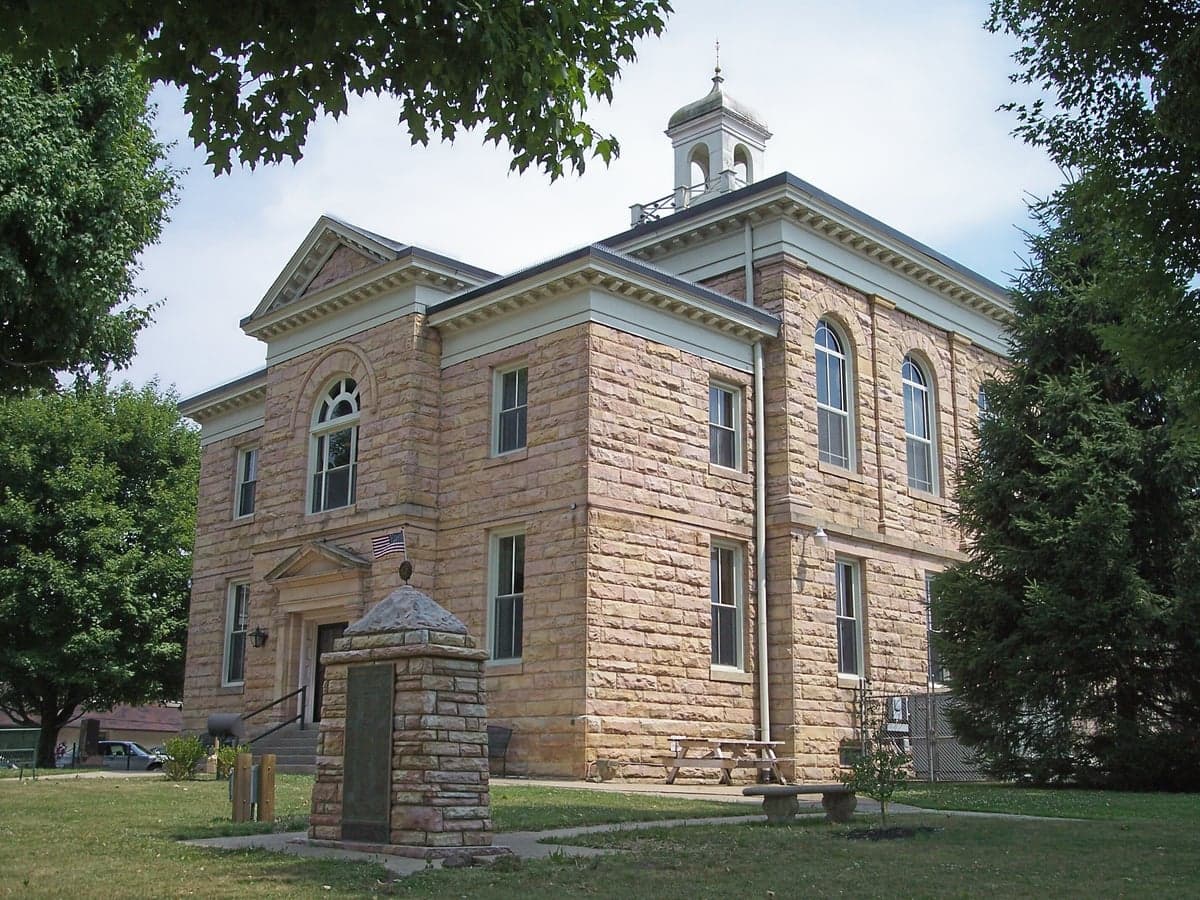
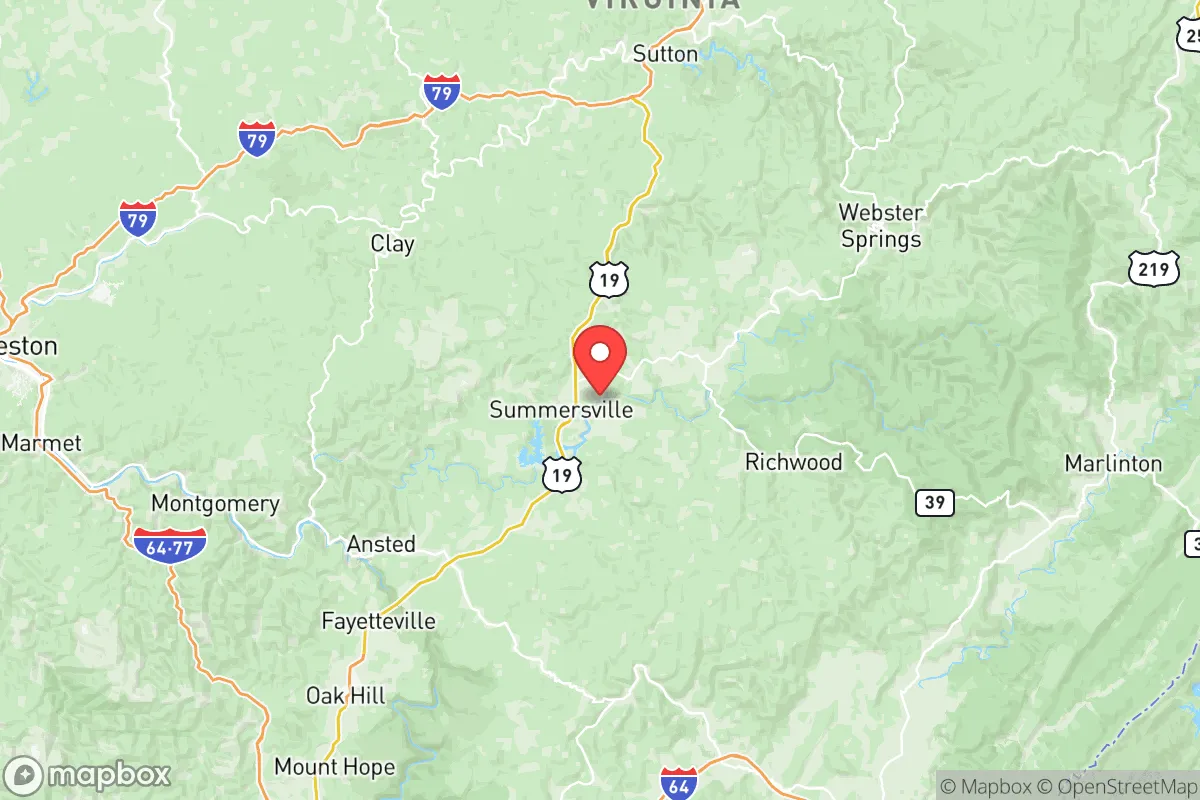
The first permanent white settlers arrived in the 1790s, overwhelmingly Scots-Irish and English from Virginia’s Shenandoah Valley and the Piedmont. They were drawn by cheap, fertile land along the Gauley River and its tributaries, and they established small subsistence farms. The county was formally created in 1818 from parts of Greenbrier, Kanawha, and Randolph counties, and its first county seat was at Summersville, which remains the county’s largest town and commercial hub today. By 1830, the population had reached about 3,000, consisting almost entirely of these first-wave families.
A second, smaller wave arrived between 1840 and 1860, this time including German immigrants who moved westward from the German settlements in Hardy and Pendleton counties. These families established farms and small milling operations in the area around Craigsville and Richwood, though their numbers were modest — perhaps a few hundred individuals — and they quickly assimilated into the dominant Scots-Irish culture. The population grew slowly but steadily through the late 1800s, reaching 11,000 by 1900.
The third and most transformative wave came with the timber and coal booms that began around 1890 and peaked in the 1910s and 1920s. Railroads pushed into the remote hollows of Nicholas County, opening up vast stands of virgin hardwood and rich bituminous coal seams. This boom drew a new group of domestic migrants: Appalachian-born laborers from neighboring counties and states, plus a small number of Italian and Eastern European immigrants who worked in the logging camps and coal mines. The company towns that sprang up — Mount Lookout, Swiss, Birch River, and Nallen — were built by and for the timber and coal industries. At its peak in 1950, Nicholas County’s population hit 27,696, a high-water mark it has never since regained.
Modern era (post-1965)
Unlike much of the United States, Nicholas County was almost entirely unaffected by the 1965 Hart-Cellar Act and subsequent immigration waves. The county’s foreign-born population has never exceeded 1% and remains at 0.5% today. No significant immigrant enclaves formed in the post-1965 period; the few foreign-born residents are overwhelmingly European retirees or professionals working in the healthcare and education sectors, and they are scattered rather than concentrated.
Instead, the major demographic story of the modern era is domestic out-migration and aging. From its 1950 peak, the county’s population declined steadily to a low of 24,700 in 2000, then stabilized at roughly 24,500 through the 2020s. This loss has been driven primarily by young adults leaving for larger cities and college towns, particularly Beckley to the south and Charleston to the west. Coal industry mechanization and the decline of timber reduced the number of high-paying blue-collar jobs, accelerating out-migration among men aged 18–35. The population that remains is older — the median age is 45 — and families are smaller than in previous generations.
The only notable domestic in-migration since 1990 has been a modest reverse-flow of retirees who grew up in Nicholas County and have returned after decades elsewhere, along with a very small number of remote workers and homesteaders drawn by cheap land (median home value around $85,000) and a conservative, non-metropolitan lifestyle. These newcomers tend to settle in or near Summersville, which offers the best access to services and the largest employer, the Nicholas County School District.
The future
Nicholas County is projected to experience a slow, gradual population decline over the next 10–20 years, likely losing several hundred residents per decade. The county will continue to age, and the school-age population will shrink. Diversity — already negligible — is unlikely to increase significantly because the county lacks the job base and housing stock to attract international migrants or substantial domestic diversity. The Hispanic share (0.5%) and Asian share (0.5%) are expected to remain static, with no enclave formation.
The most likely drivers of future population change are (1) the continued expansion of outdoor recreation around the Summersville Lake and the Gauley River National Recreation Area, which could bring in a small number of amenity-seeking retirees and entrepreneurs, and (2) the possibility of new natural gas extraction in the Marcellus Shale underlying the region. If gas development proceeds at scale, it could temporarily stabilize the population and attract a modest influx of male-dominated, transient workers from other parts of Appalachia and the Gulf Coast — but such a boom would not increase racial or ethnic diversity.
The cultural identity of Nicholas County will likely remain strongly white, Appalachian, and conservative. The county voted +40 points Republican in the 2024 presidential election, and that political and cultural orientation shows no sign of shifting. For someone moving in now, the county offers a deeply stable, interconnected community where family names from the 1790s still dominate the phone book, and where the pace of change is measured in decades, not years.

* Values derived from national, state, county, city and local statistics and may differ in a specific area. Last updated: 2026-07-03T04:54:02.000Z
Narrative content on this page is AI-generated and may contain mistakes. Verify any details that matter before acting on them.
ReloMaps may earn a commission from affiliate links at no extra cost to you.

