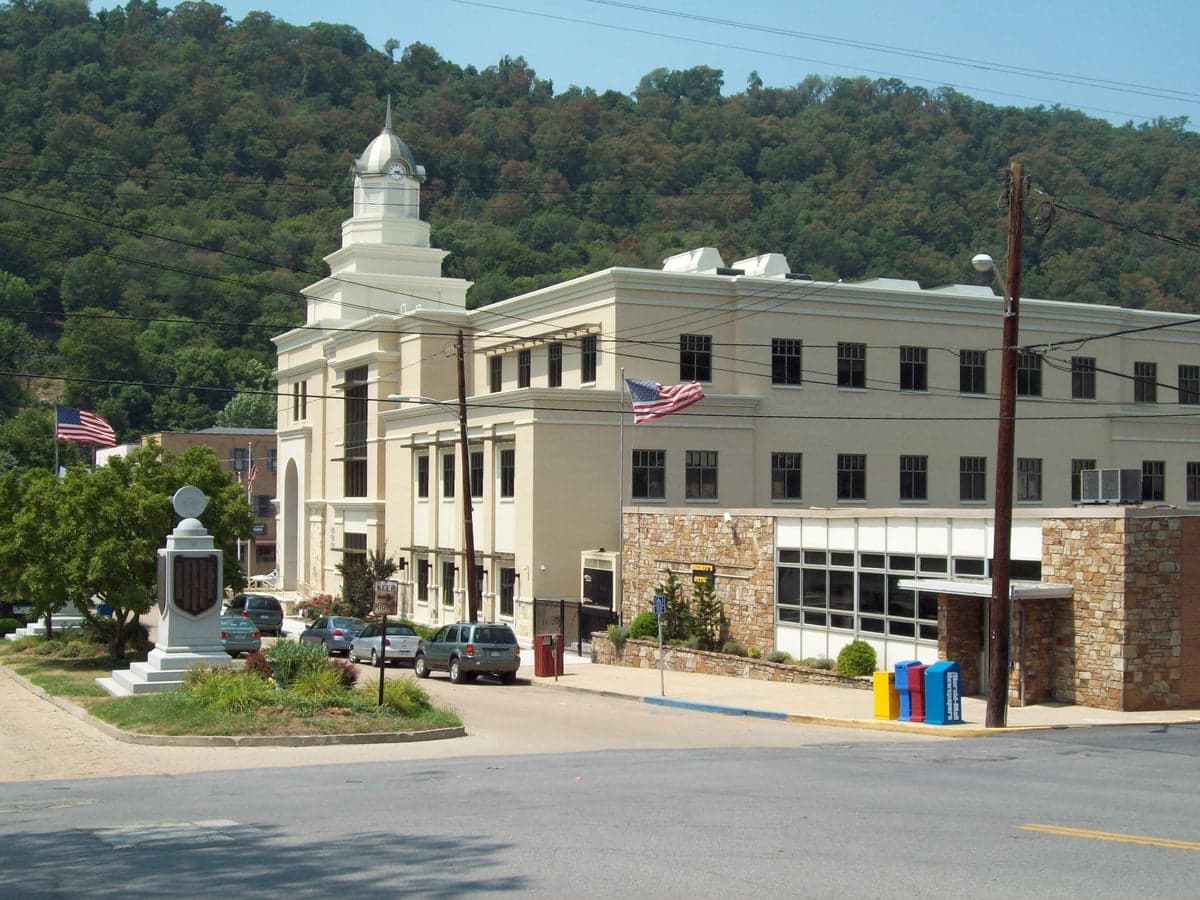
Photo: Wikipedia
Political ClimatePolitical Climate in Morgan County
Showing county-level results — no local-only data available.
Lean and PVI are calculated from this county’s 2020 and 2024 presidential results, Cook-style.
Political rankings in West Virginia
- Most Conservative Cities in West Virginia
- Most Liberal Cities in West Virginia
- Best Liberal-Leaning Towns in the South
- Best Liberal-Leaning Towns in Appalachia
- Safest Liberal-Leaning Towns in the South
- Safest Conservative-Leaning Towns in the South
- Affordable Small Towns for Conservatives
- Safest Conservative-Leaning Cities in the U.S.
- Most Conservative Counties in West Virginia
- Most Liberal Counties in West Virginia
Local Political AnalysisPolitical Analysis of Morgan County
Morgan County is one of the most reliably Republican counties in West Virginia, carrying a Cook Partisan Voting Index of R+28, meaning it votes about 28 points more Republican than the national average. In the 2024 presidential election, the county delivered roughly 78% of its vote to Donald Trump, a margin that has only widened over the past decade as the area has shifted rightward alongside the rest of the state. This isn't a recent fluke—Morgan County has voted Republican in every presidential election since 2000, but the intensity of that support has deepened considerably since 2016.
How it compares to West Virginia as a whole
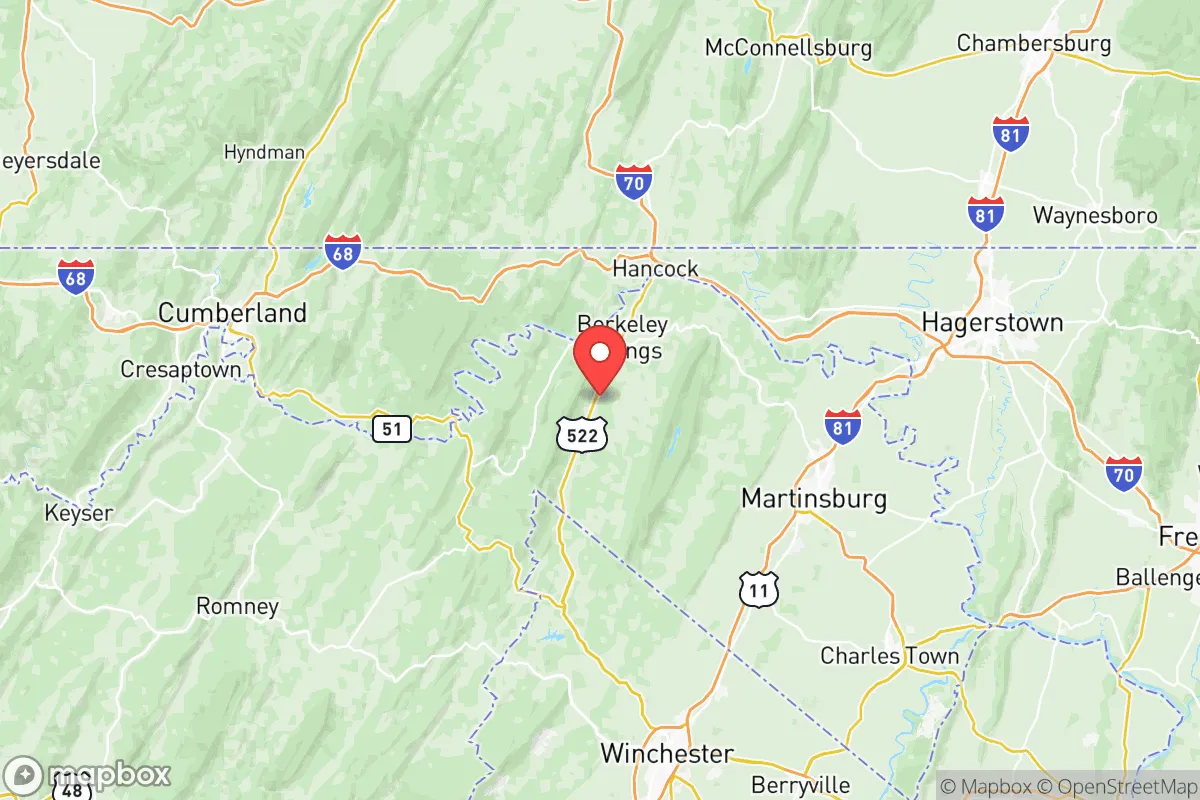
While West Virginia as a state is also deeply red—with a Cook PVI estimated in the R+20 range—Morgan County is noticeably more conservative than the state average. The county's R+28 rating places it among the top 10% of Republican-leaning counties in the entire country. To put it in perspective, neighboring Berkeley County, which includes the growing Martinsburg area, leans R+16, while Morgan County's eastern neighbor, Frederick County, Virginia, is a competitive R+4. Within Morgan County itself, there's some variation: the town of Berkeley Springs (the county seat) is slightly less conservative than the rural outlying areas, with precincts around the town center occasionally hitting 65-70% Republican rather than the 78% countywide average. The more remote communities like Great Cacapon and Paw Paw tend to run closer to 80-85% Republican. There are no precincts in Morgan County that lean Democratic—the bluest precinct in Berkeley Springs still votes about 60% Republican.
What this means for residents
For conservative residents, the political climate is deeply comfortable. Local offices—county commission, school board, and judicial positions—are held by Republicans, and policy debates tend to focus on tax cuts, Second Amendment rights, and limiting government regulation. The county commission has consistently opposed state-level gun control measures and has passed resolutions supporting coal and natural gas development. For liberal or moderate residents, the reality is more isolating. There is no organized Democratic Party presence in the county; the local party committee is largely inactive, and progressive candidates rarely run for office. Socially liberal residents often find themselves keeping their political views private, especially in more rural areas like Hancock or Slanesville, where conservative social values are deeply embedded in community life. That said, Berkeley Springs—with its arts scene, tourist economy, and proximity to the Cacapon Resort State Park—does offer a slightly more tolerant environment, and you'll find a handful of progressive-leaning small business owners and artists there who are open about their views.
Culturally, Morgan County stands out even within West Virginia for its strong libertarian streak. The county has a long history of resisting federal land management—particularly around the Cacapon and Sleepy Creek Wildlife Management Areas—and local officials frequently clash with the state Department of Environmental Protection over property rights. This independent, "leave us alone" ethos is a point of pride for many residents, regardless of party affiliation. Looking ahead, the political trajectory seems locked in: as younger, more conservative families move in from the D.C. suburbs seeking lower taxes and more space, the county's Republican lean is likely to intensify further, with no signs of a Democratic resurgence on the horizon.

State Political ClimatePolitical Climate in West Virginia
State Political AnalysisPolitical Environment in the State
West Virginia is one of the most reliably Republican states in the nation, a transformation that has been dramatic and swift. As recently as 2000, the state voted for Al Gore; by 2024, Donald Trump carried it by nearly 40 points, making it the second-reddest state in the country after Wyoming. The shift is driven by a wholesale realignment of the white working-class electorate, the collapse of the state’s once-dominant Democratic machine, and a deep cultural and economic resentment of national Democratic policies on coal, energy, and social issues. For a conservative relocator, this means living in a state where Republican control is near-total and likely to remain so for the foreseeable future.
Urban vs. rural divide
The political map is starkly divided between a few small, blue-leaning islands and a vast red sea. The only reliably Democratic stronghold is Morgantown, home to West Virginia University, where Monongalia County has voted blue in recent presidential cycles thanks to a concentration of academics, students, and younger professionals. Charleston, the state capital, is a purple-to-light-blue area in Kanawha County, with a mix of government workers, union households, and a small professional class that keeps it competitive. Huntington (Cabell County) and Wheeling (Ohio County) have trended hard red over the past decade, as their industrial and union bases have shifted allegiance. Outside these pockets, the state is overwhelmingly Republican. The southern coalfields—places like Beckley, Logan, and Bluefield—were once the heart of the New Deal coalition but now vote 70-80% Republican. The eastern panhandle, including Martinsburg and Charles Town, is a mix of native West Virginians and D.C.-area exurbs, leaning Republican but with a libertarian streak on land use and taxes. The rural north-central and western counties, like Parkersburg and Clarksburg, are deep red, driven by older, white, non-college voters who prioritize gun rights, energy jobs, and cultural conservatism.
Policy environment
West Virginia’s policy environment is aggressively conservative across the board. The state has no personal income tax on Social Security benefits and has been phasing down its personal income tax rate—currently at 3.99% for most brackets, with a goal of elimination. The corporate net income tax is a flat 6.5%, and the state has a 6% sales tax with no local add-ons. Property taxes are among the lowest in the nation, capped by the state constitution at a maximum of 1% of assessed value for most property. Education policy is a flashpoint: the state passed a sweeping school choice law in 2021, creating the Hope Scholarship, which allows any public school student to use state funding for private school tuition, homeschooling, or other educational expenses. The law was upheld by the state Supreme Court in 2023. On healthcare, West Virginia expanded Medicaid under the ACA in 2014, but the state has not pursued a state-based exchange and has one of the highest rates of opioid addiction and overdose deaths in the country. Election laws are restrictive: voter ID is required, early voting is limited to 10 days, and absentee voting requires an excuse. The state has also passed laws restricting ballot drop boxes and limiting third-party ballot collection.
Recent policy direction
The last five years have seen a cascade of conservative legislation. On gun rights, West Virginia became a constitutional carry state in 2016, allowing permitless carry of concealed firearms. In 2023, the legislature passed a law prohibiting state enforcement of any federal gun control measures, a direct challenge to the ATF. On parental and education rights, the state passed the Parental Bill of Rights in 2021, requiring schools to notify parents of any medical or mental health services provided to their children and to obtain consent for any changes to a student’s gender identity or expression. In 2023, the legislature banned transgender athletes from female sports and prohibited gender-affirming care for minors. On speech and privacy, the state has no broad privacy law, but it passed a law in 2023 requiring social media platforms to verify the age of users and obtain parental consent for minors. On medical and bodily autonomy, abortion is banned at all stages of pregnancy with no exceptions for rape or incest, only for medical emergencies. The state has also passed a law prohibiting the use of public funds for abortion services or abortion-related travel. On property rights, West Virginia is a strong property rights state, with a right-to-farm law that protects agricultural operations from nuisance lawsuits and a law requiring just compensation for any regulation that diminishes property value by more than 20%. On voting and ballot access, the state has tightened voter ID requirements and shortened the early voting window, and in 2024, it passed a law requiring all ballots to be hand-counted in future elections, a move that has drawn both praise and criticism.
Civil unrest & political movements
West Virginia has a history of labor militancy and populist anger, but in recent years, political activism has been dominated by the right. The 2021 teachers’ strike was a notable exception, a multi-week walkout that shut down schools across the state and forced the Republican governor and legislature to pass a 5% pay raise. That strike was a rare moment of cross-ideological labor solidarity, but it has not been repeated. The state has seen a rise in Second Amendment sanctuary resolutions, with over 40 counties passing measures declaring they will not enforce federal gun laws. There is a small but vocal secessionist movement in the eastern panhandle, where some residents have proposed breaking away to join Virginia or Maryland, citing frustration with the state’s poverty and lack of economic opportunity. Immigration politics are largely absent, as West Virginia has one of the smallest foreign-born populations in the country—around 1.5%—and no sanctuary cities. Election integrity has been a major theme: the 2020 and 2024 elections saw widespread claims of fraud from local Republican activists, though no evidence of widespread irregularities has been found. The hand-counting law passed in 2024 is a direct result of this pressure. A new resident would notice a general distrust of federal authority, especially the EPA and the Bureau of Land Management, which are seen as hostile to the state’s coal and natural gas industries.
Projection
Over the next 5-10 years, West Virginia will likely become even more Republican, but with internal tensions. The state is losing population—it was one of only three states to lose residents in the 2020 Census—and the people leaving are disproportionately younger, more educated, and more moderate. Those moving in are often retirees from the Midwest and Northeast seeking low taxes and a slower pace, or remote workers from D.C. and the Mid-Atlantic drawn by cheap land and a conservative culture. This in-migration is concentrated in the eastern panhandle and the Morgantown area, which could create a small but growing libertarian-leaning bloc that pushes back on some social issues, particularly on land use and property rights. The coal industry will continue to decline, and the state’s economy will remain dependent on natural gas, healthcare, and government transfers. The political trajectory is toward even more aggressive tax cuts, further school choice expansion, and continued resistance to federal environmental regulations. A new resident moving in now should expect a state that is deeply conservative, politically stable, and unlikely to shift leftward, but also one that is aging, struggling economically, and increasingly dependent on federal funding even as it rhetorically opposes it.
For a conservative relocator, West Virginia offers a policy environment that aligns closely with their values: low taxes, strong gun rights, school choice, and a culture that prizes self-reliance and local control. For a liberal relocator, the state will feel like a foreign country, with few political allies, a restrictive social environment, and a government that is actively hostile to many of their priorities. The practical takeaway is that West Virginia is not a purple state in waiting—it is a deeply red state that is only getting redder, and anyone moving here should be prepared for that reality. The trade-off is a low cost of living, beautiful natural scenery, and a slower pace of life, but the political climate is unambiguous and unlikely to change anytime soon.
* Values derived from national, state, county, city and local statistics and may differ in a specific area. Last updated: 2026-11-19T06:53:59.000Z
Narrative content on this page is AI-generated and may contain mistakes. Verify any details that matter before acting on them.
ReloMaps may earn a commission from affiliate links at no extra cost to you.

