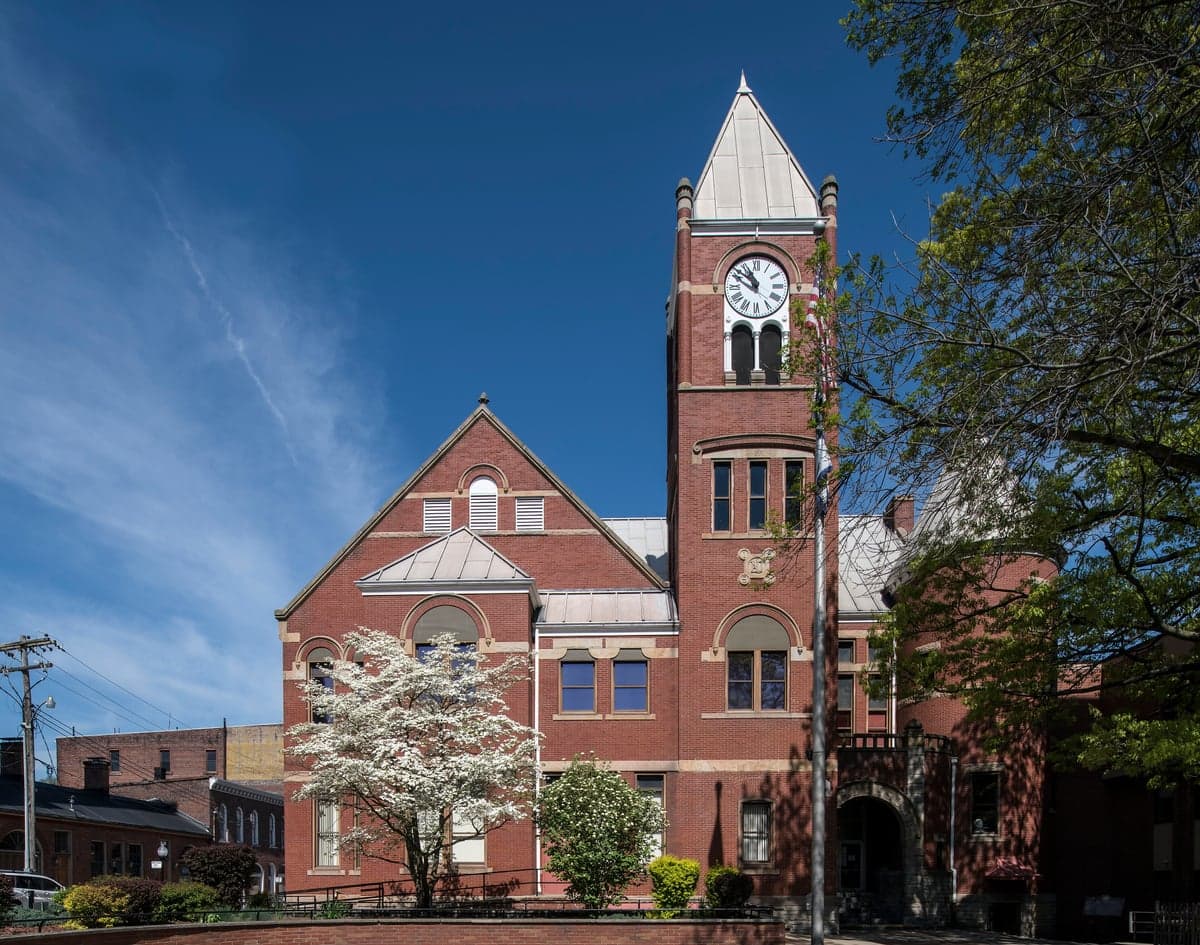
Photo: Wikipedia
Personal Sovereignty in Monongalia County
Viable for self-reliance. Generally workable, though some barriers may limit total independence.
What does Personal Sovereignty tell us?
Personal Sovereignty measures your capacity for self-reliance and independence with minimal government friction. Higher scores mean fewer barriers between you and the way you want to live... but it assumes you have the space you need and good neighbors.
What does this tell us?
Personal Sovereignty measures your capacity for self-reliance and independence with minimal government friction. Higher scores mean fewer barriers between you and the way you want to live... but it assumes you have the space you need and good neighbors.
State Policy
Energy independence: Net exporter (200% of energy produced in-state)
Personal Liberty
Homesteading

Personal Liberty Analysis
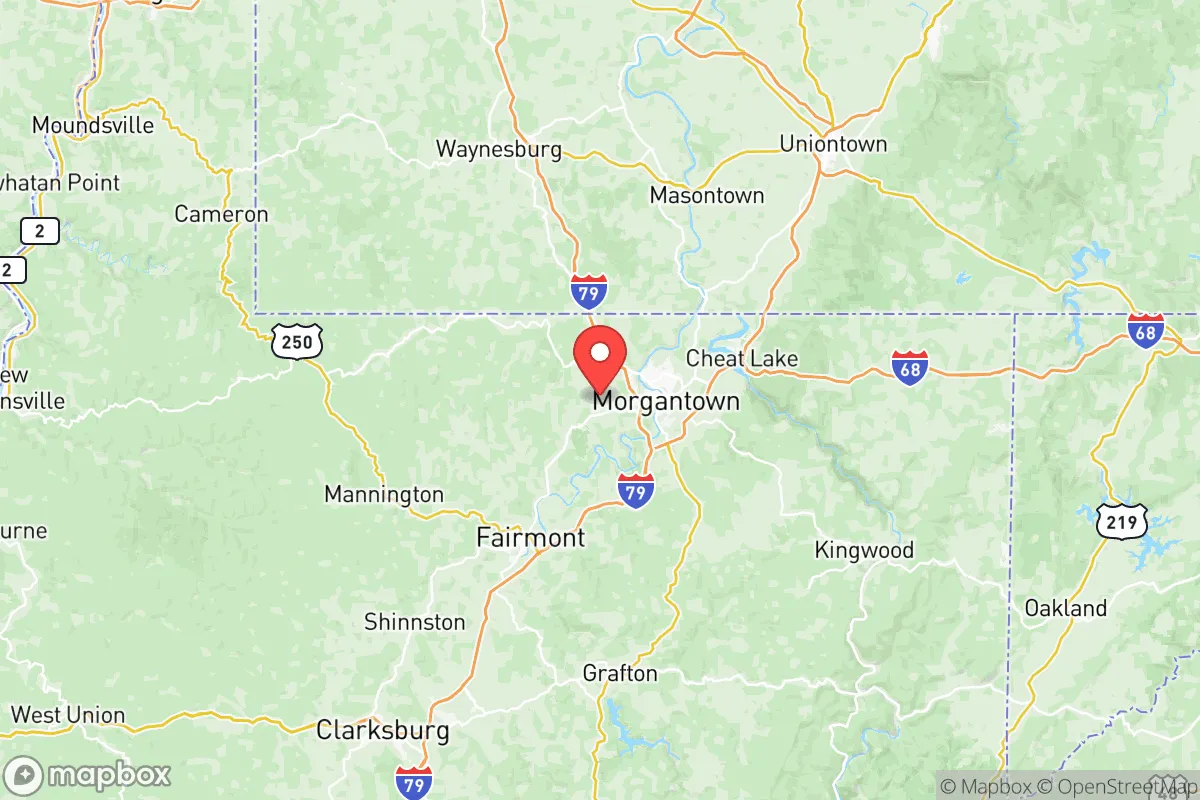
Monongalia County, West Virginia offers a notably high degree of personal sovereignty compared to much of the Mid-Atlantic and Northeast, driven by a state-level legal framework that prioritizes individual autonomy in taxation, self-defense, and property rights. While the county is home to the city of Morgantown and West Virginia University, which introduce a more progressive political and regulatory influence, the surrounding towns and unincorporated areas provide a markedly different environment for those seeking maximum personal freedom. The balance between the university hub and the rural expanse creates a unique sovereignty landscape where a resident's experience can vary significantly based on whether they live within Morgantown's city limits or in the outlying communities of Cheat Lake, Westover, Granville, or the more remote areas near Dellslow and Cassville.
Tax burden and regulatory posture in Monongalia County
West Virginia's overall tax burden is among the lowest in the nation, and Monongalia County benefits from this state-level posture. There is no state income tax on Social Security benefits, and the state has been phasing down its personal income tax rates, with a current top marginal rate of 4.82% as of 2026. Property taxes in Monongalia County are assessed at 60% of appraised value, with a levy rate that remains low by national standards; a typical home valued at $250,000 carries an annual property tax bill of roughly $1,200 to $1,500. The regulatory posture is generally light-touch at the county level, but the city of Morgantown imposes its own business and occupation (B&O) tax on gross receipts, which can be a burden for home-based businesses and contractors operating within city limits. In contrast, the towns of Westover and Granville have lower municipal tax burdens, and unincorporated areas like Cheat Lake and Cassville have no municipal tax at all, making them more attractive for entrepreneurs and self-employed individuals seeking to minimize government overhead.
Self-defense and gun law specifics in Monongalia County
West Virginia is a constitutional carry state, meaning no permit is required to carry a concealed firearm for any law-abiding adult 21 or older. Monongalia County fully reflects this state law, with no additional county-level firearm restrictions as of 2026. The sheriff's office in Morgantown issues concealed carry permits for reciprocity purposes, but they are not required for in-state carry. Stand-your-ground and castle doctrine laws are codified in state statute, providing strong legal protection for the use of deadly force in self-defense. Gun culture is prevalent across the county, with multiple shooting ranges and gun shops located in Morgantown, Westover, and along the Cheat Lake corridor. There are no local ordinances in Monongalia County that restrict magazine capacity, ban specific firearm types, or impose waiting periods, making the area one of the most permissive in the eastern United States for gun owners. The only practical limitation is that firearms are prohibited on WVU campus property, which is a state law applicable to all public universities.
Self-reliance and homesteading viability across Monongalia County
Homesteading and off-grid living are viable in Monongalia County, though feasibility varies sharply by location. In unincorporated areas like Cassville, Dellslow, and the rural stretches near the Pennsylvania border, land is available with minimal zoning restrictions. The county does not enforce a building code in unincorporated areas for owner-occupied single-family homes, though a permit is required for septic systems and well drilling. Lot sizes in these areas commonly range from 1 to 10 acres, with prices between $5,000 and $15,000 per acre as of 2026. Off-grid solar is legal and common, with net metering available through Mon Power, though the utility requires interconnection agreements for grid-tied systems. Rainwater collection is unrestricted for outdoor use, and private wells are standard. Within Morgantown city limits and the planned community of Cheat Lake, however, zoning is more restrictive, with minimum lot sizes of 0.25 acres and building code enforcement that makes off-grid living impractical. Westover and Granville fall in the middle, with some zoning but more flexibility than Morgantown proper.
Personal liberties in Monongalia County: parental rights, medical autonomy, and property
West Virginia law provides strong protections for parental rights, including a statutory requirement that schools obtain parental consent before administering any medical or mental health screening to a minor. The state's 2023 "Parental Bill of Rights" law, codified in West Virginia Code §18-2-7c, requires schools to notify parents of any changes in a child's services or monitoring related to mental, emotional, or physical health. Medical autonomy is generally respected, with no state-level vaccine mandate for adults and a broad religious exemption for childhood immunizations. However, Monongalia County's proximity to WVU Medicine means that the Morgantown area has a high concentration of medical facilities that may push standard protocols; residents seeking alternative or holistic care often travel to private practitioners in the surrounding towns. Property rights are strongly protected under West Virginia's "takings" law, which requires just compensation for any regulatory action that diminishes property value. There is no county-level rental inspection program outside of Morgantown, and short-term rentals like Airbnb are permitted in unincorporated areas without special permitting. Free speech is protected under the state constitution, and Monongalia County has no local ordinances restricting political signage or public assembly beyond standard time, place, and manner regulations.
Overall, Monongalia County presents a sovereignty profile that is strong for the eastern United States, particularly for those who choose to live outside Morgantown's city limits. The combination of constitutional carry, low property taxes, minimal zoning in rural areas, and strong parental rights laws places it well ahead of most counties in neighboring Pennsylvania, Maryland, and Ohio for personal freedom. The primary trade-off is the presence of WVU, which drives a more progressive local government in Morgantown and higher taxes within city limits, but the county's unincorporated areas and smaller towns like Westover, Granville, and Cassville offer a regulatory environment that rivals more famously libertarian-leaning regions of the country. For a relocation-minded individual or family prioritizing personal sovereignty, Monongalia County's rural and small-town areas represent a compelling option that balances access to university amenities with a genuinely light-touch government posture.

* Values derived from national, state, county, city and local statistics and may differ in a specific area. Last updated: 2026-07-02T21:07:50.000Z
Narrative content on this page is AI-generated and may contain mistakes. Verify any details that matter before acting on them.
ReloMaps may earn a commission from affiliate links at no extra cost to you.

