Photo: Wikipedia
Political ClimatePolitical Climate in Marion County
Showing district-level results — no local-only data available.
Local Political AnalysisPolitical Analysis of Marion County
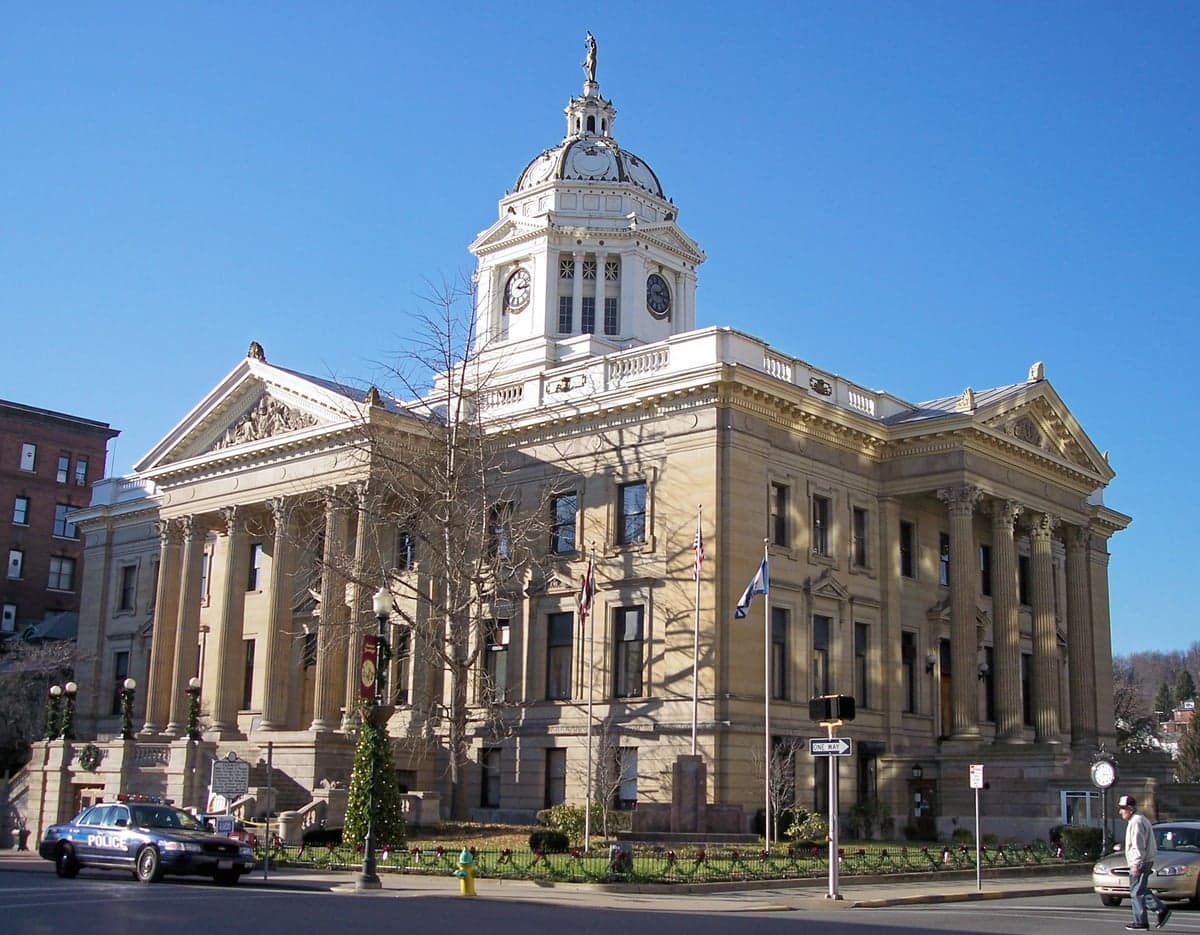
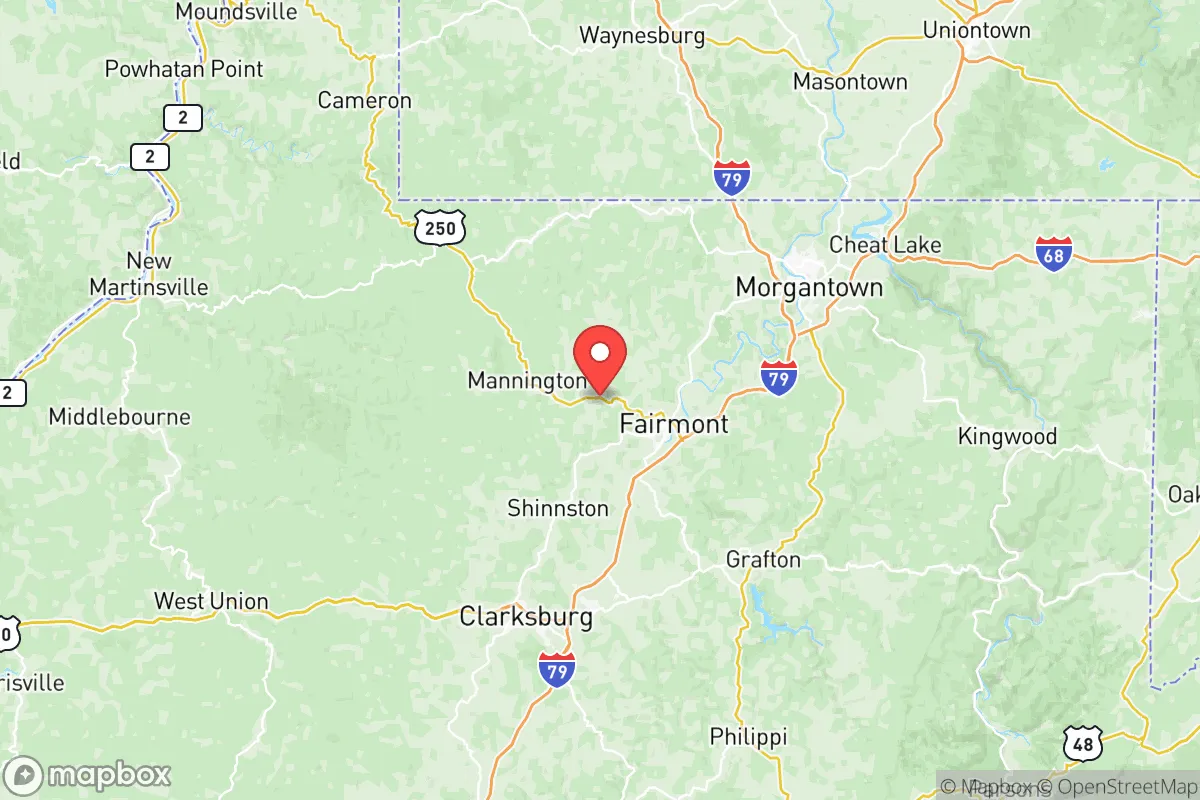
Marion County has been reliably Republican for a long time, with a Cook PVI of R+20 that puts it just a hair to the left of the state as a whole (R+21). But don't let that one-point difference fool you — this is still deep-red territory, and the real story is how the county's politics break down by town and precinct. Fairmont, the county seat, has historically been a union stronghold and still leans more moderate-to-blue in its core wards, especially around the old coal and glass plants. Meanwhile, smaller towns like Mannington, Farmington, and Rivesville are solidly red, and the rural precincts along the Monongahela River and up into the hills vote overwhelmingly conservative. The swing precincts are mostly in the suburban fringe of Fairmont — places like Pleasant Valley and the area around East Park Avenue — where you'll see races decided by a few hundred votes.
How it compares
Compared to West Virginia as a whole, Marion County is basically a mirror image with a slightly more moderate streak in its urban core. The state's R+21 PVI is driven by huge margins in places like Mingo, McDowell, and Wyoming counties, where Republicans routinely win by 40-50 points. Marion doesn't have that kind of raw red dominance — Fairmont's Democratic legacy keeps the county from being as deep red as the southern coalfields. But that legacy is fading fast. In 2020, Trump won Marion by 20 points, and in 2024 he likely did even better. The shift away from the Democratic Party here has been steady and, from a conservative perspective, welcome — fewer votes for policies that feel like government overreach into our personal lives, our businesses, and our Second Amendment rights. The state legislature has been reliably conservative for years, and Marion's delegation reflects that, though you still get the occasional moderate Democrat from Fairmont who talks a good game about "working across the aisle."
What this means for residents
For folks living here, the political climate means a government that generally stays out of your way — low taxes, minimal red tape on property and small business, and strong support for gun rights and energy independence. The county commission and local school board are conservative-leaning, so you don't see the kind of progressive curriculum battles or zoning overreach that plague blue states. That said, there's always a risk of creeping government overreach, especially if Fairmont's city council ever flips back to a more progressive majority. Right now, the city is run by a mix of old-school Democrats and pragmatic Republicans, so it's a decent balance. But if the national trend toward progressive policies — think vaccine mandates, DEI programs, or restrictive land-use rules — ever takes hold here, it would be a real concern. Most residents are watching the state legislature closely to make sure preemption laws stay strong, keeping local governments from imposing their own burdensome regulations.
Culturally, Marion County is still a place where neighbors help neighbors and the government is seen as a last resort, not a first responder. The biggest policy distinction from the rest of West Virginia is probably the county's lingering union influence — UMWA still has a presence, and that sometimes creates a weird alliance between blue-collar Democrats and Republicans on issues like mine safety and energy jobs. But on social issues, there's no daylight: this is a pro-life, pro-Second Amendment, pro-energy community that values personal responsibility over government programs. The trajectory is good — more conservatives moving in from out of state, fewer people buying the progressive line — but we need to stay vigilant. If you're looking for a place where your freedoms aren't under constant attack, Marion County is still a solid bet.

State Political ClimatePolitical Climate in West Virginia
State Political AnalysisPolitical Environment in the State
West Virginia is about as red as it gets these days, with a Cook PVI of R+21, but it wasn’t always that way. I’ve lived here long enough to remember when the state was reliably Democratic — the old coal-country union Democrats who voted for FDR and then for Reagan. Over the last 20 years, that coalition shattered. Cultural realignment, the war on coal, and a growing distrust of federal overreach flipped the state hard. Now the dominant coalition is conservative, pro-gun, pro-energy, and deeply skeptical of Washington. The trajectory has been a steady march rightward, and that shows no sign of reversing.
Urban vs. rural divide
The political map of West Virginia is stark. The few urban centers lean left or moderate, while the vast rural countryside is deeply conservative. Charleston, the capital, is the most Democratic-leaning city — Kanawha County voted for Biden in 2020, but only barely, and the city itself has a small but vocal progressive presence around the state capitol. Morgantown, home to West Virginia University, is the other blue dot; Monongalia County is reliably Democratic thanks to the academic and student population. Huntington in Cabell County is a mixed bag — some old union Democrats still hold sway, but the surrounding suburbs are trending red. Everywhere else — Beckley, Bluefield, Martinsburg, Charles Town, Wheeling, Parkersburg — is solidly Republican. The eastern panhandle, especially Jefferson and Berkeley counties, has seen an influx of former D.C. area residents, and while some bring moderate tendencies, the area still votes reliably red. The real engine of the state’s conservatism is the rural south and the northern panhandle — places where coal, gas, and manufacturing are the backbone and where government regulation is seen as the enemy.
Policy environment
West Virginia’s policy environment is broadly conservative, but with some lingering Appalachian populist quirks. Taxes: the state has a progressive income tax with rates up to 6.5%, but there’s been a push to cut them — in 2023 the legislature passed a 21% across-the-board income tax cut, with a goal of eventual elimination. Sales tax is 6%, and property taxes are low. Regulation: the state is aggressively pro-business, especially for energy extraction. Permitting for natural gas and coal is streamlined, and the state has pushed back against EPA overreach. Education: school choice has been a major win. In 2021, the legislature passed the Hope Scholarship, a universal education savings account program that lets parents use state funds for private school, homeschooling, or tutoring. It survived a court challenge and is now one of the most expansive school choice programs in the country. Healthcare: West Virginia expanded Medicaid under the Affordable Care Act, a decision that was bipartisan at the time but is now seen as a mixed blessing — it helped rural hospitals but also tied the state to federal funding. Election laws: voter ID is required, early voting is available, and the state has resisted mail-in ballot expansions. In 2021, the legislature passed a bill tightening absentee ballot rules and limiting ballot drop boxes. Election integrity is taken seriously here, and there’s broad trust in the system.
Trajectory & freedom
On balance, West Virginia has become more free over the last decade, especially on gun rights and parental autonomy. The state passed permitless carry (HB 2003) in 2021, allowing any law-abiding adult to carry a concealed firearm without a permit. That was a big deal. In 2023, the legislature passed the Parental Bill of Rights (HB 4356), which requires schools to notify parents about curriculum changes and medical services, and gives parents the right to opt their children out of any instruction they find objectionable. On abortion, the state enacted a near-total ban after Dobbs (SB 468), with very limited exceptions — that aligns with the conservative majority. On property rights, the state has strong protections against eminent domain abuse. The one area of concern is COVID-era overreach — some local health departments imposed mask mandates and business closures, and the state government under Governor Jim Justice was inconsistent. But the legislature has since passed laws limiting the governor’s emergency powers and banning vaccine mandates for state employees. The trajectory is toward more individual liberty, but vigilance is needed to keep local bureaucrats from overstepping.
Civil unrest & political movements
West Virginia isn’t known for riots, but it has a proud tradition of peaceful protest. The 2018 statewide teacher strike was massive — teachers walked out for nine days, shutting down schools across the state, and won a 5% pay raise. That strike was notable because it united rural conservatives and union Democrats against the statehouse. More recently, anti-mask and anti-vaccine mandate protests drew crowds in Charleston and Martinsburg. The gun rights movement is strong — the West Virginia Citizens Defense League is active and influential. Moms for Liberty has chapters in several counties, pushing for parental rights in schools. Immigration politics are almost nonexistent because the state has very few foreign-born residents; there are no sanctuary cities, and the legislature passed a law requiring local cooperation with ICE. Election integrity controversies were minimal in 2020 — the state’s paper ballot system and strict ID laws meant few disputes. The biggest flashpoint in recent memory was the 2018 strike, which showed that even in a red state, organized labor can still flex muscle. But that muscle is fading as union membership declines. New residents will find a politically engaged but generally civil environment — people argue passionately but rarely violently.
Projection
Over the next 5-10 years, West Virginia will likely stay deeply red, but with internal tensions. The state’s population is aging and declining — young people leave for better jobs. In-migration is modest, mostly retirees and remote workers from Virginia and Maryland settling in the eastern panhandle (Charles Town, Shepherdstown). That influx could bring some moderate tendencies, but not enough to flip any county. The bigger shift is within the GOP: the establishment wing (pro-business, pro-coal) is being challenged by a more populist, libertarian-leaning wing that wants to cut taxes further, abolish the income tax, and push back on federal overreach. Expect more school choice expansion, further tax cuts, and continued resistance to federal environmental regulations. The coal industry will keep declining, but natural gas and renewables will grow. A new resident moving in now should expect a state that values personal freedom, low regulation, and traditional culture, but also one with economic challenges — limited job diversity, poor infrastructure in rural areas, and a healthcare system stretched thin. If you’re looking for a place where your rights are respected and your voice matters, West Virginia is a solid bet. Just be ready to drive an hour for a good grocery store.
Bottom line: West Virginia offers a conservative haven with a strong sense of community and a government that, for the most part, stays out of your business. The taxes are moderate but trending down, the gun laws are among the best in the country, and the school choice options are expanding fast. If you’re a conservative single or parent looking to escape blue-state overreach, this is a state where you can live free — but you’ll need to bring your own economic opportunity. The politics are on your side; the economy is the work you’ll have to do yourself.
* Values derived from national, state, county, city and local statistics and may differ in a specific area. Last updated: 2026-05-14T17:18:39.000Z
Narrative content on this page is AI-generated and may contain mistakes. Verify any details that matter before acting on them.
ReloMaps may earn a commission from affiliate links at no extra cost to you.

