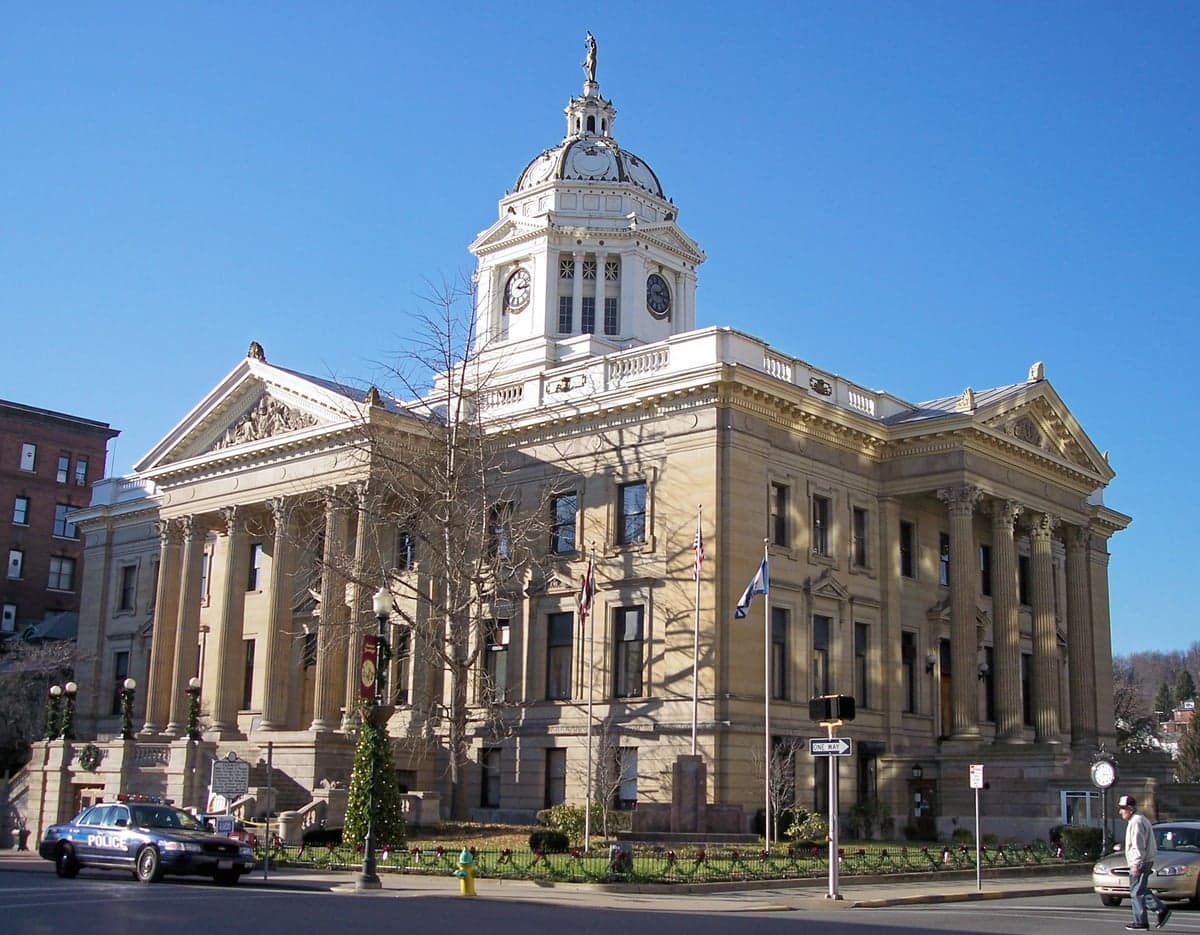
Photo: Wikipedia
Quality of Life in Marion County
A livable area that tracks near national norms for affordability, walkability, and neighborhood health.
What does Quality of Life tell us?
Quality of Life measures an area by evaluating factors like cost of living, nearby amenities, country club access, airport proximity, socioeconomic signals and neighborhood character. For large states, this is a general average — quality of life can vary dramatically between metro areas, suburbs, and rural communities within the same state.
What does this tell us?
Quality of Life measures an area by evaluating factors like cost of living, nearby amenities, country club access, airport proximity, socioeconomic signals and neighborhood character. For large states, this is a general average — quality of life can vary dramatically between metro areas, suburbs, and rural communities within the same state.
Cost of Living
30% below national average
144%
The Real Cost of Living in Marion County for 2026
| Tier | Individual | Family (4) |
|---|---|---|
| Survival | $14k | $27k |
| Comfortable | $32k | $47k |
| Luxury | $99k+ | $153k+ |
| Elite (Top 5%) | $116k+ | $180k+ |
Quality-of-Life Analysis
Marion County, West Virginia, offers a broad spectrum of living environments, from the walkable, historic core of Fairmont to the quiet, unincorporated hollows of the county’s rural southern and eastern reaches. The county’s character shifts noticeably within a 20-minute drive: one end of the spectrum draws professionals and students who want proximity to Fairmont State University and downtown amenities, while the other attracts those seeking acreage, privacy, and a slower pace of life in communities like Rivesville or Worthington. With a cost of living index of 70 (30% below the national average) and a median home value of $164,300, the county provides tangible financial breathing room across nearly all its sub-areas.
Largest town(s) & population centers
Fairmont is the county seat and by far the largest population center, home to roughly 18,000 residents and the anchor for most daily activity. Life here centers around the downtown historic district along the Monongahela River, Fairmont State University, and a compact grid of neighborhoods where the median rent of $901 is attainable for many. The town offers a genuine walkable core with local restaurants, the Marion County Public Library, and the Palatine Park amphitheater. Commuting patterns reflect Fairmont’s role as a bedroom community for Morgantown and Clarksburg: the average commute across the county is 24.8 minutes, with Fairmont residents often driving I-79 north to WVU or south to the FBI’s Criminal Justice Information Services complex. Pleasant Valley, a smaller incorporated town adjacent to Fairmont, functions as a quieter, more residential extension with slightly newer housing stock and direct access to the interstate.
Smaller towns & rural pockets
South of Fairmont, Rivesville (population roughly 900) sits along the Monongahela River and offers a distinctly small-town feel with a handful of local businesses and a strong sense of community identity. Further east, Worthington and Farmington are classic West Virginia coal-camp towns that have transitioned into quiet residential hamlets; Farmington is notable for its proximity to the Tygart Valley River and the sprawling Valley Falls State Park, a major recreational draw for the entire county. The unincorporated area of White Hall, just south of Fairmont, has seen modest suburban infill but remains largely rural in character, with scattered homes on larger lots. Barrackville, with its iconic covered bridge, is another small community where life revolves around local churches, volunteer fire departments, and the rhythms of the surrounding farmland. These smaller pockets generally lack commercial services beyond a convenience store or gas station, meaning most errands require a drive into Fairmont.
Cost & lifestyle range
The cost-of-life spread across Marion County is real but not extreme. At the higher end, Fairmont’s East Side and parts of Pleasant Valley command home values above the county median of $164,300, with well-maintained historic homes and newer subdivisions often listing between $200,000 and $300,000. Renters in these areas pay closer to the county median of $901, though downtown Fairmont apartments near the university can push slightly higher. At the lower end, Rivesville and Farmington offer home values frequently below $120,000, and rental options in these areas are scarce but often below $700 per month. The trade-off is clear: lower-cost areas trade away retail density, restaurant variety, and walkability for space and quiet. White Hall and Barrackville sit in the middle, with home values near the county average and commute times that are only a few minutes longer than Fairmont’s. Across the board, property taxes remain low by national standards, and the absence of a county sales tax on groceries keeps everyday costs manageable.
Marion County best suits people who want a genuine low-cost base in Appalachia without total isolation. Professionals commuting to Morgantown or Clarksburg find the 25-minute drive acceptable for the housing savings. Families and retirees who prioritize space over nightlife thrive in the smaller towns and rural pockets, while students and university staff gravitate toward Fairmont’s walkable core. The county’s diversity of settings — from a functioning small city to deep river-valley hollows — means the right fit depends almost entirely on how much daily driving one is willing to trade for square footage and quiet.

Crime in Marion County
Generally safer than 69% of comparable U.S. locations.
Violent CrimeViolent Crime Analysis
Property CrimeProperty Crime Analysis
Crime Analysis
Marion County, West Virginia, reports a violent crime rate of 220 incidents per 100,000 residents and a property crime rate of 923 per 100,000, placing it slightly below the national average for violent offenses but above the state median for property crime. The county’s safety picture is shaped by its mix of small industrial towns and rural stretches, with the city of Fairmont—the county seat and largest population center—concentrating a disproportionate share of reported incidents. Residents in outlying communities such as Mannington, Pleasant Valley, and Rivesville generally experience lower crime volumes, though property theft remains a concern countywide.
Crime in context
Marion County’s violent crime rate of 220 per 100,000 is about 37% lower than the national average of roughly 380 per 100,000 and sits near the middle of West Virginia’s 55 counties. By comparison, neighboring Monongalia County (home to Morgantown) posts a higher violent rate near 260 per 100,000, while more rural counties like Taylor and Harrison report rates closer to 180. Property crime in Marion County, at 923 per 100,000, exceeds the West Virginia state average of approximately 850 per 100,000 but remains well below the national figure of 1,954 per 100,000. Larceny-theft accounts for the bulk of property offenses, with motor vehicle theft and burglary occurring at moderate levels. The county’s judicial system, overseen by the Marion County Prosecuting Attorney’s Office and the 16th Judicial Circuit, has maintained a generally conservative approach to sentencing, avoiding the progressive prosecutor policies seen in larger urban jurisdictions—a factor that local law enforcement credits with keeping violent recidivism in check.
What residents experience
Day-to-day safety in Marion County varies noticeably by location. Fairmont, with a population just over 18,000, sees the highest concentration of both violent and property crimes, particularly along the U.S. 250 corridor and near the Fairmont State University campus. Incidents of assault and drug-related offenses are the most common violent crimes, while vehicle break-ins and package thefts are frequent property complaints. In contrast, the smaller towns of Mannington (pop. ~2,000) and Pleasant Valley (pop. ~3,100) report far fewer violent incidents, though residents in Mannington have noted an uptick in copper theft and shed burglaries tied to scrap-metal prices. Rivesville and Barrackville, both unincorporated communities, experience minimal violent crime but share the county’s property-crime baseline. The Marion County Sheriff’s Office and Fairmont Police Department collaborate on targeted patrols in higher-crime blocks, and neighborhood watch groups are active in several subdivisions. Because the county lacks a large, progressive district attorney’s office—unlike jurisdictions in Pittsburgh or Washington, D.C., that have drawn criticism for lenient plea deals—offenders here face more consistent prosecution, which many residents view as a deterrent.
Neighborhood-level variation is most pronounced within Fairmont itself. The East Side and areas near the former Fairmont General Hospital have historically reported higher rates of drug-related crime, while the West End and newer subdivisions near White Hall remain quieter. Outside Fairmont, crime is largely opportunistic: unlocked vehicles and outbuildings are the primary targets. For those considering relocation, Pleasant Valley and the rural stretches between Fairmont and Mannington offer the lowest crime risk, though property owners should still invest in basic security measures. Overall, Marion County provides a moderate safety environment that benefits from a traditional judicial philosophy—a meaningful contrast to the rising crime trends observed in metro areas with progressive prosecutors.
* Values derived from national, state, county, city and local statistics and may differ in a specific area. Last updated: 2026-05-14T17:18:39.000Z
Narrative content on this page is AI-generated and may contain mistakes. Verify any details that matter before acting on them.
ReloMaps may earn a commission from affiliate links at no extra cost to you.

