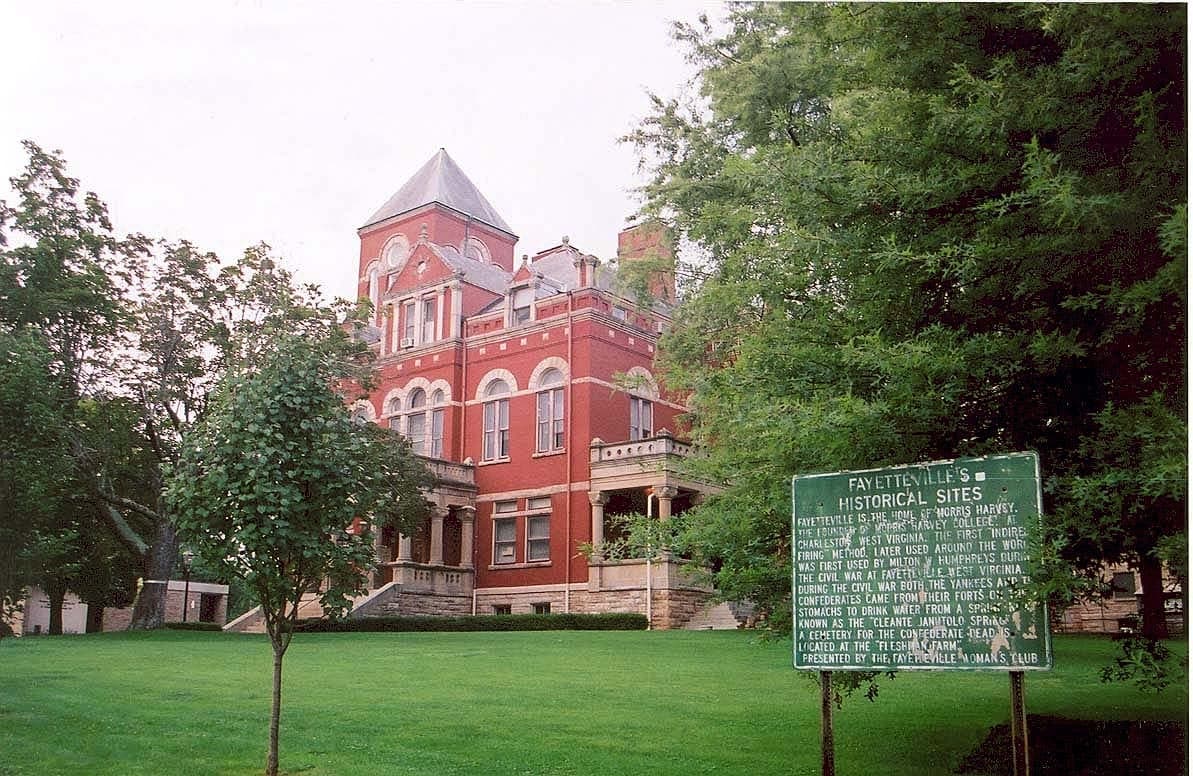
Photo: Wikipedia
Personal Sovereignty in Fayette County
Viable for self-reliance. Generally workable, though some barriers may limit total independence.
What does Personal Sovereignty tell us?
Personal Sovereignty measures your capacity for self-reliance and independence with minimal government friction. Higher scores mean fewer barriers between you and the way you want to live... but it assumes you have the space you need and good neighbors.
What does this tell us?
Personal Sovereignty measures your capacity for self-reliance and independence with minimal government friction. Higher scores mean fewer barriers between you and the way you want to live... but it assumes you have the space you need and good neighbors.
State Policy
Energy independence: Net exporter (200% of energy produced in-state)
Personal Liberty
Homesteading

Personal Liberty Analysis
Fayette County, West Virginia, offers a notably high degree of personal sovereignty, grounded in the state’s broad constitutional protections and a deeply ingrained culture of self-reliance. The county’s regulatory environment is light-touch relative to many parts of the country, with no county-level income tax and a property tax structure that is among the lowest in the nation. For individuals and families prioritizing autonomy over government involvement, the area presents a compelling balance of low taxes, strong gun rights, and practical opportunities for self-sufficient living, though the specific experience varies between the county’s small towns and more remote hollows.
Tax burden and regulatory posture in Fayette County
West Virginia’s tax structure is a key draw for those seeking fiscal sovereignty. There is no county or municipal income tax in Fayette County; the state income tax is a flat 4.12% as of 2026, down from a progressive rate in recent years. Property taxes are assessed on 60% of appraised value, with effective rates typically ranging from 0.5% to 0.8% of market value—among the lowest in the nation. The regulatory posture at the county level is generally permissive. The Fayette County Commission does not impose extensive zoning or building codes outside of incorporated towns. In unincorporated areas like Gauley Bridge or Lansing, property owners face minimal bureaucratic hurdles for construction, land use, or small-scale business operations. However, towns like Fayetteville and Oak Hill have more formal zoning ordinances and building permit requirements, particularly in historic districts or near the New River Gorge National Park. The county’s business licensing is straightforward, with no gross receipts tax, making it easier to operate a home-based enterprise or workshop without excessive paperwork.
Self-defense and gun law specifics in West Virginia
West Virginia is a constitutional carry state, meaning no permit is required to carry a concealed firearm for anyone legally allowed to possess one. Fayette County fully reflects this posture. The county sheriff’s office issues concealed carry permits for reciprocity purposes, but there is no requirement to obtain one for daily carry. Stand-your-ground laws are in effect, with no duty to retreat in any place where a person is lawfully present. The state also preempts local firearm ordinances, so towns like Montgomery or Ansted cannot enact their own restrictions beyond state law. Shooting ranges are common, and there are no county-level restrictions on firearm ownership, magazine capacity, or ammunition types. For hunters, the county offers abundant public land, including portions of the New River Gorge National Park and Preserve, where legal hunting is permitted in designated areas. The cultural attitude toward firearms is overwhelmingly supportive, with gun shops and shooting clubs operating openly in communities like Smithers and Mount Hope.
Self-reliance and homesteading viability in Fayette County
Fayette County is well-suited for homesteading and off-grid living, particularly outside its incorporated towns. Lot sizes in unincorporated areas are often one acre or larger, with many parcels available for under $5,000 per acre in remote parts of the county. Zoning is minimal or nonexistent in these areas, allowing for livestock, gardens, and alternative structures without county approval. Off-grid feasibility is high: many properties have access to well water, and solar energy is practical given the region’s moderate sun exposure. The county does not prohibit rainwater collection, composting toilets, or alternative energy systems. However, properties near the New River Gorge National Park, especially around Fayetteville, may face more scrutiny regarding building permits and environmental impact, as the park’s presence has led to some informal pressure on landowners to maintain aesthetic standards. In contrast, areas like Thurmond (largely a ghost town) and the rural stretches of Glen Jean offer near-total freedom for self-sufficient living, with no active code enforcement. The county’s agricultural extension office provides resources for small-scale farming, and the local soil is suitable for gardens and orchards with proper amendment.
Personal liberties: parental rights, medical autonomy, speech, and property
West Virginia law provides strong protections for parental rights, including the right to direct a child’s education, medical care, and religious upbringing. Homeschooling is straightforward, requiring only a simple notice of intent and a basic assessment, with no state-mandated curriculum or home visits. Fayette County has a robust homeschooling community, with support groups operating in Oak Hill and Fayetteville. Medical autonomy is generally respected, though the state does not have a specific medical freedom law comparable to some western states. Vaccine mandates are not enforced at the county level for adults, and religious exemptions are available for school requirements. Speech protections are strong under the state constitution, and there are no county-level restrictions on political expression or assembly. Property rights are well-protected, with no county-level rent control or landlord licensing schemes. Eminent domain is rarely used for private development, and the county’s tax sale process is transparent, with a two-year redemption period for delinquent properties. The overall legal environment favors individual decision-making over government intervention, particularly in rural areas where community norms reinforce self-reliance.
Compared to other regions in the United States, Fayette County ranks among the most sovereignty-friendly areas east of the Mississippi. The combination of constitutional carry, low property taxes, minimal zoning, and strong parental rights places it in the top tier for personal freedom. While towns like Fayetteville and Oak Hill have slightly more regulatory structure due to tourism and historic preservation, the vast majority of the county—especially the unincorporated hollows and former coal towns—offers a level of autonomy that rivals rural areas in the Mountain West. For a conservative-leaning individual or family seeking to maximize personal sovereignty without leaving the eastern time zone, Fayette County represents a strong, data-backed choice.

* Values derived from national, state, county, city and local statistics and may differ in a specific area. Last updated: 2026-06-15T16:20:23.000Z
Narrative content on this page is AI-generated and may contain mistakes. Verify any details that matter before acting on them.
ReloMaps may earn a commission from affiliate links at no extra cost to you.

