
Photo: Wikipedia
Personal Sovereignty in Cabell County
Strong independent fundamentals that actively favor personal liberty and low regulation.
What does Personal Sovereignty tell us?
Personal Sovereignty measures your capacity for self-reliance and independence with minimal government friction. Higher scores mean fewer barriers between you and the way you want to live... but it assumes you have the space you need and good neighbors.
What does this tell us?
Personal Sovereignty measures your capacity for self-reliance and independence with minimal government friction. Higher scores mean fewer barriers between you and the way you want to live... but it assumes you have the space you need and good neighbors.
State Policy
Energy independence: Net exporter (200% of energy produced in-state)
Personal Liberty
Homesteading

Personal Liberty Analysis
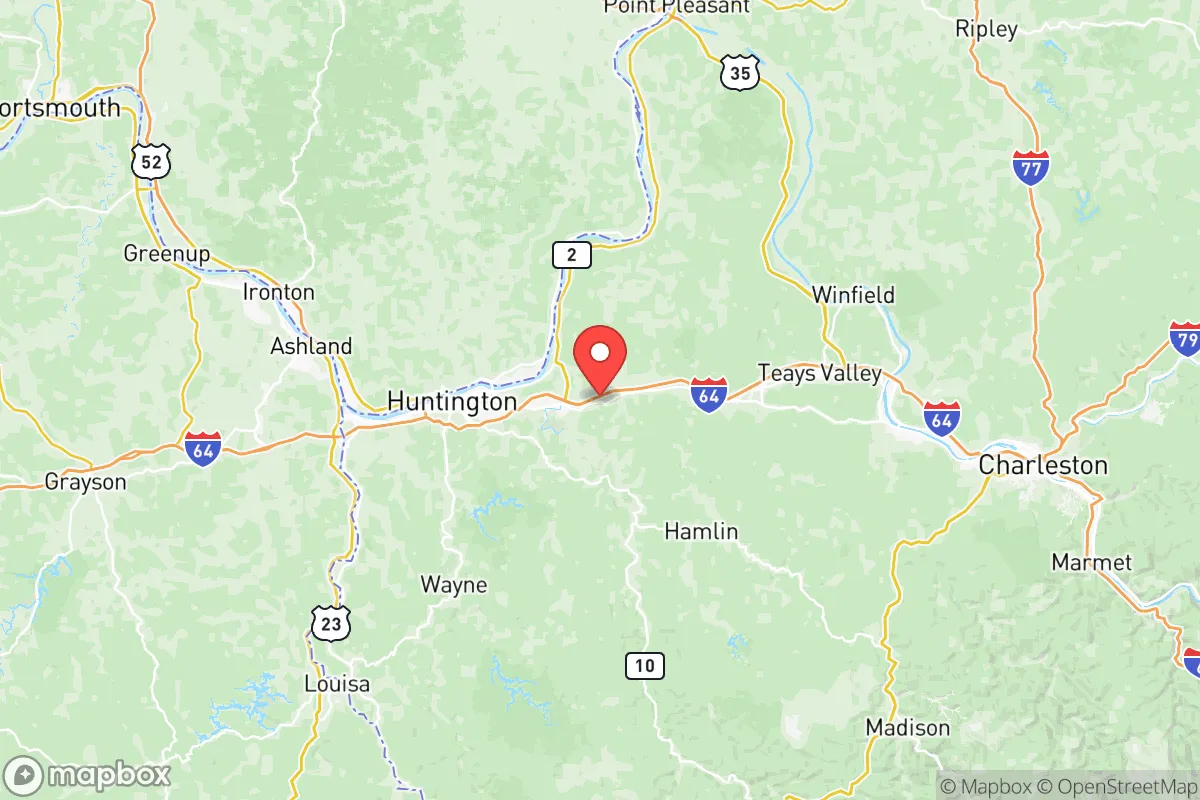
Cabell County, West Virginia, offers a notably high degree of personal sovereignty compared to much of the eastern United States, driven by the state’s historically libertarian-leaning legal framework and a local culture that prizes self-reliance. For individuals and families who prioritize autonomy over government oversight, the county presents a regulatory environment that is generally light-touch, particularly in areas of taxation, self-defense, and property use. While the county seat of Huntington provides urban amenities, the surrounding communities like Milton, Barboursville, and Lesage offer a markedly different, more independent lifestyle that aligns with conservative values of limited government and personal responsibility.
Tax burden and regulatory posture in Cabell County
West Virginia’s tax structure is among the most favorable in the nation for those seeking to minimize state-level interference in personal finances. The state has no personal property tax on vehicles or business inventory, and its income tax, following recent cuts, is now a flat 4.12% rate for most earners. In Cabell County specifically, property taxes are assessed at a low effective rate—typically around 0.5% to 0.7% of market value—because the state caps assessment increases and limits local levies. This means a home valued at $200,000 in Huntington might carry an annual tax bill of roughly $1,200, while a comparable property in Milton or Culloden could be even lower due to less frequent reassessments. The regulatory posture at the county level is similarly restrained. Cabell County does not impose its own building codes beyond basic state safety standards, and there is no county-wide zoning ordinance outside of Huntington’s city limits. This creates a permissive environment for property owners in unincorporated areas like Lesage or Salt Rock, where you can park an RV, keep livestock, or operate a home-based business without navigating a thicket of permits. The state’s right-to-work law and lack of a state-level minimum wage above the federal floor further reduce regulatory friction for small business owners and independent contractors.
Self-defense and gun law specifics in Cabell County
West Virginia is a constitutional carry state, meaning that as of 2024, any adult legally allowed to possess a firearm can carry it openly or concealed without a permit. Cabell County’s sheriff’s office, led by a pro-Second Amendment sheriff, issues concealed carry permits for reciprocity purposes, but they are not required for in-state carry. The state’s Stand Your Ground law, codified in West Virginia Code §55-7-22, eliminates any duty to retreat before using deadly force in self-defense, both inside and outside the home. This legal framework is actively supported by local gun culture. In Barboursville, the annual Gun & Knife Show at the Huntington Mall draws thousands, and shooting ranges like the Cabell County Gun Club near Milton are well-used. The county’s courts have a reputation for applying self-defense statutes broadly; prosecutors rarely charge lawful defensive shootings, and grand juries have consistently declined to indict in such cases. For residents, this means the legal risk of defending oneself or one’s family is minimal, provided the use of force is proportionate and justified. The only notable restriction is that firearms are prohibited in certain government buildings and schools, but even there, West Virginia law allows for secure storage in vehicles on school property, a provision that respects the right to carry while commuting.
Self-reliance and homesteading viability in Cabell County
The viability of a self-reliant lifestyle varies significantly across Cabell County, driven by differences in land use regulation and lot sizes. In unincorporated areas like Lesage and Salt Rock, where zoning is essentially nonexistent, residents can keep chickens, goats, and even larger livestock on parcels as small as one to two acres. The county’s agricultural extension office reports that over 60% of land in these rural pockets is classified as farmland or woodland, making it feasible to grow a substantial portion of one’s own food. Off-grid living is legally straightforward: West Virginia has no state law requiring connection to municipal water or sewer, and many homes in Culloden and Milton rely on private wells and septic systems. Solar panels are unregulated at the county level, and net metering is available through Appalachian Power, though the utility’s buyback rates are modest. In contrast, Huntington’s city limits impose stricter rules: the city requires building permits for most structural changes, and its zoning code restricts livestock to parcels over three acres in agricultural zones. Even so, the city’s urban homesteading movement has gained traction, with community gardens and backyard chicken coops permitted under specific conditions. For those seeking maximum autonomy, the rural fringes of the county—particularly along the Ohio River near Lesage—offer the best combination of low land costs (often under $5,000 per acre) and minimal regulatory oversight.
Personal liberties in Cabell County: parental rights, medical autonomy, speech, and property
West Virginia law provides strong protections for parental rights, including a statutory presumption that parents act in their child’s best interest in medical and educational decisions. Cabell County’s school board, which oversees districts in Barboursville and Milton, has adopted policies that allow parents to opt their children out of any curriculum they find objectionable, including sex education and certain health modules. The state’s medical autonomy landscape is mixed: while West Virginia has no vaccine mandate for adults, it does require certain immunizations for school attendance, though medical and religious exemptions are available and generally honored. The state’s 2023 law banning gender-affirming care for minors reflects a conservative approach to medical decision-making, aligning with the values of many in the county. Free speech protections are robust, with no county-level restrictions on political expression, and the local culture in Huntington and Barboursville supports open debate on contentious issues. Property rights are strongly defended: West Virginia’s “takings” law requires just compensation for any regulatory action that diminishes property value by more than 20%, and Cabell County’s planning commission rarely imposes conditions that would trigger such claims. The county’s assessor’s office is known for being responsive to property owners who challenge valuations, and the homestead exemption for seniors and disabled veterans is among the most generous in the state.
Overall, Cabell County ranks as one of the more sovereignty-friendly areas in the Appalachian region, offering a balance of low taxes, strong self-defense laws, and permissive land-use rules that appeal to those seeking independence from government overreach. While Huntington retains some urban regulatory features, the county’s rural communities—Milton, Lesage, Salt Rock, and Culloden—provide a legal and cultural environment where personal autonomy is the default, not the exception. For a conservative-leaning individual or family weighing relocation, Cabell County’s combination of constitutional carry, minimal zoning, and low property taxes places it in the top tier of U.S. counties for those who prioritize freedom over convenience.

* Values derived from national, state, county, city and local statistics and may differ in a specific area. Last updated: 2026-07-16T02:13:28.000Z
Narrative content on this page is AI-generated and may contain mistakes. Verify any details that matter before acting on them.
ReloMaps may earn a commission from affiliate links at no extra cost to you.

