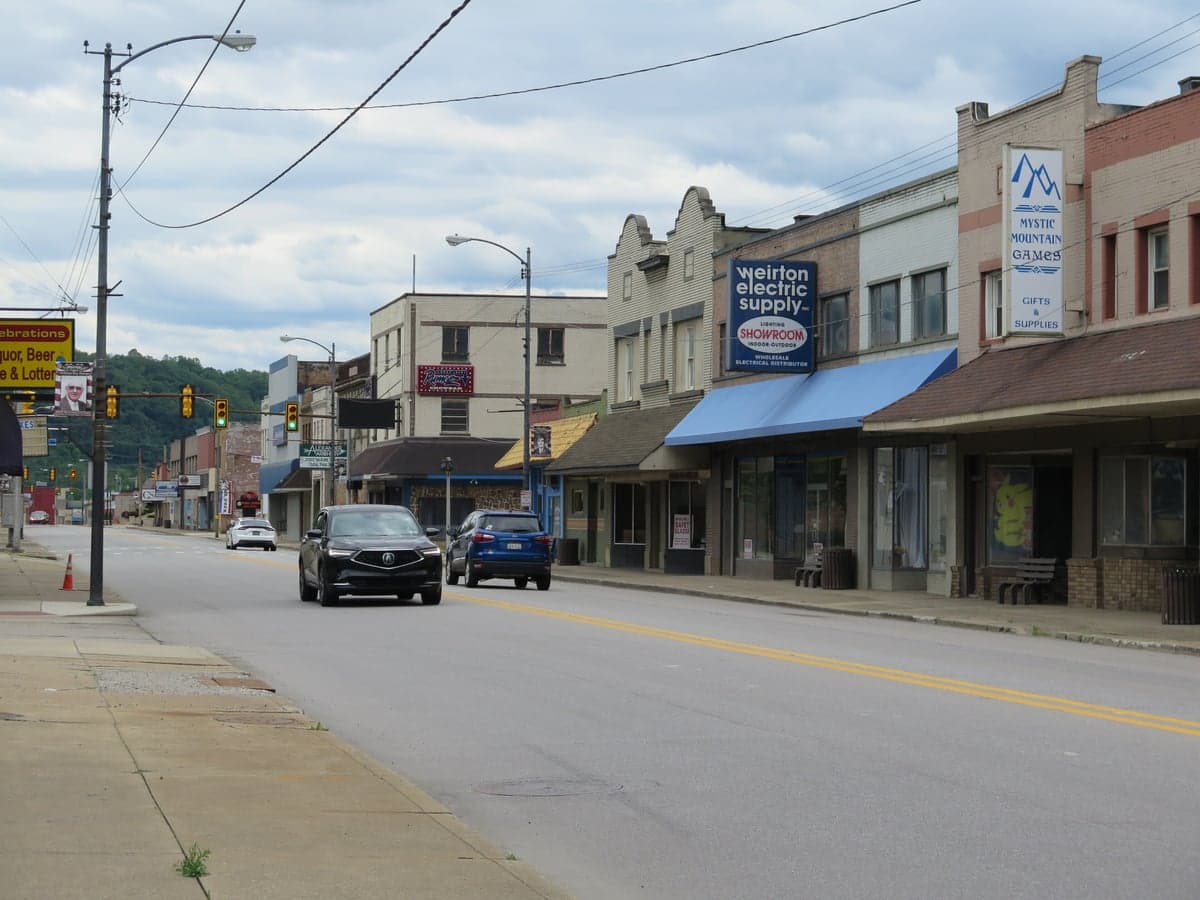
Photo: Wikipedia
Political ClimatePolitical Climate in Weirton, WV
District shown is the primary district for this city’s centroid. Cities may span multiple districts.
Local Political AnalysisPolitical Analysis of Weirton, WV
Weirton, West Virginia, has long been a rock-solid conservative stronghold, and that’s not changing anytime soon. With a Cook PVI of R+20, this town votes Republican by a wider margin than almost anywhere else in the Ohio Valley. I’ve lived here my whole life, and I can tell you—back in the 80s and 90s, this was a union Democrat town, but the shift started when folks realized the national party stopped caring about steelworkers and started pushing stuff that doesn’t fly around here. Now, it’s reliably red, and the trajectory is only getting more conservative as younger generations see what’s happening in places like Pittsburgh or Columbus and want no part of it.
How it compares
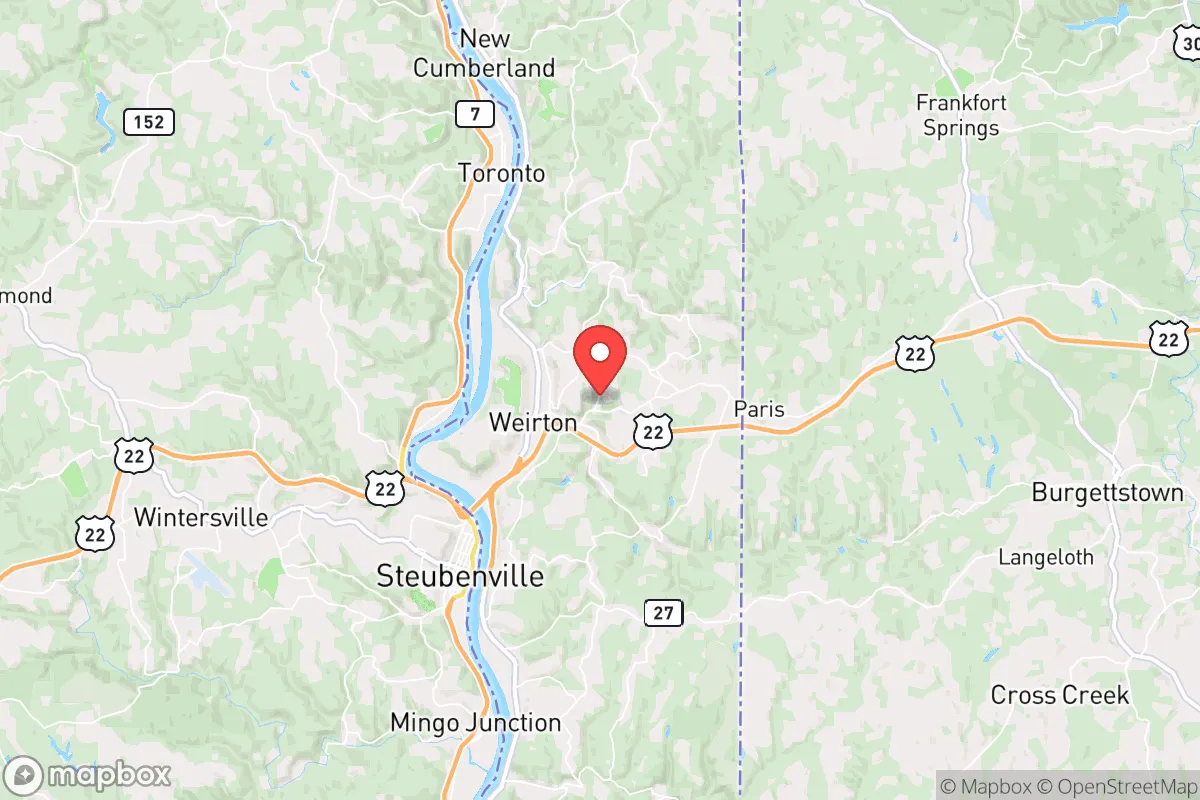
Weirton sits right on the Ohio border, and the contrast with nearby Steubenville, Ohio, is telling. Steubenville has drifted a bit more purple in recent years, with some progressive city council pushes on zoning and spending that have folks there grumbling. Head east toward Pittsburgh, and you’re in a whole different world—Allegheny County went blue by double digits in 2024, and you can feel the government overreach creeping in with mask mandates, business closures, and property tax hikes that never seem to end. Weirton, by contrast, stays grounded. Hancock County, which Weirton anchors, votes consistently red, and the surrounding towns like New Cumberland and Chester are cut from the same cloth. The only real contrast is south toward Wheeling, which has a slightly more moderate streak thanks to its university presence, but even there, the rural parts keep things balanced. Weirton’s political DNA is shaped by its working-class roots and a deep skepticism of anyone telling you how to live your life.
What this means for residents
For folks living here, the conservative tilt means a lighter touch from local government. Property taxes are low compared to Ohio or Pennsylvania, and there’s no appetite for the kind of progressive social experiments you see in bigger cities—no defund the police movements, no radical school curriculum changes, no heavy-handed business regulations. The city council and county commission are full of people who believe in personal responsibility and Second Amendment rights, and that’s reflected in how things run. You won’t find a mask mandate or a vaccine passport being debated here. The downside? Some folks worry that the area’s resistance to change can slow down economic development, but most residents would rather have freedom than a new coffee shop. The real concern is whether the state-level push from Charleston—where some moderate Republicans have flirted with tax increases and education reforms—will trickle down. So far, Weirton’s local leaders have held the line.
Culturally, Weirton stands apart from the progressive tide washing over much of the country. There’s a strong sense of community self-reliance here—neighbors help neighbors, and the idea of the government solving your problems is met with a raised eyebrow. The big policy distinction is on gun rights: West Virginia is a constitutional carry state, and Weirton residents take that seriously. You’ll see “Come and Take It” stickers on trucks, and the local sheriff’s office is openly pro-Second Amendment. Another distinction is the area’s stance on energy—coal and natural gas are still king, and any talk of a Green New Deal is laughed off. Looking ahead, the biggest threat I see is if national Democrats ever flip the state legislature, which could bring the kind of overreach we’ve watched ruin places like Portland or Seattle. But for now, Weirton remains a place where common sense and personal freedom still mean something. If you’re looking for a spot where the government stays out of your business, this is it.

State Political ClimatePolitical Climate in West Virginia
State Political AnalysisPolitical Environment in the State
West Virginia is one of the most reliably Republican states in the nation, with a partisan lean of roughly +30 to +35 points in federal elections, but that wasn't always the case. As recently as the 1990s, the state was a Democratic stronghold at the local level, voting for Bill Clinton twice and sending a heavily Democratic delegation to Congress. The shift began in earnest around 2000, accelerated during the Obama years over coal and energy policy, and has now solidified into a deep-red, culturally conservative consensus. Today, the dominant coalition is a mix of rural traditionalists, energy-sector workers, and an emerging class of remote workers and retirees fleeing blue states, all united by a suspicion of federal overreach and a desire for local control.
Urban vs. rural divide
The political map of West Virginia is starkly divided between a handful of small urban centers and the vast, deeply red rural countryside. The state's largest city, Charleston, and its surrounding Kanawha County have become a blue island in a red sea, voting Democratic in recent presidential elections by narrow margins due to a concentration of government workers, university faculty, and healthcare professionals. Morgantown, home to West Virginia University, is another liberal-leaning pocket, driven by the student population and academic staff, though it’s surrounded by reliably red Monongalia County. Huntington and Cabell County are more competitive but still lean Republican in statewide races. Meanwhile, the rural counties that make up the rest of the state—like Mingo, Logan, McDowell, and Wyoming in the southern coalfields—routinely deliver 70-80% of their votes to Republican candidates. The eastern panhandle, including Berkeley and Jefferson counties, has seen an influx of former Washington D.C. area residents, making it a purple-to-light-red zone that is more moderate on social issues but still fiscally conservative. The key takeaway: if you want to live in a deep-red environment, head to the small towns and rural areas; if you prefer a more mixed political atmosphere, stick to the college towns or the panhandle.
Policy environment
West Virginia’s policy environment is aggressively conservative, with a focus on reducing the footprint of state government. The state has no personal income tax on most wages—a major selling point for relocators—though it does have a flat 6.5% corporate net income tax and a 6% sales tax. Property taxes are among the lowest in the nation, capped by the state constitution at a fraction of market value. The regulatory posture is business-friendly, particularly for energy extraction, manufacturing, and outdoor recreation. Education policy has been a battleground: the state passed a school choice law in 2021 that created education savings accounts (ESAs) for all students, making it one of the most expansive programs in the country. This was a major win for parental rights advocates. Healthcare is a mixed bag—West Virginia expanded Medicaid under the Affordable Care Act, but the state legislature has resisted further federal health mandates and has passed laws restricting abortion to the first eight weeks, with no exceptions for rape or incest. Election laws are strict: voter ID is required, early voting is limited to 10 days, and no-excuse absentee voting is available. The state also passed a law in 2023 banning ranked-choice voting and requiring all ballots to be hand-counted in future elections, a move that has drawn both praise and criticism.
Trajectory & freedom
West Virginia is becoming more free in several key areas, particularly when it comes to gun rights, parental rights, and economic liberty. In 2023, the state enacted constitutional carry, allowing any adult who can legally possess a firearm to carry it openly or concealed without a permit. The same year, the legislature passed a Parents’ Bill of Rights, requiring schools to notify parents of any changes to a student’s health or well-being and to obtain parental consent before administering any medical or psychological services. On the medical autonomy front, West Virginia has one of the strictest abortion bans in the country, but it also passed a law in 2024 protecting doctors who prescribe ivermectin or hydroxychloroquine for off-label use from professional discipline—a direct response to COVID-era mandates. Property rights are strong, with no statewide zoning in most rural areas and a right-to-farm law that shields agricultural operations from nuisance lawsuits. However, there are concerning trends: the state has seen a push for more centralized control over local school boards, and some residents worry about the influence of federal dollars in areas like broadband expansion and infrastructure. The biggest threat to freedom remains the state’s heavy reliance on federal transfer payments, which account for roughly 40% of the state budget—a vulnerability that could be exploited by future administrations.
Civil unrest & political movements
West Virginia has a history of labor activism, but in recent years, political movements have shifted toward conservative populism and anti-establishment sentiment. The 2018 teachers’ strike, which shut down schools across the state for nine days, was a rare moment of left-leaning civil unrest, but it was driven more by frustration with low pay and underfunded pensions than by progressive ideology. Since then, the dominant grassroots energy has been on the right: the 2020 and 2022 election cycles saw a surge in “election integrity” activists, many of whom successfully pushed for the hand-counting law and stricter voter ID rules. There have been no major protests or riots in the state in recent years, and the immigration debate is largely theoretical—West Virginia has one of the smallest foreign-born populations in the country, and there are no sanctuary cities. The most visible flashpoint for a new resident would be the culture war over public school curriculum, with frequent school board meetings in places like Berkeley County and Kanawha County drawing large crowds over critical race theory, LGBTQ+ materials, and mask mandates. The state also has a small but vocal secessionist movement in the eastern panhandle, where some residents have floated the idea of joining Maryland or Virginia over frustrations with state-level policies on roads and education funding—though this remains a fringe idea.
Projection
Over the next 5-10 years, West Virginia is likely to become even more conservative, but with a growing tension between the old-guard rural populists and the new wave of remote workers and retirees from blue states. The in-migration pattern is already shifting: Jefferson County in the eastern panhandle is growing fast, bringing in people who are fiscally conservative but socially moderate, which could soften the state’s hardline stance on issues like marijuana legalization (still illegal for recreational use) and gambling expansion. Meanwhile, the southern coalfields continue to lose population, which will further concentrate political power in the northern and eastern parts of the state. The biggest wildcard is the state’s fiscal health: if federal transfer payments are cut or restructured, West Virginia could face a budget crisis that forces tax increases or service cuts, which would test the state’s commitment to small government. Expect continued battles over school choice, gun rights, and medical freedom, with the legislature likely to pass additional protections for religious liberty and parental authority. For someone moving in now, the state will feel very free and stable for the next decade, but keep an eye on the panhandle—that’s where the political future of West Virginia is being written.
For a conservative-leaning individual or family, West Virginia offers a rare combination of low taxes, strong gun rights, parental control in education, and a culture that values self-reliance. The trade-offs are real: limited economic opportunity outside of energy and healthcare, a struggling infrastructure in rural areas, and a political environment that can feel insular. If you’re looking for a place where your values are the norm and the government mostly stays out of your life, West Virginia is one of the best bets in the country. Just be prepared for a slower pace, fewer amenities, and a community that will expect you to pull your own weight.
* Values derived from national, state, county, city and local statistics and may differ in a specific area. Last updated: 2026-05-02T02:24:03.000Z
Narrative content on this page is AI-generated and may contain mistakes. Verify any details that matter before acting on them.
ReloMaps may earn a commission from affiliate links at no extra cost to you.

