Photo: Wikipedia
Political ClimatePolitical Climate in Yakima County
Showing district-level results — no local-only data available.
Local Political AnalysisPolitical Analysis of Yakima County
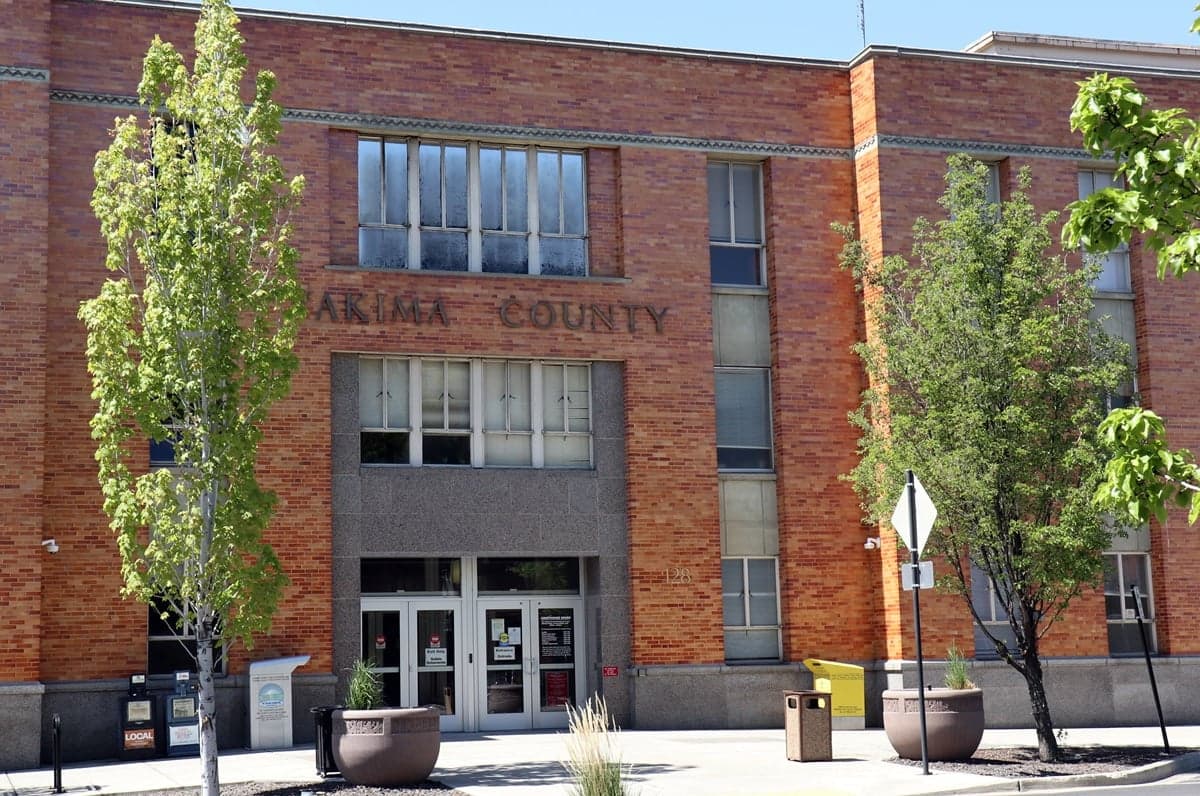
Yakima County is a solidly Republican stronghold in Washington state, with a Cook Partisan Voting Index of R+10, meaning it votes about ten points more Republican than the national average. This isn't a recent shift; the county has been reliably red for decades, though the margins have tightened slightly in presidential elections as the city of Yakima itself has grown more diverse and Democratic-leaning. The real story here is the stark urban-rural divide within the county, where the agricultural valleys and small towns vote overwhelmingly Republican while the core of Yakima city has become a genuine battleground.
How it compares
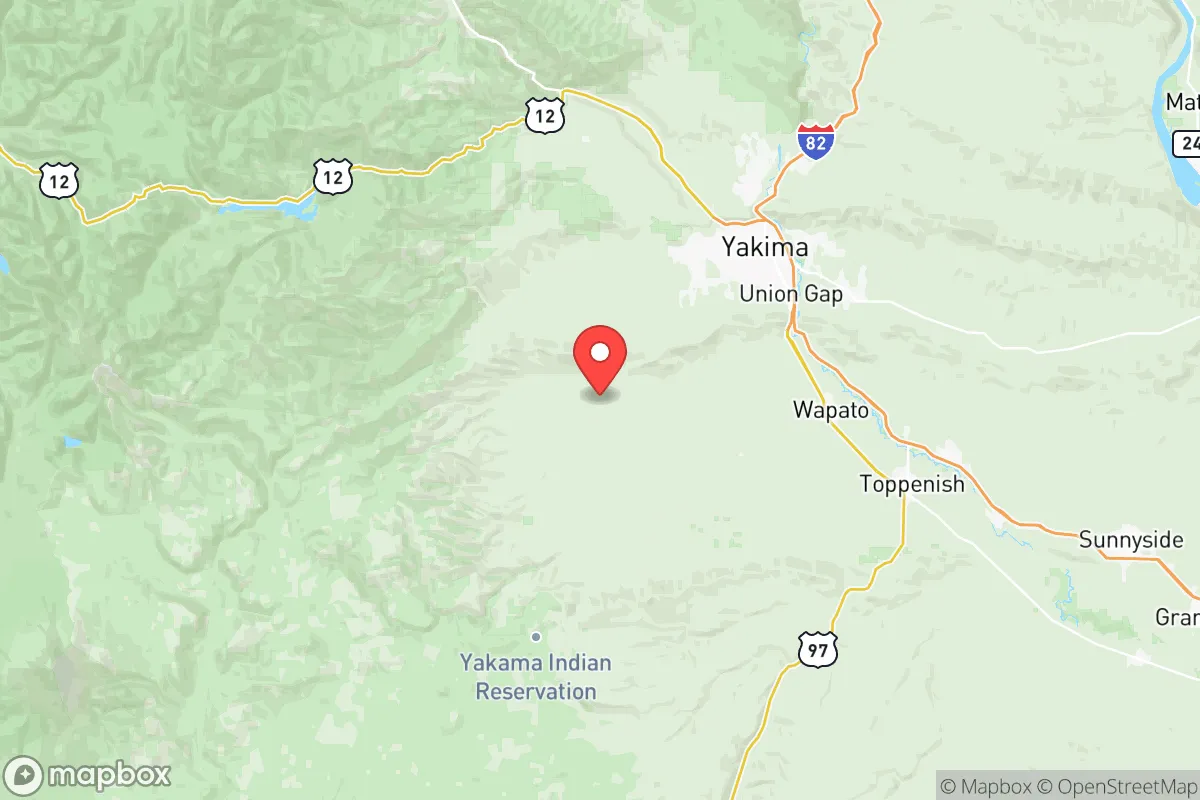
Compared to Washington state as a whole, which leans Democratic by roughly 8-10 points in statewide elections, Yakima County is a political outlier. The contrast is dramatic: while King County (Seattle) and the Puget Sound region drive the state's blue tilt, Yakima County consistently delivers some of the highest Republican vote shares east of the Cascades. Within the county itself, the political geography is anything but uniform. The city of Yakima has precincts that vote Democratic, particularly in the central and south-central neighborhoods with large Latino populations, while the suburban fringe and bedroom communities like West Valley and Terrace Heights lean Republican. The smaller towns tell a clearer story: Toppenish, Wapato, and Granger are heavily Latino and reliably Democratic, while Selah, Naches, and Tieton are deeply conservative. The swing precincts are mostly in the unincorporated areas around Moxee and along the I-82 corridor, where moderate voters often decide local races.
What this means for residents
For conservative residents, Yakima County offers a political environment where their views are the local norm. Republican candidates for county commission, sheriff, and state legislative seats typically win comfortably, and conservative values shape local policy on land use, taxation, and law enforcement. For liberal residents, the reality is more complicated. They are a clear minority in countywide elections, but they hold real influence in Yakima city council races and school board contests, particularly in the Yakima School District. The practical effect is that progressive residents often focus their energy on city-level issues—like housing policy, public transit, and police reform—where they can actually win, while accepting that county and state legislative seats will remain Republican for the foreseeable future.
Culturally, Yakima County feels more like inland Oregon or Idaho than coastal Washington. Gun rights are widely supported, religious institutions play a prominent role in community life, and there is a strong agricultural work ethic that shapes local politics. The most notable policy distinction is on land use and water rights: Yakima County has resisted state-level growth management mandates more aggressively than western Washington counties, and local officials frequently clash with the state Department of Ecology over irrigation and groundwater regulations. For anyone moving here, the political climate is straightforward: if you lean conservative, you'll feel at home in most of the county; if you lean liberal, you'll find your people in Yakima city proper, but you'll need to be comfortable being in the minority at the county level.

State Political ClimatePolitical Climate in Washington
State Political AnalysisPolitical Environment in the State
Washington State has been a reliably Democratic stronghold for over a decade, but its political reality is far more nuanced than a simple blue label. The state hasn't voted for a Republican presidential candidate since 1984, and Democrats control every statewide executive office and both legislative chambers. However, this dominance is almost entirely driven by the Seattle metro area, which has grown more populous and progressive with each cycle, while vast swaths of eastern and southwestern Washington have trended just as hard in the opposite direction. For a conservative-leaning relocator, the key takeaway is that Washington is a tale of two states: the urban crescent west of the Cascades and the rural, resource-driven east.
Urban vs. rural divide
The political map of Washington is a textbook example of the urban-rural split. King County, home to Seattle, casts roughly one-third of the state's total votes and consistently delivers margins of 70% or more for Democratic candidates. This single county is powerful enough to swing statewide elections on its own. Neighboring Snohomish and Pierce counties (home to Everett and Tacoma) have also shifted left in recent cycles, though Pierce retains a more mixed character. Across the Cascade Range, the dynamic flips entirely. Spokane County, the state's second-most populous, is a competitive battleground that has leaned red in recent cycles, while the rural counties of the Columbia Basin — Grant, Adams, and Yakima — vote Republican by wide margins. The most dramatic shift has been in Clark County (Vancouver), just across the river from Portland. Once a reliably red suburb, Clark County has flipped to a narrow Democratic lean as Portland's housing crisis pushed moderate and liberal families north. For a conservative moving to Washington, the practical choice often comes down to the eastern side of the state — Spokane, the Tri-Cities (Kennewick, Pasco, Richland), or smaller towns like Wenatchee and Walla Walla — where the political culture is more aligned with Idaho or Montana than with Seattle.
Policy environment
Washington's policy environment is defined by a few structural features that matter deeply to relocators. The state has no personal income tax, which is a major draw for high earners and business owners, but it compensates with some of the highest sales tax rates in the country — typically 8-10% depending on the locality — and above-average property taxes. The regulatory posture is generally business-friendly in the tech and manufacturing sectors, but the state has aggressive environmental and labor regulations, including a minimum wage that is among the highest in the nation (indexed to inflation, currently over $16 per hour). Education policy is mixed: Washington spends above the national average per pupil, but outcomes vary wildly by district, with Seattle-area schools performing well and rural districts struggling. Healthcare is heavily regulated, and the state operates its own health insurance exchange under the Affordable Care Act. Election laws are among the most accessible in the country: all elections are conducted by mail-in ballot, with ballots automatically sent to every registered voter. Voter registration is same-day and online, and turnout consistently ranks among the highest nationally.
Recent policy direction
The last five years have seen Washington's legislature move aggressively on a range of issues that a conservative relocator would want to weigh carefully. On gun policy, the state has passed some of the nation's strictest laws: a ban on certain semi-automatic firearms (the 2023 ban on "assault weapons"), a 10-day waiting period for all firearm purchases, a requirement for safe storage, and a ban on magazines holding more than ten rounds. Self-defense law is governed by a "reasonable belief" standard rather than a "stand your ground" statute, and the state does not recognize concealed carry reciprocity from most other states. On education and parental rights, the state has moved in the opposite direction from many red states: it prohibits schools from notifying parents when a child changes their gender identity or pronouns, and it mandates inclusive curriculum standards that cover LGBTQ+ history. On privacy and surveillance, Washington has strong biometric privacy protections and a strict data breach notification law, but it also allows warrantless surveillance in certain public safety contexts. Medical and bodily autonomy is broadly protected: abortion is legal without restriction up to viability, and the state has a "shield law" protecting providers who serve patients from states with bans. Property rights are constrained by the state's Growth Management Act, which limits development in rural areas and requires cities to plan for density. On taxes, the state recently enacted a capital gains tax on high earners (over $250,000 in gains), which is being challenged in court but is currently in effect. Ballot access remains wide open, with no voter ID requirement beyond a signature match, which has become a flashpoint for election integrity concerns among conservative voters.
Civil unrest & political movements
Washington has a visible and active protest culture, particularly in Seattle, which was the epicenter of the 2020 CHOP/CHAZ occupation — a several-block area in the Capitol Hill neighborhood that was taken over by protesters for weeks, drawing national attention and criticism. Since then, organized activist movements on both sides have become more entrenched. On the left, groups like the Seattle Democratic Socialists of America have real influence in local politics, and the state's sanctuary policies — which limit cooperation between local law enforcement and federal immigration authorities — are among the strongest in the country. On the right, the Washington State Republican Party has shifted further right in response, and there are active "constitutional sheriff" movements in several rural counties. Election integrity has been a persistent controversy: after the 2020 and 2022 elections, conservative activists raised concerns about the state's all-mail voting system, and a few counties saw protests at ballot counting centers. Secession rhetoric flares up periodically — the "Liberty State" movement in eastern Washington has proposed splitting the state along the Cascade crest, though it remains a fringe idea with no realistic path. For a new resident, the most visible flashpoint is likely the contrast between Seattle's street-level activism and the quiet, conservative culture of towns like Spokane Valley or Moses Lake.
Projection
Over the next five to ten years, Washington's political trajectory points toward continued Democratic dominance at the state level, but with growing internal tension. Demographic trends favor the left: the Seattle metro area continues to grow, and in-migration from California and Oregon tends to reinforce the state's progressive lean. However, there are signs of a counter-movement. The pandemic-era migration to smaller cities like Spokane and the Tri-Cities has brought new residents who are often more moderate or conservative, and these areas are growing faster than Seattle proper. The state's housing crisis — driven by the Growth Management Act and local zoning — is pushing families out of King County and into more affordable, politically mixed suburbs and exurbs. This could slowly shift the balance in places like Pierce and Clark counties. But the structural advantage for Democrats is hard to overcome: the state's mail-in voting system and high turnout favor the party that dominates the urban core, and the state legislature's redistricting process has been relatively stable. A conservative moving to Washington now should expect to live under a Democratic-controlled state government for the foreseeable future, with the practical impact varying dramatically depending on whether they settle in Spokane or Seattle.
For a conservative relocator, the bottom line is that Washington offers a high quality of life in many respects — no income tax, strong job market, beautiful geography — but it comes with a policy environment that is increasingly at odds with conservative values on guns, education, and parental rights. The key is location: choosing a city like Spokane, the Tri-Cities, or even parts of Pierce County can give you a community that feels politically comfortable while still allowing access to the state's economic and natural advantages. Just don't expect the state government to reflect your values anytime soon.
* Values derived from national, state, county, city and local statistics and may differ in a specific area. Last updated: 2026-06-22T19:01:04.000Z
Narrative content on this page is AI-generated and may contain mistakes. Verify any details that matter before acting on them.
ReloMaps may earn a commission from affiliate links at no extra cost to you.

