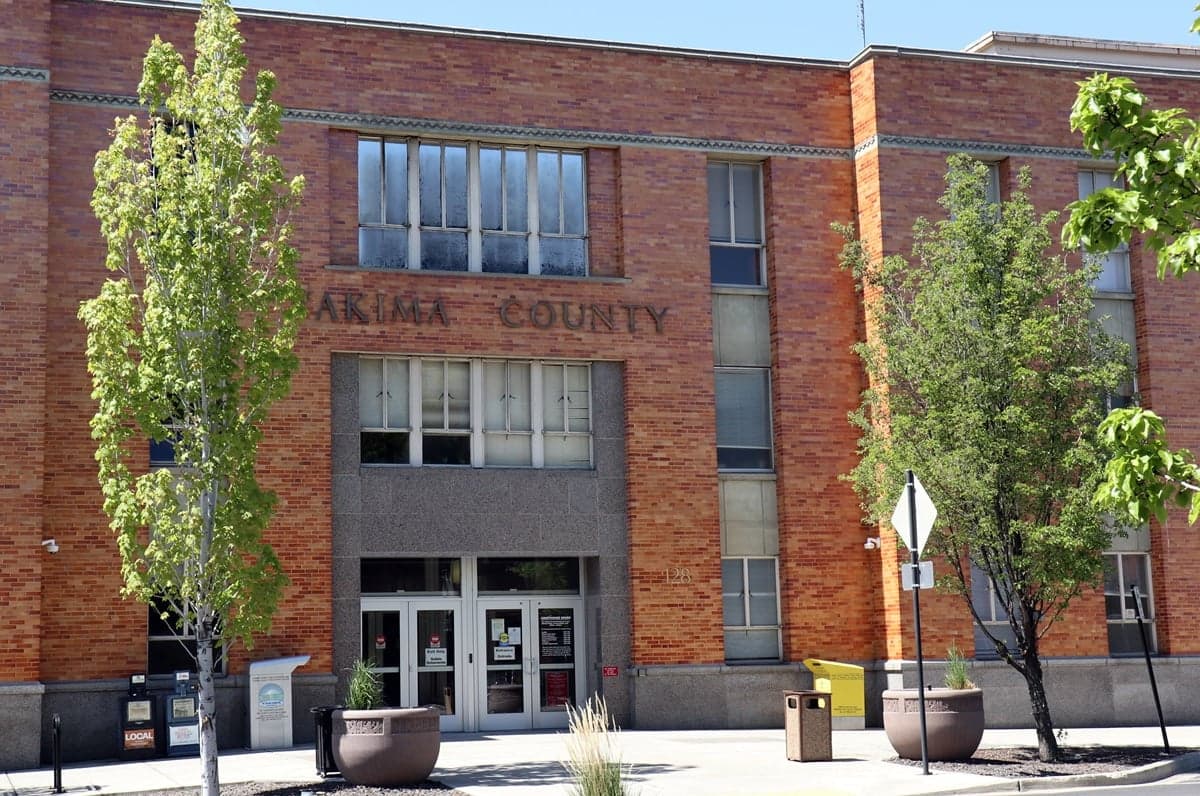
Photo: Wikipedia
Personal Sovereignty in Yakima County
Viable for self-reliance. Generally workable, though some barriers may limit total independence.
What does Personal Sovereignty tell us?
Personal Sovereignty measures your capacity for self-reliance and independence with minimal government friction. Higher scores mean fewer barriers between you and the way you want to live... but it assumes you have the space you need and good neighbors.
What does this tell us?
Personal Sovereignty measures your capacity for self-reliance and independence with minimal government friction. Higher scores mean fewer barriers between you and the way you want to live... but it assumes you have the space you need and good neighbors.
State Policy
Energy independence: Importer (55% of energy produced in-state)
Personal Liberty
Homesteading

Personal Liberty Analysis
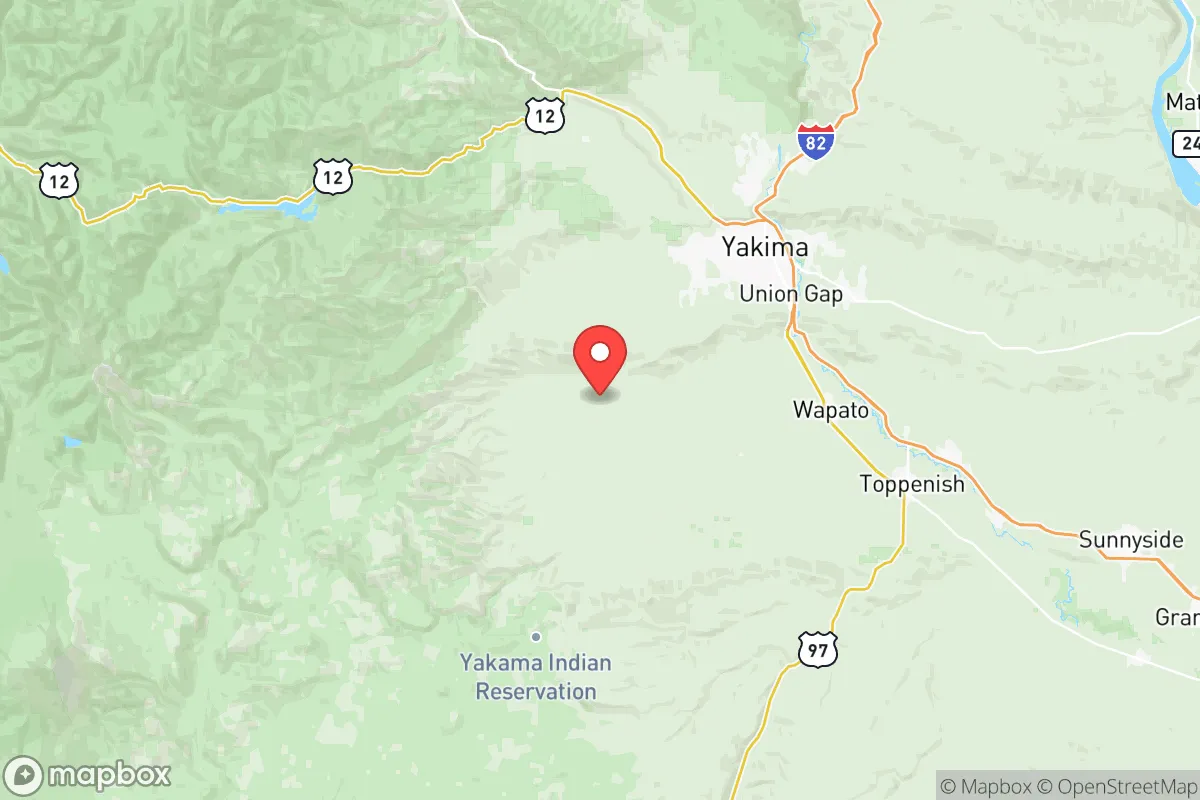
Yakima County offers a notably higher degree of personal sovereignty than Washington's urban core, with a regulatory environment that balances state-level mandates against a deeply rooted local culture of self-reliance. The county's political geography is not monolithic; the city of Yakima itself leans more moderate, while outlying communities like Naches, Tieton, and the rural stretches near Toppenish and Sunnyside operate with a far lighter touch from local government. For a relocation-minded individual or family prioritizing autonomy, the key variables are tax burden, firearm laws, land-use flexibility, and the practical latitude for off-grid living — and each varies significantly depending on whether you settle inside city limits or on unincorporated county land.
Tax burden and regulatory posture: how Yakima County compares to the rest of Washington
Washington State has no personal income tax, which is a structural advantage for sovereignty-minded residents, but it levies a state sales tax of 6.5% that climbs to roughly 8.9% in Yakima city and around 8.4% in most unincorporated areas after local add-ons. Property taxes in Yakima County are moderate by state standards, with an effective rate near 1.0% of assessed value — significantly lower than King County's 0.9% average only because home values are far lower. The regulatory posture from Yakima County government is generally permissive on land use and business licensing, especially compared to the Puget Sound region. The county's building and planning department processes permits with fewer layers of environmental review than jurisdictions west of the Cascades. However, the Washington State Growth Management Act imposes county-wide planning requirements that limit sprawling development in designated agricultural zones, which affects landowners near Zillah and Granger who want to subdivide. For a small-scale farmer or home-based business operator, the county's business license fee is a flat $50 annually, and home occupation permits are routinely approved for low-impact operations like consulting, craft production, or online retail. The overall tax and regulatory environment is best described as moderately light — not a zero-regulation haven, but far less intrusive than Seattle or Portland.
Self-defense and gun law specifics: what the Second Amendment landscape looks like in Yakima County
Washington State has moved left on firearms policy in recent years, passing Initiative 1639 (2018) which raised the purchase age for semi-automatic rifles to 21 and mandated enhanced background checks, and the 2023 ban on certain magazines over ten rounds. These state-level restrictions apply uniformly across Yakima County, but local enforcement culture and political will differ sharply by jurisdiction. The Yakima County Sheriff's Office, led by an elected sheriff who publicly supports Second Amendment rights, is known for a restrained approach to enforcement of state gun laws — deputies generally do not proactively seek out magazine capacity violations. In contrast, the Yakima Police Department operates under city council direction that has been more aligned with state mandates. For concealed carry, Washington is a shall-issue state, and Yakima County's sheriff's office processes applications efficiently, with typical turnaround under 30 days. Open carry is legal without a permit statewide, and it is a common sight in rural areas around Naches and the Upper Valley. There is no county-level gun registry or additional local ordinance restricting firearms. For a resident who prioritizes self-defense, the practical reality is that Yakima County offers a gun-friendly culture and a sheriff's office that does not treat legal gun owners as a priority enforcement target, even as state law becomes more restrictive. The key distinction is between living inside Yakima city limits, where police are more likely to enforce state magazine bans, versus unincorporated areas where the sheriff's office takes a hands-off posture.
Self-reliance and homesteading viability: lot sizes, zoning, and off-grid feasibility
Yakima County is one of Washington's most viable locations for homesteading and off-grid living, thanks to large tracts of unincorporated land, permissive zoning, and a semi-arid climate that reduces some of the moisture-related building challenges found west of the Cascades. Minimum lot sizes in the county's agricultural zone (AG-1) are 20 acres, but rural residential zones allow parcels as small as one acre with a single-family dwelling. Areas near Tieton and the Naches River valley offer affordable land — raw parcels under $10,000 per acre are still common — and the county does not require a building permit for accessory structures under 200 square feet. Off-grid utilities are legally feasible: rainwater catchment is permitted for outdoor use, though a well permit from the Washington Department of Ecology is required for domestic water, and the county allows composting toilets with a approved system design. Solar panels face no county-level restriction, and net metering is available through the local public utility district, though battery storage is more common among self-reliance-minded residents. The county's zoning code does not prohibit tiny homes on wheels if they are classified as recreational vehicles, but permanent occupancy requires a foundation-built structure meeting state building codes. For a family seeking to raise livestock, the county allows up to four chickens per acre without a permit, and larger operations require a simple animal unit calculation. The towns of Naches and Cowiche are particularly popular with homesteaders because of their proximity to national forest land and a local culture that tolerates non-standard housing arrangements. Overall, Yakima County ranks among the top five counties in Washington for practical homesteading feasibility, behind only Ferry and Stevens counties in the northeast.
Personal liberties: parental rights, medical autonomy, speech, and property
Yakima County's political culture supports a broad interpretation of personal liberties, particularly in areas where state law leaves room for local discretion. Parental rights in education have been a flashpoint in the Yakima School District, where school board meetings have seen heated debates over curriculum transparency and library materials; the current board majority leans conservative and has adopted policies requiring parental notification for any changes to a student's gender identity or health records. Medical autonomy is constrained by state law — Washington mandates vaccination for school attendance and has a physician-assisted suicide law — but the county has a robust network of independent healthcare providers, including naturopathic doctors and direct-primary-care clinics that operate outside insurance networks. Freedom of speech is protected under the First Amendment, and Yakima County has not enacted any local ordinances restricting public protest or expressive conduct beyond state traffic laws. Property rights are generally strong: the county's zoning code allows for a wide range of uses on rural land, and the assessment process for property taxes is transparent, with an appeal rate that favors landowners in roughly 60% of contested cases. The most significant constraint on personal liberty in Yakima County is the state's land-use framework, which limits subdivision of agricultural land and imposes buffer requirements near waterways. For a resident who values the ability to control their children's education, choose their own medical treatments, speak freely, and use their property without excessive interference, Yakima County offers a substantially more permissive environment than Washington's urban counties, though it operates within the boundaries of state law.
For the relocation-minded individual or family who prioritizes personal sovereignty, Yakima County represents a strong middle ground — not a libertarian enclave like parts of Idaho or Montana, but far more accommodating than the Seattle metropolitan area. The county's tax burden is moderate, its gun culture is robust despite state restrictions, its homesteading potential is among the best in Washington, and its local governance tends toward restraint rather than overreach. The practical advice for a prospective resident is to choose unincorporated land near Naches, Tieton, or Cowiche for maximum autonomy, and to be aware that living inside Yakima city limits or in the more densely populated Lower Valley towns like Sunnyside and Grandview means accepting tighter local ordinances and a more enforcement-oriented police presence. On balance, Yakima County delivers a level of personal freedom that is increasingly rare in the Pacific Northwest.

* Values derived from national, state, county, city and local statistics and may differ in a specific area. Last updated: 2026-06-22T19:01:04.000Z
Narrative content on this page is AI-generated and may contain mistakes. Verify any details that matter before acting on them.
ReloMaps may earn a commission from affiliate links at no extra cost to you.

