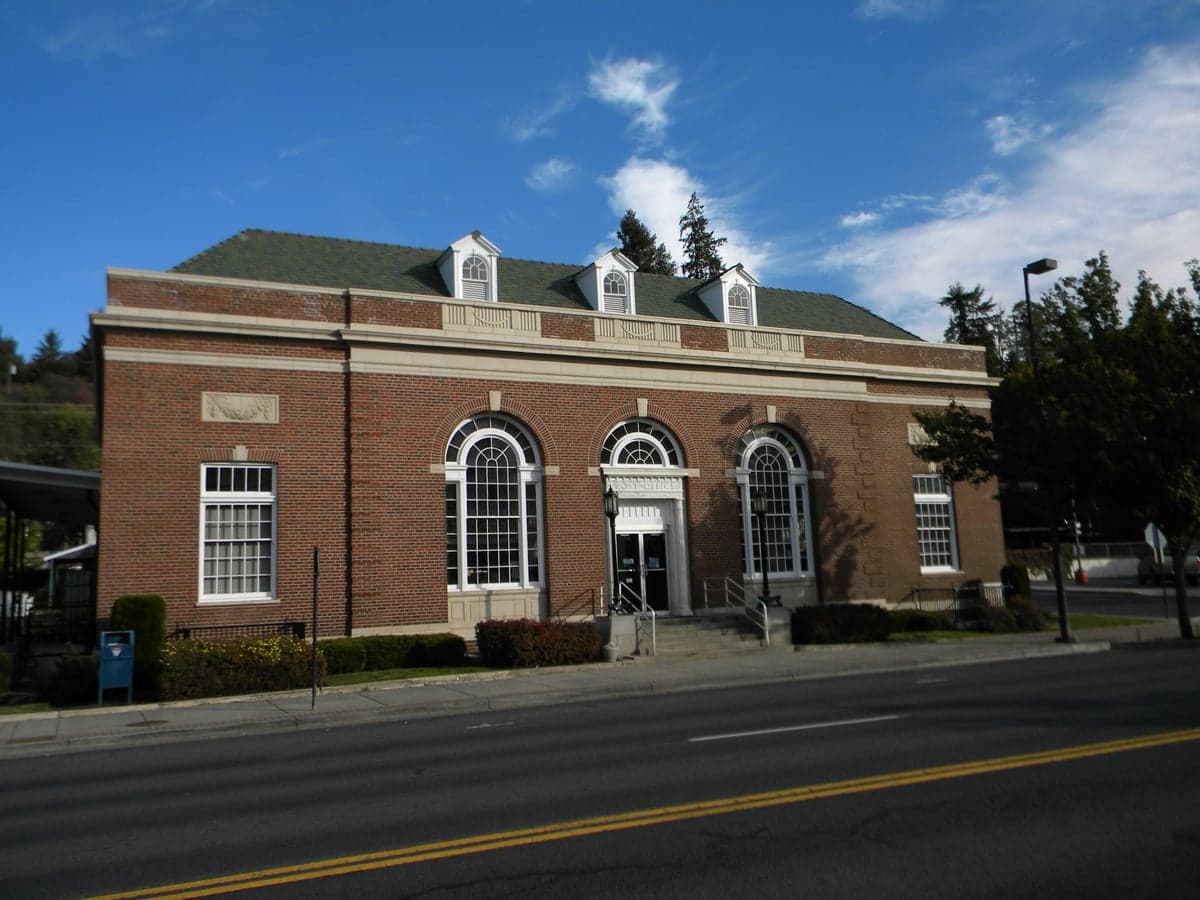
Photo: Wikipedia
Quality of Life in Whitman County
A livable area that tracks near national norms for affordability, walkability, and neighborhood health.
What does Quality of Life tell us?
Quality of Life measures an area by evaluating factors like cost of living, nearby amenities, country club access, airport proximity, socioeconomic signals and neighborhood character. For large states, this is a general average — quality of life can vary dramatically between metro areas, suburbs, and rural communities within the same state.
What does this tell us?
Quality of Life measures an area by evaluating factors like cost of living, nearby amenities, country club access, airport proximity, socioeconomic signals and neighborhood character. For large states, this is a general average — quality of life can vary dramatically between metro areas, suburbs, and rural communities within the same state.
Cost of Living
2% below national average
57%
The Real Cost of Living in Whitman County for 2026
| Tier | Individual | Family (4) |
|---|---|---|
| Survival | $16k | $30k |
| Comfortable | $63k | $92k |
| Luxury | $96k+ | $148k+ |
| Elite (Top 5%) | $136k+ | $211k+ |
Quality-of-Life Analysis
Whitman County, Washington, offers a distinct quality-of-life spectrum anchored by the college town of Pullman and stretching through agricultural service centers like Colfax to remote, unincorporated farming hamlets. The county’s character is defined by the Washington State University (WSU) presence in Pullman, which injects a youthful, transient energy, while the surrounding Palouse region attracts those seeking quiet, land-based living, lower costs, and a deeply rooted agricultural community. The range of options means a single county can accommodate a WSU professor, a wheat farmer, a remote tech worker, and a retiree, each finding a very different daily reality.
Largest town(s) & population centers
Pullman is the county’s undisputed hub, home to roughly 32,000 residents (swelling to over 40,000 during the academic year). Daily life here revolves around the WSU campus, with a walkable downtown along Main Street featuring coffee shops, bars, and restaurants that cater to students and faculty. The town has a strong sense of community during football games and events like the National Lentil Festival, but the rental market is tight and expensive relative to the rest of the county, with median rent at $1,002 — a figure that can feel higher when competing with student demand. Colfax, the county seat with about 2,800 people, is the second-largest population center. Life here is quieter and more government- and agriculture-focused, with the Whitman County Courthouse anchoring a compact, historic downtown. Colfax lacks Pullman’s nightlife but offers a slower pace, better access to outdoor recreation along the Palouse River, and a notably lower cost of living for homebuyers, with median home values around $250,000 compared to Pullman’s $323,300.
Smaller towns & rural pockets
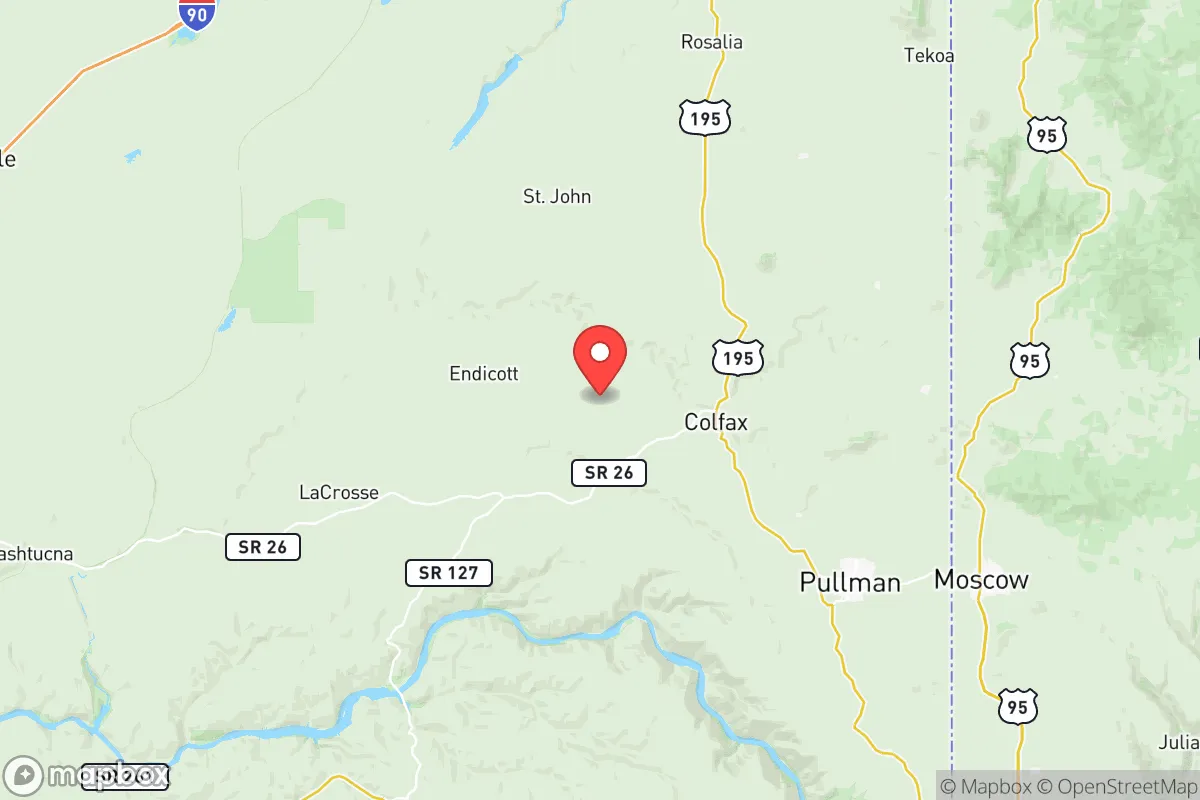
Beyond the two main towns, Whitman County is dotted with unincorporated communities and tiny towns that define the rural Palouse experience. Palouse (population ~1,000) is a classic grain-elevator town with a single main street, a historic hotel, and a strong sense of local identity centered on the Palouse River. Garfield (pop. ~600) and LaCrosse (pop. ~300) are even smaller, with a post office, a tavern, and a grain elevator as the primary social anchors. Oakesdale (pop. ~400) sits in the far north, near the Idaho border, and is known for its quiet, affordable housing stock. Endicott and St. John are unincorporated farming hamlets where residents often commute 20-30 minutes to Colfax or Pullman for groceries and schools. These areas offer true rural isolation, with homes on acreage often selling for under $200,000, but with limited services — no gas station, no grocery store, and often spotty cell service.
Cost & lifestyle range
The cost-of-living index for Whitman County sits at 98, slightly below the national average, but this masks a wide internal spread. At the low end, a buyer can purchase a fixer-upper home in LaCrosse or Garfield for under $150,000, with property taxes among the lowest in the state due to agricultural land-use designations. At the high end, Pullman’s newer subdivisions near the WSU golf course or the Sunnyside Park area see home values pushing $500,000-$600,000, driven by faculty demand and limited inventory. Renters face the sharpest divide: a one-bedroom apartment in Pullman averages $1,002, while a comparable unit in Colfax or Palouse might rent for $700-$800. The average commute countywide is just 16.4 minutes, but this is skewed by Pullman’s compact campus. A resident of Endicott commuting to a job in Pullman faces a 30-minute drive each way on two-lane highways through rolling wheat fields — a trade-off for lower housing costs. Amenities also vary dramatically: Pullman has a hospital, a Walmart, and multiple grocery stores; Colfax has a small hospital and a Safeway; LaCrosse has a single gas station-convenience store. For specialized shopping or entertainment, residents of the smaller towns typically drive 45-60 minutes to Moscow, Idaho, or Spokane.
Whitman County suits people who value space, quiet, and a strong sense of place over urban convenience. The county works best for WSU-affiliated individuals who want walkable campus life in Pullman, for agricultural workers or retirees who prefer the low-cost, low-service reality of a town like Palouse or Garfield, and for remote workers willing to trade a longer commute for acreage and solitude. It is less suited to those seeking diverse dining, robust public transit, or a vibrant arts scene outside of Pullman’s college calendar. The county’s real strength is offering a genuine choice between a lively college town and a deeply rural, affordable farming community — all within a 30-minute drive of each other.

Crime in Whitman County
Crime rates similar to the national median for U.S. locations.
Violent CrimeViolent Crime Analysis
Property CrimeProperty Crime Analysis
Crime Analysis
Whitman County, Washington, presents a mixed safety profile where property crime rates significantly exceed national averages while violent crime remains slightly below the U.S. median. The county's 2023-2024 data shows a violent crime rate of 284.9 per 100,000 residents and a property crime rate of 1,968.6 per 100,000, placing it in a middle tier among Washington's 39 counties. Pullman, home to Washington State University, and the county seat of Colfax are the primary population centers where most reported incidents occur, though the vast rural areas between these towns see far fewer crimes.
Crime in context
Whitman County's violent crime rate of 284.9 per 100,000 sits roughly 10% below the national average of 380 per 100,000 but above the Washington state average of 290 per 100,000. The property crime rate of 1,968.6 per 100,000, however, is approximately 30% higher than the national average of 1,954 per 100,000 and notably above the Washington state average of 1,800 per 100,000. These figures are heavily influenced by the Pullman area, where student-population density and transient housing patterns drive higher theft and burglary numbers. By contrast, smaller communities like Palouse, Garfield, and Oakesdale report property crime rates closer to 800-1,200 per 100,000, reflecting their lower population turnover and stronger neighborhood watch dynamics. The county's overall safety ranking within Washington has slipped in recent years, partly due to rising property crime in the Pullman-Moscow corridor.
What residents experience
For most Whitman County residents, the primary safety concern is property crime rather than violent confrontation. Vehicle break-ins and package thefts are the most common complaints in Pullman's College Hill and downtown areas, particularly during WSU academic terms when thousands of students cycle through rental housing. Colfax, the county seat, experiences fewer property crimes but has seen a rise in burglaries targeting unoccupied farmhouses and outbuildings in the surrounding agricultural areas. Violent crime is rare in the county's smaller towns—Uniontown, Endicott, and Tekoa typically report zero homicides and fewer than five aggravated assaults annually. However, domestic violence incidents and alcohol-fueled altercations near Pullman's bar district contribute to the county's assault statistics. The Whitman County Sheriff's Office and Pullman Police Department maintain visible patrols, but response times in remote areas like Steptoe or Dusty can exceed 30 minutes.
Neighborhood-level variation is pronounced in Whitman County. The Pullman campus area and adjacent apartment corridors see the highest crime density, while residential neighborhoods like Pioneer Hill and Sunnyside in Pullman report rates comparable to small towns. Colfax's historic district and newer subdivisions on the town's west side are considered safer than the commercial corridor along Highway 195. For those considering relocation, the safest options are the smaller incorporated towns—Palouse, Garfield, and Oakesdale—where violent crime is virtually nonexistent and property crime runs well below county averages. Prospective residents should also note that the county's judicial system, overseen by the Whitman County Superior Court, has maintained a relatively moderate approach to sentencing compared to more progressive jurisdictions in King County, though some local observers express concern about diversion programs for property offenders that may contribute to repeat incidents in Pullman's rental-heavy zones.
* Values derived from national, state, county, city and local statistics and may differ in a specific area. Last updated: 2026-10-25T16:17:29.000Z
Narrative content on this page is AI-generated and may contain mistakes. Verify any details that matter before acting on them.
ReloMaps may earn a commission from affiliate links at no extra cost to you.

