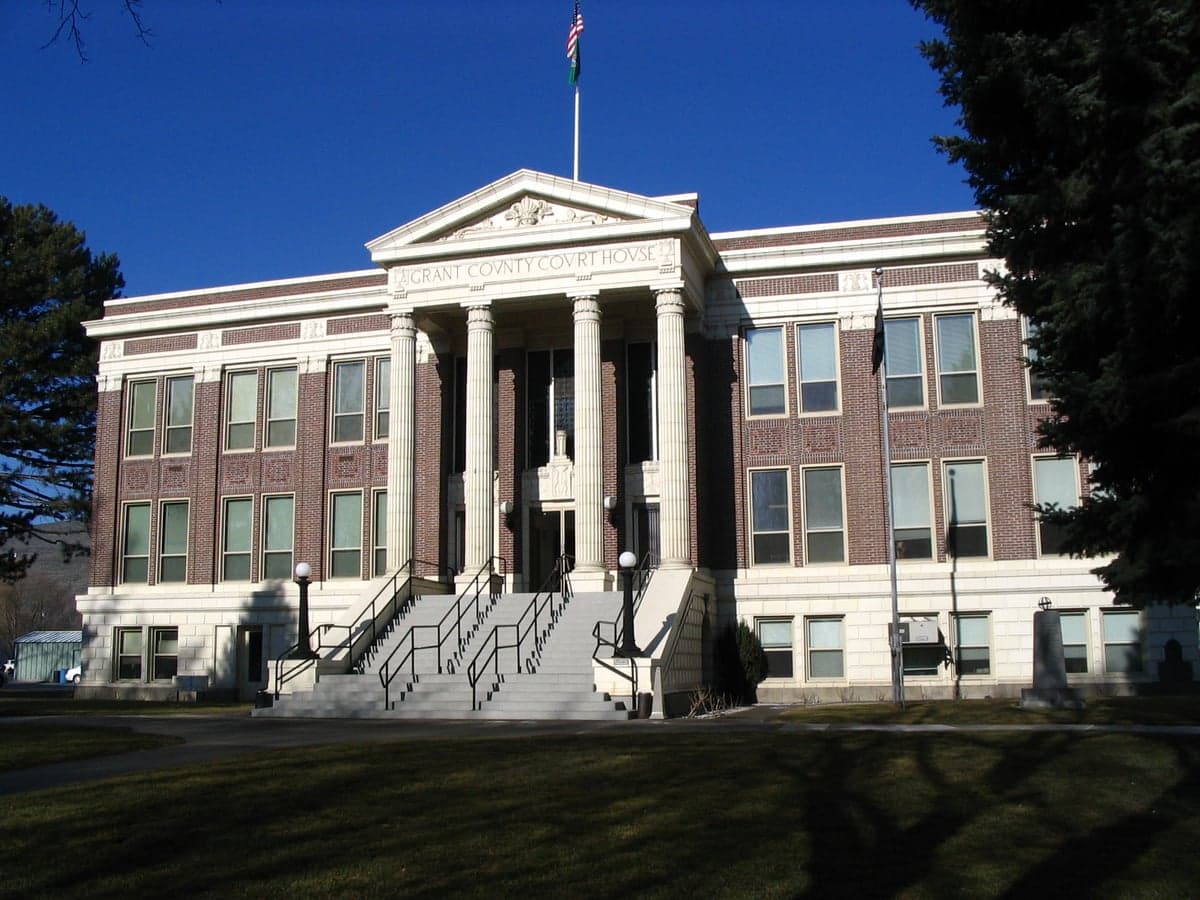
Photo: Wikipedia
Quality of Life in Grant County
A livable area that tracks near national norms for affordability, walkability, and neighborhood health.
What does Quality of Life tell us?
Quality of Life measures an area by evaluating factors like cost of living, nearby amenities, country club access, airport proximity, socioeconomic signals and neighborhood character. For large states, this is a general average — quality of life can vary dramatically between metro areas, suburbs, and rural communities within the same state.
What does this tell us?
Quality of Life measures an area by evaluating factors like cost of living, nearby amenities, country club access, airport proximity, socioeconomic signals and neighborhood character. For large states, this is a general average — quality of life can vary dramatically between metro areas, suburbs, and rural communities within the same state.
Cost of Living
6% below national average
90%
The Real Cost of Living in Grant County for 2026
| Tier | Individual | Family (4) |
|---|---|---|
| Survival | $17k | $32k |
| Comfortable | $54k | $79k |
| Luxury | $117k+ | $181k+ |
| Elite (Top 5%) | $138k+ | $213k+ |
Quality-of-Life Analysis
Grant County, WA is a sprawling, high-desert county of roughly 100,000 residents where quality of life ranges from walkable small-city neighborhoods in Moses Lake to irrigated farm towns along the Columbia Basin Project and remote ranch country on the channeled scablands. The county's cost of living index of 94 (below the U.S. average of 100), median home value of $275,700, and median rent of $1,059 make it one of the more affordable corners of Washington, and an average commute of about 20 minutes means most residents can trade a longer drive for cheaper land without wrecking their workday. People drawn here tend to fall into a few camps: workers tied to agriculture, food processing, data centers, and the aerospace and manufacturing supply chain; families priced out of King and Spokane counties; and retirees or remote workers who want low costs and open country within reach of medical care and a commercial airport.
Largest town(s) & population centers
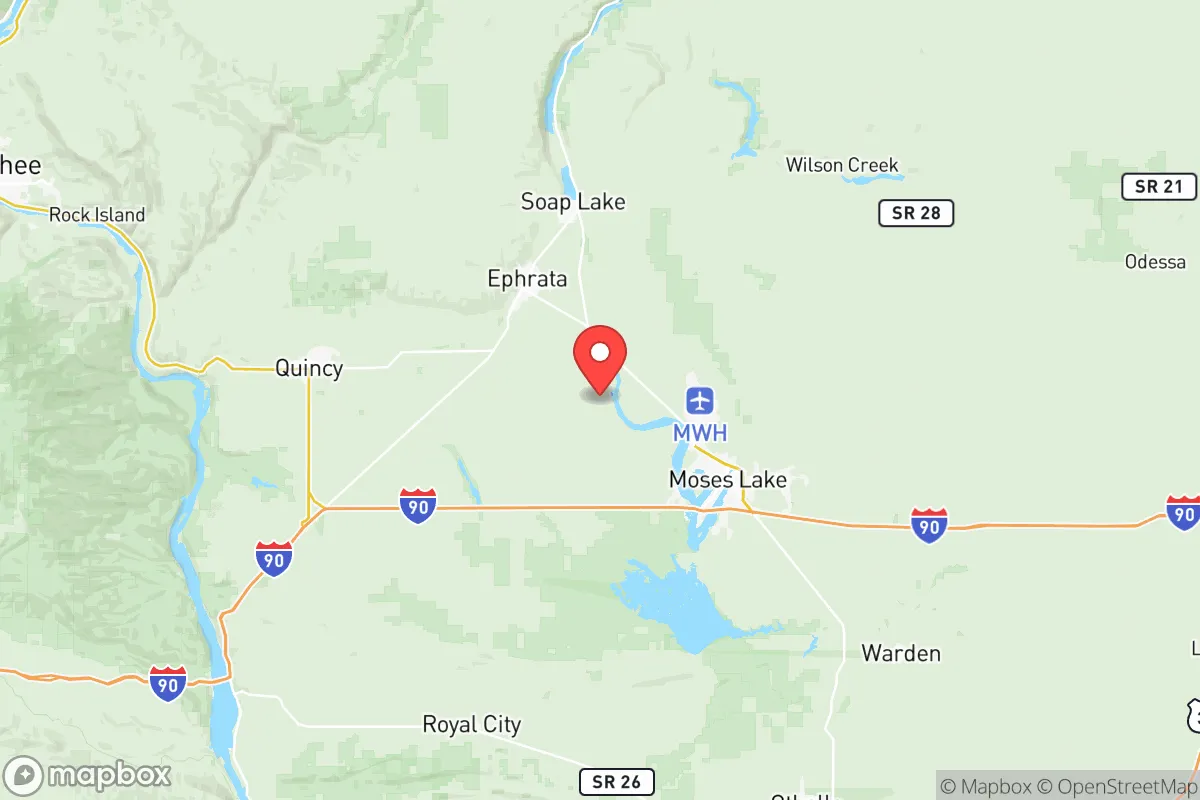
Moses Lake is the county seat and dominant population center, with roughly 25,000 people in the city and tens of thousands more in the surrounding unincorporated area. Daily life here revolves around the lake itself — Moses Lake and the connected Potholes Reservoir draw boaters, anglers, and waterfowl hunters — plus a retail strip along Stratford Road and Broadway Avenue that covers most big-box and grocery needs. The city has the county's only hospital (Samaritan Healthcare), its community college (Big Bend Community College), and Grant County International Airport, a former military base that now hosts Boeing and other aviation and manufacturing employers. Ephrata, the second-largest city at around 8,000 residents, functions as a quieter county government and agricultural services hub with a historic downtown and its own school district. Quincy, in the north, has grown quickly on the strength of potato and frozen-food processing plants and large data centers operated by Microsoft and others, giving it a younger, more industrial character than its size would suggest.
Smaller towns & rural pockets
Beyond the main centers, Grant County is a patchwork of small incorporated towns and unincorporated communities, each with a distinct identity. Soap Lake, south of Moses Lake, is known for its mineral lake and a faded resort-town feel that has attracted artists and alternative-health enthusiasts. Warden, southeast of Moses Lake, is a tight-knit farming town anchored by potato and onion processing. Royal City and Othello, in the eastern half of the county, sit in the heart of the Columbia Basin irrigation project and have large Latino populations tied to agriculture and food processing; Othello in particular has a busy Main Street and a strong school sports culture. Coulee City and Electric City, on the county's northern edge near Banks Lake and the Grand Coulee Dam area, serve as gateways to recreation country with small year-round populations and heavy seasonal tourism. Unincorporated areas like Wheeler, Ruff, and the farmland along Road 1 SE offer true rural living — wells, septic systems, and long drives to groceries — while Mattawa, just across the county line in adjacent Adams County, functions as a de facto service town for Grant County's western farm workers.
Cost & lifestyle range
Housing costs vary meaningfully across the county even though the overall index sits at 94. Moses Lake and Ephrata carry the highest prices, with newer lakefront and view properties in Moses Lake pushing well above the $275,700 county median, and rents in the $1,100–$1,400 range for a modest house. Quincy and Othello sit in the middle, buoyed by industrial employment but still offering single-family homes in the low-to-mid $200,000s. The cheapest options are in the small eastern and northern towns — Royal City, Warden, Soap Lake, Electric City — where homes can trade in the $150,000–$200,000 range, though buyers should expect older housing stock and fewer amenities. Amenities track the same gradient: Moses Lake has the full complement of chain retail, restaurants, a multiplex, and specialty medical care; Ephrata and Quincy have solid grocery and hardware options plus their own school systems; the smallest towns may have a single market, a tavern, and a gas station, with residents driving 30–45 minutes to Moses Lake for anything more.
Grant County suits people who value affordability, space, and outdoor access over urban polish. Workers in agriculture, food processing, data centers, and manufacturing find steady employment without a long commute; families appreciate lower housing costs and smaller school districts; retirees and remote workers get cheap land and proximity to hunting, fishing, and boating at Potholes Reservoir, Banks Lake, and the Columbia National Wildlife Refuge. Those who need walkable urban amenities, extensive public transit, or a broad white-collar job market will find the county thin — Spokane, about 90 minutes east, is the nearest large-city alternative.

Crime in Grant County
Crime rates similar to the national median for U.S. locations.
Violent CrimeViolent Crime Analysis
Property CrimeProperty Crime Analysis
Crime Analysis
Crime in context: how Grant County compares to Washington and the U.S.
Washington's violent crime rate has hovered in the roughly 290–300 per 100,000 range in recent years, so Grant County's 284.9 is essentially at parity with the state and modestly above the national rate of about 230 per 100,000. The property crime figure is the outlier: at 1,968.6 per 100,000, Grant County runs well above the national rate of roughly 1,900 and above many Puget Sound counties, though it remains below the highest-crime counties in Washington. The county's geography explains part of this — a 2,700-square-mile agricultural county bisected by I-90, with seasonal labor migration and a large share of vacant or seasonal housing, creates conditions (unattended property, vehicle prowls, mail and package theft, metal and equipment theft from farms) that drive property crime numbers upward. The Grant County Sheriff's Office, Moses Lake Police Department, and Ephrata Police Department are the primary agencies reporting these figures, and prosecutions run through the Grant County Prosecuting Attorney's Office in Ephrata, with Superior Court trials held at the county courthouse there.
What residents experience day to day
For most residents in Quincy, Royal City, Warden, and the unincorporated farm towns, daily life is quiet; the practical concerns are car prowls, stolen tools and irrigation equipment, and theft from outbuildings rather than street violence. Moses Lake, the county's largest city at roughly 25,000 people, accounts for a disproportionate share of both violent and property incidents, and specific corridors — the Wheeler Road and Broadway Avenue retail strips, and older apartment clusters near downtown — see the most calls for service. Ephrata, the county seat, runs lower on violent crime but sees recurring property offenses near the Highway 28 corridor. Quincy, despite rapid population growth tied to the data-center and food-processing boom, has generally tracked below the county average. Readers weighing a move should note that criminal-justice policy in Washington is set largely at the state level — the 2021 Blake decision on drug possession, the 2023 drug-possession statute, and pursuit-restriction laws passed in Olympia — and that urban counties with reform-oriented prosecutors, such as King County, have seen case-declination rates and repeat-offender patterns that frustrate victims and contrast with Grant County's more conventional charging practices. That contrast matters for anyone comparing eastern and western Washington.
Within Grant County, neighborhood-level variation is real but modest: block-level differences in Moses Lake (particularly north of I-90 versus the Cascade Valley and Peninsula areas) matter more than city-to-city gaps, and rural residents should weigh distance-to-deputy response times — the sheriff's office covers vast stretches of the county — alongside raw crime rates. Buyers can pull address-level data from the Moses Lake PD's public calls-for-service map and the sheriff's office annual reports before committing to a neighborhood.
* Values derived from national, state, county, city and local statistics and may differ in a specific area. Last updated: 2026-11-03T09:56:57.000Z
Narrative content on this page is AI-generated and may contain mistakes. Verify any details that matter before acting on them.
ReloMaps may earn a commission from affiliate links at no extra cost to you.

