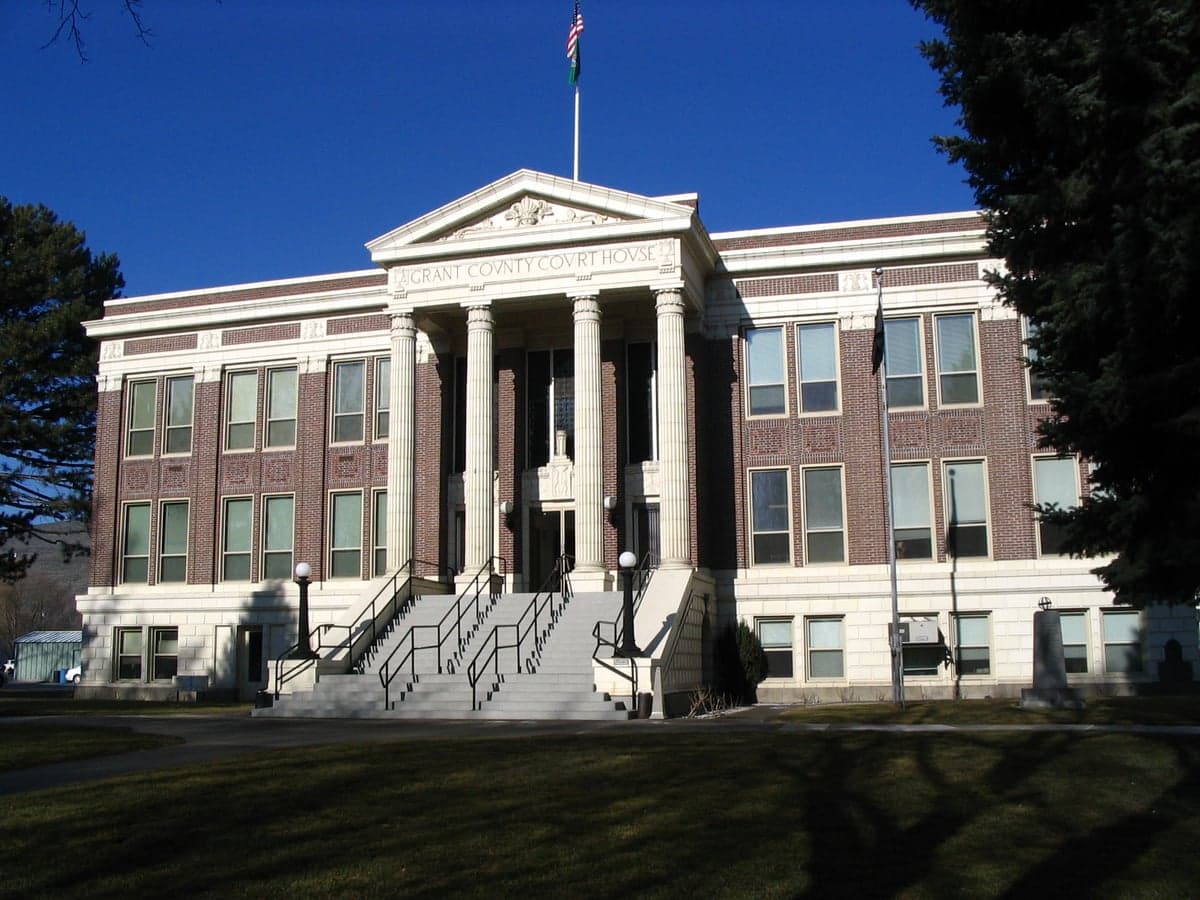
Photo: Wikipedia
Personal Sovereignty in Grant County
Moderate friction. Expect trade-offs in some aspect of personal liberty and independence.
What does Personal Sovereignty tell us?
Personal Sovereignty measures your capacity for self-reliance and independence with minimal government friction. Higher scores mean fewer barriers between you and the way you want to live... but it assumes you have the space you need and good neighbors.
What does this tell us?
Personal Sovereignty measures your capacity for self-reliance and independence with minimal government friction. Higher scores mean fewer barriers between you and the way you want to live... but it assumes you have the space you need and good neighbors.
State Policy
Energy independence: Importer (29% of energy produced in-state)
Personal Liberty
Homesteading

Personal Liberty Analysis
Grant County operates with a light-touch regulatory posture that most freedom-minded relocators will find workable, though it is not a no-rules jurisdiction. Washington State sets the baseline — no income tax, a 6.5% state sales tax (8.0–8.2% combined in Moses Lake and Ephrata with local additions), and the nation's highest gasoline taxes — while Grant County adds little on top. The county's real draw for autonomy-seekers is spatial: vast unincorporated acreage, agricultural zoning that tolerates rural residential use, and a sheriff's office that has publicly positioned itself as a check on state-level overreach. The trade-off is that Olympia, not the county seat in Ephrata, writes most of the rules that affect daily life.
How heavy is the tax and regulatory burden in Grant County?
Washington has no personal income tax, which is the single biggest structural advantage for high earners and retirees, and Grant County keeps property levies moderate by Puget Sound standards — typical effective rates run near 0.9–1.0% of assessed value, well below King County's blended burden. The catch is consumption and excise taxation: the state's 6.5% sales tax plus local rates pushes Moses Lake and Ephrata to roughly 8.2%, and Washington's gas tax (among the highest in the country) hits harder in a county where Quincy and Warden residents routinely drive 30–60 miles for work and supplies. Business regulation is where Grant County differentiates itself — the county's permitting for agricultural and rural residential construction is comparatively streamlined, and the Grant County International Airport industrial area near Moses Lake has been aggressively marketed for data centers and manufacturing with fast-tracked approvals. For a small operator or home-based business, the practical burden is state B&O tax and licensing, not county red tape. Building permits in unincorporated areas go through Grant County Community Development in Ephrata; expect standard septic and well requirements rather than anything exotic.
What gun laws and self-defense rules apply in Grant County?
Washington is a "shall-issue" state for concealed pistol licenses, and Grant County's sheriff issues them promptly — the county has a documented history of sheriffs publicly stating they will not prioritize enforcement of certain state firearms laws they view as unconstitutional, a posture that matters more symbolically than legally but signals local culture. The state's 2023 assault weapons ban (HB 1240), magazine capacity limit (10 rounds), and expanded background check and training requirements for purchases (HB 1143) all apply in Grant County as everywhere in Washington, and the county cannot opt out. Open carry is legal without a permit; the age to purchase any firearm is now 21 under state law. In practice, the culture is deeply gun-friendly — hunting access across the Columbia Basin, the Potholes Reservoir area, and the Royal Slope is a major draw, and rural residents in places like Soap Lake and Coulee City treat firearms ownership as unremarkable. Self-defense law follows Washington's stand-your-ground-adjacent framework: no duty to retreat in your own home, and the state's justifiable homicide statute covers defense of self and others. If firearms policy is your top priority, Grant County is among the more sympathetic jurisdictions in a state whose legislature is not.
Can you homestead or live off-grid in Grant County?
This is where Grant County separates itself from western Washington decisively. Outside incorporated cities, lot sizes of 5, 10, and 20 acres are common and often inexpensive — rural parcels near Hartline, Wilson Creek, and the Odessa area routinely list in the low five figures per acre, and agricultural-adjacent land can be cheaper still. Grant County zoning generally permits rural residential and agricultural uses with minimal fuss, and the county has no blanket prohibition on manufactured homes or accessory dwellings in unincorporated zones, which lowers the cost of a first homestead. Off-grid feasibility is genuinely strong: eastern Washington's solar resource is among the best in the state (roughly 4.5–5 peak sun hours daily), and the county sits over the Columbia Basin's aquifer, so wells are standard rather than exceptional. The constraints are real, though — water rights in the Odessa subarea are tightly managed due to aquifer decline, and any new well or irrigation use may require a permit through the state Department of Ecology, not just the county. Septic approval, wildfire defensible-space expectations, and winter access on gravel roads in the coulee country around Coulee City and Grand Coulee are the practical friction points. Homesteading here works best with a well-funded water plan and a realistic winter logistics plan.
How protected are parental rights, medical autonomy, and property rights?
Washington State law leans toward state authority on several personal-liberty fronts, and Grant County residents live with that reality. Parental rights in education are governed by state statute and local school boards — districts in Moses Lake, Ephrata, and Quincy have seen active parent involvement and some conservative board turnover in recent cycles, giving families more leverage at the district level than at the state level. Medical autonomy is the weakest link for freedom-focused residents: Washington has strong state-level vaccine requirements for school enrollment (with a narrow personal exemption), and state emergency powers are broad. Speech and property rights are comparatively well protected — Washington's constitution has an unusually strong free-speech provision, and property rights are robust outside incorporated limits, though the state Growth Management Act constrains development in some areas (Grant County is largely exempt from GMA planning requirements, a meaningful advantage). Local governance in cities like Moses Lake and Ephrata is where residents can most directly influence rules on short-term rentals, land use, and business licensing.
Weighed against alternatives, Grant County lands in the "practical freedom" tier rather than the "maximum freedom" tier. It beats western Washington on land cost, regulatory friction, gun culture, and off-grid viability by a wide margin, and its no-income-tax status is a genuine structural benefit. It cannot match Idaho or Wyoming on state-level firearms and medical policy, and anyone whose top priority is escaping state mandates entirely should look east of the border. For readers who want affordable acreage, a sympathetic local sheriff, and a county government that mostly leaves rural residents alone — while accepting that Olympia sets the outer boundaries — Grant County around Moses Lake, Ephrata, and the Odessa–Wilson Creek corridor is a defensible, well-priced choice.

* Values derived from national, state, county, city and local statistics and may differ in a specific area. Last updated: 2026-11-03T09:56:57.000Z
Narrative content on this page is AI-generated and may contain mistakes. Verify any details that matter before acting on them.
ReloMaps may earn a commission from affiliate links at no extra cost to you.

