Photo: Wikipedia
Personal Sovereignty in Walkerton, IN
Viable for self-reliance. Generally workable, though some barriers may limit total independence.
What does Personal Sovereignty tell us?
Personal Sovereignty measures your capacity for self-reliance and independence with minimal government friction. Higher scores mean fewer barriers between you and the way you want to live... but it assumes you have the space you need and good neighbors.
What does this tell us?
Personal Sovereignty measures your capacity for self-reliance and independence with minimal government friction. Higher scores mean fewer barriers between you and the way you want to live... but it assumes you have the space you need and good neighbors.
State Policy
Energy independence: Importer (29% of energy produced in-state)
Personal Liberty
Homesteading

Personal Liberty Analysis
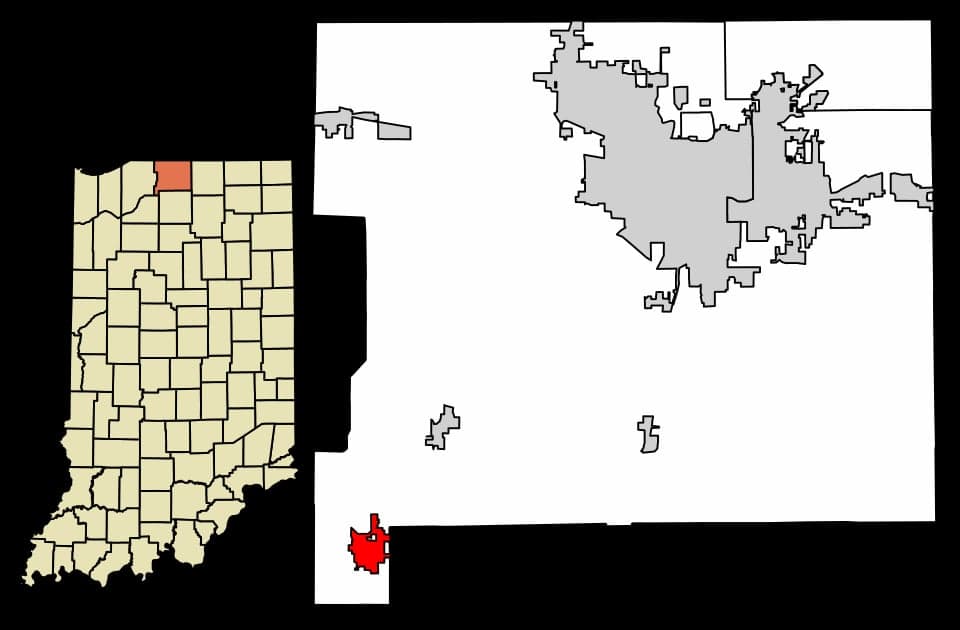
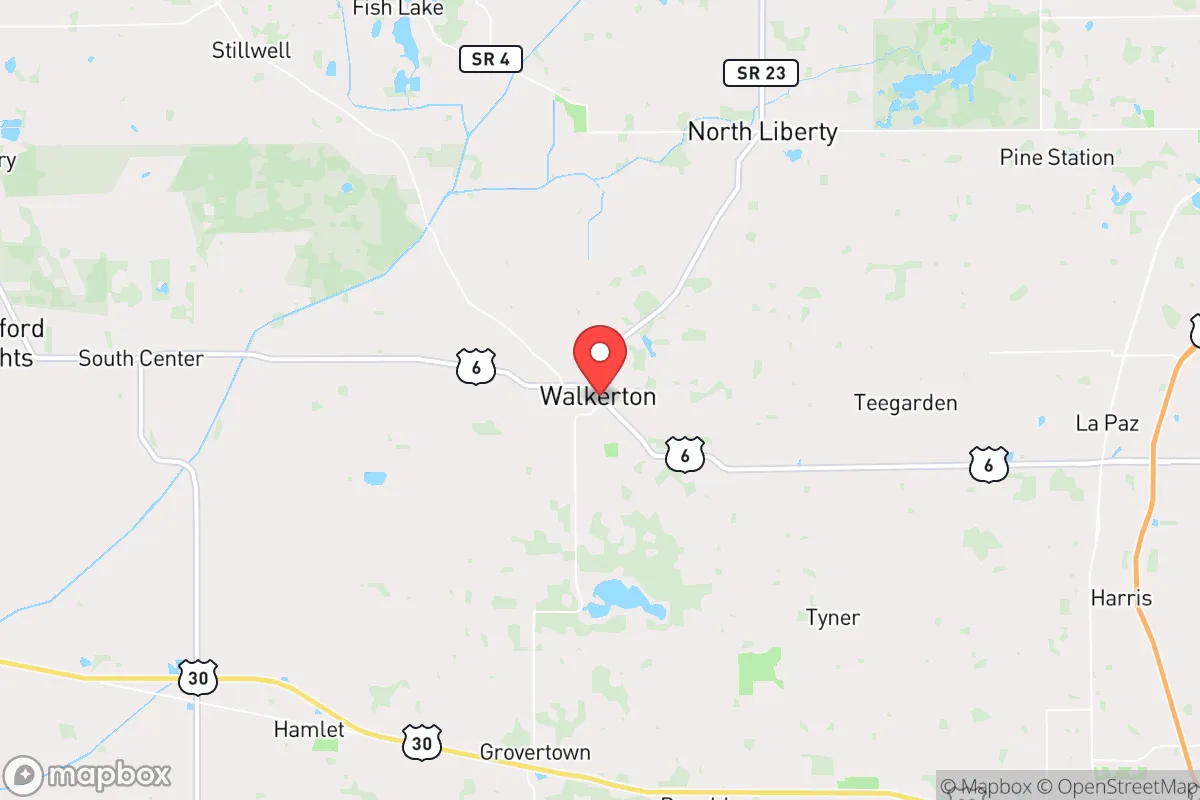
Walkerton, Indiana sits in Marshall County about 25 miles south of South Bend, and for a reader who ranks personal freedom near the top of the relocation checklist, the honest summary is this: Indiana is a moderately light-touch state on taxes, gun law, and property rights, and Walkerton inherits most of that posture while adding small-town enforcement and a few local friction points. The town of roughly 2,200 people is in a county that voted heavily Republican in recent cycles, and the surrounding culture leans self-reliant and agricultural. The practical autonomy picture is favorable but not frictionless — you get low property taxes, strong self-defense protections, and room to own land, offset by Indiana's relatively aggressive annexation history, township-level zoning that varies block by block, and a state income tax that is falling but still exists.
How heavy is the tax and regulatory burden in Walkerton, Indiana?
Indiana's tax structure is one of the more competitive in the Midwest, and Walkerton residents feel that directly. The state individual income tax rate dropped to 3.0% in 2024 and is scheduled to step down further under a 2023 law that triggers cuts when revenue targets are met, eventually reaching 2.9%. The state sales tax is a flat 7%, which is high by national standards and hits consumption rather than income or property. Property taxes are capped by the constitutional-style circuit breaker: 1% of assessed value for owner-occupied homes, 2% for rentals, and 3% for business. For a Walkerton homeowner, that cap is the single most freedom-relevant tax fact — it limits how much local government can extract through the property roll regardless of what the town or Marshall County wants. Marshall County's local income tax adds a modest increment on top of the state rate, and the county's effective property tax rate typically runs well under 1% of market value. Regulatory posture at the town level is conventional small-city: building permits, a board of zoning appeals, and code enforcement on nuisance and unsafe structures. There is no local income tax specific to Walkerton, and no evidence of the kind of aggressive overregulation seen in larger metros. The heavier hand comes from the state, not the town — Indiana's permitting and contractor licensing regime, septic and well rules through the county health department, and statewide building codes all apply.
What Indiana's self-defense and gun laws mean for Walkerton residents
Indiana is a strong self-defense state, and this is one of the clearest autonomy advantages of the location. In 2022, Indiana eliminated its handgun license requirement, making it a constitutional carry state — any lawful adult who is not prohibited can carry a handgun openly or concealed without a permit. Long guns have never required a license. The state's stand-your-ground law (codified in Indiana Code 35-41-3-2) removes any duty to retreat before using force if you are in a place you have a right to be and are not committing a crime, and it extends the presumption of reasonable fear to force used against someone unlawfully entering your home, vehicle, or curtilage. Indiana also has a firearm preemption statute that bars local governments from enacting their own gun ordinances stricter than state law, so Walkerton cannot layer on its own restrictions. The tradeoffs: Indiana requires a permit to carry in some other states under reciprocity, so travelers should check the map, and federal prohibitors still apply. For a household that treats armed self-defense as a core part of personal sovereignty, Indiana ranks among the more permissive states east of the Mississippi, and Walkerton's rural character means response times from the Marshall County Sheriff's Department can stretch in outlying areas — a practical argument for self-reliance that many residents take seriously.
Is Walkerton viable for homesteading and off-grid living?
This is where Walkerton scores well for the land-minded buyer, with caveats. The town itself has small in-town lots — typically a quarter acre or less in the older grid — but the surrounding Marshall County farmland and rural parcels routinely run 2 to 40 acres, and agricultural land prices in this part of northern Indiana are moderate compared with Michigan or the Chicago exurbs. Zoning is the key variable: Marshall County administers zoning outside town limits, and agricultural districts generally permit gardens, livestock, and accessory structures with limited oversight, while platted subdivisions impose covenants that can restrict poultry, fencing, and outbuildings. Off-grid feasibility is real but not frictionless. Indiana has no statewide right-to-solar or right-to-dry statute overriding private covenants, so HOA and subdivision restrictions can block panels or clotheslines even though the county itself is permissive. Well and septic systems are regulated by the Marshall County Health Department, and Indiana requires permits for both — you can go off the grid, but you do it through the county's process, not around it. The climate is workable for serious homesteading: zone 5b/6a, adequate rainfall, and productive soils, though winters demand real planning for heating and water. Propane, wood heat, and generator backup are common. For a reader who wants acreage, a well, a septic field, and room to raise animals, the rural ring around Walkerton is a genuinely practical option — provided you buy outside covenant-controlled subdivisions and confirm the zoning district before you close.
How personal liberties — parental rights, medical autonomy, speech, and property — play out locally
Indiana's liberty framework is mixed, and a sovereignty-minded reader should understand where the state is strong and where it is not. On parental rights, Indiana has moved in a more protective direction: a 2023 law strengthened parents' ability to review school curriculum and materials, and the state's school choice program — including the expanded voucher system — gives families direct control over education funding, which matters for readers who want to exit the public system. On medical autonomy, Indiana is more restrictive than its neighbors on some fronts: it has one of the nation's tighter abortion bans (with limited exceptions), and its vaccine exemption framework for schools requires a religious objection in writing, which is workable but not automatic. On speech, Indiana has no state-level speech code beyond federal law, and small-town governance in Walkerton is the kind of place where public comment at town council meetings is genuinely accessible — a practical advantage for civic engagement. On property rights, the state's record is more complicated: Indiana has a long history of annexation by municipalities, and while 2019 reforms gave landowners more notice and remonstrance rights, involuntary annexation remains a live risk near town boundaries. If you buy just outside Walkerton's limits, check the town's comprehensive plan and any pending annexation ordinances before you commit. The circuit breaker caps and the preemption statute are the two strongest property-protective features; annexation exposure is the weakest link.
Weighed against other relocation options, Walkerton lands in the upper-middle tier for personal sovereignty — not as unregulated as rural Tennessee or Wyoming, but clearly lighter than Illinois, Michigan, or most of the Northeast. You get constitutional carry, stand-your-ground, a 1% homestead property tax cap, a falling income tax, and real access to affordable acreage. You give up some ground on medical autonomy, face annexation risk near the town edge, and must navigate county zoning and health department permitting for any serious off-grid build. For a family or individual whose priority list runs taxes, guns, land, and parental control, the tradeoffs are manageable and the upside is concrete. The strategic move is to buy rural acreage outside covenant subdivisions, confirm the zoning district and annexation status in writing, and treat the county — not the town — as your primary regulatory counterpart.

* Values derived from national, state, county, city and local statistics and may differ in a specific area. Last updated: 2026-11-03T15:06:36.000Z
Narrative content on this page is AI-generated and may contain mistakes. Verify any details that matter before acting on them.
ReloMaps may earn a commission from affiliate links at no extra cost to you.

