Photo: Wikipedia
Demographics of Walkerton, IN
Affluence Level in Walkerton, IN
A middle-class area roughly in line with national averages across income, home values, education, and employment.
People of Walkerton, IN
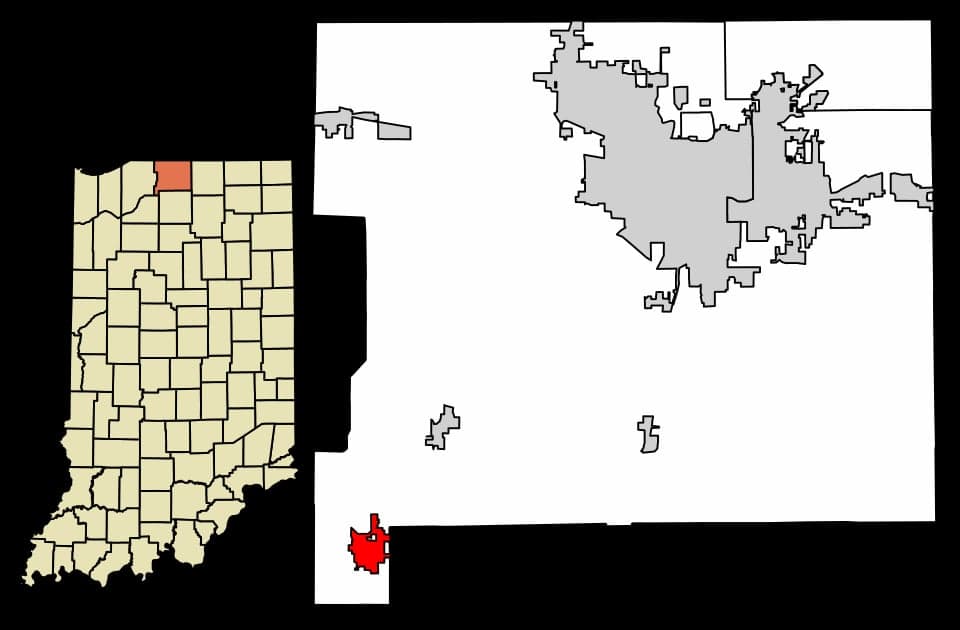
Walkerton is a small, overwhelmingly white, native-born town of about 2,052 people in northern St. Joseph County, where roughly 89.6% of residents identify as white and only 2.0% are foreign-born. Its identity was forged less by immigration than by Yankee and Midwestern farm families who followed the Kankakee River bottomlands and the railroad into the area in the 19th century, and by the small-town institutions — churches, a grain elevator, a volunteer fire department, a consolidated school — that still organize daily life. The Hispanic share (3.7%) and Black share (1.8%) are modest but real, and the town's 21.2% college-educated rate sits below the national average, reflecting a workforce rooted in agriculture, small manufacturing, and commutes to larger employers nearby.
How Walkerton was settled and grew
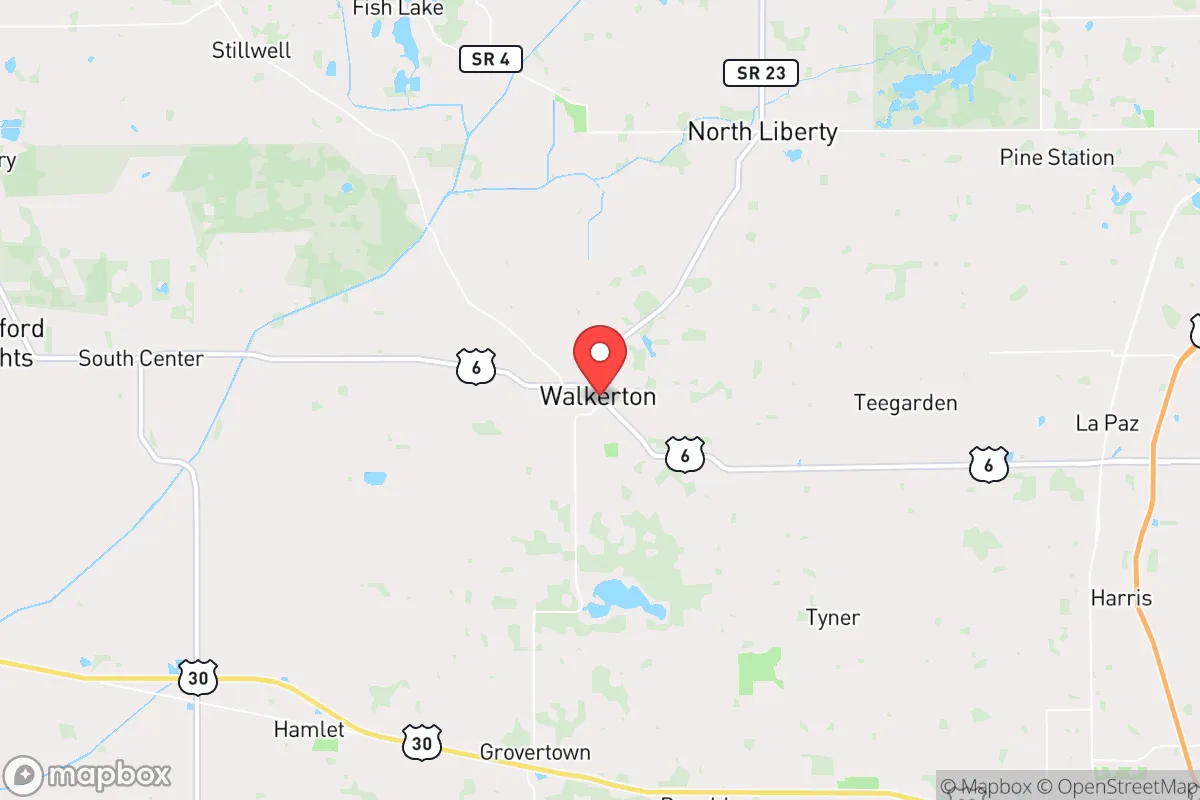
Walkerton is a genuinely 19th-century railroad town, not a post-1900 suburb. It was platted in the 1850s along the line that became part of the Grand Trunk system, and it incorporated as a town in 1890. The first settlers were largely Yankee stock from New York, Ohio, and Pennsylvania, joined by German and Irish railroad and farm laborers; the surrounding Lincoln Township farmland drew families who cleared the oak openings and worked the Kankakee marsh margins. The downtown core along Michigan Street and the blocks immediately around the old depot became the commercial and residential heart, while the Roosevelt Road corridor on the town's south side absorbed later working-class housing tied to the grain and implement businesses. A small Black community with roots in the Great Migration settled in scattered pockets near the rail line in the early 20th century, though it never grew large. Through the mid-20th century the population was stable and agricultural, anchored by St. Patrick's and the Methodist and Baptist congregations and by the consolidation of the local schools.
Modern era (post-1965)
The 1965 Hart-Celler Act reshaped immigration nationally but barely touched Walkerton: the town remained a destination for domestic movers rather than international ones. Through the 1970s and 1980s, families left South Bend and Mishawaka for cheaper lots and small-school life, filling in the Northside residential blocks and the newer subdivisions off U.S. 6 on the town's edge. The 1990s and 2000s brought a modest Hispanic presence — 3.7% today — largely Mexican-origin families drawn by farm and food-processing work in the surrounding county, concentrated in the older rental housing near downtown and along the Washington Street corridor. The Black share (1.8%) and the East/Southeast Asian share (0.6%) remain small; the Indian-subcontinent population is effectively zero in the data. The town's demographic story since 1965 is therefore one of slow diversification at the margins rather than transformation — a place that absorbed a little suburban spillover and a little Latino in-migration without changing its fundamental character.
The future
Walkerton is likely to remain majority-white and native-born for the next decade or two, but the direction is toward gradual, modest diversification. The Hispanic share is the most likely to grow, following countywide trends in St. Joseph County, and the town's cheap housing stock and proximity to South Bend employers make it a plausible landing spot for working families of any background. The bigger demographic force is aging: like much of rural Indiana, Walkerton faces an older median age and slow or flat population growth, with younger residents leaving for South Bend, Plymouth, and Indianapolis. New housing, if it comes, will likely appear on the U.S. 6 and Roosevelt Road edges rather than in the historic core, and the town's cultural identity — church-centered, school-centered, agricultural — will persist even as the faces around it slowly change.
For someone moving in now, Walkerton is a stable, low-cost, small-town place with a clear Yankee-and-farmroots identity, a slowly broadening Hispanic presence, and little international immigration. It is not becoming a diverse metro suburb; it is becoming a slightly more varied version of the rural Indiana town it has always been — which is precisely what draws the families and single buyers who choose it.

* Values derived from national, state, county, city and local statistics and may differ in a specific area. Last updated: 2026-11-03T15:06:36.000Z
Narrative content on this page is AI-generated and may contain mistakes. Verify any details that matter before acting on them.
ReloMaps may earn a commission from affiliate links at no extra cost to you.

