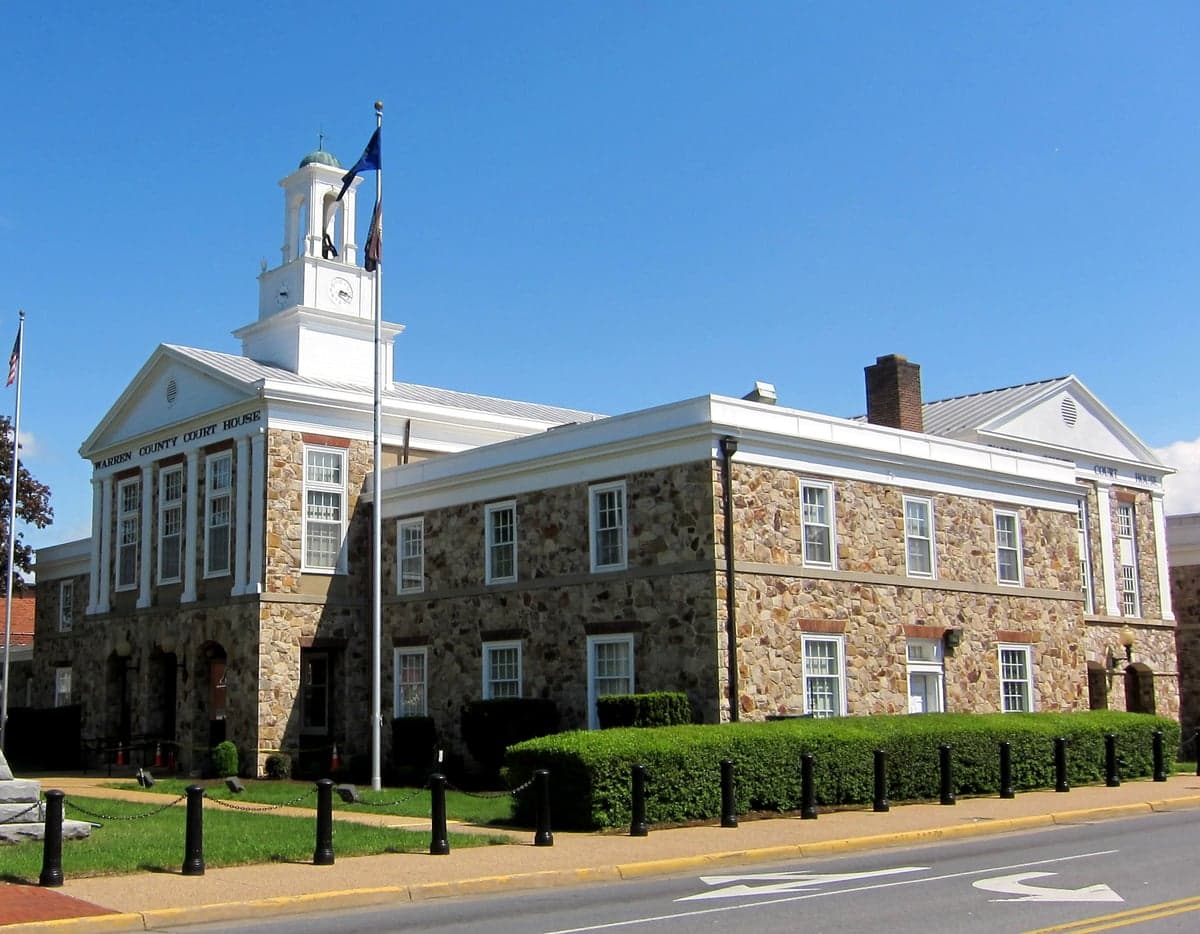
Photo: Wikipedia
Personal Sovereignty in Warren County
Viable for self-reliance. Generally workable, though some barriers may limit total independence.
What does Personal Sovereignty tell us?
Personal Sovereignty measures your capacity for self-reliance and independence with minimal government friction. Higher scores mean fewer barriers between you and the way you want to live... but it assumes you have the space you need and good neighbors.
What does this tell us?
Personal Sovereignty measures your capacity for self-reliance and independence with minimal government friction. Higher scores mean fewer barriers between you and the way you want to live... but it assumes you have the space you need and good neighbors.
State Policy
Energy independence: Importer (20% of energy produced in-state)
Personal Liberty
Homesteading

Personal Liberty Analysis
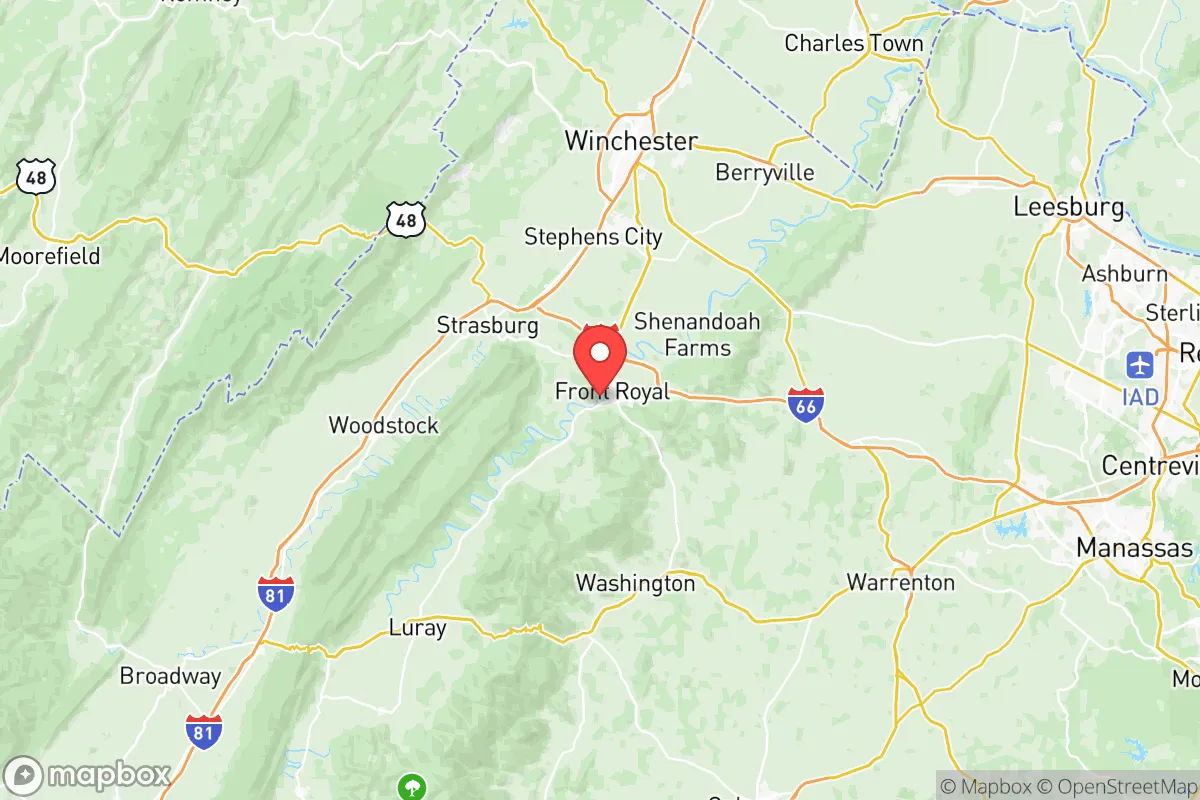
Warren County, Virginia offers a notably high degree of personal sovereignty compared to Northern Virginia jurisdictions just 60 miles east, with a regulatory environment that generally favors individual choice over government oversight. The county’s rural character, combined with Virginia’s status as a "shall-issue" state for concealed carry and its right-to-work laws, creates a baseline of autonomy that attracts those seeking to minimize government entanglement in daily life. However, the degree of personal freedom varies significantly between the county seat of Front Royal, the more rural communities like Linden and Bentonville, and the growing suburban fringe near the Shenandoah River, making location choice critical for sovereignty-minded relocators.
Tax burden and regulatory posture: How Warren County compares to neighboring jurisdictions
Warren County’s tax burden is moderate by Virginia standards but significantly lighter than the high-tax environments of Fairfax or Loudoun counties. The county levies a real property tax rate of approximately $0.52 per $100 of assessed value as of 2025, which is roughly half the rate of Arlington County and about 30% lower than neighboring Fauquier County. Personal property tax on vehicles is assessed at the same rate, with no county-level income tax—Virginia only imposes a state income tax with a top marginal rate of 5.75%. The regulatory posture in Warren County is decidedly hands-off for most business and residential activities. Unlike the more restrictive zoning in Front Royal’s historic district, unincorporated areas such as Bentonville and Linden have minimal county oversight for home-based businesses, agricultural operations, and minor construction projects. The county does not impose a business license tax on most small enterprises, and the permitting process for accessory structures like sheds or workshops is streamlined compared to the 45-day review cycles common in Northern Virginia. For a family or individual prioritizing low overhead and minimal bureaucratic friction, Warren County’s tax and regulatory environment ranks favorably among Virginia’s 95 counties, though it is not as aggressively low-tax as jurisdictions in West Virginia or Tennessee.
Self-defense and gun law specifics: What the Second Amendment landscape looks like here
Virginia is a "shall-issue" state for concealed handgun permits, meaning the Warren County Circuit Court must issue a permit to any qualified applicant who passes a background check and completes a state-approved firearms safety course. The county has no additional local ordinances restricting firearm possession beyond state law, and open carry is legal without a permit for anyone 18 or older who can legally possess a firearm. The sheriff’s office in Warren County is known for a pro-Second Amendment posture; Sheriff Mark Butler has publicly stated his office will not enforce any federal firearms restrictions that conflict with Virginia law, a stance shared by many rural Virginia sheriffs. In practical terms, this means residents in Front Royal and the surrounding areas face no local barriers to purchasing, carrying, or storing firearms. The county has no magazine capacity restrictions, no "assault weapon" bans, and no waiting periods beyond the federal NICS check. For those who prioritize self-defense autonomy, Warren County offers a legal environment where carrying a firearm for personal protection is straightforward and culturally accepted. The nearest major gun-friendly retail and training options are in Winchester (about 20 minutes north) and Harrisonburg (about 45 minutes south), both of which host multiple gun shops and shooting ranges.
Self-reliance and homesteading viability: Lot sizes, zoning, and off-grid feasibility
Warren County’s zoning code explicitly supports agricultural and rural residential uses, making homesteading a realistic option for those willing to invest in land and infrastructure. Minimum lot sizes in the Agricultural (A) district are 3 acres, while the Rural Residential (RR) district requires at least 1 acre. This is a stark contrast to the 0.25-acre minimums common in suburban developments closer to Washington, D.C. In areas like Bentonville and Linden, properties of 5 to 20 acres are common and affordable, with raw land prices averaging $8,000–$15,000 per acre as of 2025. Off-grid living is legally feasible but requires adherence to state health department regulations for septic systems and wells. The county does not require connection to municipal water or sewer in rural zones, and solar panel installations are permitted without special county approval as long as they meet standard building code requirements. Rainwater collection is legal and encouraged for non-potable uses. However, the county does enforce the Virginia Statewide Building Code, meaning any habitable structure must meet minimum safety standards, and unpermitted dwellings are subject to fines. For those seeking complete off-grid autonomy, the Rileyville area and the western slopes near the Shenandoah National Park boundary offer the most secluded parcels with minimal neighbor proximity. The county’s animal ordinance allows keeping chickens, goats, and up to two horses on parcels of 1 acre or more, with no limit on livestock on parcels over 5 acres in the Agricultural district.
Personal liberties: Parental rights, medical autonomy, speech, and property rights
Warren County reflects the broader Virginia trend of strong parental rights in education, with the county’s school board maintaining a policy that allows parents to opt their children out of any instructional material they find objectionable without penalty. The school board has also resisted state-level mandates on curriculum content, particularly regarding gender identity and sexual education, deferring to parental authority. Medical autonomy is more constrained by state law than local policy; Virginia requires parental consent for minors seeking most medical treatments, and the state does not have a vaccine mandate for school attendance beyond standard childhood immunizations. The county’s health department does not enforce any local public health orders beyond state guidance. Free speech protections are robust, with no local noise ordinances that restrict political or religious expression, and the county’s public meeting spaces are available for reservation by any group without content-based restrictions. Property rights are protected by Virginia’s right-to-farm law, which shields agricultural operations from nuisance lawsuits if they have been operating for more than one year. This is particularly relevant for homesteaders in Front Royal’s outskirts and Linden, where neighbors may raise livestock or operate small farms. The county does not have a rental inspection program or rent control, giving property owners full discretion over leasing terms.
Overall, Warren County offers a level of personal sovereignty that is significantly higher than the densely regulated environments of Northern Virginia and the D.C. suburbs, while remaining within a two-hour drive of major employment centers. For a conservative-leaning individual or family, the county’s combination of low taxes, permissive gun laws, homesteading-friendly zoning, and strong parental rights creates a freedom-oriented baseline that is rare in the Mid-Atlantic region. The trade-off is that residents must accept a lower level of public services—fewer parks, slower emergency response times in remote areas, and limited public transit—which aligns with the self-reliance ethos that draws many to the area. Compared to similarly rural counties in West Virginia or Tennessee, Warren County’s sovereignty is slightly tempered by Virginia’s state-level regulations on building codes and health standards, but it remains one of the most autonomy-friendly options within a reasonable commute of the Washington, D.C. metro area.

* Values derived from national, state, county, city and local statistics and may differ in a specific area. Last updated: 2026-06-27T23:26:15.000Z
Narrative content on this page is AI-generated and may contain mistakes. Verify any details that matter before acting on them.
ReloMaps may earn a commission from affiliate links at no extra cost to you.

