Photo: Wikipedia
Demographics of Warren County
Affluence Level in Warren County
A middle-class area roughly in line with national averages across income, home values, education, and employment.
People of Warren County
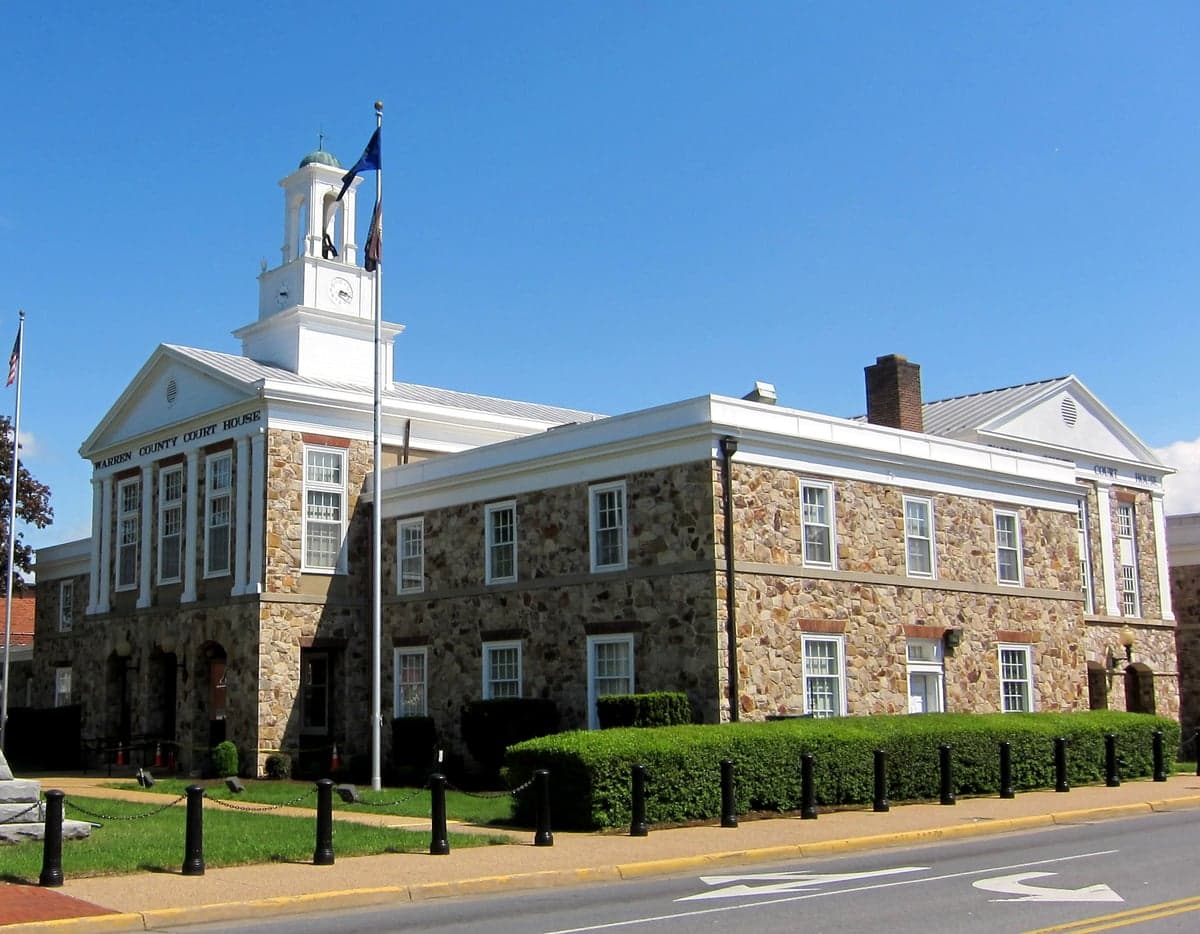
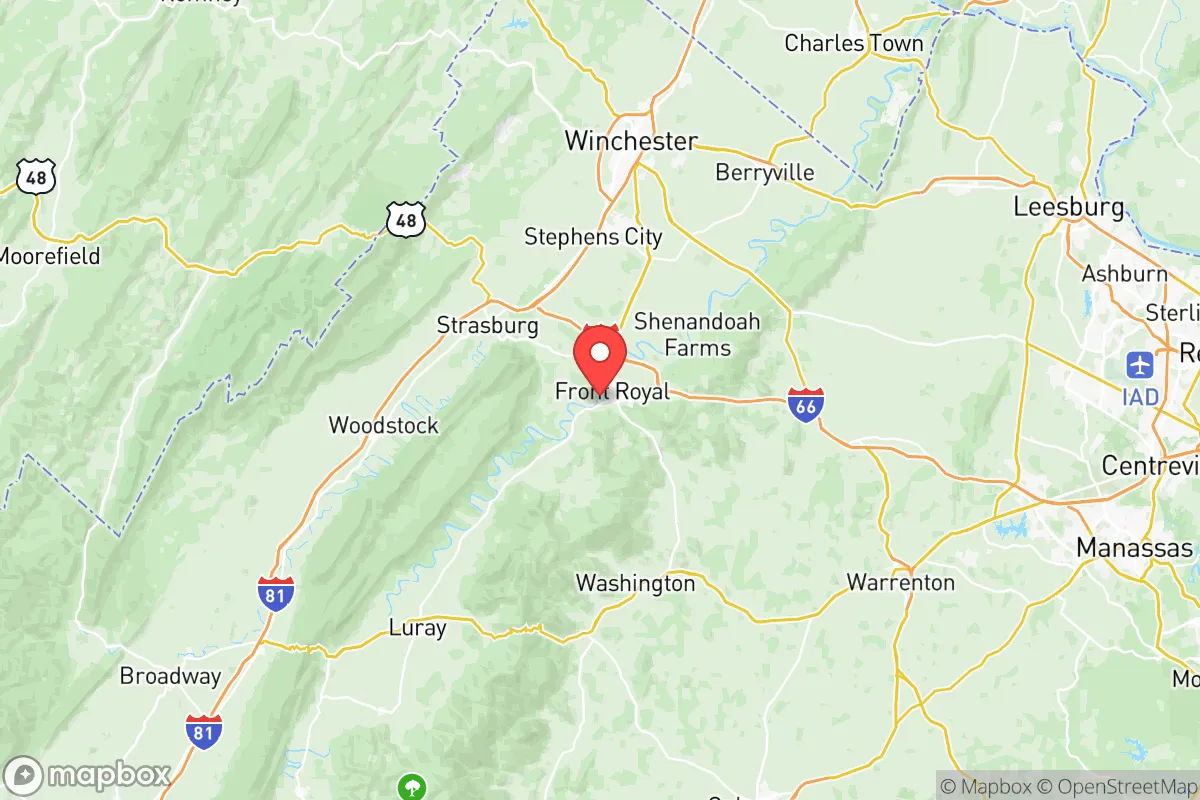
Warren County, Virginia, is a predominantly white, rural community of 41,104 residents where a strong sense of local identity is rooted in Appalachian frontier history and small-town life. The county’s character is defined by its seat, Front Royal, a historic railroad and agricultural hub, and by the surrounding Blue Ridge Mountain communities like Linden and Bentonville. With a foreign-born population of just 3.2% and a population that is 82.4% white, Warren County remains one of Virginia’s less diverse areas, though its Hispanic (6.7%) and Black (5.0%) communities are established and growing. The county’s people are shaped by a legacy of Scots-Irish independence, Civil War-era division, and a modern shift toward commuter and retirement living along the I-66 corridor.
Settlement & growth (pre-1960)
Long before European settlers arrived, the Shenandoah Valley region that includes Warren County was home to the Siouan-speaking Manahoac people, who used the Shenandoah River as a travel and trade route. By the early 1700s, the Iroquois Confederacy had pushed south into the area, but the region remained sparsely populated by Native peoples when the first European colonists arrived. The Virginia General Assembly officially formed Warren County from part of Frederick County in 1836, naming it after Joseph Warren, a Revolutionary War hero, but the area’s settlement patterns were already well established.
The first major wave of European settlers came in the mid-1700s, predominantly Scots-Irish and German Protestants moving south and west from Pennsylvania along the Great Wagon Road. These groups were drawn by the promise of fertile valley land and relative religious freedom, settling along the Shenandoah River and its tributaries. They established the agricultural communities that would become Front Royal, the county seat, and smaller hamlets like Linden and Bentonville. The Scots-Irish, in particular, brought a fiercely independent, frontier-oriented culture that would define the area’s political and social character for generations.
During the 19th century, the county’s economy revolved around farming—especially cattle, grain, and apples—and the region became a strategic crossroads during the Civil War. The Battle of Front Royal in 1862 saw Confederate forces under Stonewall Jackson capture a Union garrison, and the area’s population, largely sympathetic to the Southern cause, endured occupation and economic disruption. After the war, the arrival of the railroad in the 1850s and later the Norfolk and Western Railway transformed Front Royal into a shipping hub for agricultural goods and timber. African Americans, who made up a significant portion of the county’s population after emancipation, worked primarily as sharecroppers and laborers, settling in communities like Riverton and the Happy Creek area of Front Royal.
The early 20th century brought modest industrial growth, including the establishment of the American Viscose Corporation plant in the 1920s, which produced rayon and drew workers from the surrounding countryside. This period also saw the construction of the Skyline Drive and the creation of Shenandoah National Park in the 1930s, which displaced some mountain families but also laid the groundwork for tourism as a major economic driver. By 1960, Warren County’s population had grown to just over 14,000, remaining overwhelmingly white and native-born, with a strong agricultural and working-class identity centered on Front Royal and the smaller communities of Limeton and Rockland.
Modern era (post-1965)
The 1965 Hart-Cellar Act had a limited direct impact on Warren County, as the area did not experience the large-scale immigration seen in Northern Virginia’s suburbs. Instead, the county’s demographic shifts since the 1970s have been driven primarily by domestic migration—specifically, the movement of families and retirees from the Washington, D.C., metropolitan area seeking lower housing costs and a rural lifestyle. The completion of I-66 in the 1980s made Front Royal a viable commuter town for the D.C. exurbs, and the county’s population more than doubled between 1970 and 2020.
This influx has brought a more politically and culturally diverse population, though the county remains predominantly white. The Hispanic population, now 6.7% of the total, grew steadily from the 1990s onward, with many families settling in Front Royal and working in construction, landscaping, and the region’s growing hospitality industry. The Black population, at 5.0%, is concentrated in the same historic neighborhoods of Front Royal and Riverton, with some newer residents arriving from the D.C. area. East and Southeast Asian residents (0.6%) and Indian subcontinent residents (0.6%) are small but present, primarily in professional and medical roles in Front Royal. The foreign-born share of 3.2% is well below the Virginia state average of about 13%, reflecting the county’s limited appeal to recent international immigrants.
Suburbanization has been most visible along the U.S. 340 and I-66 corridors, where new subdivisions have replaced farmland, particularly near Front Royal and the Lake Front Royal development. The county has also seen growth in the Browntown area, as commuters seek larger lots and mountain views. At the same time, the historic downtown of Front Royal has experienced a revival, with boutique shops, breweries, and tourism-oriented businesses catering to both visitors to Shenandoah National Park and new residents. The county’s college-educated population stands at 24.5%, lower than the state average but rising as more professionals move in from Northern Virginia.
The future
Warren County is likely to become slightly more diverse over the next 10 to 20 years, driven by continued domestic migration from the D.C. suburbs and natural growth among the existing Hispanic and Black populations. The Hispanic share, currently 6.7%, is expected to rise as younger families settle in the area, particularly in Front Royal and along the U.S. 340 corridor. The white population share will likely decline gradually, but the county will remain predominantly white and native-born for the foreseeable future.
New residential development is concentrating in the eastern part of the county, closer to I-66, with planned communities and subdivisions in the Limeton and Rockland areas. The county’s cultural identity is evolving from a purely agricultural and working-class character to a blend of rural tradition and exurban commuter culture, a shift that has created some tension over land use and development. The county government has pursued a cautious growth strategy, emphasizing preservation of the rural landscape while accommodating new housing and commercial development. The aging of the baby boomer generation will also shape the county, as more retirees from Northern Virginia and the D.C. area choose Warren County for its lower cost of living and mountain scenery.
For someone moving in now, Warren County offers a small-town, rural lifestyle with relatively low crime, strong community ties, and easy access to outdoor recreation in the Shenandoah Valley. The population is stable and growing slowly, with a conservative-leaning political culture that values independence and local control. The county is becoming more connected to the D.C. region economically, but it remains a place where the pace of life is slower and the landscape is defined by mountains, rivers, and farmland rather than strip malls and office parks. New residents will find a community that is welcoming but not rapidly changing, where the past is still visible in the names of the families who have lived here for generations.

* Values derived from national, state, county, city and local statistics and may differ in a specific area. Last updated: 2026-06-27T23:26:15.000Z
Narrative content on this page is AI-generated and may contain mistakes. Verify any details that matter before acting on them.
ReloMaps may earn a commission from affiliate links at no extra cost to you.

