
Photo by Matthew Lancaster on Unsplash
Quality of Life in Staunton City County
A livable area that tracks near national norms for affordability, walkability, and neighborhood health.
What does Quality of Life tell us?
Quality of Life measures an area by evaluating factors like cost of living, nearby amenities, country club access, airport proximity, socioeconomic signals and neighborhood character. For large states, this is a general average — quality of life can vary dramatically between metro areas, suburbs, and rural communities within the same state.
What does this tell us?
Quality of Life measures an area by evaluating factors like cost of living, nearby amenities, country club access, airport proximity, socioeconomic signals and neighborhood character. For large states, this is a general average — quality of life can vary dramatically between metro areas, suburbs, and rural communities within the same state.
Cost of Living
15% below national average
92%
The Real Cost of Living in Staunton City County for 2026
| Tier | Individual | Family (4) |
|---|---|---|
| Survival | $16k | $30k |
| Comfortable | $46k | $68k |
| Luxury | $104k+ | $161k+ |
| Elite (Top 5%) | $122k+ | $190k+ |
Quality-of-Life Analysis
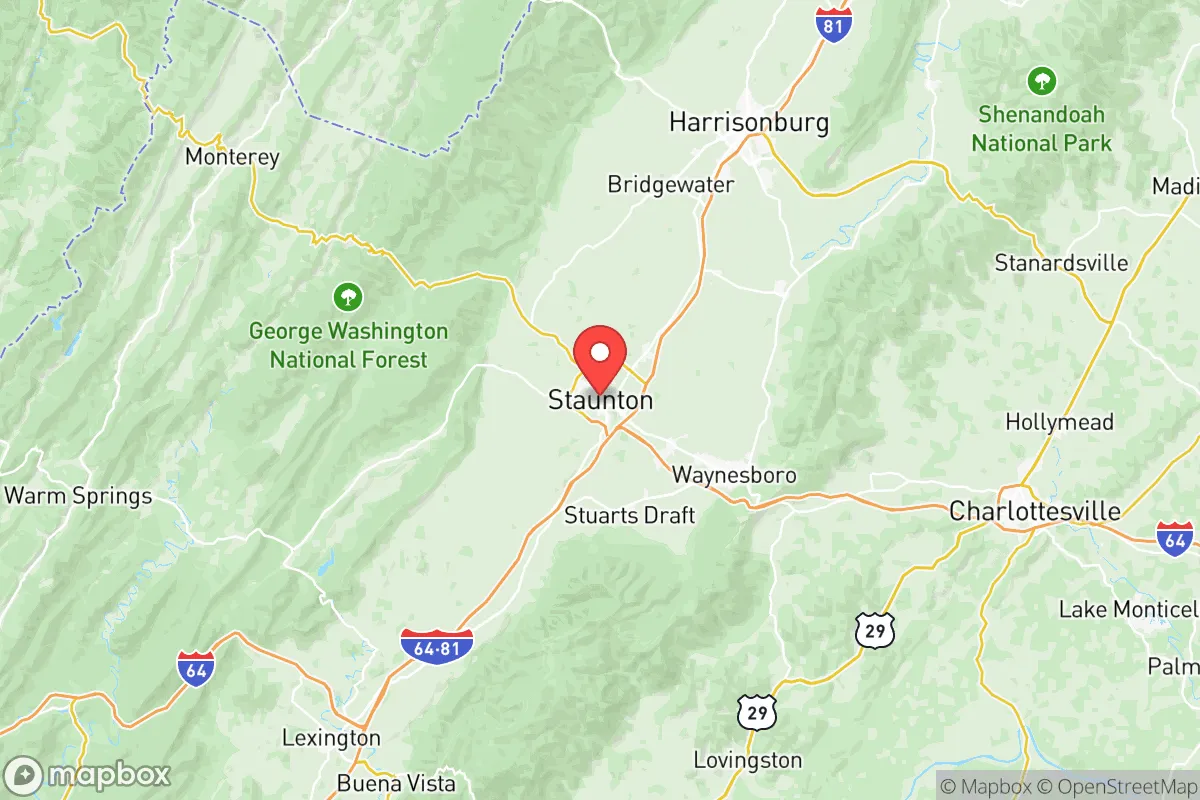
Staunton City County, VA, is a unique independent city that functions as a county-equivalent, offering a surprisingly broad spectrum of quality-of-life options despite its compact 22 square miles. The city itself is the sole population center, but its character shifts dramatically from a vibrant, walkable historic downtown to quiet residential neighborhoods and semi-rural pockets near the city limits. This range attracts a diverse mix of residents, from artists and young professionals drawn to the urban energy of the Beverley Street corridor to families and retirees seeking more space and lower costs on the outskirts near the Augusta County line.
Largest town(s) & population centers
Staunton is the county's only incorporated city and its undisputed population and economic hub, home to roughly 25,000 residents. Daily life here is defined by a compact, walkable historic core centered on Beverley Street and the Wharf area, which are lined with independent bookstores, farm-to-table restaurants, and art galleries. The city is anchored by major employers like Mary Baldwin University, the Staunton-Augusta-Waynesboro Public Schools central office, and the Western State Hospital campus. Commuting patterns are notably efficient, with an average commute time of just 22 minutes, well below the national average, allowing residents to live in the heart of the city and still reach jobs in nearby Waynesboro or Harrisonburg quickly. The downtown area is particularly popular with creatives and empty-nesters who value being able to walk to the American Shakespeare Center's Blackfriars Playhouse or the Staunton Farmers Market.
Smaller towns & rural pockets
While Staunton City County itself contains no other incorporated towns, its boundaries encompass distinct neighborhoods and semi-rural enclaves that feel like separate communities. The Churchville Avenue corridor and areas near the Staunton-Augusta County line (such as the neighborhoods around Thornrose Cemetery and the Gypsy Hill Park area) offer larger lots and a more suburban-to-rural feel. Further out, the unincorporated community of Fishersville lies just across the county line in Augusta County but serves as a key residential and commercial spillover zone for Staunton residents. Within the city limits, the Newtown and Beverley Manor neighborhoods provide a quieter, more family-oriented atmosphere with tree-lined streets and older homes, contrasting with the denser downtown core.
Cost & lifestyle range
The cost of living in Staunton City County is significantly below the national average, with a cost-of-living index of 85 (where 100 is the U.S. average), making it one of the more affordable independent cities in Virginia. The median home value is $239,300, and the median rent is $993, both well under national medians. However, lifestyle and costs vary by area. The most expensive end of the spectrum is the Historic Downtown district, where restored Victorian and Federal-style homes often command prices above $350,000, and walkability to shops and entertainment is a premium. At the more affordable end, neighborhoods like West End and parts of North Staunton offer homes in the $150,000–$200,000 range, often with larger yards and more parking, appealing to first-time buyers and families. The Gypsy Hill Park area offers a middle ground, with modest homes near the city's largest green space, providing a suburban feel within city limits.
Staunton City County is best suited for those who want the cultural and social amenities of a small city—like a thriving arts scene, historic architecture, and walkable neighborhoods—without the high costs or long commutes of larger metros. The range of housing options and neighborhood characters means that a recent graduate renting near downtown, a family buying a starter home in West End, and a retiree settling into a quiet bungalow near Gypsy Hill Park can all find a place that fits their budget and lifestyle within this single, tight-knit community.

Crime in Staunton City County
Generally safer than 60% of comparable U.S. locations.
Violent CrimeViolent Crime Analysis
Property CrimeProperty Crime Analysis
Crime Analysis
Staunton City County, Virginia, presents a mixed safety profile where property crime rates significantly exceed national averages while violent crime remains below the U.S. median. With a violent crime rate of 209 incidents per 100,000 residents and a property crime rate of 1,389.4 per 100,000, the city offers a relatively safe environment for person-to-person offenses but demands vigilance regarding theft, burglary, and vehicle-related crimes. The presence of progressive judicial policies in the broader Shenandoah Valley region, including Staunton’s own court system, has contributed to a revolving-door approach to property offenders, raising concerns among residents about repeat offenses and diminished consequences for non-violent criminals.
Crime in context
Staunton’s violent crime rate of 209 per 100,000 sits roughly 40% below the national average of 380 per 100,000, placing it in a safer tier compared to larger Virginia cities like Richmond (470 per 100,000) or Norfolk (580 per 100,000). However, the city’s property crime rate of 1,389.4 per 100,000 is approximately 25% higher than the U.S. average of 1,100 per 100,000, driven largely by larceny-theft and motor vehicle theft. When compared to neighboring jurisdictions, Staunton fares worse than the more conservative and enforcement-focused areas of Augusta County (property crime around 950 per 100,000) and Waynesboro (1,100 per 100,000), but better than the more urbanized and progressive-leaning Harrisonburg, which posts property crime rates above 1,600 per 100,000. The disparity reflects the impact of local prosecutorial philosophies: Staunton’s Commonwealth’s Attorney office has adopted diversion programs and reduced incarceration for low-level property offenses, a trend that critics argue emboldens repeat offenders and undermines public safety.
What residents experience
For daily life in Staunton, the most tangible crime risks involve theft from vehicles, package theft, and occasional burglaries in residential neighborhoods. The downtown historic district and areas near Mary Baldwin University see higher foot traffic and correspondingly more larceny incidents, while the neighborhoods of Newtown and Churchville Avenue report elevated property crime rates relative to the city average. Violent crime is rare but not absent: aggravated assaults account for the majority of violent incidents, often concentrated in the West End and around the Staunton Crossing commercial corridor. Residents in the Gospel Hill and Sears Hill neighborhoods generally report feeling safer, with lower incident densities and stronger neighborhood watch participation. The city’s police department has responded with targeted patrols and a property crime task force, but the underlying challenge remains the judicial system’s leniency: offenders arrested for theft or burglary in Staunton frequently receive suspended sentences or probation, returning to the same neighborhoods within weeks. This pattern is especially pronounced in cases processed through the Staunton District Court, where progressive sentencing guidelines prioritize rehabilitation over incarceration, leaving victims without a sense of justice and communities exposed to repeat criminal activity.
Neighborhood-level variation is significant in Staunton. The Beverley Historic District and the area around Gypsy Hill Park consistently report the lowest crime rates in the city, with violent crime nearly absent and property crime roughly half the citywide figure. In contrast, the Greenville Avenue corridor and the neighborhoods adjacent to the Staunton Mall see property crime rates approaching 2,000 per 100,000, driven by retail theft and vehicle break-ins. The disparity underscores the importance of location choice: families and retirees moving to Staunton should prioritize the northern and eastern quadrants of the city, while exercising caution in the central commercial zones and the western edge near the city limits. Overall, Staunton offers a livable environment for those who take standard urban precautions, but the property crime burden and the justice system’s progressive tilt remain legitimate concerns for prospective residents.
* Values derived from national, state, county, city and local statistics and may differ in a specific area. Last updated: 2026-06-28T20:50:48.000Z
Narrative content on this page is AI-generated and may contain mistakes. Verify any details that matter before acting on them.
ReloMaps may earn a commission from affiliate links at no extra cost to you.

