
Photo: Wikipedia
Personal Sovereignty in Prince Edward County
Viable for self-reliance. Generally workable, though some barriers may limit total independence.
What does Personal Sovereignty tell us?
Personal Sovereignty measures your capacity for self-reliance and independence with minimal government friction. Higher scores mean fewer barriers between you and the way you want to live... but it assumes you have the space you need and good neighbors.
What does this tell us?
Personal Sovereignty measures your capacity for self-reliance and independence with minimal government friction. Higher scores mean fewer barriers between you and the way you want to live... but it assumes you have the space you need and good neighbors.
State Policy
Energy independence: Importer (32% of energy produced in-state)
Personal Liberty
Homesteading

Personal Liberty Analysis
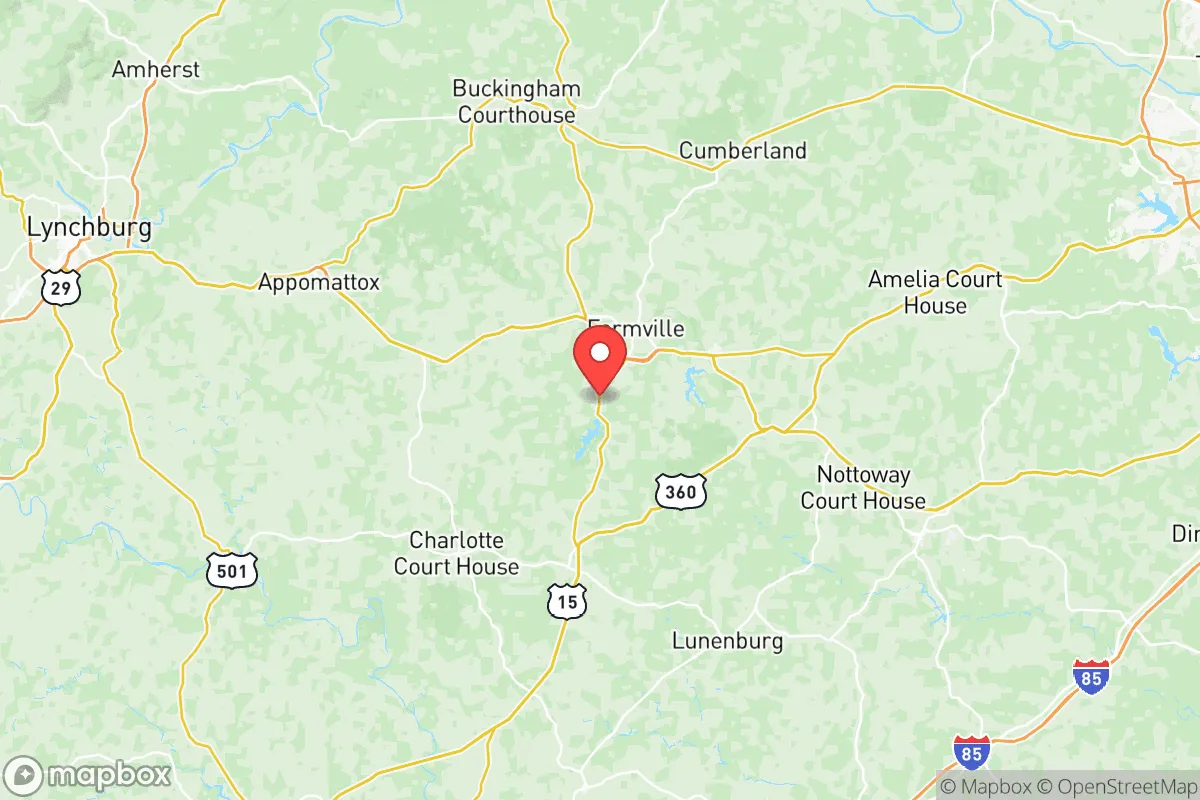
Prince Edward County, Virginia, offers a notably high degree of personal sovereignty relative to the urban centers of the state, with a regulatory environment that generally favors individual autonomy in taxation, self-defense, and land use. The county’s rural character, combined with Virginia’s status as a Dillon Rule state (where local authority is limited to what the state explicitly grants), creates a framework where state-level laws often set the floor for personal freedoms, and local enforcement tends to be light-touch. For individuals and families prioritizing self-reliance, the area around Farmville, the county seat, and the smaller communities of Hampden-Sydney, Prospect, and Meherrin present distinct opportunities and constraints that differ markedly from the more restrictive policies found in Northern Virginia or Richmond.
Tax burden and regulatory posture: how the county compares to state averages
Prince Edward County’s tax burden is moderate by Virginia standards, with a real property tax rate of approximately $0.65 per $100 of assessed value as of 2025, which is below the state average of roughly $0.80. This lower rate, combined with Virginia’s flat income tax of 5.75% and a state sales tax of 5.3% (with an additional 1% local option tax, totaling 6.3% in the county), means the overall tax load is lighter than in high-tax localities like Arlington or Fairfax. The county’s regulatory posture is generally permissive: there is no county-wide zoning in unincorporated areas, which allows for a wide range of land uses without the bureaucratic hurdles common in more urbanized jurisdictions. However, the town of Farmville does enforce its own zoning and building codes, so property owners within town limits face stricter oversight on setbacks, lot coverage, and permitted structures. For those seeking maximum regulatory freedom, the unincorporated areas around Prospect and Meherrin offer a more hands-off environment, where agricultural and residential uses can coexist with minimal county interference.
Self-defense and gun law specifics: what Virginia’s framework means locally
Virginia is a shall-issue state for concealed handgun permits, meaning that as long as an applicant meets statutory requirements (age 21, no disqualifying criminal history, completion of a firearms safety course), the county sheriff must issue the permit. Prince Edward County’s sheriff’s office processes these applications efficiently, with no local ordinances that add additional restrictions beyond state law. The county does not have any local gun control measures, such as bans on open carry or restrictions on magazine capacity, which are preempted by state law. Open carry of handguns and long guns is legal without a permit for anyone 18 or older who can legally possess a firearm. The communities of Farmville and Hampden-Sydney, while hosting a university (Longwood University) and a college (Hampden-Sydney College), do not have the same anti-gun sentiment found in college towns like Charlottesville. The local culture is strongly pro-Second Amendment, with multiple gun shops and shooting ranges in the area, including the Farmville Gun Club and the Meherrin River Sportsman’s Club. For residents, the practical reality is that self-defense rights are robust, with no waiting periods, no universal background checks beyond federal requirements, and no restrictions on carrying in most public spaces (excluding schools and government buildings, as per state law).
Self-reliance and homesteading viability: lot sizes, zoning, and off-grid feasibility
Prince Edward County is one of the more viable locations in central Virginia for homesteading and off-grid living, thanks to its permissive land-use regulations and affordable land prices. In unincorporated areas, there is no minimum lot size for agricultural or residential use, though the county’s health department requires a minimum of one acre for a conventional septic system. For those seeking to go off-grid, the county does not prohibit alternative energy systems like solar panels or wind turbines, and there are no county-wide building codes that mandate grid connection. The communities of Prospect and Meherrin, in particular, offer large parcels of land (often 5 to 20 acres) at prices ranging from $3,000 to $8,000 per acre, making them attractive for self-sufficient homesteads. Water access is generally via private wells, and the county does not restrict rainwater harvesting. However, the town of Farmville does have building codes that require permits for structural changes and electrical work, so off-grid living within town limits is more constrained. For those willing to live outside town boundaries, the county’s light regulatory touch extends to livestock: there are no county-wide restrictions on keeping chickens, goats, or even larger livestock like cattle, though residents near Hampden-Sydney should be aware of the college’s influence on local noise and nuisance ordinances. The county’s agricultural zoning allows for farm stands and small-scale processing of homegrown products without the need for a business license, which supports a self-reliant lifestyle.
Personal liberties: parental rights, medical autonomy, speech, and property
Virginia law generally respects parental rights in education and medical decisions, and Prince Edward County’s school board has not adopted the more progressive policies seen in urban districts. The county’s public schools, including Prince Edward County High School and the elementary schools in Farmville, do not have explicit policies on critical race theory or gender ideology that override parental consent, and the school board has maintained a policy of transparency in curriculum materials. Medical autonomy is shaped by state law: Virginia does not have a state-level vaccine mandate for adults, and the county does not impose local health orders beyond state requirements. For those concerned about medical freedom, the county’s rural hospitals, such as Centra Southside Community Hospital in Farmville, operate under standard state regulations but do not have the aggressive enforcement seen in more populous areas. Free speech is protected under the First Amendment, and the county has not enacted any local ordinances restricting public assembly or protest. Property rights are strong: the county’s lack of comprehensive zoning in unincorporated areas means that landowners have broad discretion over how to use their property, subject only to state environmental regulations (e.g., wetland protections) and health department requirements for septic systems. The town of Farmville does have a historic district with design review for exterior changes, but this applies only to properties within that designated area.
Overall, Prince Edward County offers a level of personal sovereignty that is significantly higher than what is available in Virginia’s urban corridors, particularly for those who choose to live outside the town limits of Farmville. The combination of low taxes, permissive gun laws, minimal zoning, and respect for parental and property rights makes it a strong candidate for individuals and families seeking a self-reliant lifestyle. While not as libertarian as some counties in the western part of the state (like Highland or Bath), Prince Edward strikes a balance that is more freedom-oriented than the average Virginia locality, especially when compared to the regulatory density of Northern Virginia or the Richmond metro area. For those prioritizing autonomy, the unincorporated areas around Prospect, Meherrin, and Hampden-Sydney represent the best opportunities for a life with minimal government interference.

* Values derived from national, state, county, city and local statistics and may differ in a specific area. Last updated: 2026-10-24T12:07:31.000Z
Narrative content on this page is AI-generated and may contain mistakes. Verify any details that matter before acting on them.
ReloMaps may earn a commission from affiliate links at no extra cost to you.

