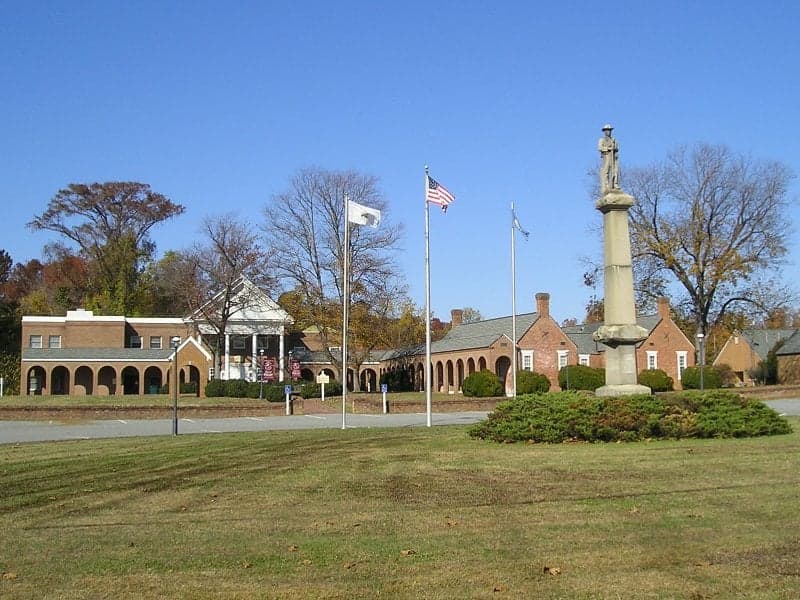
Photo: Wikipedia
Quality of Life in Isle of Wight County
A livable area that tracks near national norms for affordability, walkability, and neighborhood health.
What does Quality of Life tell us?
Quality of Life measures an area by evaluating factors like cost of living, nearby amenities, country club access, airport proximity, socioeconomic signals and neighborhood character. For large states, this is a general average — quality of life can vary dramatically between metro areas, suburbs, and rural communities within the same state.
What does this tell us?
Quality of Life measures an area by evaluating factors like cost of living, nearby amenities, country club access, airport proximity, socioeconomic signals and neighborhood character. For large states, this is a general average — quality of life can vary dramatically between metro areas, suburbs, and rural communities within the same state.
Cost of Living
15% above national average
101%
The Real Cost of Living in Isle of Wight County for 2026
| Tier | Individual | Family (4) |
|---|---|---|
| Survival | $21k | $39k |
| Comfortable | $65k | $95k |
| Luxury | $153k+ | $237k+ |
| Elite (Top 5%) | $180k+ | $279k+ |
Quality-of-Life Analysis
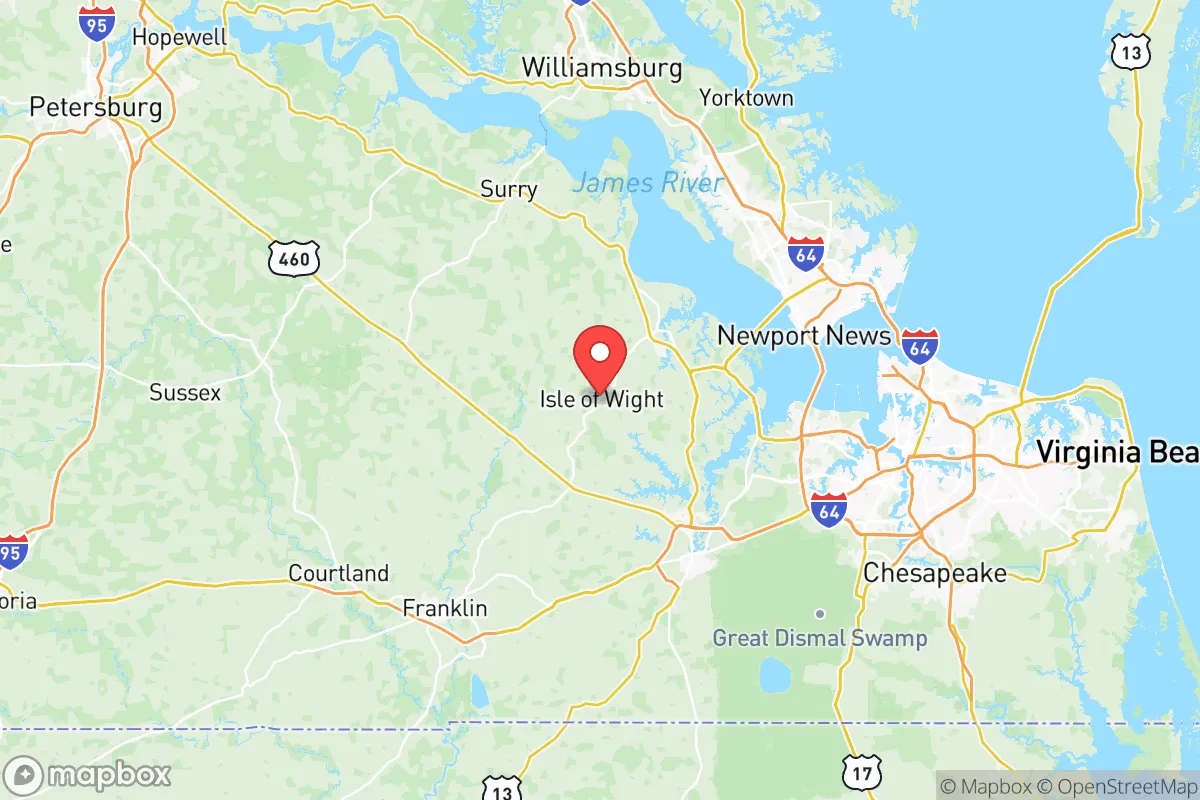
Isle of Wight County, Virginia, offers one of the widest quality-of-life spreads in the Hampton Roads region, ranging from the walkable, historic riverfront of Smithfield to the deeply agricultural crossroads of Walters and the growing suburban fringe of Carrollton. With a cost of living index of 115 (15% above the national average) and a median home value of $333,600, the county attracts both commuters seeking proximity to Norfolk and Newport News and retirees looking for quiet, land-rich living along the Pagan River and Burwell Bay. The county’s character shifts dramatically within a 20-minute drive, making it essential for prospective residents to match their lifestyle expectations to the specific community they choose.
Largest town(s) & population centers
Smithfield is the county’s cultural and economic anchor, home to roughly 8,500 residents and the historic downtown that draws visitors to its 18th-century courthouse and the iconic Smithfield Foods plant. Daily life here revolves around the compact, brick-lined Main Street, where residents walk to coffee shops, the Smithfield Little Theatre, and the Windsor Castle Park trail system along the Pagan River. The town’s median home value sits near the county average at $340,000, but inventory is tight, with many properties in the historic district commanding premiums above $450,000. Carrollton, located in the county’s northeast corner along the James River, is the fastest-growing population center, offering newer subdivisions like Benn’s Grant and Eagle Harbor that appeal to military families and shipyard workers. Commuters from Carrollton face the county’s longest average drive at roughly 35 minutes to Norfolk Naval Station, though the proximity to the James River Bridge and Route 17 makes it the most convenient base for Hampton Roads employment.
Smaller towns & rural pockets
Between these two anchors, Isle of Wight maintains a genuine rural character that has largely disappeared from neighboring counties. Windsor, the county’s second incorporated town, sits along U.S. Route 460 and serves as a quiet bedroom community with a median home value near $290,000—noticeably below the county average. The unincorporated community of Rushmere, on the James River’s southern shore, offers some of the county’s most affordable waterfront property, with older ranch homes frequently listing between $200,000 and $250,000. Further inland, the crossroads communities of Walters, Rescue, and Zuni are defined by peanut and soybean farms, volunteer fire departments, and churches that anchor social life. These areas have no municipal water or sewer service, and residents rely on wells and septic systems—a trade-off that keeps land prices at roughly $8,000 to $12,000 per acre, compared to $30,000-plus per acre in Carrollton’s newer developments.
Cost & lifestyle range
The cost spread across Isle of Wight is substantial. At the high end, Carrollton’s waterfront communities along the James River feature homes from $500,000 to $800,000, with HOA fees covering community pools, boat ramps, and gated entrances. The median rent countywide is $1,313, but two-bedroom apartments in Smithfield’s newer complexes like The Reserve at Smithfield Station run closer to $1,500, while older duplexes in Windsor can be found for $1,100. At the low end, Rushmere and the rural western corridor offer manufactured homes and fixer-uppers on half-acre lots for under $200,000, though buyers should budget for well maintenance and longer drives to grocery stores—the nearest full-service Food Lion is in Smithfield, 20 minutes from Walters. The county’s average commute of 29.8 minutes reflects this trade-off: residents in Carrollton and northern Smithfield trade shorter drives for higher prices, while those in Zuni and Rescue accept 40-minute commutes to Newport News in exchange for acreage and privacy.
The county’s tax structure adds another layer to the lifestyle calculus. Isle of Wight’s real estate tax rate of $0.72 per $100 of assessed value is among the lowest in Hampton Roads, meaning a $333,600 median home carries an annual tax bill of roughly $2,400—about $800 less than the same home in Suffolk. However, the county has no public transportation, so every resident needs at least one vehicle, and the lack of a hospital means medical care requires a 25-minute drive to Riverside Regional Medical Center in Newport News or Sentara Obici in Suffolk.
Families with school-age children will find the county’s three public high schools—Smithfield, Windsor, and Isle of Wight Academy (private)—all rated above the state average on Virginia’s Standards of Learning assessments, though the rural western schools have smaller Advanced Placement course offerings than Smithfield High. Retirees and remote workers increasingly favor the Burwell Bay area south of Smithfield, where newer custom homes on 2-to-5-acre lots offer a middle ground between subdivision living and true farmland, with fiber-optic internet now available along the Route 10 corridor.
Ultimately, Isle of Wight County rewards residents who understand its patchwork nature. Those who thrive here are typically self-sufficient, value space over convenience, and accept that the county’s charm lies in its contrasts—the smell of curing ham from the Smithfield plant, the sight of tractors on Route 460, and the evening boat traffic on the Pagan River. Buyers seeking walkable urban amenities should look elsewhere, but for those who want a genuine rural Virginia lifestyle within commuting distance of a major metro area, the county offers a range of options unmatched in the region.

Crime in Isle of Wight County
Generally safer than 60% of comparable U.S. locations.
Violent CrimeViolent Crime Analysis
Property CrimeProperty Crime Analysis
Crime Analysis
Isle of Wight County, Virginia, presents a mixed public-safety picture: its violent crime rate of 210.4 incidents per 100,000 residents sits well below the national average, while its property crime rate of 1,393.7 per 100,000 runs notably higher than both state and national medians. The county’s geography matters—rural communities like Smithfield and Windsor anchor the north, while the southern unincorporated areas near the Suffolk border experience different pressures. For families weighing a move to the Hampton Roads exurbs, the data suggests a quiet, low-violence environment punctuated by property offenses like theft and vehicle break-ins.
Crime in context
Isle of Wight’s violent crime rate of 210.4 per 100,000 is roughly 40% below the national average of about 380 per 100,000 and slightly under Virginia’s statewide figure of approximately 240 per 100,000. Aggravated assault accounts for the majority of these incidents, with homicide and robbery remaining rare events—typically single digits annually across the entire county. The property crime rate of 1,393.7 per 100,000, however, is about 15% higher than the national average and roughly 20% above Virginia’s statewide rate. Larceny-theft is the dominant category, followed by motor vehicle theft, which has ticked upward in recent years as regional auto-theft rings from Norfolk and Portsmouth have pushed into exurban jurisdictions.
Comparatively, Isle of Wight is safer than neighboring Suffolk (which posts violent crime near 350 per 100,000) and significantly safer than Portsmouth or Norfolk, where violent crime rates exceed 600 per 100,000. The county’s challenge is not violent victimization but property loss—a pattern consistent with bedroom communities where residents commute to higher-crime metros and leave homes unattended during work hours.
What residents experience
Crime in Isle of Wight is not evenly distributed. The town of Smithfield—the county seat and largest municipality—accounts for a disproportionate share of reported property crime, particularly shoplifting and vehicle break-ins around the historic downtown and the shopping corridors along Benns Church Boulevard. Windsor, the county’s second incorporated town, sees far fewer incidents, with most reports limited to minor vandalism and occasional trespassing. The unincorporated communities of Carrollton and Rushmere along the James River waterfront experience low crime, though Rushmere has seen periodic drug-related arrests tied to the regional opioid trade.
Residents in the county’s southern tier, near the Suffolk line, report more frequent property crimes—particularly theft from vehicles and outbuildings—than those in the northern half. The Isle of Wight County Sheriff’s Office, which provides primary law enforcement for all unincorporated areas, maintains a visible patrol presence, and the county’s response times average under 10 minutes in the Smithfield-Windsor corridor. The county also operates a dedicated animal control unit and a school resource officer program across its five public schools.
One factor worth noting for prospective residents: Isle of Wight falls under the 5th Judicial Circuit, with courts in Smithfield and Isle of Wight proper. The commonwealth’s attorney’s office in Isle of Wight has historically pursued property crime cases more aggressively than neighboring Hampton Roads jurisdictions, and the county’s jail population and conviction rates reflect a more traditional approach to prosecution. This stands in contrast to the more progressive district attorney offices in Norfolk and Portsmouth, where critics argue lenient charging policies have contributed to repeat-offender cycles.
Neighborhood-level variation is significant. The gated communities and waterfront developments around Smithfield’s historic district and the Battery Park area near the ferry landing report near-zero crime. Conversely, the mobile home parks and older subdivisions along Route 258 south of Windsor see the highest concentration of property incidents. For families prioritizing safety, the northern half of the county—particularly the Carrollton and Smithfield zip codes of 23805 and 23430—offers the most secure environment, while the southern corridor warrants standard suburban precautions like exterior lighting and home security systems.
* Values derived from national, state, county, city and local statistics and may differ in a specific area. Last updated: 2026-10-13T18:21:44.000Z
Narrative content on this page is AI-generated and may contain mistakes. Verify any details that matter before acting on them.
ReloMaps may earn a commission from affiliate links at no extra cost to you.

