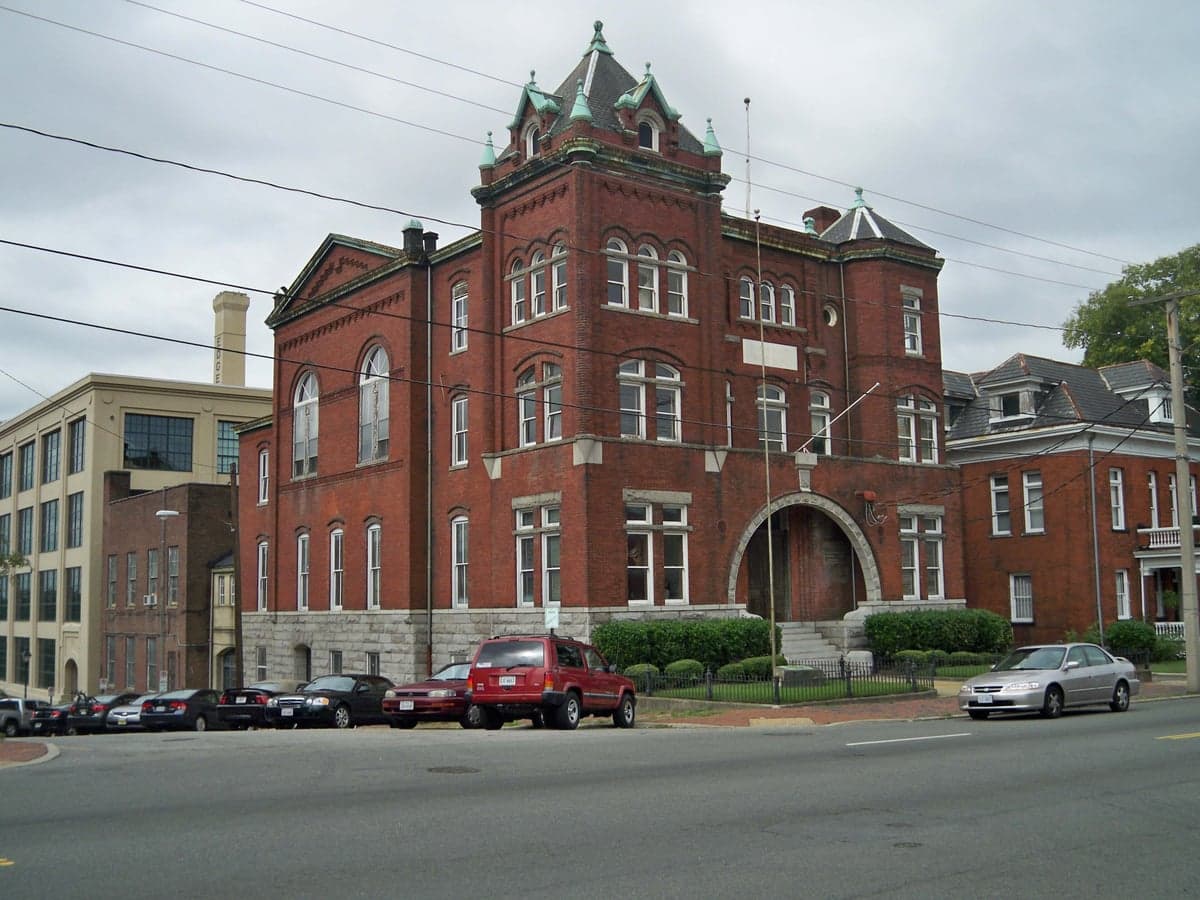
Photo: Wikipedia
Political ClimatePolitical Climate in Henrico County
Showing county-level results — no local-only data available.
Lean and PVI are calculated from this county’s 2020 and 2024 presidential results, Cook-style.
Political rankings in Virginia
- Most Conservative Cities in Virginia
- Most Liberal Cities in Virginia
- Best Liberal-Leaning Towns in the South
- Best Liberal-Leaning Towns in Appalachia
- Best Conservative-Leaning Towns in the Mid-Atlantic
- Safest Liberal-Leaning Towns in the South
- Safest Conservative-Leaning Towns in the South
- Safest Conservative-Leaning Towns on the East Coast
- Most Conservative Counties in Virginia
- Most Liberal Counties in Virginia
Local Political AnalysisPolitical Analysis of Henrico County
Henrico County has transformed into one of the most reliably Democratic strongholds in Virginia, carrying a Cook Partisan Voting Index of D+34 — a staggering 30 points bluer than the state as a whole, which sits at D+4. This isn't a recent fluke; the county has been trending leftward for over a decade, driven by rapid suburbanization, an influx of younger professionals and families from the Washington, D.C. metro area, and a diversifying population. In the 2024 presidential election, Henrico delivered roughly 65% of its vote to the Democratic candidate, while Virginia overall was a closer 52-46 split. The shift is most visible in the county's eastern and central precincts, where neighborhoods like those in the 23231 and 23233 zip codes have swung hard blue, while the western reaches — particularly around Short Pump and Glen Allen — remain more competitive, though even those areas have drifted left since 2016.
How it compares
Henrico's D+34 PVI places it in a league with deep-blue suburban counties like Montgomery County, Maryland (D+29) or Fairfax County, Virginia (D+18). To put it in state context: Henrico is roughly 8.5 times more Democratic-leaning than Virginia as a whole. The county's political geography is not monolithic, however. The western towns of Short Pump and Glen Allen still host pockets of Republican voters, particularly in precincts near the Hanover County line, where Trump won 48-50% of the vote in 2020. Meanwhile, the eastern and central areas — including Highland Springs, Sandston, and the city of Richmond's northern suburbs — are overwhelmingly blue, often delivering 70-80% for Democratic candidates. The swing precincts are largely in the middle of the county, around Lakeside and Tuckahoe, where margins have tightened from R+5 in 2012 to D+8 in 2024. This means that while the county is solidly Democratic overall, a Republican candidate who can peel off 40% in Henrico can still win statewide — as Glenn Youngkin did in 2021 by carrying 43% of the county vote.
What this means for residents
For liberal residents, Henrico's lean means local policies align closely with their values: the county has expanded public transit with the GRTC Pulse bus rapid transit system, invested heavily in affordable housing initiatives, and maintained a progressive school board that has increased teacher salaries by 15% since 2022. Conservative residents, while outnumbered, are not voiceless. The county's Board of Supervisors still has two Republican members (from the Three Chopt and Brookland districts), and local GOP groups remain active in Short Pump and Glen Allen. Practical effects include a property tax rate of $0.85 per $100 of assessed value — lower than Richmond city's $1.20 — and a business-friendly environment that has attracted major employers like Capital One, which employs over 10,000 people in the county. The political climate also shapes daily life: you'll see "Black Lives Matter" signs in yards in Lakeside and "Thin Blue Line" flags in Short Pump, but the county's strong public schools and low crime rates (violent crime is 40% below the national average) are unifying issues that transcend party lines.
Culturally, Henrico stands apart from much of Virginia by being both suburban and urban-adjacent, with a political identity that mirrors its geography. The county has been a testing ground for policy experiments that later spread statewide: it was one of the first in Virginia to adopt a $15 minimum wage for county employees in 2021, and its school board was an early adopter of transgender-inclusive policies. For newcomers, the key takeaway is that Henrico is a place where Democratic dominance is the norm, but the political temperature is moderate compared to deep-blue cities like San Francisco or New York. You can find a conservative church in Glen Allen and a progressive coffee shop in Lakeside within a 10-minute drive — and both groups tend to agree on keeping the county's parks well-maintained and its schools well-funded. The trajectory is clear: Henrico will likely stay D+30 or higher for the foreseeable future, but the real story is how its internal diversity — from the red-tinted west to the deep-blue east — makes it a microcosm of Virginia's broader political evolution.

State Political ClimatePolitical Climate in Virginia
State Political AnalysisPolitical Environment in the State
Virginia has shifted from a reliably red presidential state to a solidly blue one over the past two decades, carrying a Cook PVI of D+4. The state’s political center of gravity has moved decisively toward the populous, diverse, and fast-growing suburbs of Northern Virginia, which now anchor the Democratic coalition. However, this is not a monolithic blue state — it’s a deeply divided commonwealth where rural and exurban areas remain staunchly Republican, and the balance of power is constantly contested in statewide races. For a conservative relocator, Virginia offers a mixed bag: a state government that has trended left on social and economic policy, but with strong local pockets of conservative governance and a political culture that still values pragmatism over extremism.
Urban vs. rural divide
The political map of Virginia is a tale of two commonwealths. The Democratic stronghold is the crescent from Arlington and Alexandria through Fairfax County and down to Richmond, powered by federal workers, tech professionals, and a diverse population. Loudoun County, once a Republican bastion, flipped blue in the 2010s and now delivers margins of 20+ points for Democrats. Prince William County has followed a similar trajectory. Meanwhile, the rural south and southwest — places like Roanoke, Lynchburg, and the coal country around Bristol — vote Republican by 30-40 points. The Hampton Roads region (Norfolk, Virginia Beach) is a true swing area, with military families and defense contractors leaning right, but the urban core of Norfolk and Portsmouth leaning left. The result is a state where Democrats win statewide by piling up huge margins in NoVA and Richmond, while Republicans dominate the landmass but lack the population density to counter it.
Policy environment
Virginia’s tax structure is moderately conservative compared to its blue-state peers. The state income tax is a flat 5.75% (as of 2025), and the sales tax is 5.3% (higher in some localities). Property taxes are set locally and are generally moderate — about 0.8-1.1% of assessed value in most counties. There is no estate tax. The regulatory posture is business-friendly in many sectors, particularly data centers and defense contracting, which are major economic drivers. Education policy has been a flashpoint: under Governor Glenn Youngkin (R, 2022-2026), the state expanded school choice with lab schools and charter school funding, and implemented "Parents’ Bill of Rights" legislation requiring school transparency on curriculum and library materials. Healthcare policy is mixed — Virginia expanded Medicaid under the Affordable Care Act in 2019, but does not have a state-level individual mandate. Election laws are moderately restrictive: voter ID is required, early voting is available (45 days), and no-excuse absentee voting was made permanent in 2020. The state does not have a "stand your ground" law, but does have a "castle doctrine" and permits open carry of firearms.
Recent policy direction
The last five years have seen Virginia swing back and forth on key liberty issues. Under the Democratic trifecta (2020-2021), the state passed a sweeping gun control package: universal background checks, a "red flag" law (extreme risk protective orders), a one-handgun-per-month limit, and a ban on assault weapons for those under 21. Governor Youngkin and a Republican House (2022-2023) could not repeal these laws, but did block further restrictions. On education, Youngkin’s administration banned "divisive concepts" in public schools and required parental notification of sexually explicit content — policies that remain in place. On abortion, Virginia is an outlier in the South: abortion is legal up to 26 weeks (the second trimester), with no waiting period or mandatory counseling. A 2023 attempt by Youngkin to enact a 15-week ban failed in the Democratic-controlled Senate. On voting, the state expanded early voting and made Election Day a state holiday, but kept voter ID. On property rights, Virginia has no statewide rent control, and localities have limited ability to impose it. On privacy, the state passed a comprehensive data privacy law in 2021 (the Virginia Consumer Data Protection Act), giving residents rights to access, correct, and delete personal data held by companies.
Civil unrest & political movements
Virginia has been a stage for some of the most visible political flashpoints in the country. The 2017 "Unite the Right" rally in Charlottesville — and the violent clashes that followed — left a lasting scar and made the city a symbol of far-right extremism. In response, the state removed Confederate statues and passed laws allowing localities to do so. More recently, the 2020-2021 protests over racial justice in Richmond saw the Robert E. Lee statue become a focal point; it was eventually removed in 2021. On the right, the "Parents Matter" movement has been particularly strong in Loudoun County, where school board meetings became national news over transgender policies and library book content. Immigration politics are less heated than in border states, but Prince William County has a history of aggressive immigration enforcement (the 2007 "Prince William model" of police cooperation with ICE), though that has softened under Democratic control. Election integrity controversies have been muted compared to other swing states — Virginia’s 2020 election was certified without major dispute, and the state’s voter rolls are regularly cleaned. There is no serious secession or nullification movement, though some rural counties have passed "Second Amendment sanctuary" resolutions.
Projection
Over the next 5-10 years, Virginia will likely continue its gradual leftward drift, driven by the relentless growth of Northern Virginia and the diversification of the Richmond and Hampton Roads suburbs. The state’s population is projected to grow by about 1 million by 2035, with most of that in the DC exurbs. This demographic shift makes it increasingly difficult for Republicans to win statewide — Youngkin’s 2021 victory was an exception, fueled by a backlash to COVID school closures and a moderate message. Future GOP candidates will need to run the table in the rural south and southwest while cutting margins in NoVA, a tall order. On policy, expect continued battles over education (school choice vs. public school funding), gun rights (with Democrats likely to push for further restrictions if they regain full control), and abortion (where the current 26-week limit is likely to be a floor, not a ceiling, for Democrats). A conservative moving to Virginia should expect a state that is purple in statewide races but blue-trending, with a policy environment that is moderate on taxes and business but increasingly progressive on social issues.
For a new resident, the bottom line is this: Virginia offers a high quality of life, strong job markets, and a moderate tax burden, but the political climate is one of constant tension. If you’re a conservative, you’ll find welcoming communities in the exurbs (like Spotsylvania or Fredericksburg) or in the rural south, but you’ll be voting in a state where your vote is often outmatched by the NoVA machine. If you’re a liberal, you’ll feel at home in the urban crescent, but you’ll encounter sharp cultural divides the moment you drive west of Richmond. The state’s political future is not settled — it’s a battleground where every election feels like a referendum on which direction the commonwealth will take. That makes it an exciting, if exhausting, place to live.
* Values derived from national, state, county, city and local statistics and may differ in a specific area. Last updated: 2026-11-16T15:20:58.000Z
Narrative content on this page is AI-generated and may contain mistakes. Verify any details that matter before acting on them.
ReloMaps may earn a commission from affiliate links at no extra cost to you.

