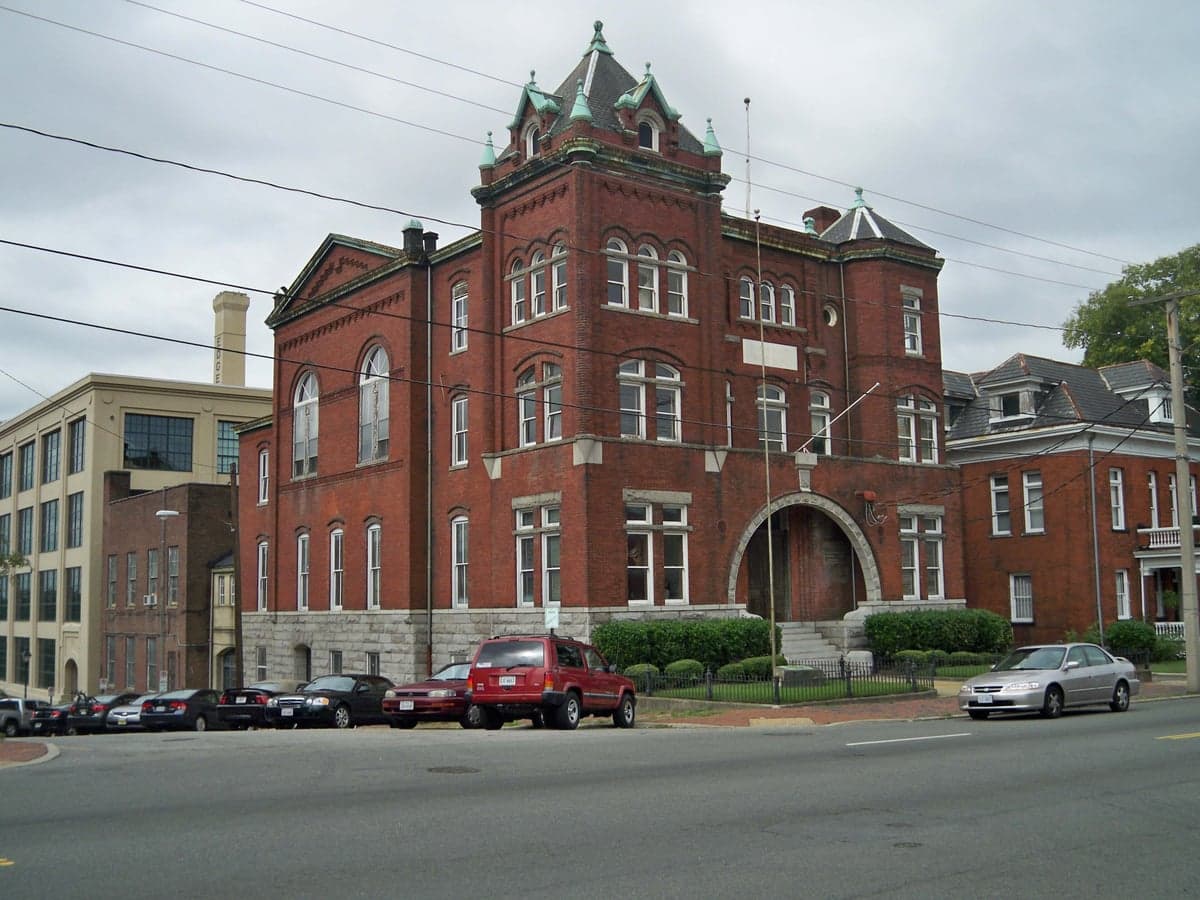
Photo: Wikipedia
Personal Sovereignty in Henrico County
Viable for self-reliance. Generally workable, though some barriers may limit total independence.
What does Personal Sovereignty tell us?
Personal Sovereignty measures your capacity for self-reliance and independence with minimal government friction. Higher scores mean fewer barriers between you and the way you want to live... but it assumes you have the space you need and good neighbors.
What does this tell us?
Personal Sovereignty measures your capacity for self-reliance and independence with minimal government friction. Higher scores mean fewer barriers between you and the way you want to live... but it assumes you have the space you need and good neighbors.
State Policy
Energy independence: Importer (32% of energy produced in-state)
Personal Liberty
Homesteading

Personal Liberty Analysis
Henrico County, Virginia, offers a notably balanced environment for personal sovereignty, where state-level preemptions on firearms and land use provide a baseline of autonomy, yet local ordinances and suburban density create meaningful variation across the county. The area's regulatory posture leans moderately permissive compared to Northern Virginia or the City of Richmond, but residents must navigate a patchwork of rules that differ sharply between the eastern, western, and central sections of the county. For individuals and families prioritizing self-reliance, Henrico presents a workable middle ground—neither as restrictive as urban centers nor as hands-off as rural counties further west.
Tax burden and regulatory posture in Henrico County
Henrico County's tax structure is competitive within the Richmond metro area, with a real property tax rate of $0.89 per $100 of assessed value as of 2025, which is lower than the City of Richmond's $1.20 but higher than neighboring Hanover County's $0.82. The county imposes a personal property tax of $4.20 per $100 on vehicles, a common Virginia levy, but offers a car tax relief program that caps the rate on the first $20,000 of value for qualifying vehicles. Business and occupational license taxes exist but are modest compared to larger jurisdictions. The regulatory environment is generally business-friendly, with no county-level income tax and a streamlined permitting process for home-based businesses in most residential zones. However, homeowners associations (HOAs) govern many newer subdivisions, particularly in areas like Short Pump and Glen Allen, where covenants can restrict everything from fence heights to vehicle storage. In contrast, unincorporated areas east of Interstate 295, such as Sandston and Highland Springs, have fewer HOA constraints, offering more operational freedom for residents who want to run small repair shops or keep multiple vehicles on their property.
Self-defense and gun law specifics in Henrico County
Virginia is a shall-issue state for concealed handgun permits, and Henrico County processes applications through the circuit court with typical turnaround times of 30–45 days. The county does not impose additional restrictions beyond state law, meaning no county-level assault weapon bans or magazine capacity limits exist. Open carry is legal for anyone 18 or older who can legally possess a firearm, though local law enforcement may respond to calls about open carry in public spaces like shopping centers in Tuckahoe or West End—not because it is illegal, but due to citizen concern. Stand-your-ground principles apply under Virginia Code § 18.2-279, which provides a presumption of reasonable fear when an intruder unlawfully enters a dwelling. Henrico's police department has a generally pro-Second Amendment culture, with no record of hostile interactions at permit application counters. For target shooting, the county has no public ranges, but private clubs like the Henrico County Shooting Range (operated by the police department for training) are not open to the public. Residents typically drive 20–30 minutes west to Goochland County or south to Chesterfield County for commercial ranges. The county's gun-friendly posture is strongest in its rural eastern pockets, where firearm ownership is common and visible, and weakest in dense suburban areas where HOAs may prohibit firearm storage in common areas.
Self-reliance and homesteading viability across Henrico's zones
Homesteading and off-grid living are feasible only in specific parts of Henrico, as the county's zoning code divides land into residential, agricultural, and conservation districts. Agricultural zoning (A-1) allows for livestock, crop production, and accessory structures like barns or greenhouses, but such parcels are concentrated in the eastern and northern fringes—particularly around Varina and Montrose. Minimum lot sizes in A-1 districts are 2 acres, and many properties in these areas are 5–10 acres, providing enough space for a substantial garden, small orchard, or a few goats or chickens. In suburban residential zones (R-3, R-4), lot sizes shrink to 0.25–0.5 acres, and keeping chickens is generally allowed with a permit, but larger livestock is prohibited. Off-grid living—meaning no connection to municipal water, sewer, or electric grids—is legally possible on parcels of 5+ acres in agricultural zones, but the county requires a well permit and septic system approval, which can cost $5,000–$15,000. Solar panels are permitted without special county approval, but HOAs in Innsbrook and Laurel may impose aesthetic restrictions. Rainwater collection is legal and encouraged, with no permit required for systems under 1,000 gallons. For families seeking a self-reliant lifestyle, the eastern Henrico areas near Seven Pines offer the best balance of affordability and regulatory flexibility, while western Henrico's dense subdivisions are less accommodating.
Personal liberties: parental rights, medical autonomy, speech, and property
Henrico County operates under Virginia's Dillon Rule, meaning local governments only have powers explicitly granted by the state, which limits the county's ability to enact ordinances that infringe on personal liberties. Parental rights are broadly protected under state law, with Virginia Code § 1-240.1 affirming parents' fundamental right to direct their children's upbringing. Henrico County Public Schools (HCPS) has a policy of notifying parents of any changes in a student's health or well-being, including mental health services, though some parents have raised concerns about the district's implementation of social-emotional learning curricula. Medical autonomy is generally respected; Virginia does not have a state-level vaccine mandate for adults, and Henrico does not impose local mandates beyond federal requirements for healthcare workers. The county's public health department does not enforce mask mandates in schools or businesses, deferring to individual choice. Free speech is protected under the First Amendment, and Henrico has no local ordinances restricting protest or public assembly beyond standard time, place, and manner regulations. Property rights are strong, with the county's zoning board of appeals providing a mechanism for variance requests, though approval rates hover around 60% for residential modifications. The county's eminent domain record is minimal, with no major takings controversies in the past decade. Compared to the City of Richmond, where a 2023 ordinance restricted short-term rentals and limited accessory dwelling units, Henrico's approach is more permissive, allowing ADUs by right in most residential zones.
Overall, Henrico County's personal sovereignty environment ranks as moderately high among Virginia's 95 counties—more permissive than Arlington or Fairfax, but less so than rural counties like Amelia or Louisa. The county's strength lies in its predictability: state preemptions on firearms and land use create a stable baseline, while local zoning and HOA rules are transparent and accessible. For a conservative-leaning individual or family, the key decision is location within the county—eastern Henrico offers greater autonomy for homesteading and self-reliance, while western Henrico trades some freedom for higher property values and amenities. The county's tax burden is moderate, its gun laws are standard for Virginia, and its regulatory posture is business-friendly without being libertarian. For those seeking a balance between personal liberty and suburban convenience, Henrico is a solid choice, though those prioritizing maximum sovereignty should look further west to counties with no zoning and lower taxes.

* Values derived from national, state, county, city and local statistics and may differ in a specific area. Last updated: 2026-11-16T15:20:58.000Z
Narrative content on this page is AI-generated and may contain mistakes. Verify any details that matter before acting on them.
ReloMaps may earn a commission from affiliate links at no extra cost to you.

