
Photo by Anthony Chiado on Unsplash
Quality of Life in Harrisonburg City County
A livable area that tracks near national norms for affordability, walkability, and neighborhood health.
What does Quality of Life tell us?
Quality of Life measures an area by evaluating factors like cost of living, nearby amenities, country club access, airport proximity, socioeconomic signals and neighborhood character. For large states, this is a general average — quality of life can vary dramatically between metro areas, suburbs, and rural communities within the same state.
What does this tell us?
Quality of Life measures an area by evaluating factors like cost of living, nearby amenities, country club access, airport proximity, socioeconomic signals and neighborhood character. For large states, this is a general average — quality of life can vary dramatically between metro areas, suburbs, and rural communities within the same state.
Cost of Living
3% below national average
75%
The Real Cost of Living in Harrisonburg City County for 2026
| Tier | Individual | Family (4) |
|---|---|---|
| Survival | $18k | $34k |
| Comfortable | $54k | $79k |
| Luxury | $107k+ | $167k+ |
| Elite (Top 5%) | $126k+ | $196k+ |
Quality-of-Life Analysis
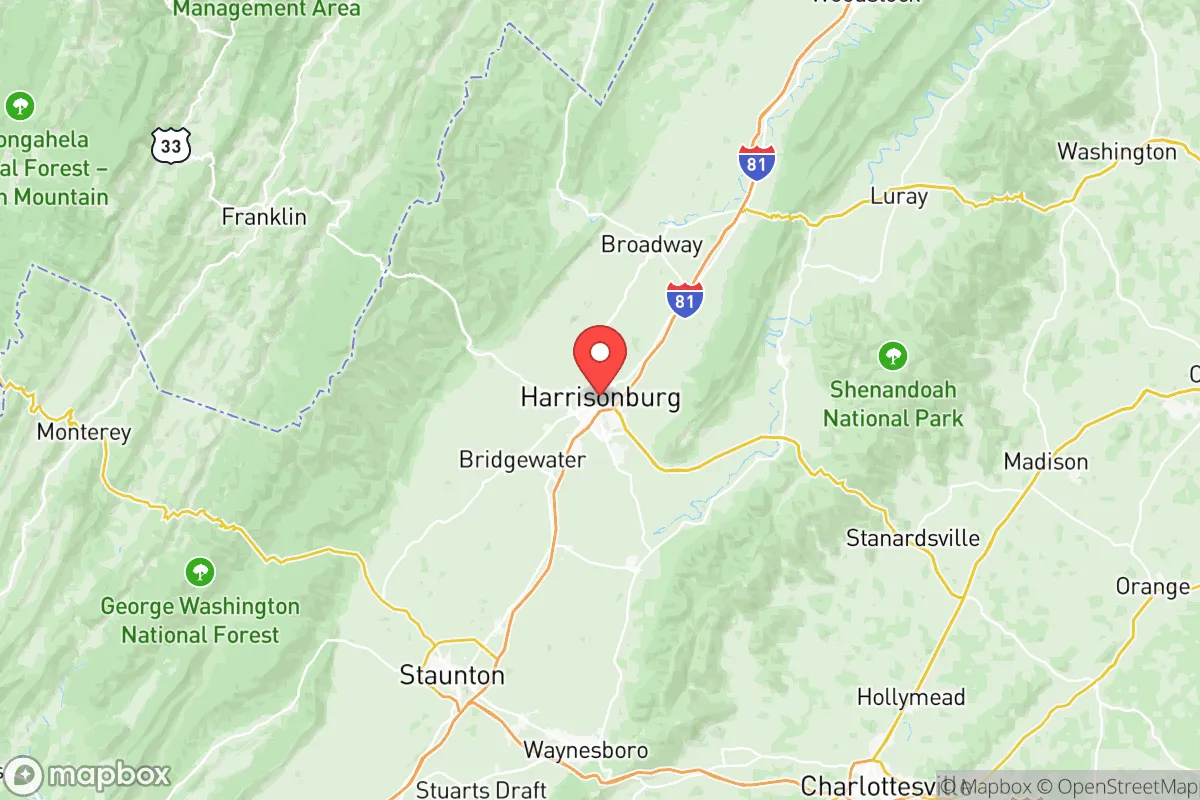
Harrisonburg City County, Virginia, is a unique jurisdiction that functions as both an independent city and the county seat of Rockingham County, creating a compact but diverse living environment. The county’s 17.1-square-mile footprint is dominated by the City of Harrisonburg itself, a mid-sized college town, with no other incorporated towns or significant rural pockets within its borders. This means the quality-of-life spectrum is less about geographic spread and more about the contrast between the energetic, walkable urban core and the quieter, family-oriented residential neighborhoods that fringe the city limits. The area draws a mix of university students, faculty, young professionals, and families who value the blend of small-city amenities and immediate access to the Shenandoah Valley’s outdoor recreation.
Largest town(s) & population centers
The sole population center is the City of Harrisonburg, home to roughly 53,000 residents and anchored by James Madison University (JMU) and Eastern Mennonite University (EMU). Daily life here is defined by a vibrant downtown centered around Court Square, with a strong farm-to-table restaurant scene, breweries, and live music venues like the Golden Pony. The Bluestone Trail and Hillandale Park provide green space within the city, while the Harrisonburg Farmers Market operates year-round. The presence of JMU means the city has a youthful, transient energy, with a significant portion of the housing stock consisting of student rentals near the university. For families and long-term residents, neighborhoods like Old Town (historic homes near downtown) and Northwest Acres (post-war single-family homes) offer a quieter pace while still being within a 10-minute drive of most amenities.
Smaller towns & rural pockets
Because Harrisonburg City County is coterminous with the city limits, there are no smaller towns or unincorporated communities within its jurisdiction. However, the county is immediately surrounded by Rockingham County, which contains the rural and small-town living options that Harrisonburg residents often access. Communities like Dayton (home to EMU’s main campus and a historic downtown), Bridgewater (a small college town with its own brewery and river access), and Elkton (a more affordable, working-class town at the base of the Blue Ridge) are all within a 15- to 20-minute commute. For those seeking true rural living, areas like Singers Glen or Linville offer large lots, farmland views, and a strong Mennonite and Old Order Mennonite presence, but these are in Rockingham County, not Harrisonburg City County itself.
Cost & lifestyle range
The cost of living in Harrisonburg City County sits at 97 on the COL index (100 = US average), making it slightly more affordable than the national norm but notably cheaper than Northern Virginia or Richmond. The median home value is $278,200, and the median rent is $1,120. The lifestyle range is primarily defined by housing type and proximity to JMU. The most affordable end of the spectrum is found in the northeast quadrant near Port Republic Road, where older duplexes and apartments cater to students and renters, with rents often below $1,000 for a one-bedroom. The higher end is concentrated in the southwest neighborhoods like Stone Spring and Massanutten Springs, where newer single-family homes and townhomes range from $350,000 to $500,000. The average commute of 17.1 minutes is exceptionally low, reflecting the county’s compact size and the fact that most jobs—at JMU, Sentara RMH Medical Center, and Merck & Co.—are within a 10-minute drive of any residence. This short commute is a major quality-of-life advantage, freeing up time for outdoor activities like hiking in the nearby George Washington National Forest or biking on the Northeast Creek Trail.
This county is best suited for people who want the social and cultural amenities of a small city—restaurants, arts, and a university atmosphere—without sacrificing a short commute or access to the Blue Ridge Mountains. Families and professionals who prioritize walkability and a tight-knit community will thrive in the core neighborhoods, while those seeking more space or lower housing costs will likely look to the surrounding Rockingham County towns. The lack of rural land within the city limits means that Harrisonburg City County is essentially a single, dense urban node, making it an ideal choice for anyone who values efficiency and convenience over acreage.

Crime in Harrisonburg City County
Generally safer than 60% of comparable U.S. locations.
Violent CrimeViolent Crime Analysis
Property CrimeProperty Crime Analysis
Crime Analysis
Harrisonburg City County, Virginia, reports a violent crime rate of 209 incidents per 100,000 residents and a property crime rate of 1,389.4 per 100,000, placing it in a moderate safety tier compared to both state and national averages. While the city is not among Virginia’s most dangerous jurisdictions, its crime figures are elevated relative to smaller, more rural counties in the Shenandoah Valley, and residents should be aware of specific neighborhood-level risks. The local criminal justice system, influenced by progressive policies in the city’s elected offices, has drawn scrutiny for its approach to offender rehabilitation, which some critics argue prioritizes leniency over public safety.
Crime in context
Harrisonburg’s violent crime rate of 209 per 100,000 is roughly 40% lower than the national average of 380 per 100,000, but it sits above the Virginia state average of 195 per 100,000. Property crime, at 1,389.4 per 100,000, is about 15% below the national rate of 1,954 per 100,000 but aligns closely with the Virginia average of 1,350 per 100,000. Compared to nearby cities, Harrisonburg is safer than Roanoke (violent crime: 450 per 100,000) but more dangerous than Staunton (violent crime: 160 per 100,000) and Waynesboro (violent crime: 140 per 100,000). The city’s crime profile is typical of a small urban center with a large university population—James Madison University—which contributes to both transient property crime and periodic disorder. However, the broader trend in Harrisonburg City County has been shaped by a progressive district attorney’s office that has implemented diversion programs and reduced incarceration for nonviolent offenses, a policy that some residents and local business owners argue has emboldened repeat offenders and contributed to a perception of rising lawlessness in certain corridors.
What residents experience
Daily life in Harrisonburg involves navigating a mix of safe, family-oriented neighborhoods and higher-crime zones concentrated along major commercial arteries. The Old Town district and areas near the JMU campus see elevated rates of theft, vandalism, and alcohol-related incidents, while the Port Republic Road and South Main Street corridors are hotspots for property crime, including vehicle break-ins and shoplifting. Violent crime, though less common, is not evenly distributed: the Northeast neighborhood and the area around the Rockingham County line near Route 33 have reported higher incidences of aggravated assault and robbery. Residents in these areas frequently cite concerns about the local judiciary’s lenient sentencing, particularly for drug-related and property offenses, which they believe undermines deterrence. In contrast, the Massanutten area and the western neighborhoods near the city limits experience significantly lower crime rates, with many blocks reporting zero violent incidents annually. The city’s police department has responded with targeted patrols and community policing initiatives, but the effectiveness of these efforts is hampered by what critics describe as a revolving-door justice system that releases offenders back onto the streets quickly.
Neighborhood-level variation is stark. Downtown Harrisonburg, centered around Court Square, has a property crime rate nearly double the city average, driven by petty theft and car break-ins, while the Lindsay Avenue and Devon Lane areas are known for drug-related activity and occasional violent disputes. Conversely, the Stone Spring and Pleasant Valley neighborhoods report crime rates 30-40% below the city median, making them preferred choices for families and retirees. For those considering relocation, consulting the Harrisonburg Police Department’s online crime map and speaking with local real estate agents about block-level trends is essential. The city’s overall safety picture is manageable with vigilance, but the progressive criminal justice policies in place mean that residents should expect a higher tolerance for low-level offending than in more conservative jurisdictions like Rockingham County or Augusta County, where sentencing is typically stricter and recidivism rates are lower.
* Values derived from national, state, county, city and local statistics and may differ in a specific area. Last updated: 2026-07-03T01:40:26.000Z
Narrative content on this page is AI-generated and may contain mistakes. Verify any details that matter before acting on them.
ReloMaps may earn a commission from affiliate links at no extra cost to you.

