Photo: Wikipedia
Personal Sovereignty in Frederick County
Viable for self-reliance. Generally workable, though some barriers may limit total independence.
What does Personal Sovereignty tell us?
Personal Sovereignty measures your capacity for self-reliance and independence with minimal government friction. Higher scores mean fewer barriers between you and the way you want to live... but it assumes you have the space you need and good neighbors.
What does this tell us?
Personal Sovereignty measures your capacity for self-reliance and independence with minimal government friction. Higher scores mean fewer barriers between you and the way you want to live... but it assumes you have the space you need and good neighbors.
State Policy
Energy independence: Importer (20% of energy produced in-state)
Personal Liberty

Personal Liberty Analysis
Frederick County, Virginia maintains a notably high degree of personal sovereignty relative to Northern Virginia jurisdictions, largely due to its mix of rural zoning policies, state-level preemption on firearms, and a county government historically resistant to expanding regulatory control beyond basic code enforcement. While Winchester and its immediate suburbs lean more toward traditional suburban governance, the county’s unincorporated areas—where the majority of land lies—allow residents to operate with minimal interference in daily life, from property use to home-based enterprise. The balance tilts toward individual autonomy here, but the specifics vary significantly depending on whether you are inside the city limits of Winchester, in the mountain communities of Gore or Wardensville, or on the open farms near Stephens City and Middletown.
Tax burden and regulatory posture in Frederick County
The tax burden in Frederick County is moderate by Virginia standards, with the county’s real estate tax rate at $0.52 per $100 of assessed value as of 2025—lower than neighboring Loudoun County’s $1.02 or Fairfax County’s $1.11, but higher than more rural counties like Shenandoah ($0.47). The county does not impose a local meals tax or a personal property tax on vehicles, though personal property tax does apply to business equipment and certain other assets. Virginia’s state income tax is flat at 5.75%, and the state’s right-to-work law and at-will employment framework provide significant labor market flexibility for both employers and workers. Regulatory posture is generally lighter than in Arlington or Alexandria: the county’s zoning ordinance explicitly allows home occupations and cottage food operations with minimal permitting, provided they do not generate external noise or traffic. A notable carve exists in the Town of Stephens City, which imposes slightly stricter sign and building set-back rules than the county’s unincorporated areas, while areas near Clearbrook and Gainesboro operate under the county’s broader agricultural zoning allowances. The overall environment is permissive enough that many residents run small-scale trades or home-based businesses from properties without triggering special use permits.
Self-defense and gun law specifics across Frederick County
Virginia is a shall-issue state for concealed carry permits, with no county-level variances; Frederick County issues permits promptly if applicants meet the state’s statutory requirements. The county has a strong gun culture rooted in its hunting traditions, particularly in the rural western sections around Gore and Wardensville, where deer and turkey hunting are common and target shooting on private property is largely unbothered by neighbors. Unlike Winchester, which bans firearm discharge within city limits except at approved ranges, Frederick County’s unincorporated areas have no such prohibition, provided the shooter is at least 100 yards from a dwelling. Stand-your-ground law applies statewide, and Virginia has no duty to retreat in any place where the individual has a right to be. Open carry is legal without a permit. The county sheriff’s office has a public reputation for supporting Second Amendment rights—several local gun stores and ranges, including The Gun Vault in Stephens City and 78 Armory in Clear Brook, report minimal friction with local law enforcement over compliance checks. One quirk: the Town of Middletown maintains a municipal ordinance prohibiting the discharge of firearms within town limits unless on a designated range, so rural gun owners living near town lines should verify their exact jurisdictional boundaries.
Self-reliance and homesteading viability in Frederick County’s zoning map
The county’s agricultural zoning (A-1) allows for livestock, apiaries, and crop production on parcels as small as 2 acres, provided they meet basic setbacks for structures and animal shelters. Off-grid utility systems—such as solar panels, composting toilets, or rainwater catchment—are permitted under the Virginia Uniform Statewide Building Code, so long as they meet health and safety standards for drinking water and sewage. The county’s health department does not mandate connection to municipal water or sewer in unincorporated areas, making Gore, Wardensville, and parts of Middletown viable for fully self-reliant setups. However, any dwelling must have an approved septic system and a drilled well if no public water is available; these regulations are enforced, so naive off-grid attempts on cheap land can run into significant capital costs. The county’s Department of Zoning and Planning is generally cooperative with homesteaders but does require a special use permit for “agri-tourism” operations—such as farm stands or U-pick operations—on parcels smaller than 20 acres. Stephens City and Clearbrook are notably less restrictive in practice than the county’s southern corridor near I-66, where more subdivision-style development has led to an active homeowner association presence. For those seeking maximum land and minimal regulation, the unincorporated areas of Winchester’s far northeastern and southwestern quadrants—especially near the Shenandoah River—are the most accommodating.
Personal liberties across the spectrum in Frederick County
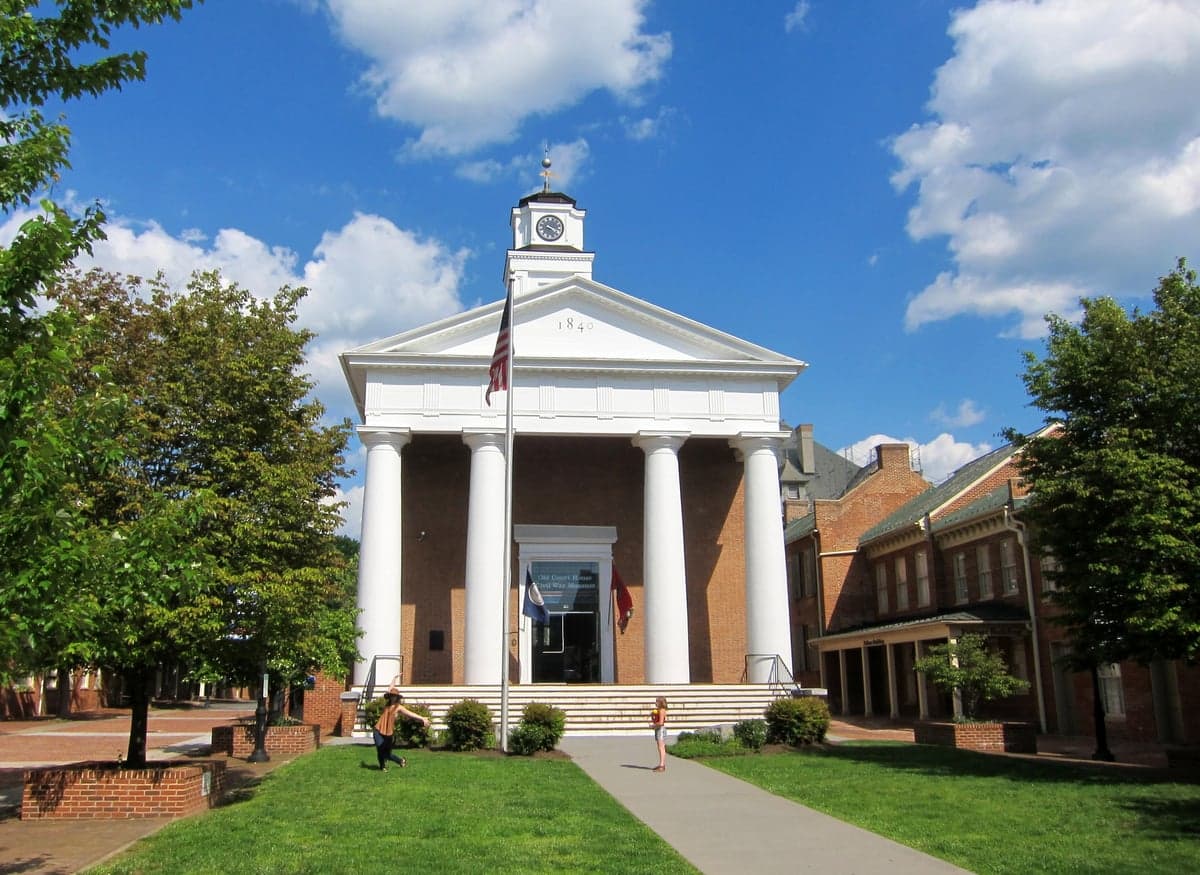
Virginia’s state-level preemption laws prevent localities from enacting ordinances that exceed state mandates in several areas: 1) firearms regulations are entirely preempted, so no local body can ban open carry or impose magazine restrictions; 2) landlord-tenant law is uniform statewide; 3) parental rights in education, including a 2024 state law requiring school boards to notify parents of any curriculum changes affecting student health or wellbeing, are broadly upheld. Frederick County’s public school system has not attempted to introduce any local curriculum or library book policies beyond state minimums, reflecting the county’s conservative-leaning board of supervisors. Medical autonomy is limited by state law—no county has the power to restrict legal medical procedures, and Virginia does allow medical cannabis use for patients with a valid state-issued card, with dispensaries in nearby Staunton. Free expression and assembly are protected under the First Amendment, and the county’s parks and public spaces (such as the walking trails at Burlington Mills Park or the grounds of the Frederick County Courthouse in Winchester) have been used for public gatherings without notable controversy. Property rights are reinforced by the county’s relatively minimal use of eminent domain; the last significant condemnation was for a road-widening project on Route 7 in 2019, which affected only a few commercial parcels near Stephens City. One area of caution: the county has a standard noise ordinance (40-50 decibel limits after 10 PM), which has occasionally been applied to tractor use or farm equipment near newer subdivisions, so homesteaders should ensure their parcel is either large enough to buffer noise or located in a zone where agricultural activities are explicitly exempted.
Overall, Frederick County offers a high degree of personal sovereignty when compared to most of Northern Virginia and even some central Virginia counties like Albemarle. The regulatory environment is lighter than in Charlottesville or Leesburg, taxes are lower, and the rural zones genuinely support off-grid living and home-based enterprise. The primary trade-off is that the county’s proximity to the D.C. metro area keeps land prices somewhat elevated—median lot prices in the unincorporated areas of Wardensville or Gore run $3,000–$5,000 per acre for raw land, while developed 2-5 acre parcels near Stephens City cost $50,000–$120,000. That price is a fraction of what an equivalently free-use property would cost in Loudoun or Fauquier counties, but higher than the deep mountain counties west of Interstate 81. For a family or individual who values autonomy in self-defense, education, business operation, and land use, Frederick County lands at a strong middle-high tier in Virginia’s sovereignty landscape—well above the urban crescent, but with the convenience of being the last county before the sweeping freedom of the Shenandoah Valley backcountry.

* Values derived from national, state, county, city and local statistics and may differ in a specific area. Last updated: 2026-09-14T13:10:04.000Z
Narrative content on this page is AI-generated and may contain mistakes. Verify any details that matter before acting on them.
ReloMaps may earn a commission from affiliate links at no extra cost to you.

