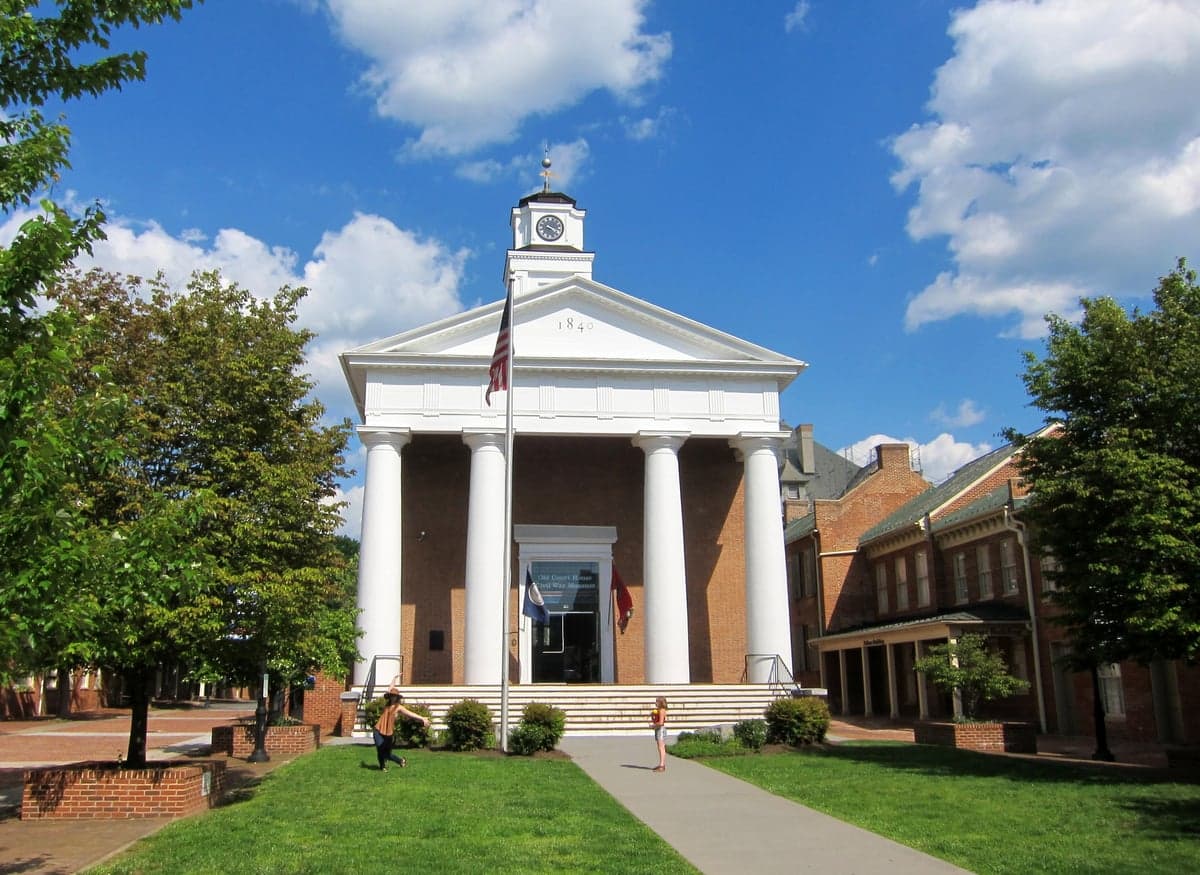
Photo: Wikipedia
Quality of Life in Frederick County
A livable area that tracks near national norms for affordability, walkability, and neighborhood health.
What does Quality of Life tell us?
Quality of Life measures an area by evaluating factors like cost of living, nearby amenities, country club access, airport proximity, socioeconomic signals and neighborhood character. For large states, this is a general average — quality of life can vary dramatically between metro areas, suburbs, and rural communities within the same state.
What does this tell us?
Quality of Life measures an area by evaluating factors like cost of living, nearby amenities, country club access, airport proximity, socioeconomic signals and neighborhood character. For large states, this is a general average — quality of life can vary dramatically between metro areas, suburbs, and rural communities within the same state.
Cost of Living
23% above national average
94%
The Real Cost of Living in Frederick County for 2026
| Tier | Individual | Family (4) |
|---|---|---|
| Survival | $22k | $42k |
| Comfortable | $69k | $101k |
| Luxury | $146k+ | $227k+ |
| Elite (Top 5%) | $172k+ | $267k+ |
Quality-of-Life Analysis
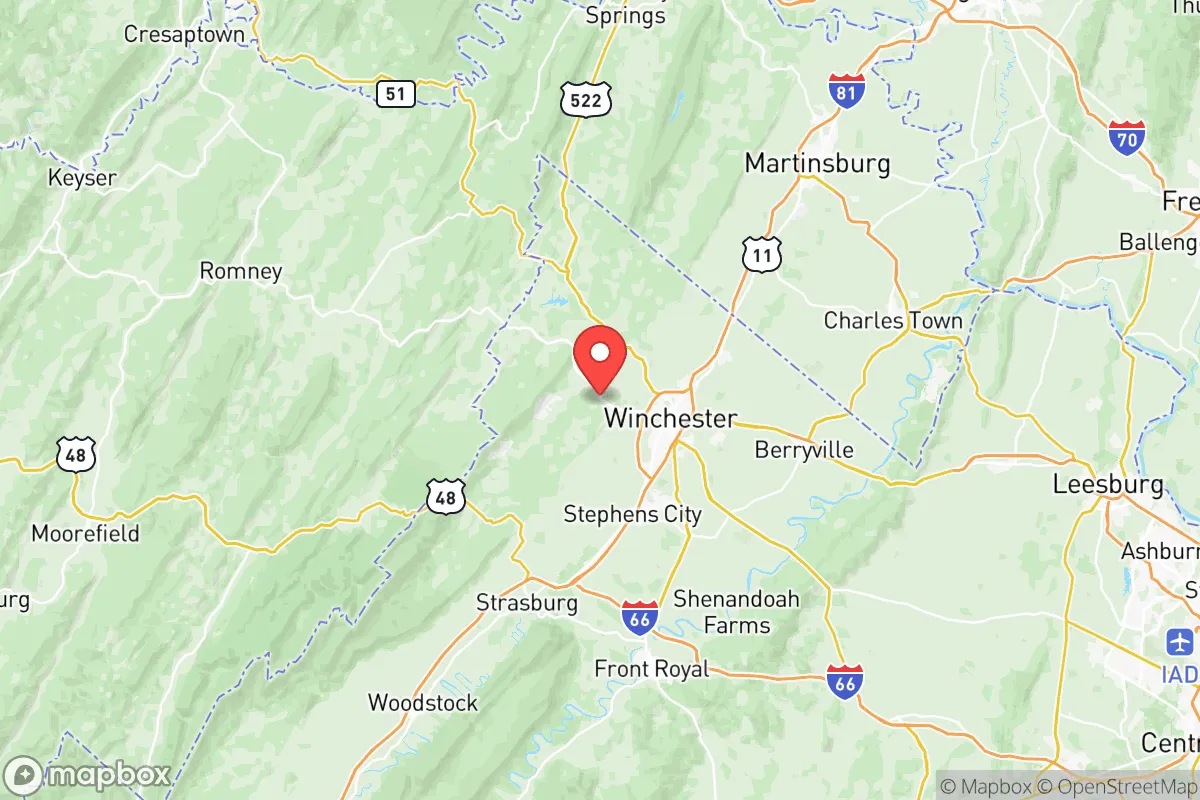
Frederick County, Virginia offers a broad spectrum of living environments, from the walkable historic core of its largest town, Winchester, to scattered crossroads communities and deep agricultural countryside. This diversity attracts a mix of commuters working in the Washington D.C. and Northern Virginia metros, professionals employed at regional health and manufacturing hubs, and residents seeking a quieter, land-based lifestyle. The county’s overall cost of living index stands at 123, reflecting a premium over the national average driven by its proximity to the D.C. area, but costs drop markedly as you move away from Winchester and into the rural eastern and western ends of the county.
Largest town(s) & population centers
Winchester is the county seat and the primary population center, with roughly 28,000 residents inside the city limits (Frederick County proper has about 91,000 residents, excluding the independent city). Daily life in Winchester centers on the pedestrian-friendly Old Town walking mall, with its independent shops, restaurants, and the Shenandoah University campus. The city also holds the region’s major hospital, Valley Health Winchester Medical Center, and the historic Museum of the Shenandoah Valley. Just east of Winchester, the Stephens City area (2,000+ residents) functions as a commuter suburb with newer subdivisions and direct access to I-81. The unincorporated area of Kernstown, anchored by the Apple Blossom Mall and big-box retail along Route 37, represents the county’s commercial and shopping corridor. Average commute times county-wide are 32 minutes, with many residents driving east on Route 50/Route 7 to jobs in Loudoun County and Fairfax County.
Smaller towns & rural pockets
Moving away from the I-81 corridor reveals a network of smaller communities. Middletown, about 10 miles south of Winchester, retains a compact historic district, a farmers market, and a small-town feel while being close to commuter routes. Clear Brook, an unincorporated area near the West Virginia line southeast of Winchester, is largely rural with large-lot homes and farmland, offering some of the lowest home prices in the county. Gore, in the county’s far northwestern corner along the West Virginia border, is almost entirely forested and agricultural, with very few services and a strong sense of isolation. The area around White Post and Boyce (near Clarke County) features expansive horse farms and estates, attracting a different demographic of rural landowners. Each of these pockets has a distinct character: Middletown has a civic center and library; Clear Brook and Gore have little more than a post office and a volunteer fire department.
Cost & lifestyle range
The financial spectrum within Frederick County is wide. At the high end, newer subdivisions near Stephens City and along the Route 7 corridor just east of Winchester see median home values above $500,000, with commute-friendly locations driving prices. The county’s overall median home value of $355,000 and median rent of $1,402 are moderate by Northern Virginia standards but high for the Shenandoah Valley region. At the lower end, older homes and rural properties in places like Gore, Indian Hollow, or the farming areas west of Cross Junction can be found for under $250,000, though they often require longer drives and come with well and septic systems. Lifestyle options follow a similar gradient: Winchester offers walkability and nightlife; the suburban ring provides schools and shopping; the rural areas deliver privacy, land, and lower property taxes but minimal services. The county’s property tax rate (approximately $0.55 per $100 of assessed value) is among the lower in the region, a notable draw for homeowners.
This county is best suited for people who need access to Northern Virginia employment but want a slower, more rooted environment than sprawl-laden Loudoun County. Families with children will find a strong school system (Frederick County Public Schools consistently ranks in Virginia’s top third). Commuters who work east of I-81 can tolerate a 30-45 minute drive each way. Retirees often choose the walkable core of Winchester or the quiet rural enclaves like Gore or Clear Brook for lower taxes and space. The trade-off is that urban amenities, dining variety, and dense employment remain concentrated in and around Winchester; residents in the county’s far corners trade convenience for land and lower costs. For those seeking a balance of career access, historic character, and genuine rural options, Frederick County provides one of the most varied residential spectra within a single Virginia county.

Crime in Frederick County
Generally safer than 61% of comparable U.S. locations.
Violent CrimeViolent Crime Analysis
Property CrimeProperty Crime Analysis
Crime Analysis
Frederick County, Virginia, presents a safety profile that is broadly average for its region, with violent and property crime rates falling between the state and national averages. The county recorded 203 violent crimes per 100,000 residents and a property crime rate of 1,344.2 per 100,000, figures that reflect both the pressures of its proximity to the Washington, D.C. metro area and the protective effect of its largely suburban and rural character. While no area is crime-free, the data suggests that Frederick County is not among the most dangerous jurisdictions in Virginia, though residents should remain attentive to property crime trends.
Crime in context
Compared to the statewide Virginia average of roughly 205 violent crimes per 100,000 and the national rate of approximately 370 per 100,000, Frederick County's 203 per 100,000 rate places it just below the state mean and well under the U.S. average. Property crime in Frederick County, at 1,344.2 per 100,000, is slightly higher than the Virginia average of about 1,200 but remains considerably lower than the national figure of roughly 1,950 per 100,000. This pattern—lower violence, elevated property crime—is typical of suburban counties near major metropolitan employment centers, where opportunity and transient populations contribute to theft and burglary rates. The city of Winchester, which sits as an independent city within the county's boundaries, historically reports higher crime rates than the surrounding unincorporated areas, a pattern driven by denser population and commercial activity. In contrast, the towns of Stephens City and Middletown consistently report lower crime volumes, reflecting their smaller, more close-knit communities.
What residents experience
For the typical resident, the day-to-day experience of crime in Frederick County is dominated by property offenses—vehicle break-ins, package theft, and burglary—rather than acts of violence. Violent crime, while present, is often concentrated in specific corridors, with the U.S. 11 corridor and the area near the Winchester city line seeing a disproportionate share of incidents. The Frederick County Sheriff's Office, rather than a progressive district attorney's office, oversees enforcement, and the county's judicial system has not adopted the lenient, offender-centric policies seen in some larger, more liberal jurisdictions. This conservative approach to prosecution and sentencing in the 26th Judicial Circuit (which covers Frederick County, Clarke County, and the City of Winchester) is a meaningful factor in maintaining order—it means convicted criminals face real consequences, removing them from the street and reducing the revolving-door dynamic that allows repeat offenders to victimize communities. By contrast, neighboring progressive jurisdictions (such as Fairfax County, with its more lenient practices) have experienced spikes in recidivism that Frederick County has largely avoided.
Neighborhood-level variation
Safety is not uniform across Frederick County, and prospective residents should be aware of meaningful neighborhood-level differences. The unincorporated communities of Gore, Cross Junction, and the rural northern stretches near the West Virginia line report the lowest crime rates in the county, offering a secluded, low-crime lifestyle ideal for families. The newer suburban developments around Kernstown and south of Route 50 show moderate crime rates but have seen increased property theft as the area builds out. The primary caution zone is the area immediately adjacent to the Winchester city limit—specifically the northwest edge near the Winchester Medical Center—where crime from the city spills over into the county. The direction of recent caselaw and prosecutorial trends in the 26th Circuit is stable and pro-public-safety, meaning that while property crime may require vigilance (locking vehicles, securing packages), the risk of violent victimization remains low for the vast majority of residents.
* Values derived from national, state, county, city and local statistics and may differ in a specific area. Last updated: 2026-09-14T13:10:04.000Z
Narrative content on this page is AI-generated and may contain mistakes. Verify any details that matter before acting on them.
ReloMaps may earn a commission from affiliate links at no extra cost to you.

