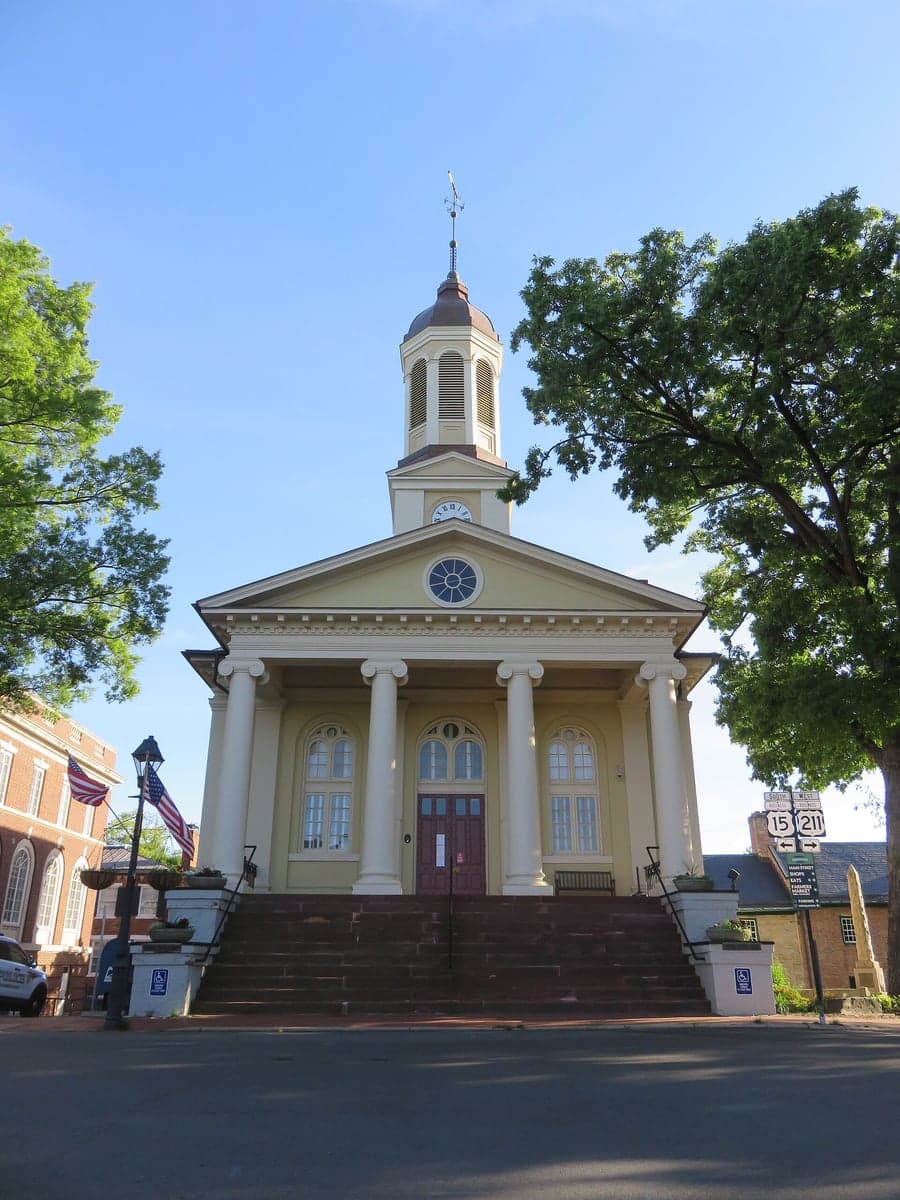
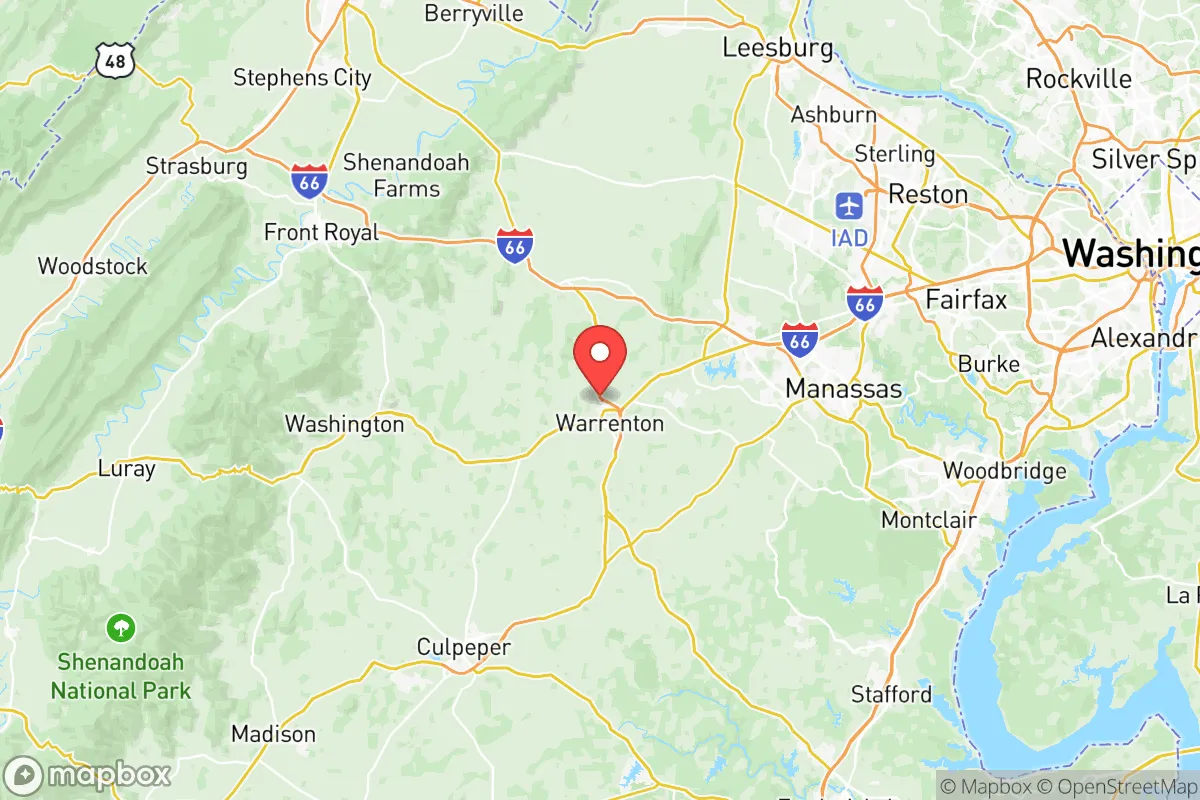
Photo: Wikipedia
Quality of Life in Fauquier County
A livable area that tracks near national norms for affordability, walkability, and neighborhood health.
What does Quality of Life tell us?
Quality of Life measures an area by evaluating factors like cost of living, nearby amenities, country club access, airport proximity, socioeconomic signals and neighborhood character. For large states, this is a general average — quality of life can vary dramatically between metro areas, suburbs, and rural communities within the same state.
What does this tell us?
Quality of Life measures an area by evaluating factors like cost of living, nearby amenities, country club access, airport proximity, socioeconomic signals and neighborhood character. For large states, this is a general average — quality of life can vary dramatically between metro areas, suburbs, and rural communities within the same state.
Cost of Living
58% above national average
83%
The Real Cost of Living in Fauquier County for 2026
| Tier | Individual | Family (4) |
|---|---|---|
| Survival | $25k | $47k |
| Comfortable | $106k | $155k |
| Luxury | $195k+ | $302k+ |
| Elite (Top 5%) | $229k+ | $356k+ |
Quality-of-Life Analysis
Fauquier County, Virginia, offers a broad quality-of-life spectrum that ranges from the walkable, historic town centers of Warrenton and Remington to the deeply rural, horse-country landscapes of Upperville, Marshall, and The Plains. The county’s character shifts noticeably from east to west: the eastern edge, closer to Prince William County and the DC exurbs, sees more suburban-style development and commuter traffic, while the western half is dominated by conservation easements, working farms, and the rolling foothills of the Blue Ridge. This diversity means the county attracts both Washington, D.C., professionals seeking a slower pace and long-time agricultural families who value land and privacy. With a cost-of-living index of 158 (well above the national average of 100), the county’s trade-off is clear: higher housing costs in exchange for low-density living, strong schools, and preserved open space.
Largest town(s) & population centers
Warrenton is the county seat and by far the largest population center, home to roughly 10,000 residents. Daily life here centers around the historic courthouse district, with brick sidewalks, independent restaurants, and a mix of local retail and national chains along U.S. 29/15 Business. The town offers the most concentrated set of amenities in the county — a public library, a YMCA, a community theater, and the Fauquier Health hospital. Housing in Warrenton ranges from older Victorians near the downtown to newer subdivisions like the Estates at Vint Hill, a former Army base redeveloped into a residential and commercial hub. Remington, about 10 miles south, is smaller (roughly 600 residents) but functions as a secondary population node, with a commuter-friendly location near the intersection of U.S. 15/29 and State Route 651. Both towns serve as bedroom communities for workers commuting to Northern Virginia and Washington, D.C., reflected in the county’s average commute time of 36.6 minutes. For residents who want sidewalks, a downtown coffee shop, and a short drive to grocery stores, Warrenton is the most practical choice in the county.
Smaller towns & rural pockets
West of Warrenton, the county’s character shifts dramatically. Marshall (population roughly 2,000) is a historic railroad town that now functions as a gateway to the hunt country, with a small commercial core along Main Street and easy access to I-66. The Plains (population about 250) is even smaller, known for the Great Meadow equestrian center and a single general store that doubles as a community hub. Upperville, near the Loudoun County line, is the heart of Virginia’s horse country, with stone walls, century-old estates, and the annual Upperville Colt & Horse Show. These western communities have no supermarkets, limited cell service in spots, and few employment centers — residents drive 20–30 minutes to Warrenton or Middleburg (Loudoun County) for most errands. The trade-off is extreme privacy, low traffic, and direct access to riding trails and conservation land. Rectortown, Orlean, and Hume are unincorporated hamlets where homes sit on multi-acre lots and neighbors are often a half-mile apart. These areas appeal to buyers who prioritize land and quiet over convenience.
Cost & lifestyle range
The cost spread across Fauquier County is wide. At the high end, the Upperville–The Plains corridor sees median home values well above the county’s overall $543,700, often exceeding $800,000 for a farmette or historic property on 10+ acres. At the lower end, Remington and the southern part of the county near the Culpeper line offer more modest housing — smaller ranches and townhomes in the $350,000–$450,000 range — though inventory is limited. Median rent across the county is $1,561, but rental options are scarce outside of Warrenton and a few apartment complexes near Vint Hill. Property taxes are moderate for Northern Virginia (roughly 1.06% of assessed value), but the lack of public water and sewer in rural areas adds well and septic maintenance costs. Lifestyle follows the same gradient: Warrenton residents can walk to a farmers market and a brewery; Upperville residents may drive 40 minutes to a sit-down restaurant. The county has no public transit system of note, so a car is mandatory everywhere.
The resident who thrives in Fauquier County is someone who values space, land, and a slower rhythm over urban convenience and cultural density. The county works best for families who can absorb the commute to D.C. (or who work remotely), for equestrians and farmers who need acreage, and for retirees who want a small-town medical center without suburban sprawl. It is less suited to young renters seeking nightlife or to households on a tight budget, given the high cost of entry and limited multifamily housing. For those who can afford the premium, Fauquier offers a rare combination of preserved countryside, low crime, and proximity to a major metro area — a balance that keeps demand steady and inventory tight.

Crime in Fauquier County
Generally safer than 61% of comparable U.S. locations.
Violent CrimeViolent Crime Analysis
Property CrimeProperty Crime Analysis
Crime Analysis
Fauquier County, Virginia, presents a mixed safety profile that is significantly safer than national averages but carries property-crime rates that merit attention from prospective residents. The county’s violent crime rate of 203 incidents per 100,000 residents sits well below the U.S. average of roughly 380 per 100K, while its property crime rate of 1,344.2 per 100K is slightly above the Virginia state average of approximately 1,200 per 100K. These figures reflect a largely rural and suburban jurisdiction where most serious offenses are concentrated in specific corridors and towns, rather than spread uniformly across the county.
Crime in context
When measured against both state and national benchmarks, Fauquier County’s violent crime rate is roughly 47% lower than the national median, placing it among the safer jurisdictions in Northern Virginia. The county’s property crime rate, however, is about 12% higher than the Virginia average, driven largely by thefts from vehicles and residential burglaries in unincorporated areas near major commuting routes. By comparison, neighboring Prince William County reports a violent crime rate near 250 per 100K and a property crime rate above 1,800 per 100K, making Fauquier notably safer on both counts. The town of Warrenton, the county seat, accounts for a disproportionate share of reported property crimes, while the more rural communities of Marshall, Remington, and The Plains see far fewer incidents. The county’s location along the I-66 corridor means that transient property crime—particularly vehicle break-ins at park-and-ride lots—is a recurring issue that local law enforcement actively patrols.
What residents experience
Daily life in Fauquier County is generally characterized by low fear of violent crime, with most residents reporting feeling safe walking in their neighborhoods and downtown areas during daylight and evening hours. The violent crimes that do occur are overwhelmingly domestic in nature—intimate partner assaults and family disputes—rather than random stranger attacks. Property crimes, especially larcenies from unlocked cars and sheds, are the most common nuisance, particularly in subdivisions near Route 29 and Route 17. The Fauquier County Sheriff’s Office and the Warrenton Police Department maintain a visible presence, and community policing programs in areas like New Baltimore and Catlett have helped keep burglary rates stable. However, residents in more isolated stretches—such as the rural areas around Upperville and Rectortown—should take basic precautions like securing outbuildings and using motion-activated lighting, as response times can be longer in those remote zones.
Neighborhood-level variation is notable across Fauquier County. The historic district of Warrenton sees higher foot traffic and correspondingly more petty theft, while the gated communities and large-lot estates near Bealeton report very low crime overall. The county’s judicial system, overseen by the Fauquier County Commonwealth’s Attorney, has maintained a conservative approach to prosecution that prioritizes victim rights and public safety. This stands in contrast to some larger Northern Virginia jurisdictions where progressive district attorneys have implemented policies that critics argue reduce accountability for repeat offenders. In Fauquier, property crime offenders face consistent consequences, and the county’s incarceration and diversion programs are structured to deter recidivism. For families and retirees considering relocation, the safest bets are the smaller villages and rural subdivisions outside of Warrenton’s immediate core, while those seeking walkable amenities should be comfortable with standard urban-suburban precautions like locking vehicles and securing packages.
* Values derived from national, state, county, city and local statistics and may differ in a specific area. Last updated: 2026-07-26T14:59:00.000Z
Narrative content on this page is AI-generated and may contain mistakes. Verify any details that matter before acting on them.
ReloMaps may earn a commission from affiliate links at no extra cost to you.

