
Quality of Life in Alexandria City County
A livable area that tracks near national norms for affordability, walkability, and neighborhood health.
What does Quality of Life tell us?
Quality of Life measures an area by evaluating factors like cost of living, nearby amenities, country club access, airport proximity, socioeconomic signals and neighborhood character. For large states, this is a general average — quality of life can vary dramatically between metro areas, suburbs, and rural communities within the same state.
What does this tell us?
Quality of Life measures an area by evaluating factors like cost of living, nearby amenities, country club access, airport proximity, socioeconomic signals and neighborhood character. For large states, this is a general average — quality of life can vary dramatically between metro areas, suburbs, and rural communities within the same state.
Cost of Living
104% above national average
57%
The Real Cost of Living in Alexandria City County for 2026
| Tier | Individual | Family (4) |
|---|---|---|
| Survival | $32k | $61k |
| Comfortable | $135k | $199k |
| Luxury | $205k+ | $318k+ |
| Elite (Top 5%) | $260k+ | $403k+ |
Quality-of-Life Analysis
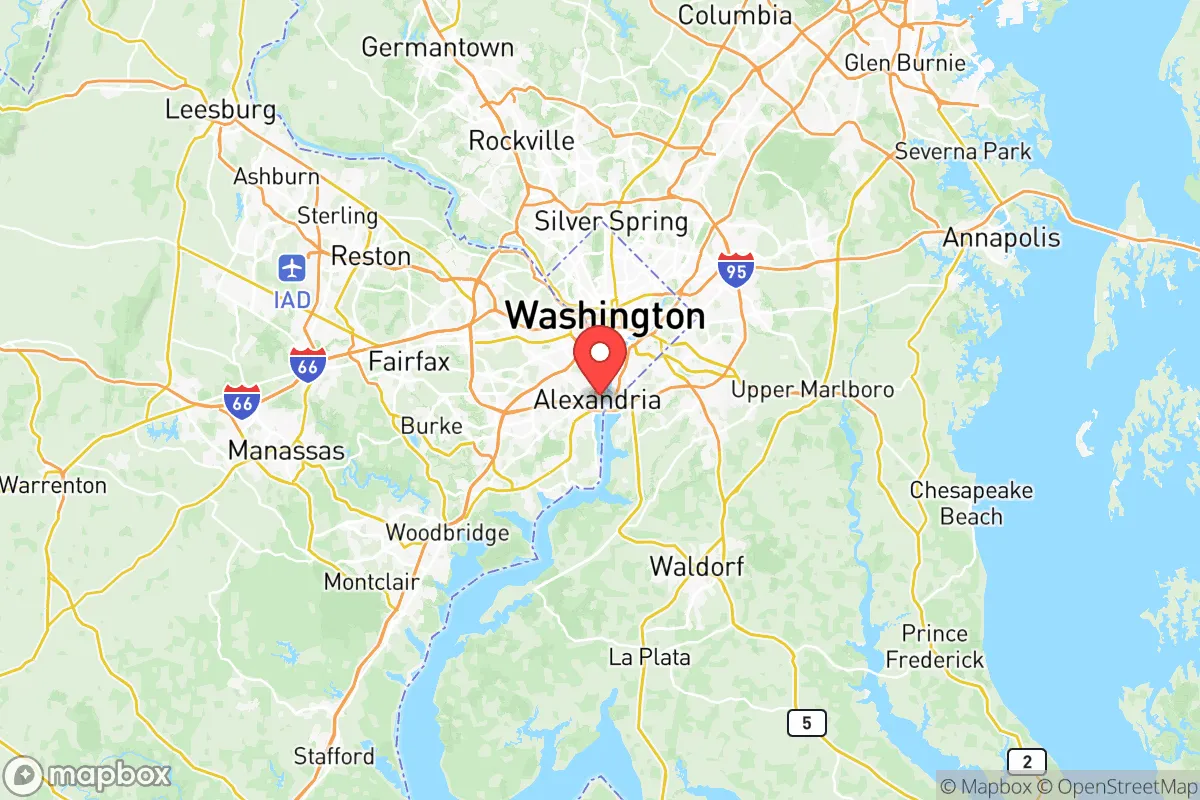
Alexandria City County, Virginia, presents a unique case in regional analysis: it is an independent city that operates as a county-equivalent, meaning there are no smaller towns, rural pockets, or unincorporated areas within its boundaries. This compact, urban jurisdiction covers just under 16 square miles along the Potomac River, drawing residents who seek the density, walkability, and historic character of a 275-year-old port city paired with direct access to the Washington D.C. metro area. The entire county is effectively a single, contiguous population center, making its quality-of-life spectrum a matter of neighborhood character rather than a town-to-rural gradient.
Largest town(s) & population centers
As a city-county, Alexandria itself is the sole population center, with a 2024 estimated population of roughly 160,000. Daily life here is defined by its historic grid layout, with King Street serving as the primary commercial spine running from the George Washington Masonic National Memorial to the Potomac River waterfront. The area is divided into distinct neighborhoods: Old Town offers 18th- and 19th-century rowhouses, boutique shops, and a cobblestone feel, attracting professionals and families willing to pay a premium for short commutes to Washington D.C.—the average commute across Alexandria is 29.3 minutes, slightly above the national average due to reliance on the Blue and Yellow Metro lines and I-395. Del Ray, a former streetcar suburb within the city, provides a more relaxed, village-like atmosphere with independent cafés and a strong community identity. The West End, centered around Landmark Mall and Van Dorn Street, features denser apartment complexes and townhomes, drawing younger renters and military personnel connected to nearby Mark Center and the Pentagon. The county has no separate towns or rural zones; instead, these neighborhoods represent the full spectrum of living options.
Smaller towns & rural pockets
Alexandria City County contains no smaller towns, villages, or unincorporated areas. The entirety of the county is the city itself, a distinction that dates to its 1870 charter as an independent city separate from Fairfax County. This means residents do not have the option to live in a rural or semi-rural setting within the county borders. For those seeking a slower pace, the adjacent communities of Fairfax County (such as Mount Vernon or Fort Hunt) and Arlington County provide more suburban or wooded residential areas, but those are separate jurisdictions. Within Alexandria, the closest approximation to a low-density pocket is the Seminary Valley neighborhood near the Virginia Theological Seminary, where larger lots and tree-lined streets offer a leafy respite from the urban core. However, this area remains within the city’s zoning and tax base, with no independent municipal governance.
Cost & lifestyle range
The cost of living across Alexandria is uniformly high, with a composite index of 204—more than double the national average—driven predominantly by housing. The median home value of $696,800 is consistent across most neighborhoods, though Old Town rowhomes routinely list above $1 million, while the West End and Arlandria offer slightly more attainable options near the lower end of that median. Median rent of $2,031 reflects the county’s tight rental market, with studios and one-bedrooms in luxury high-rises near the Braddock Road or King Street Metro stations commanding $2,500+. Lifestyle options range from the urban intensity of Old Town’s restaurant row and arts scene (with venues like the Birchmere Music Hall) to the family-oriented civic engagement of Del Ray’s annual parades and farmers’ markets. The western neighborhoods provide more car-dependent living, while the eastern half is highly walkable and transit-accessible. There is no truly affordable or rural end of the spectrum; the cost floor is still well above national norms, with the most economical units typically found in older garden apartments along Route 1 in the Arlandria corridor, where commute times are longer and walkability lower.
Alexandria City County is best suited for professionals and families who prioritize urban density, historic character, and short access to the District’s employment and cultural amenities. The county is ideal for those who are comfortable with a fully built-out, highly regulated environment—there are no acreages, farmsteads, or unincorporated buffers. Residents thrive here when they value walkable streets, a robust public school system (featuring nationally ranked schools like Alexandria City High School and George Washington Middle School), and the ability to commute by Metro, bike, or foot. Conversely, individuals seeking larger homes, lower property taxes, or rural isolation are better suited to neighboring Loudoun, Fauquier, or Prince William counties. In essence, Alexandria offers a singular, dense urban lifestyle with no rural gradient—a deliberate trade-off for being one of the region’s most historic and connected communities.

Crime in Alexandria City County
Generally safer than 60% of comparable U.S. locations.
Violent CrimeViolent Crime Analysis
Property CrimeProperty Crime Analysis
Crime Analysis
Alexandria City County, Virginia, reports a violent crime rate of 209 incidents per 100,000 residents and a property crime rate of 1,389.4 per 100,000, according to the most recent data. While these figures place the city significantly below the national average for violent crime and near the national average for property crime, the local justice system’s progressive orientation introduces real risks for residents. The City of Alexandria operates its own police department and is served by an elected Commonwealth’s Attorney focused on criminal justice reform, a factor that can undermine public safety despite the city’s relatively low crime numbers.
Crime in context
Alexandria’s violent crime rate of 209 per 100,000 is roughly 45% lower than the U.S. national average of about 380 per 100K, placing it in the safer tier of comparably sized cities. Property crime, at 1,389.4 per 100K, is close to the national benchmark of approximately 1,900 per 100K. However, these raw numbers can be misleading. In neighboring jurisdictions like Fairfax County (violent crime rate around 95 per 100K) and Arlington County (violent crime rate roughly 120 per 100K), both of which also lean progressive, the safety picture is even more favorable. The contrast is sharper when compared to more conservative areas: Loudoun County to the west records a violent crime rate near 60 per 100K, while Prince William County sits around 150 per 100K. Alexandria’s higher numbers reflect its dense, urban character and a correlated increase in opportunity-based theft, but also the consequences of a progressive prosecutorial philosophy that prioritizes diversion and reduced sentencing over strict enforcement.
What residents experience
The practical impact of these crime statistics and the local justice system’s ideology is unevenly distributed across Alexandria’s neighborhoods. The historic Old Town district, particularly the area south of King Street toward the waterfront, sees frequent reports of property crime—vehicle break-ins, bicycle theft, and package theft—driven by high foot traffic and tourist density. Areas near the Braddock Road Metro station and along the Route 1 corridor in the Arlandria neighborhood have higher concentrations of reported larcenies and occasional violent incidents, including robberies. In contrast, the leafy, affluent neighborhoods of Del Ray, North Ridge, and the Seminary Hill area report substantially fewer incidents, with violent crime remaining extremely rare there. Residents in these safer enclaves still benefit from the city’s overall low violent crime rate but are largely insulated from the street-level property crime that plagues transit-adjacent zones. The progressive policies of Commonwealth’s Attorney Bryan Porter, who has emphasized alternatives to incarceration and reduced prosecution for low-level drug offenses, mean that even when arrests are made, the likelihood of meaningful incarceration is diminished—a reality that emboldens repeat property offenders and keeps recidivism cycles active.
Neighborhood-level variation and the progressive justice effect
The safety experience in Alexandria is not uniform, and the progressive tilt of the local judiciary amplifies risk in certain areas. In neighborhoods like Eisenhower East near the Eisenhower Avenue Metro, a corridor of new high-rise apartments and mixed-use development, property crime—particularly larceny from vehicles and mail theft—is notably higher than in the neighboring single-family-home sections of Southwest Alexandria. The city’s Landmark and Van Dorn areas also see elevated reports of property crime relative to the city average. Meanwhile, the Parker-Gray and Rosemont historic districts maintain lower incident counts, though neither is immune from the regional trend of organized retail theft that targets stores along the King Street retail spine. For families and professionals considering relocation, the critical takeaway is that Alexandria’s raw numbers, while favorable nationally, are achieved despite a justice system that treats property crime leniently. Any future shift in prosecutorial priorities or a decline in police staffing—both risks given local political dynamics—could see Alexandria’s property crime rate rise toward the national average or beyond, especially in the higher-risk neighborhoods named above. Savvy buyers should prioritize blocks with active civic associations and high walkability, where neighborhood watch programs provide a layer of informal security that counterbalances the city’s soft-on-crime judicial approach.
* Values derived from national, state, county, city and local statistics and may differ in a specific area. Last updated: 2026-07-01T06:41:34.000Z
Narrative content on this page is AI-generated and may contain mistakes. Verify any details that matter before acting on them.
ReloMaps may earn a commission from affiliate links at no extra cost to you.

