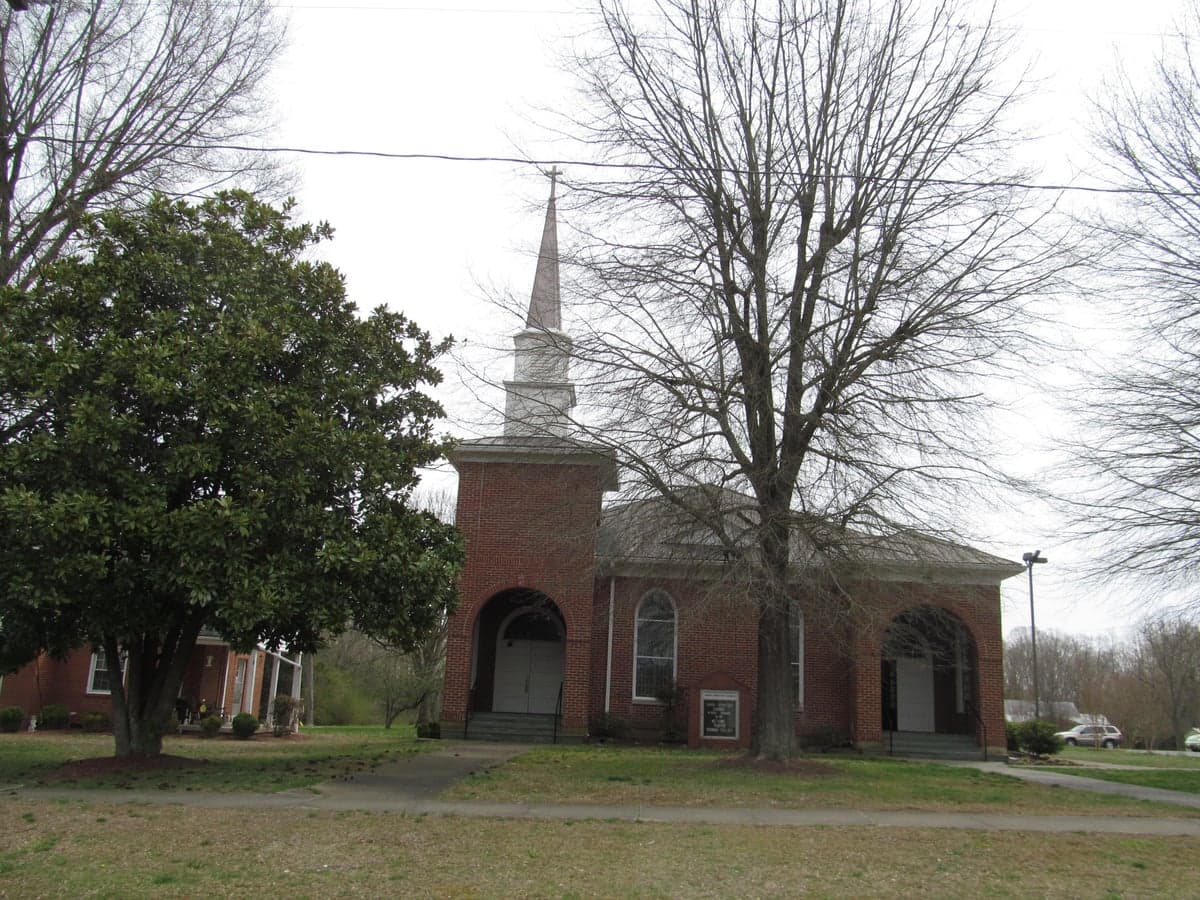
Photo: Wikipedia
Political ClimatePolitical Climate in Virgilina, VA
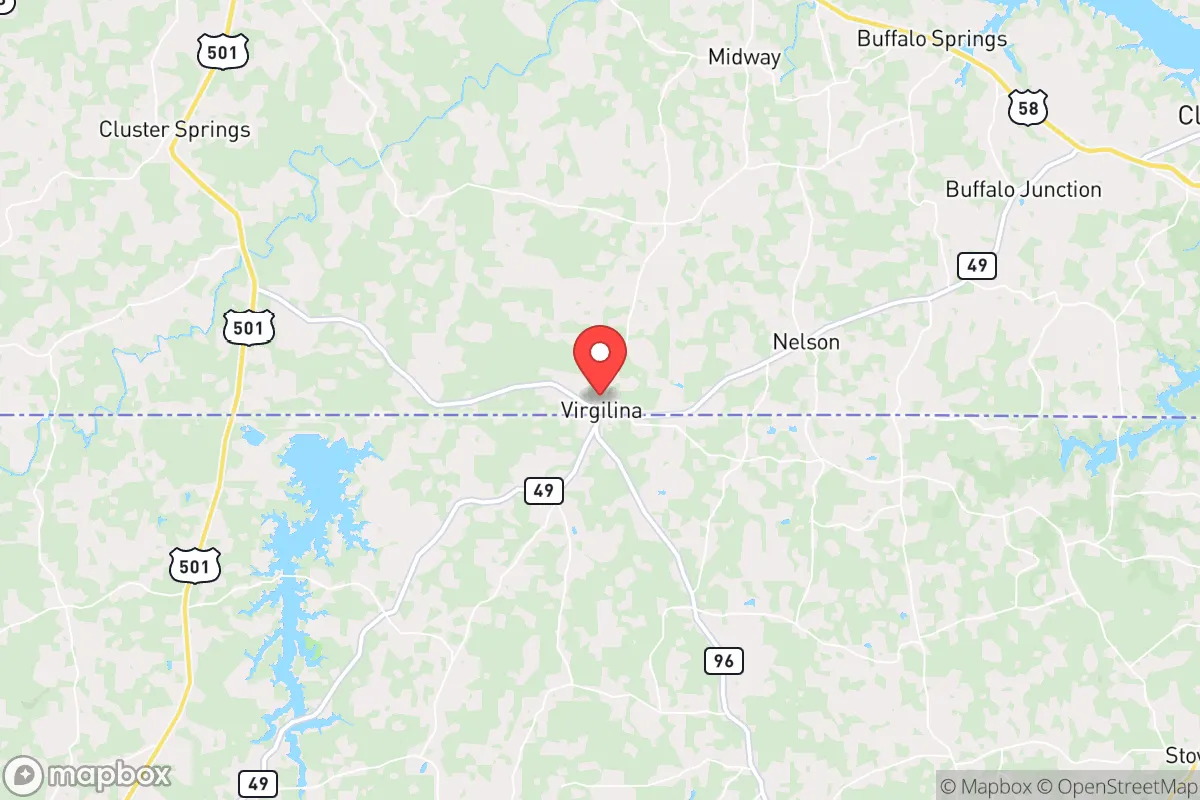
District shown is the primary district for this city’s centroid. Cities may span multiple districts.
Local Political AnalysisPolitical Analysis of Virgilina, VA
Virgilina is a small, deeply conservative town in the southern Piedmont, and its politics are a direct reflection of that rural, close-knit identity. With a Cook Partisan Voting Index of R+6, the area leans significantly more Republican than the state of Virginia as a whole, which sits at D+4. This isn't a recent shift; Virgilina has been a Republican stronghold for decades, and the trend is only solidifying as the surrounding counties of Halifax and Mecklenburg continue to vote red by wide margins. If you're looking at the political trajectory here, it's steady and unmoving—there's no sign of the suburban or urban shifts that have turned places like Loudoun County or Richmond blue.
How it compares
The contrast between Virgilina and the broader Commonwealth is stark. While Virginia statewide has moved leftward in recent presidential cycles—driven by the explosive growth of Northern Virginia and the Richmond suburbs—Virgilina has held its ground. A drive north to South Boston or east to Clarksville will show you similar conservative leanings, but head just a bit further north to Danville, and you'll find a more mixed picture, with a growing Democratic presence in the city limits. The real political divide in Virginia isn't just urban vs. rural; it's the I-95 corridor vs. everything else. Virgilina sits firmly in the "everything else" camp, where gun rights, low taxes, and a traditional way of life are the bedrock issues. The state's D+4 rating is almost entirely carried by the massive populations in Fairfax, Prince William, and Henrico counties—places that feel a world away from the tobacco fields and quiet streets of Virgilina.
What this means for residents
For a conservative resident, Virgilina is a comfortable place to live politically. Local offices, from the school board to the county supervisors, are reliably held by Republicans, and the community's values align closely with the GOP platform. You won't find much debate over things like Second Amendment sanctuary resolutions or opposition to state-level energy mandates—those are largely settled questions here. For a liberal resident, the reality is different. While you won't face outright hostility, you will be in a clear minority. Socially, it can feel isolating, and politically, your vote is unlikely to change the outcome of local or even state-level races. That said, the small-town culture means people are generally polite and neighborly regardless of party affiliation—politics rarely gets personal at the grocery store or the post office. The practical effect is that policy debates are minimal; the town moves forward on consensus rather than conflict, which can be a double-edged sword for anyone hoping for progressive change.
Culturally, Virgilina is distinct from much of Virginia in its slower pace and deep-rooted traditions. There's no push for the kind of urban density or transit projects you see in Northern Virginia, and the local economy is still tied to agriculture and small manufacturing. One notable policy distinction is the area's strong support for local control over land use and education, often pushing back against state mandates from Richmond. For anyone moving here, the key takeaway is simple: if you value a quiet, predictable, and conservative community, Virgilina will feel like home. If you're looking for a politically diverse or progressive environment, you'll find that more easily in the state's urban centers, but you'll miss out on the genuine warmth and simplicity that defines life here.

State Political ClimatePolitical Climate in Virginia
State Political AnalysisPolitical Environment in the State
Virginia is a classic swing state that has shifted decisively blue over the past two decades, now carrying a Cook PVI of D+4, but its politics are anything but monolithic. The state’s trajectory has been driven by explosive growth in the Washington, D.C. suburbs, particularly in Northern Virginia, which now dominates statewide elections and pulls the state leftward even as vast stretches of rural and exurban Virginia remain deeply conservative. For a relocator, this means you’re moving into a state where your vote and your lifestyle will be heavily shaped by which corner of Virginia you choose to call home.
Urban vs. rural divide
The political map of Virginia is a study in stark contrasts. The blue engine is Northern Virginia, anchored by Arlington, Alexandria, and Fairfax County, which together generate a massive Democratic vote margin that often decides statewide races before the rest of the state has finished counting. The Richmond metro area and Norfolk/Virginia Beach also lean Democratic, though the latter is more competitive. In contrast, the rural Southside and Southwest Virginia — places like Roanoke, Lynchburg, and the coal country around Bristol — vote overwhelmingly Republican. A key bellwether has been Loudoun County, once a conservative stronghold that flipped blue in the 2010s and now exemplifies the suburban shift that defines modern Virginia politics. The divide isn’t just cultural; it’s economic, with the urban crescent prospering from tech and government contracting while rural areas struggle with job loss and population decline.
Policy environment
Virginia’s policy environment reflects its purple-to-blue status, with a tax structure that is moderate by national standards. The state income tax is a flat 5.75%, and sales tax is 5.3% (higher in some localities), which is competitive with neighboring states. Property taxes are set locally and vary widely — Fairfax County rates are higher than rural Augusta County, for example. The regulatory posture is business-friendly in many sectors, especially data centers and defense contracting, but the state has moved left on social and labor policy. Virginia has abolished right-to-work in practice by allowing collective bargaining for public employees, and the minimum wage has been raised to $12.00 per hour with scheduled increases. Education policy is a flashpoint: the state has invested heavily in public schools, but parental rights battles have intensified, especially around library books and transgender policies. Election laws are among the most accessible in the South, with no-excuse absentee voting, same-day registration, and early voting widely available.
Recent policy direction
The last five years have seen Virginia enact a sweeping progressive agenda under Democratic control, followed by a partial pullback under Governor Glenn Youngkin. On gun and self-defense law, the state passed universal background checks, a red flag law, and a one-handgun-per-month limit in 2020, though Youngkin has resisted further restrictions. Parental and education rights became the defining issue of the 2021 election, with Youngkin winning on a platform of banning critical race theory and giving parents more say in school curriculum; his administration has since issued model policies on transgender students that require parental notification and restrict bathroom access. Speech and privacy are generally protected, though the state has enacted a comprehensive data privacy law (the Virginia Consumer Data Protection Act) that gives residents control over their personal data. On medical and bodily autonomy, Virginia has become a haven for abortion access in the South, with no gestational ban and Medicaid covering the procedure, though a 2024 ballot measure to enshrine abortion rights in the state constitution failed. Property rights are generally strong, but localities have broad zoning powers, and the state has moved to allow more accessory dwelling units and missing-middle housing. Taxation saw a modest cut under Youngkin, with the standard deduction doubled and the grocery tax eliminated, but the overall burden remains moderate. Voting and ballot access has been expanded significantly, with automatic voter registration and no-excuse absentee voting now permanent fixtures.
Civil unrest & political movements
Virginia has been a stage for some of the most visible political flashpoints in the country. The 2017 Unite the Right rally in Charlottesville remains a defining scar, leading to a statewide debate over Confederate monuments and a shift in public sentiment against white nationalism. The 2020 protests over racial justice saw significant demonstrations in Richmond and Northern Virginia, with the Robert E. Lee statue becoming a focal point before its removal. On the right, the Virginia Citizens Defense League remains a powerful force, organizing annual Lobby Day rallies at the state capitol that draw thousands of gun rights activists. Immigration politics are less heated than in border states, but Prince William County has seen tensions over sanctuary policies, with local officials debating cooperation with ICE. Election integrity controversies flared after 2020, with some rural counties calling for audits, but no major fraud was found. A new resident will notice the prevalence of political yard signs and bumper stickers, especially in competitive suburbs like Chesterfield County and Henrico County, where the battle for the state’s soul is fought block by block.
Projection
Over the next five to ten years, Virginia is likely to continue its slow drift leftward, driven by the relentless growth of Northern Virginia and the in-migration of educated, moderate-to-liberal professionals from other states. The rural conservative vote is shrinking in relative terms, and the state’s Democratic lean will probably solidify to D+5 or D+6 by 2030. However, the Youngkin era has shown that a Republican can still win statewide by focusing on kitchen-table issues and education, so the state will remain competitive in gubernatorial and down-ballot races. The key wildcard is whether the suburbs of Richmond and Hampton Roads continue trending blue or stabilize as swing areas. For a relocator, this means you can expect a state that is increasingly progressive on social issues and election access, but with enough geographic and cultural diversity that you can find a community that matches your values — whether that’s a deep-red county in the Shenandoah Valley or a deep-blue enclave in Arlington.
For a new resident, the bottom line is that Virginia offers a genuine choice: you can live in a conservative rural or exurban area with low taxes and strong gun rights, or in a progressive urban center with robust public services and social liberalism. The state’s political climate is not monolithic, and your experience will depend almost entirely on which county you choose. If you value a purple state where your vote matters and where policy can swing with each election, Virginia is one of the few remaining places in the country where that is still true. If you want a guaranteed red or blue environment, you’ll need to pick your locality carefully — but the option exists.
* Values derived from national, state, county, city and local statistics and may differ in a specific area. Last updated: 2026-10-24T15:25:54.000Z
Narrative content on this page is AI-generated and may contain mistakes. Verify any details that matter before acting on them.
ReloMaps may earn a commission from affiliate links at no extra cost to you.

