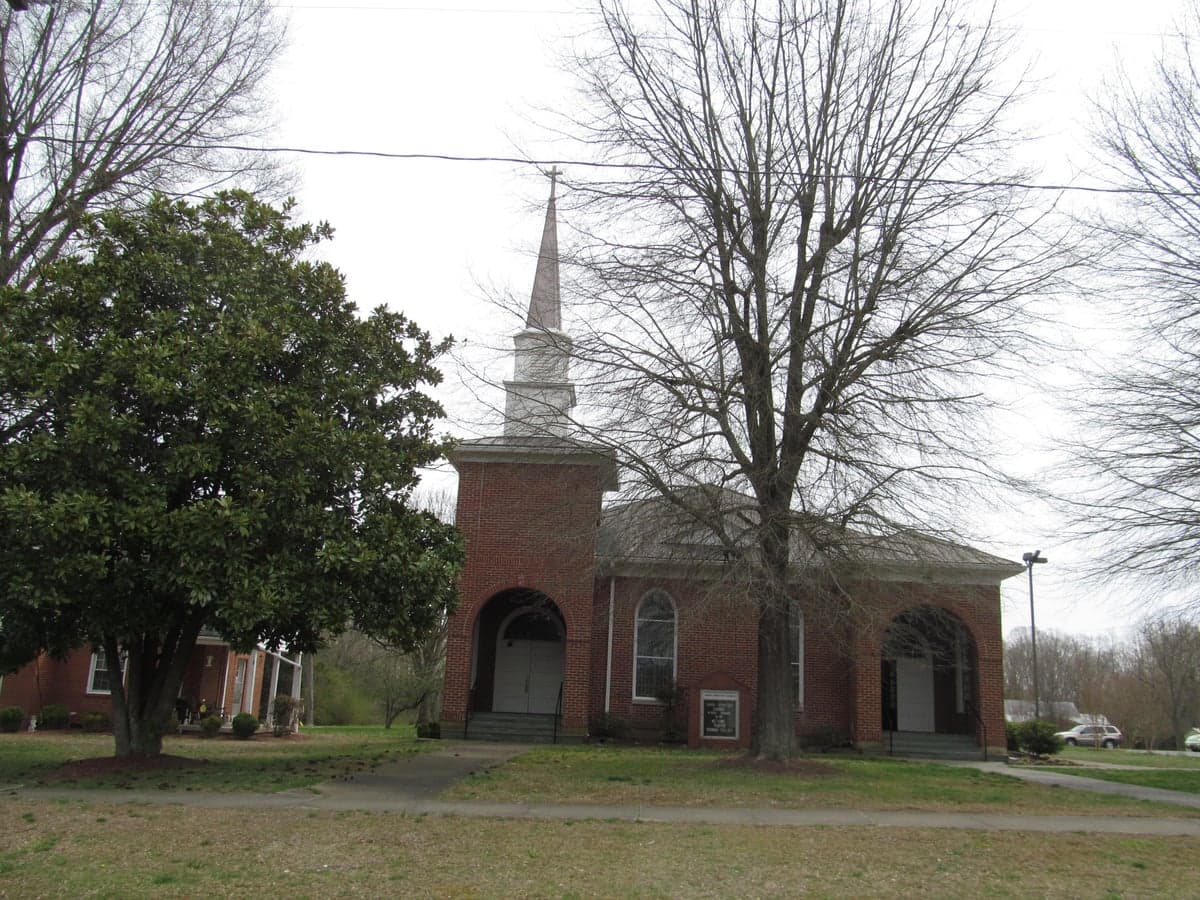
Photo: Wikipedia
Personal Sovereignty in Virgilina, VA
Viable for self-reliance. Generally workable, though some barriers may limit total independence.
What does Personal Sovereignty tell us?
Personal Sovereignty measures your capacity for self-reliance and independence with minimal government friction. Higher scores mean fewer barriers between you and the way you want to live... but it assumes you have the space you need and good neighbors.
What does this tell us?
Personal Sovereignty measures your capacity for self-reliance and independence with minimal government friction. Higher scores mean fewer barriers between you and the way you want to live... but it assumes you have the space you need and good neighbors.
State Policy
Energy independence: Importer (20% of energy produced in-state)
Personal Liberty

Personal Liberty Analysis
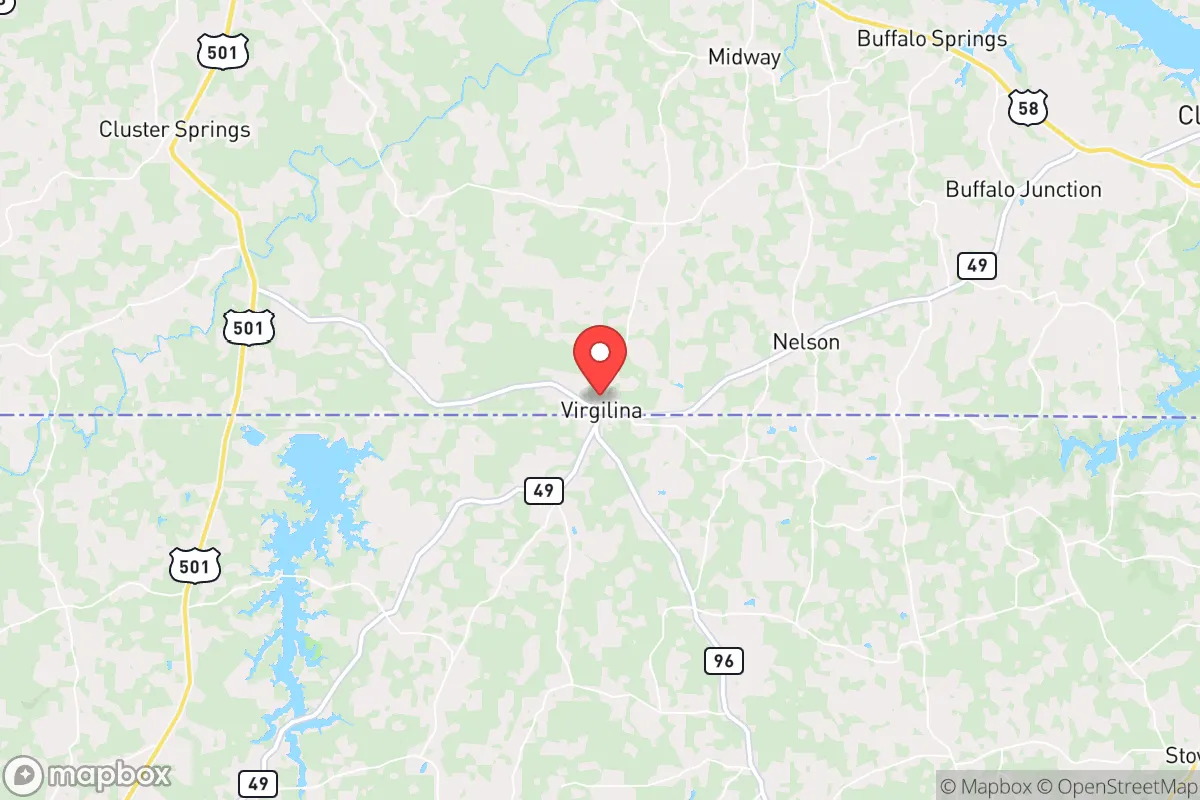
Virgilina, Virginia, offers a notably high degree of personal sovereignty, grounded in the state’s broader tilt toward individual liberty and local control, though the specifics of daily autonomy depend heavily on county-level enforcement and proximity to the North Carolina border. For a single individual or family prioritizing self-reliance, the area presents a regulatory environment that is generally light-touch on property use and self-defense, while the tax burden remains moderate compared to neighboring states. The town’s small population—roughly 150 residents—and rural setting in Halifax County mean that formal government oversight is often minimal, but residents should understand the specific legal frameworks that shape their freedoms, from gun laws to homesteading rules.
Tax burden and regulatory posture in Halifax County
Virginia’s overall tax burden is moderate, ranking around the middle of U.S. states, but Halifax County keeps local levies relatively low. The county’s real property tax rate is approximately $0.50 per $100 of assessed value, which is well below the state average and significantly lower than rates in Northern Virginia or Richmond suburbs. Personal property tax applies to vehicles and some business equipment, but the county does not impose a local income tax, leaving the state’s flat 5.75% income tax as the primary direct levy on earnings. Sales tax in Halifax County is 5.3% (state plus local), which is standard for rural Virginia. Regulatory posture is generally permissive: there is no county-wide zoning ordinance in unincorporated areas, meaning that many land-use decisions—such as building a workshop, keeping livestock, or operating a small home business—fall to the property owner without needing a variance or special permit. However, Virgilina itself is an incorporated town with its own modest zoning code, so anyone buying within town limits should verify setback requirements and permitted uses before purchasing. The absence of heavy county-level regulation is a concrete advantage for those seeking to minimize bureaucratic friction, but it also means that disputes between neighbors over land use are handled through civil courts rather than a planning department.
Self-defense and gun law specifics in Virginia
Virginia is a shall-issue state for concealed handgun permits, meaning that if a resident passes a background check and completes a required training course, the local circuit court must issue the permit. Halifax County’s circuit court processes applications efficiently, with typical turnaround under 45 days. Open carry of handguns and long guns is legal without a permit for anyone 18 or older who can legally possess a firearm. Virginia law also recognizes the Castle Doctrine, which presumes that a person using deadly force against an intruder inside their home or vehicle had a reasonable fear of imminent harm—there is no duty to retreat in those spaces. However, Virginia does not have a broad Stand Your Ground law applying to public spaces; outside the home or vehicle, a person must attempt to retreat if safely possible before using deadly force. This distinction matters for anyone who carries a firearm for personal protection while walking or driving through rural areas. Magazine capacity is not restricted at the state level, and there is no state-level registry for firearms. The town’s proximity to the North Carolina border means that residents should also be aware of that state’s different reciprocity rules—Virginia honors North Carolina permits and vice versa, but the legal specifics of transport across state lines require careful attention.
Self-reliance and homesteading viability: lot sizes, zoning, and off-grid feasibility
For those interested in homesteading, off-grid living, or significant self-reliance, Virgilina’s rural setting is highly accommodating. Most residential parcels in the surrounding unincorporated areas of Halifax County are zoned A-1 (Agricultural), which permits farming, livestock, and accessory structures without special permitting. Minimum lot sizes in the county are typically one acre for a single-family dwelling on a septic system, but many properties in the Virgilina area are sold as 2- to 10-acre parcels, providing ample space for gardens, chicken coops, or small orchards. Off-grid feasibility is strong: Virginia law does not require a connection to the electrical grid, and many rural homes already rely on private wells and septic systems. Solar panels are legal and common, though net metering rules with the local electric cooperative (Mecklenburg Electric Cooperative) require a signed interconnection agreement. Rainwater collection is unrestricted for outdoor use, and composting toilets are permitted under the Virginia Private Well and Septic Regulations if they meet NSF standards. The main regulatory hurdle for full off-grid living is the requirement for a permitted septic system—composting or incinerating toilets must be approved by the Halifax County Health Department, which can add a few hundred dollars in permitting fees but is generally straightforward. There are no county-level bans on backyard chickens, beekeeping, or small-scale livestock, though residents within town limits should check Virgilina’s town code for any restrictions on roosters or hog pens.
Personal liberties: parental rights, medical autonomy, speech, and property
Virginia law provides strong protections for parental rights in education and healthcare decisions. Parents have the legal right to opt their children out of specific instructional materials or activities that conflict with their religious or moral beliefs, and the state does not mandate any specific vaccine for school attendance beyond those required by the Code of Virginia—though exemptions are available for medical and religious reasons. Medical autonomy is generally respected: Virginia does not have a state-level vaccine passport mandate, and there are no restrictions on purchasing raw milk directly from a farm (though retail sale is prohibited). Freedom of speech and assembly are protected under the Virginia Constitution, which includes a specific provision that “no law shall be passed to restrain the freedom of speech or of the press.” Property rights are robust: Virginia is a “pure” fee simple state, meaning there is no state-level inheritance tax, and the state’s eminent domain powers are limited to public use projects with just compensation. Halifax County does not have a stormwater utility or tree preservation ordinance that would restrict a homeowner’s ability to clear land or modify their property. The main limitation on property autonomy is the state’s building code, which applies to any new construction or major renovation—permits are required for structural work, electrical, and plumbing, but minor repairs and non-structural changes do not require county approval.
Overall, Virgilina offers a level of personal sovereignty that is well above the national average for small towns, particularly in the areas of property use, self-defense, and homesteading feasibility. The combination of low taxes, minimal county-level zoning, strong gun rights, and legal support for off-grid living makes it a compelling option for individuals and families who prioritize autonomy over access to urban amenities. Compared to areas in the Northeast or West Coast, the regulatory burden is light; compared to other rural Virginia towns, it is competitive but not exceptional—Halifax County’s permissive stance on land use and its efficient permitting process are the standout advantages. For a relocation decision, the key trade-off is that this freedom comes with limited local services and a small population base, meaning that self-reliance is not just a legal option but a practical necessity for many daily needs.

* Values derived from national, state, county, city and local statistics and may differ in a specific area. Last updated: 2026-10-24T15:25:54.000Z
Narrative content on this page is AI-generated and may contain mistakes. Verify any details that matter before acting on them.
ReloMaps may earn a commission from affiliate links at no extra cost to you.

