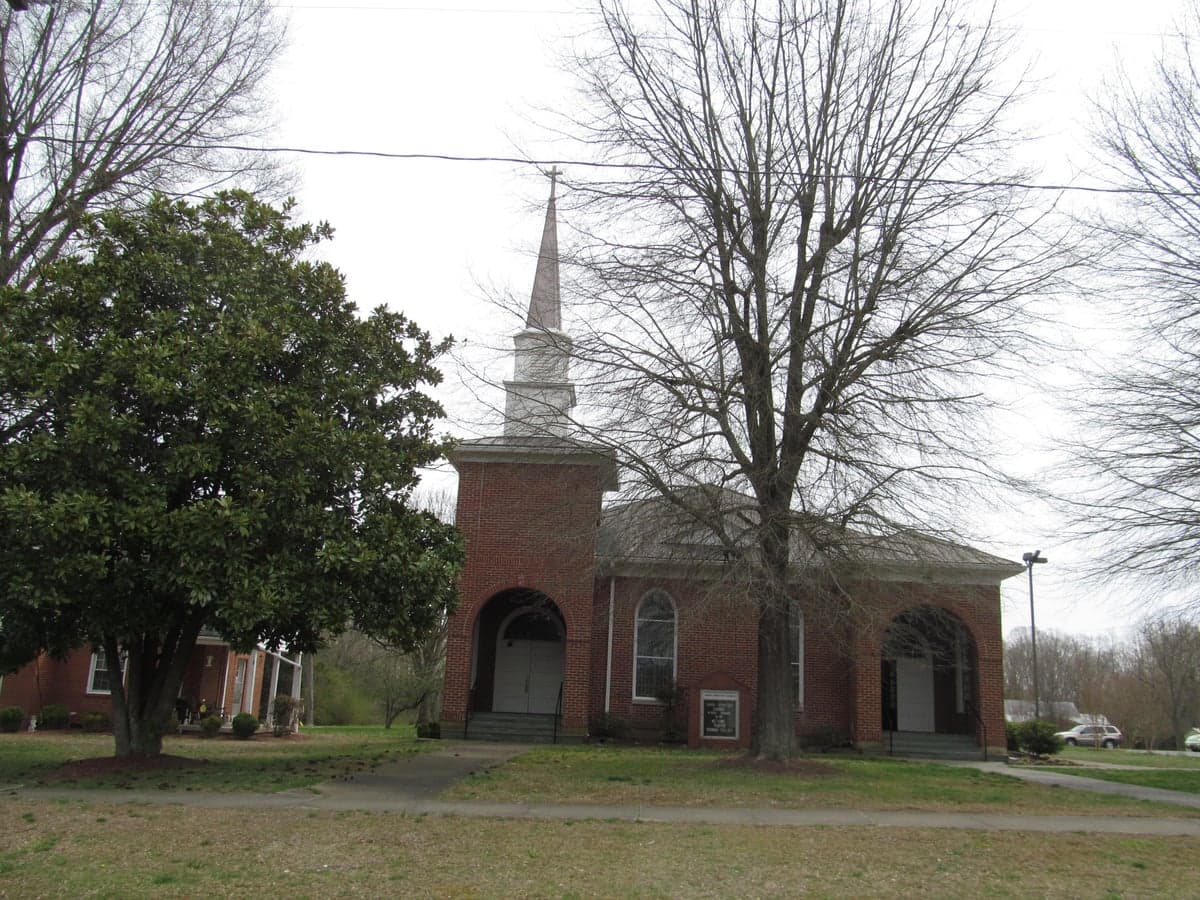
Photo: Wikipedia
Demographics of Virgilina, VA
Affluence Level in Virgilina, VA
A middle-class area roughly in line with national averages across income, home values, education, and employment.
People of Virgilina, VA
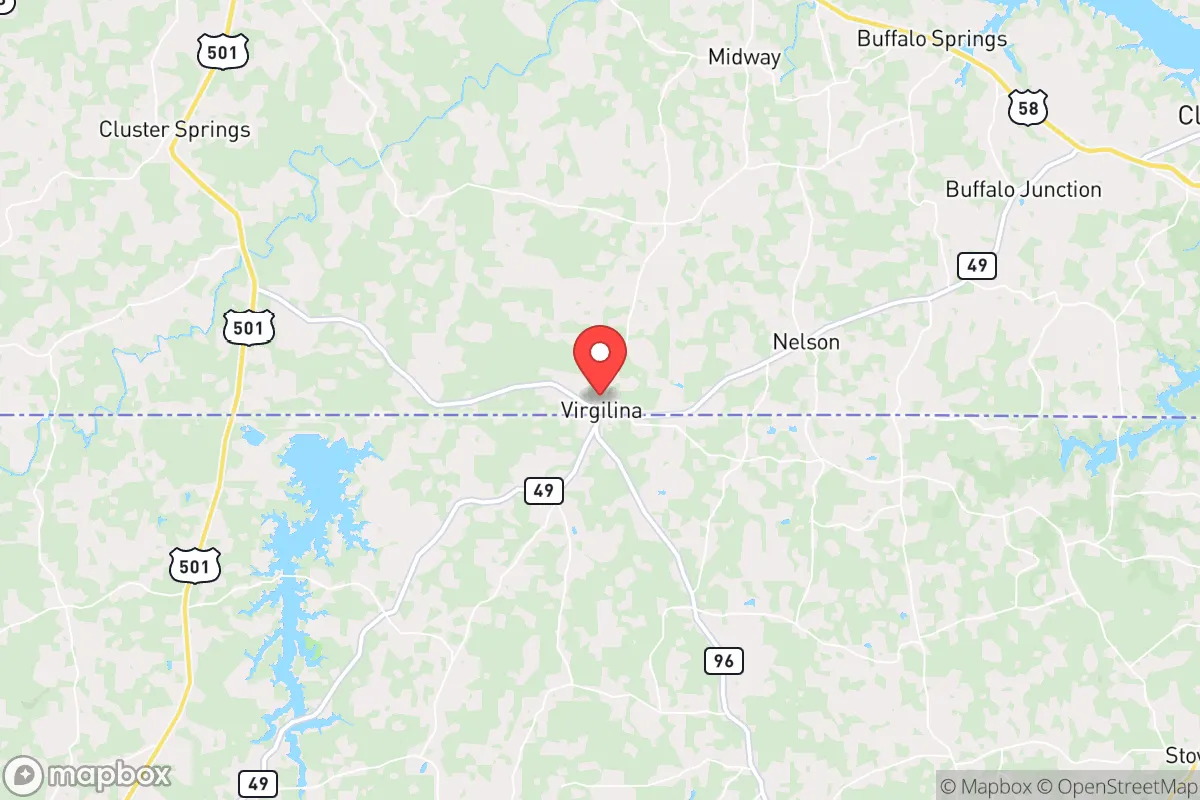
Virgilina, Virginia, is a small, tight-knit community of 130 residents in Halifax County, near the North Carolina border. The population is predominantly White (80.8%) with a significant Black or African American minority (11.5%), and a foreign-born share of just 0.8%. The town’s identity is rooted in its rural, working-class heritage, shaped by the tobacco and textile industries that once defined the region, and today it remains a quiet, family-oriented place where generational roots run deep.
How the city was settled and grew
Virgilina was founded in the late 19th century as a railroad and tobacco town, named after a combination of Virginia and the nearby community of Lina. The arrival of the Richmond and Danville Railroad in the 1880s spurred the town’s initial growth, drawing farmers and laborers to the area. The original settlers were primarily of English and Scots-Irish descent, who established homesteads in what is now the Old Town District around the railroad depot. By the early 1900s, the tobacco boom brought a second wave of residents, including Black families who moved to the area to work in the tobacco warehouses and on surrounding farms. These families settled in the Mill Creek Bottom neighborhood, a historically Black community just south of the town center. The town was officially incorporated in 1900, and its population peaked at around 500 in the 1920s, supported by a thriving tobacco market and a cotton mill that operated until the mid-20th century.
Modern era (post-1965)
After the 1965 Immigration and Nationality Act, Virgilina saw virtually no new foreign-born arrivals, consistent with its current 0.8% foreign-born share. The post-1965 period was instead defined by domestic out-migration, as the decline of tobacco farming and textile manufacturing led many younger residents to leave for larger cities. The town’s population dropped from roughly 300 in 1960 to 130 today. The Lake View Estates subdivision, developed in the 1970s on the town’s northern edge, attracted a small number of White families seeking affordable rural homes, but it never filled to capacity. The Black population, which had historically concentrated in Mill Creek Bottom and along River Road, also shrank as families moved to nearby South Boston or Danville for better job opportunities. Today, the racial composition remains stable, with no significant Hispanic or Asian populations recorded in the most recent data.
The future
Virgilina’s population is projected to continue its slow decline, with no major economic drivers to reverse the trend. The town’s age profile is older than the state average, and the college-educated share is just 15.8%, limiting the potential for knowledge-economy growth. The Downtown Core along Main Street has seen a few small businesses open in recent years, but residential development is stagnant. The Piney Grove area, a cluster of homes on the town’s eastern edge, remains largely occupied by long-term residents. Diversity is unlikely to increase significantly, as the area lacks the job base or housing stock to attract new immigrant communities. The cultural identity of Virgilina will likely remain rooted in its rural, Southern heritage, with a strong sense of place among the families who stay.
For someone moving in now, Virgilina offers a quiet, affordable lifestyle in a deeply traditional community, but with limited economic opportunity and a shrinking population base. It is best suited for those seeking a low-cost, rural retreat with strong local ties, rather than for career-driven individuals or families looking for demographic diversity or urban amenities.

* Values derived from national, state, county, city and local statistics and may differ in a specific area. Last updated: 2026-10-24T15:25:54.000Z
Narrative content on this page is AI-generated and may contain mistakes. Verify any details that matter before acting on them.
ReloMaps may earn a commission from affiliate links at no extra cost to you.

