Photo: Wikipedia
Political ClimatePolitical Climate in Victoria, MN
District shown is the primary district for this city’s centroid. Cities may span multiple districts.
Local Political AnalysisPolitical Analysis of Victoria, MN
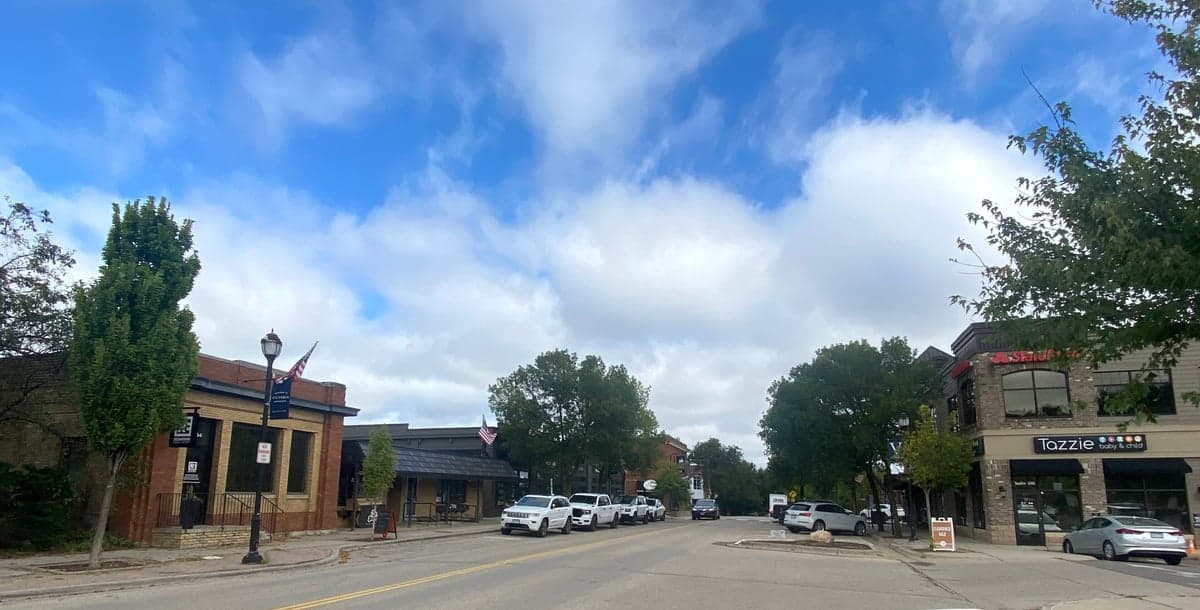
Victoria leans solidly Republican, with a Cook Partisan Voting Index (PVI) of R+10, meaning it votes about ten points more conservative than the national average. That’s a pretty strong tilt, especially when you consider that the surrounding state of Minnesota as a whole is a classic swing state—it’s voted Democratic in every presidential election since 1976 except for 2016 and 2024, when it flipped narrowly red. But Victoria’s numbers are no fluke; the town has been trending redder over the past decade as new development has drawn in families and professionals who prioritize low taxes, school choice, and a slower pace of life. If you’re looking at the broader Carver County area, places like Chaska and Waconia are more purple, but Victoria is where the conservative base really solidifies.
How it compares
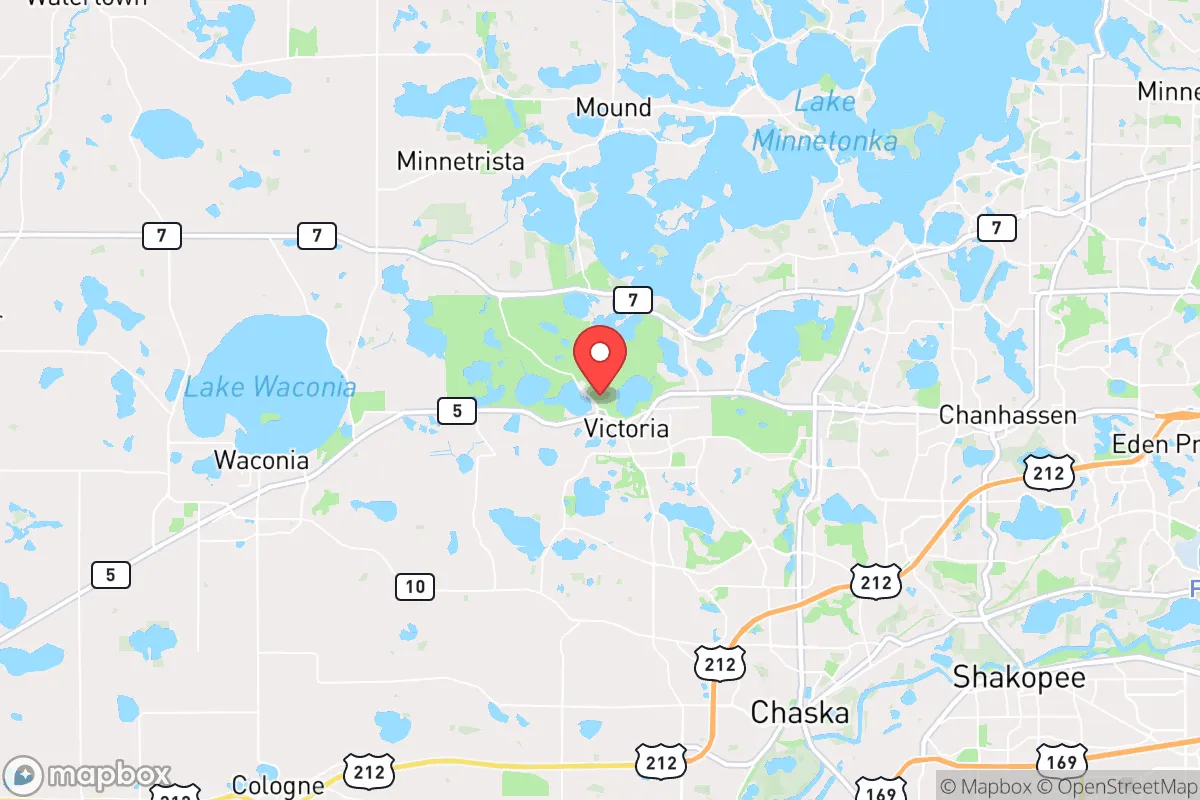
Compared to Minnesota as a whole, Victoria is a political outlier. The state’s Cook PVI is unknown, but its recent voting history shows a near-even split—think 2020’s Biden win by about 7 points, then Trump’s 2024 win by about 3 points. Victoria, by contrast, consistently delivers margins of 60% or more for Republican candidates. Drive 15 minutes east to Chanhassen or Eden Prairie, and you’ll find more moderate suburbs that lean slightly Democratic. Head west to Waconia, and you’re in a similar R+8 to R+10 zone. The real contrast is with Minneapolis, just 25 miles northeast, which is D+30 territory. So Victoria isn’t just conservative for Minnesota—it’s a pocket of deep red in a state that’s otherwise a battleground. That said, the town’s growth has brought in some younger families from the Twin Cities who lean more libertarian than traditional GOP, so the flavor of conservatism here is shifting from “old-school rural” to “new suburban fiscal conservative.”
What this means for residents
For conservative residents, Victoria is a comfortable place to live. Local government tends to be business-friendly, zoning is less restrictive than in neighboring cities, and the school board has historically been conservative-leaning, which matters to families who want curriculum transparency or school choice options. You’ll see Trump signs in yards during election season, and the local GOP chapter is active. For liberal residents, it’s a different story. You’re not going to find many like-minded neighbors, and local politics can feel like a one-party system. That said, Victoria isn’t hostile—people are polite, and the town’s small size means you can still have a voice at city council meetings. The real friction comes on issues like development density, where conservative “slow growth” advocates clash with newer residents who want more housing options. But overall, the political climate is stable, not volatile. It’s a place where you can disagree without it being personal, as long as you’re not trying to push a progressive agenda at the local level.
One cultural distinction worth noting: Victoria has a strong sense of local identity that’s separate from the Twin Cities metro. You’ll hear people say “we’re not Minneapolis” with a mix of pride and relief. The town’s annual events—like the Victoria Fest and the farmers market—are more about community than politics. There’s a practical, live-and-let-live vibe that tempers the red lean. Looking ahead, I’d expect Victoria to stay R+8 to R+12 for the next decade, as long as new development doesn’t bring in a wave of DFL voters from the east. If the state flips back to blue in 2028, Victoria will still be a red island, but it’ll feel more like a holdout than a trendsetter. For now, it’s a solidly conservative suburb that’s growing fast, and that growth is the biggest wildcard for its political future.

State Political ClimatePolitical Climate in Minnesota
State Political AnalysisPolitical Environment in the State
Minnesota has shifted from a reliably purple battleground to a solidly blue state over the past two decades, but the picture is more complicated than a simple partisan label. The state hasn't voted for a Republican presidential candidate since 1972, and the Democratic-Farmer-Labor Party (DFL) now holds a trifecta in state government. However, this is a story of two Minnesotas: the metro core of Minneapolis and Saint Paul drives the state's leftward tilt, while much of the rest of the state has moved sharply right. For a conservative-leaning relocator, the practical reality is that you'll be living in a state where state-level policy is controlled by progressives, but where local communities—especially outside the Twin Cities—often feel like a different country entirely.
Urban vs. rural divide
The political map of Minnesota is a stark study in contrast. The Twin Cities metro area (Hennepin and Ramsey counties) accounts for roughly 55% of the state's population and votes DFL by margins of 30-40 points. Minneapolis itself is one of the most progressive cities in the Midwest, while inner-ring suburbs like St. Louis Park and Roseville are solidly blue. The real story is in the exurbs and rural areas. Scott County, a fast-growing exurb southwest of the metro, has flipped from a swing county to reliably Republican, voting +15 for Trump in 2024. The Iron Range in northeastern Minnesota—historically a DFL stronghold—has been trending Republican for a decade, with St. Louis County (home to Duluth) now a genuine battleground. Meanwhile, Greater Minnesota—places like Rochester, St. Cloud, and Mankato—are competitive but lean right, especially in legislative races. The practical takeaway: if you move to a rural or exurban area, your local politics will likely be conservative, but you'll still be governed by a DFL state legislature and governor.
Policy environment
Minnesota's policy environment is a mixed bag for a conservative relocator. The state has a progressive income tax with rates up to 9.85% on high earners, and a statewide sales tax of 6.875% (local options can push it higher). Property taxes are moderate but vary widely by county. The regulatory posture is generally business-friendly in practice, but the state has a robust environmental review process and strong labor protections. Education policy is a flashpoint: Minnesota has a well-funded public school system, but the state recently eliminated the requirement for school districts to notify parents of curriculum changes (the "Parental Bill of Rights" was defeated in 2023). Election laws are among the most accessible in the country—automatic voter registration, same-day registration, no-excuse absentee voting, and a 46-day early voting period. For a conservative, the policy environment feels like a tug-of-war: low corporate taxes and a skilled workforce compete with high personal income taxes and progressive social policies.
Recent policy direction
The DFL trifecta (2023-present) has moved the state decisively left on several fronts. On gun and self-defense law, Minnesota passed a "red flag" law (Extreme Risk Protection Order) and universal background checks for private sales in 2023. Parental and education rights saw the defeat of a Parents' Bill of Rights, while the state mandated that schools provide "affirming" environments for LGBTQ+ students. On speech and privacy, Minnesota passed a strong data privacy law (the Minnesota Consumer Data Privacy Act) but has not enacted any major restrictions on public speech. Medical and bodily autonomy saw the codification of abortion rights into state law (the PRO Act) and the protection of gender-affirming care for minors. Property rights remain relatively strong, though the state has expanded rent control options for local governments (Minneapolis and St. Paul have their own rent stabilization policies). Taxation saw a new tier for high earners and a child tax credit, but no broad-based tax cuts. Voting and ballot access expanded with automatic voter registration and the restoration of voting rights for felons upon release from prison. For a conservative, the direction is clear: the state is moving toward a California-style policy model, but at a slower pace.
Civil unrest & political movements
Minnesota has been a national flashpoint for civil unrest. The 2020 murder of George Floyd in Minneapolis sparked the largest protests in the state's history, leading to widespread property damage and a national reckoning on policing. The aftermath saw the rise of the "defund the police" movement in Minneapolis, though voters later rejected a ballot measure to replace the police department. On the right, the Minneapolis "Third Precinct" occupation and the subsequent trial of Derek Chauvin galvanized conservative activism. The state has seen organized Second Amendment sanctuary resolutions in over 30 counties, though these are symbolic. Immigration politics are relatively calm—Minnesota has a large Somali and Hmong population, particularly in the Twin Cities, and the state has a "sanctuary" law limiting local cooperation with federal immigration enforcement. Election integrity controversies have been muted compared to other states, though the 2020 election saw Trump's campaign challenge the results in court (the case was dismissed). A new resident would notice the political polarization most visibly in yard signs, bumper stickers, and local news coverage—it's a state where politics is a constant topic of conversation.
Projection
Over the next 5-10 years, Minnesota is likely to continue its slow drift leftward at the state level, driven by the growing population and political influence of the Twin Cities metro. The exurban growth in Scott and Carver counties will add more Republican votes, but not enough to offset the metro's dominance. The Iron Range's shift to the right will continue, but it's a shrinking population base. The wild card is in-migration: Minnesota is seeing a net outflow of residents to states like Texas and Florida, but those leaving tend to be older and more conservative, while younger, more diverse newcomers are moving into the metro. The practical projection: a conservative moving to Minnesota in 2026 should expect to live under DFL control for the foreseeable future, but with enough local variation to find a community that fits. The state will not flip to red in a presidential election, but it could become more competitive in state legislative races if the DFL overreaches on taxes or social policy.
For a new resident, the bottom line is this: Minnesota offers a high quality of life with excellent schools, a strong economy, and beautiful natural amenities, but it comes with a progressive state government that will continue to push policies on guns, taxes, and social issues that may clash with conservative values. The key is choosing your location wisely—exurban Scott County or rural Stearns County will feel very different from Minneapolis or St. Paul. You'll have a voice in local elections, but state-level outcomes are largely out of reach for conservatives. If you can live with that trade-off, Minnesota is a great place to raise a family; if not, you'll find the policy environment increasingly frustrating.
* Values derived from national, state, county, city and local statistics and may differ in a specific area. Last updated: 2026-10-10T16:29:16.000Z
Narrative content on this page is AI-generated and may contain mistakes. Verify any details that matter before acting on them.
ReloMaps may earn a commission from affiliate links at no extra cost to you.

