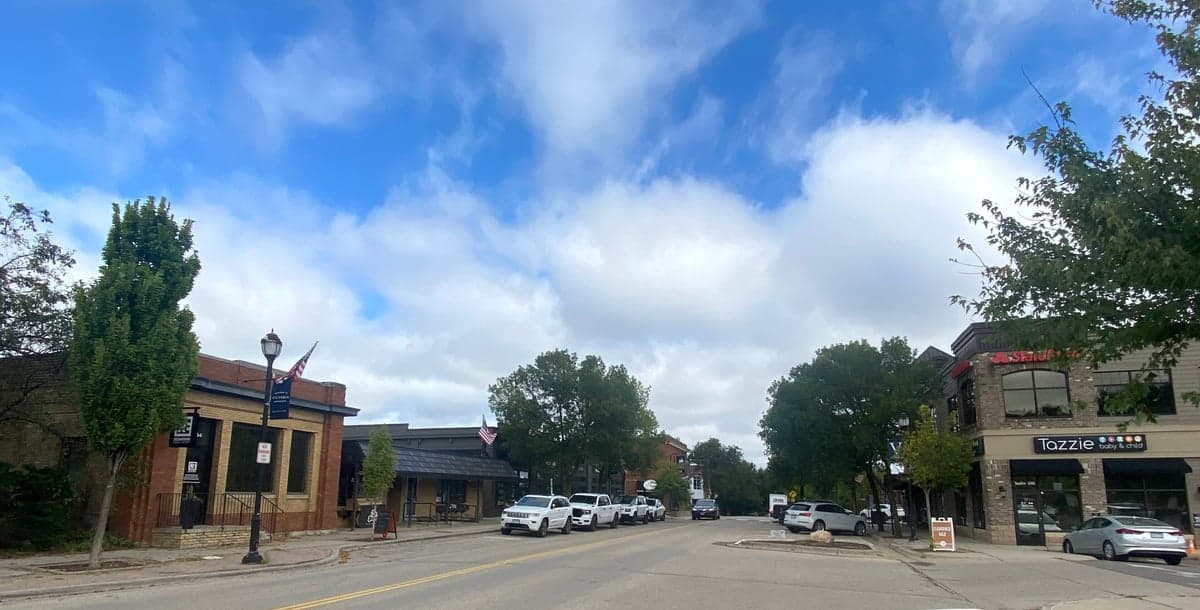
Photo: Wikipedia
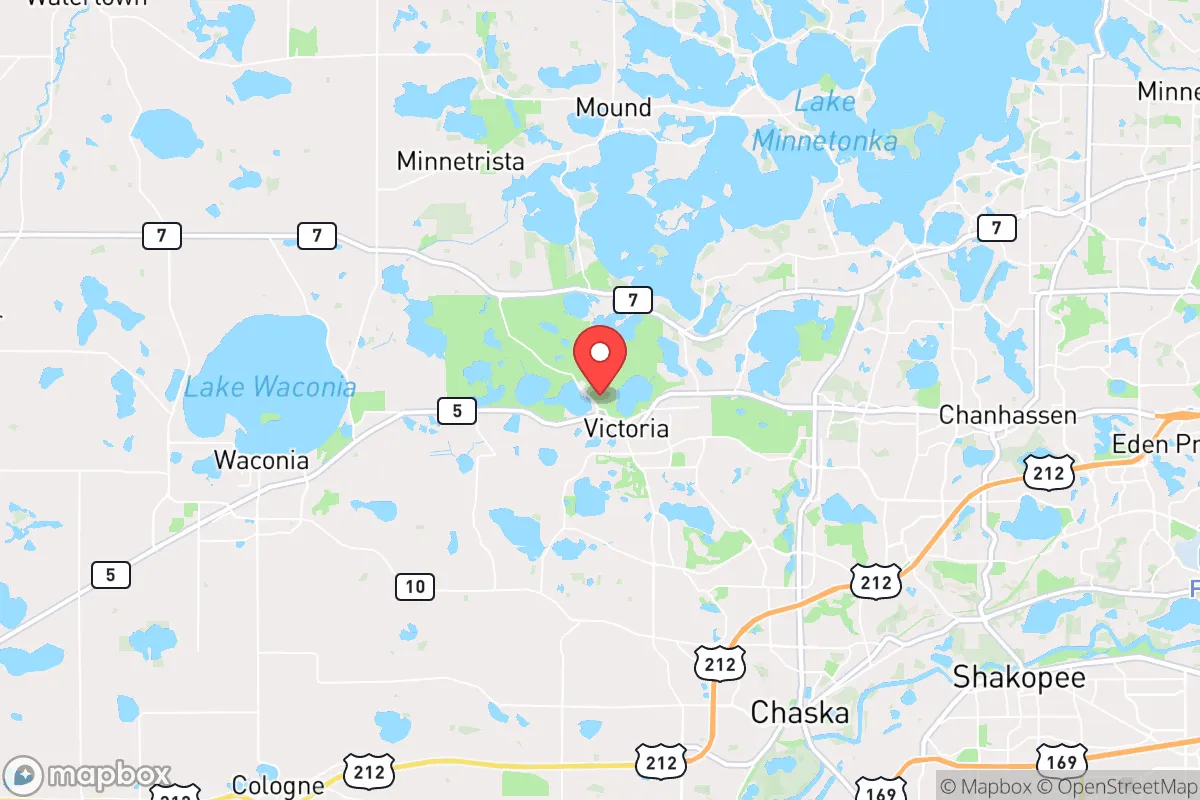
Personal Sovereignty in Victoria, MN
Viable for self-reliance. Generally workable, though some barriers may limit total independence.
What does Personal Sovereignty tell us?
Personal Sovereignty measures your capacity for self-reliance and independence with minimal government friction. Higher scores mean fewer barriers between you and the way you want to live... but it assumes you have the space you need and good neighbors.
What does this tell us?
Personal Sovereignty measures your capacity for self-reliance and independence with minimal government friction. Higher scores mean fewer barriers between you and the way you want to live... but it assumes you have the space you need and good neighbors.
State Policy
Energy independence: Importer (20% of energy produced in-state)
Personal Liberty
Homesteading

Personal Liberty Analysis
Victoria, Minnesota, offers a personal sovereignty environment that is shaped more by its small-town character and local governance than by any exceptional state-level carve-outs, placing it in a middle tier for freedom-minded relocators within the broader Twin Cities metro. While Minnesota as a whole leans interventionist in several policy areas, Victoria’s local culture of self-reliance, combined with relatively low crime and a strong sense of community, provides a buffer against the most restrictive state mandates. For a conservative-leaning individual or family, the key trade-off is accepting a moderate state tax and regulatory burden in exchange for a high-quality local living environment where personal autonomy in daily life is largely respected.
Tax burden and regulatory posture in Victoria and Carver County
Minnesota’s state-level tax burden is among the highest in the nation, ranking 6th overall in 2024 according to the Tax Foundation, with a progressive income tax topping out at 9.85% and a state sales tax of 6.875% that local jurisdictions can add to. Victoria, located in Carver County, adds a local sales tax of 0.5%, bringing the total to 7.375% — moderate for the metro area. Property taxes in Victoria are a more significant consideration: the effective property tax rate on a median-valued home (around $550,000 in 2025) is approximately 1.2%, which is above the national average but typical for the western suburbs. However, Carver County is known for its fiscally conservative approach, with a county board that has historically prioritized low debt and efficient services. The regulatory posture at the local level is generally light-touch for standard residential uses: Victoria’s zoning code is straightforward, and the city does not impose rent control, business licensing hurdles beyond state requirements, or overly burdensome home occupation restrictions. The main regulatory friction comes from state-level environmental and energy mandates, such as the 2023 law requiring 100% carbon-free electricity by 2040, which can affect utility costs and future development. For a family or individual, the annual tax burden is real but predictable, and the local government’s responsiveness to residents is a tangible benefit.
Self-defense and gun law specifics in Victoria and Minnesota
Minnesota is a “shall-issue” state for concealed carry permits, meaning that if you meet the statutory requirements — including a background check and a training course — the local sheriff’s office in Carver County must issue the permit. There is no discretionary denial, and the process is straightforward: the Carver County Sheriff’s Office processes applications efficiently, typically within 30 days. Open carry is legal for individuals with a permit to carry, but without a permit, open carry of a handgun is generally prohibited in public. Minnesota does not have a “stand your ground” law; instead, it follows a “duty to retreat” standard in public places, though the Castle Doctrine applies inside one’s home and vehicle. This is a meaningful distinction for those prioritizing self-defense autonomy: you cannot legally use deadly force in a public confrontation unless retreat is impossible or unsafe. Magazine capacity is not restricted at the state level, and there is no state-level assault weapons ban, though several cities in the metro (not Victoria) have passed local ordinances that are preempted by state law. Victoria itself has no additional gun ordinances beyond state law, and the local culture is generally pro-Second Amendment. The Carver County Sheriff’s Office is known for being supportive of lawful gun ownership, and there are several gun ranges and training facilities within a 20-minute drive. For a family, the practical takeaway is that while Minnesota’s self-defense laws are not as permissive as those in Texas or Florida, they are workable for responsible gun owners, and Victoria’s low crime rate (violent crime is roughly 60% below the national average) reduces the likelihood of needing to test those laws.
Self-reliance and homesteading viability in Victoria
Victoria’s zoning and lot sizes make small-scale homesteading feasible but not expansive. The city’s minimum lot size in single-family residential districts is typically 0.25 to 0.5 acres, with some larger estate lots available in the western parts of the city. For a family wanting to keep chickens, bees, or a substantial vegetable garden, Victoria’s code is permissive: chickens are allowed on lots of 20,000 square feet or more (about half an acre) with a permit, and beekeeping is allowed with registration. However, keeping larger livestock like goats or pigs is generally prohibited within city limits, and the city’s zoning does not allow for agricultural uses on standard residential lots. For those seeking true off-grid living — solar panels, rainwater collection, composting toilets — Victoria’s building codes and HOA restrictions in many subdivisions can be a barrier. The city follows the Minnesota State Building Code, which requires grid-tied electrical connections for new construction, and many subdivisions have covenants that prohibit visible solar panels or clotheslines. The feasibility of off-grid living is therefore low within the city; the better option is to look at unincorporated Carver County or neighboring townships like Laketown or Waconia, where lot sizes of 2-5 acres are common and zoning is more relaxed. The soil in the area is excellent for gardening (Carver County sits on some of the richest agricultural land in the state), and the growing season (approximately 150 frost-free days) supports a wide variety of vegetables. For a family focused on self-reliance, Victoria offers a good middle ground: you can have a substantial garden and some small livestock, but you will be tied to municipal utilities and subject to subdivision rules. The local farmers’ market (May-October) and strong community of home gardeners provide a support network for those learning the craft.
Personal liberties in Victoria: parental rights, medical autonomy, speech, and property
In the realm of personal liberties, Victoria benefits from being in a politically balanced county where local governance tends to respect individual choice. Parental rights are generally strong in practice: the Victoria Public Schools (Eastern Carver County Schools) have a reputation for being responsive to parent concerns, and the district does not have explicit policies that override parental authority on medical decisions or curriculum objections. Minnesota state law does require that schools provide comprehensive sex education and that they accommodate transgender students’ preferred names and pronouns without parental notification in some cases, which is a point of concern for some conservative families. However, the local school board has been moderate and has not aggressively pushed controversial policies. Medical autonomy is limited by state mandates: Minnesota has a vaccine requirement for school attendance (with medical and philosophical exemptions available), and the state’s COVID-19 emergency powers have been a flashpoint. In 2023, the legislature passed a law requiring paid sick leave and family leave, which affects small business owners and independent contractors. On speech and property rights, Victoria is a strong environment: there are no local hate speech ordinances beyond state law, and the city does not restrict political signage beyond standard size and time limits. Property rights are well-protected, with no rent control and a straightforward process for home improvements, though the city does enforce a rental inspection program for multi-family units. The overall liberty environment is one of moderate state intervention with significant local autonomy — a trade-off that many conservative families find acceptable given the quality of schools, low crime, and community cohesion.
Compared to other areas in the Upper Midwest, Victoria offers a solid but not exceptional level of personal sovereignty. It is more freedom-friendly than Minneapolis or St. Paul, where local ordinances on firearms, rent control, and business regulation are tighter, but less so than rural Minnesota counties like Meeker or McLeod, where zoning is minimal and property taxes are lower. For a family that values a strong community, good schools, and a safe environment, and is willing to accept moderate state-level taxes and regulations, Victoria represents a balanced choice. The key is to go in with eyes open: you will have more personal autonomy than in the urban core, but you will still be living under Minnesota’s state-level framework, which is not designed for maximum individual sovereignty. For those who prioritize self-reliance above all else, the rural townships west of Victoria offer a more permissive environment; for those who want a high-quality suburban life with room to garden and keep chickens, Victoria is a strong contender.

* Values derived from national, state, county, city and local statistics and may differ in a specific area. Last updated: 2026-10-10T16:29:16.000Z
Narrative content on this page is AI-generated and may contain mistakes. Verify any details that matter before acting on them.
ReloMaps may earn a commission from affiliate links at no extra cost to you.

