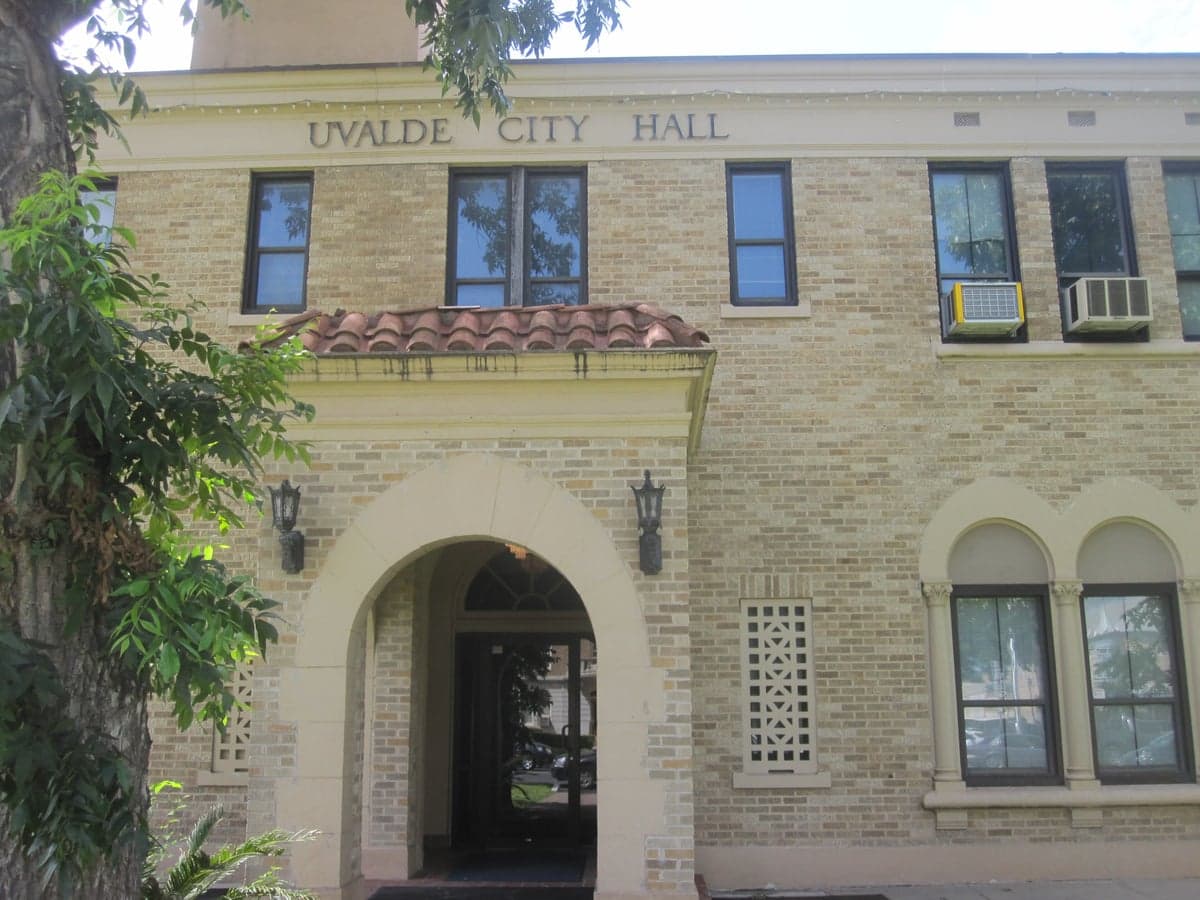
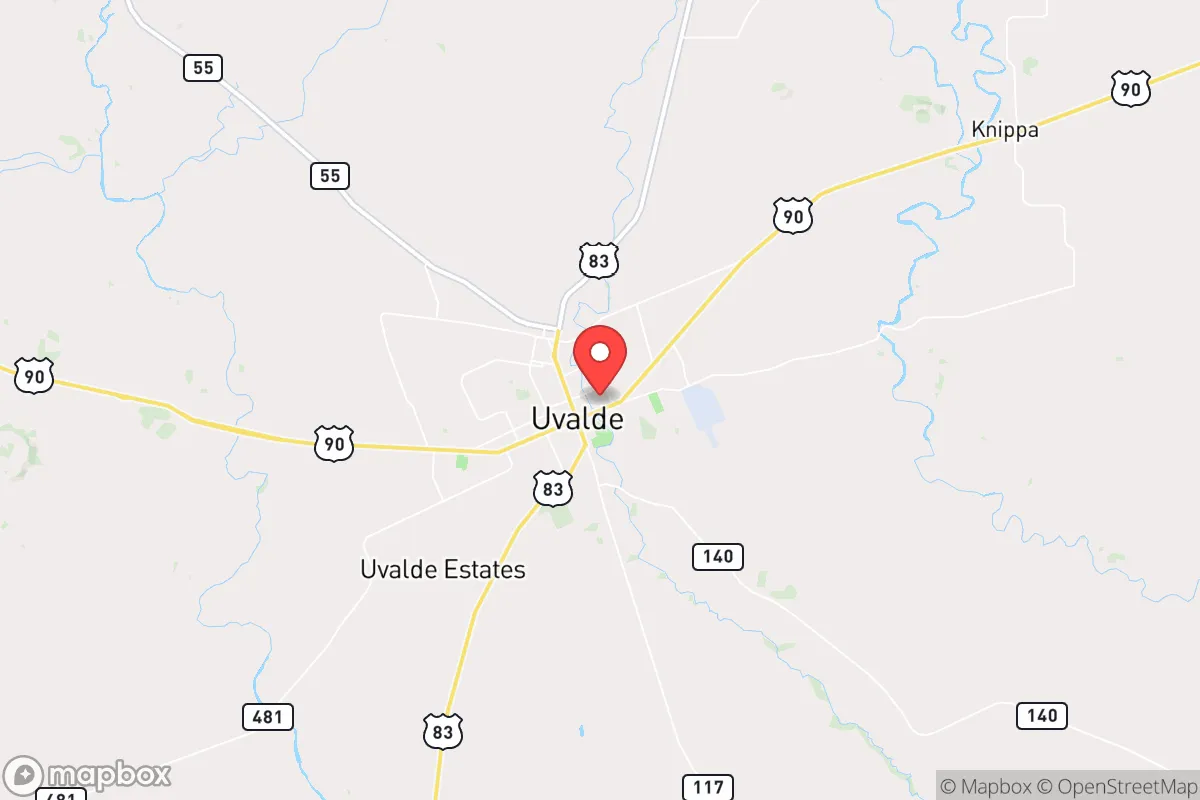
Photo: Wikipedia
Quality of Life in Uvalde, TX
Above-average quality of iife. The area offers a reasonable cost of living, decent mobility, and a mix of neighborhood amenities.
What does Quality of Life tell us?
Quality of Life blends cost of living, nearby amenities, socioeconomic signals, and neighborhood character. City-level scores represent the whole municipality; individual neighborhoods can differ.
What does this tell us?
Quality of Life blends cost of living, nearby amenities, socioeconomic signals, and neighborhood character. City-level scores represent the whole municipality; individual neighborhoods can differ.
Cost of Living
29% below national average
The Real Cost of Living in Uvalde, TX for 2026
| Tier | Individual | Family (4) |
|---|---|---|
| Survival | $16k | $30k |
| Comfortable | $26k | $38k |
| Luxury | $87k+ | $135k+ |
| Elite (Top 5%) | $102k+ | $159k+ |
133%
The Area Signal
A metric tracking the socioeconomic signals of the area.
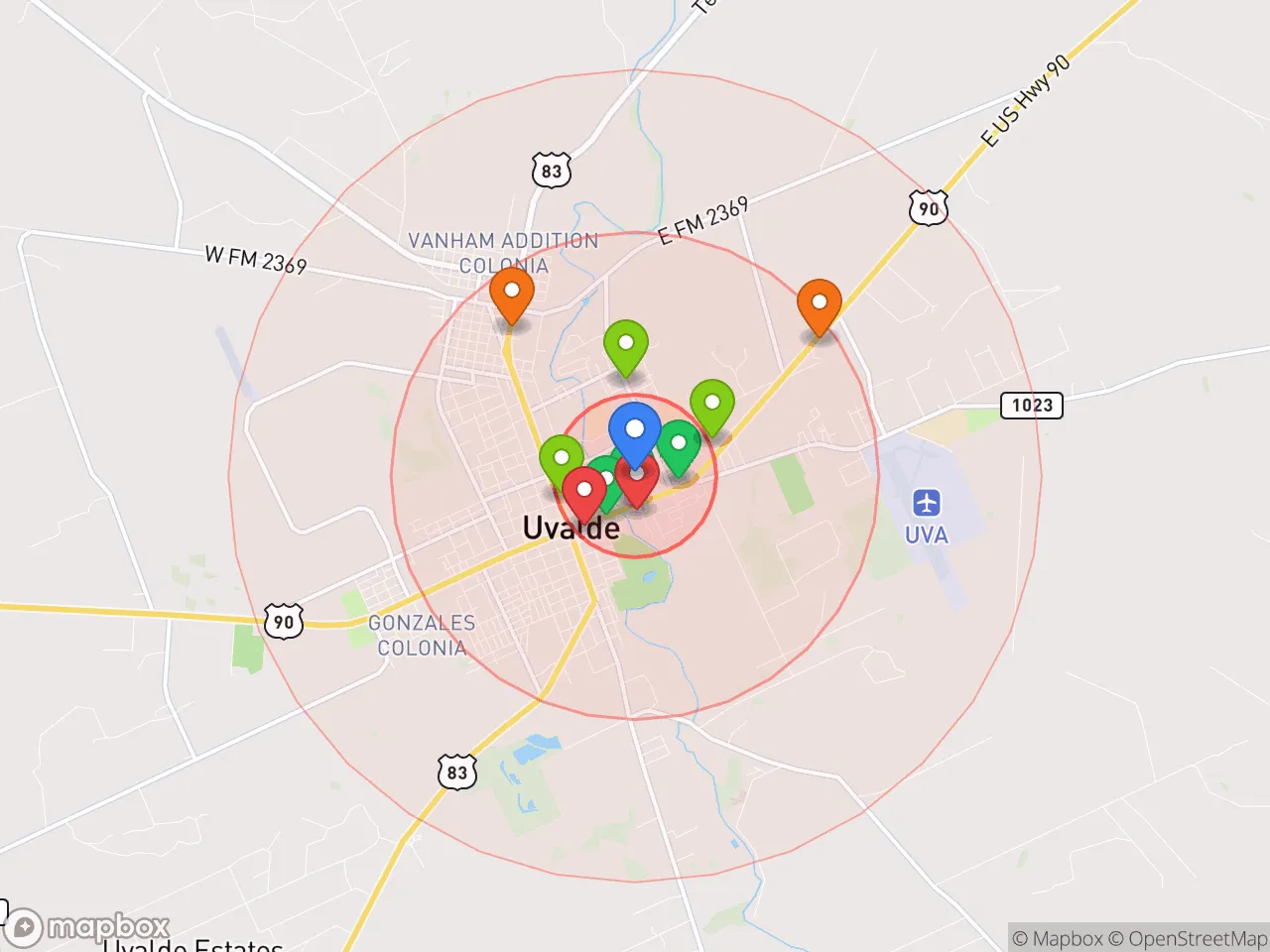
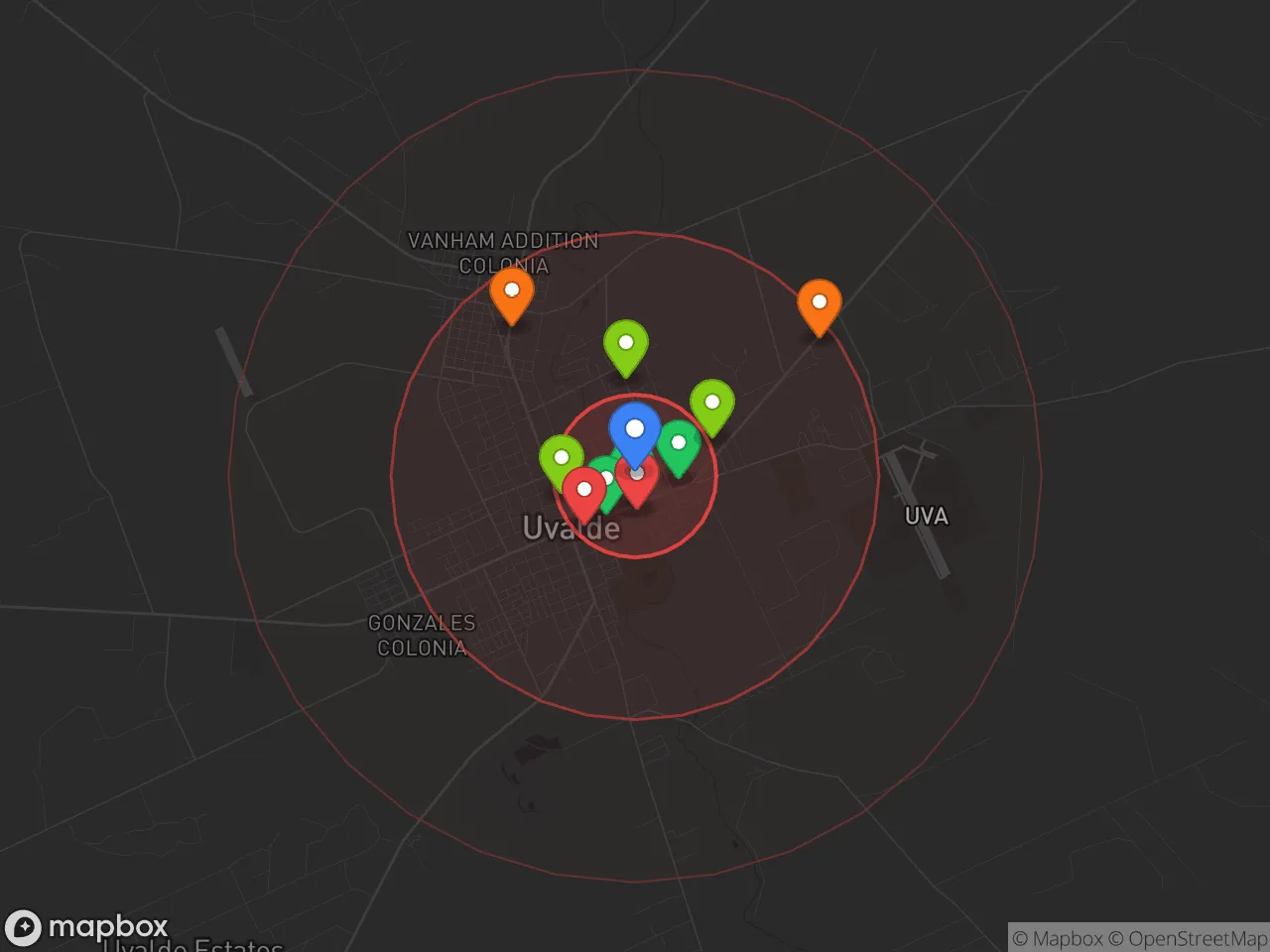
Hobbies
Explore the areaGroceries
0 within 10 miles
Gas
0 within 10 miles
Hospital
0 within 20 miles
Airport
SAN — San Antonio International
Post Office
Critical Amenities
Quality-of-Life Analysis
Uvalde, Texas, presents a notably affordable quality of life, with a cost of living index of 71—well below the national average of 100—making it one of the more budget-friendly communities in the state. The area is characterized by a mix of working-class families, agricultural workers, and retirees drawn to its low housing costs and slower pace of life. Median household incomes here trail state averages, reflecting a community where economic stability often hinges on local employment in education, healthcare, and agriculture rather than high-wage industries.
Cost of living, housing affordability, and how Uvalde compares to nearby cities
Housing is the primary driver of Uvalde's affordability. The median home value sits at $131,600, roughly half the Texas median, while median rent is $1,013 per month—significantly lower than in San Antonio (about 80 miles east) or Austin (about 130 miles northeast). For context, a comparable home in San Antonio's suburbs would cost roughly 60-70% more. The average commute in Uvalde is just 15 minutes, a fraction of the 30+ minute drives common in larger Texas metros, which translates to lower transportation costs and more time at home. However, this affordability comes with trade-offs: the local job market is narrower, and wages in sectors like retail and services often lag behind state averages. Property taxes in Uvalde County are moderate compared to other Texas counties, but buyers should note that insurance rates—especially for wind and hail—can be elevated due to the region's severe weather risk.
Local amenities, schools, and what daily life feels like in Uvalde
Daily life in Uvalde revolves around a compact downtown core and a handful of big-box retailers along Main Street. The Uvalde Consolidated Independent School District serves the area, with Uvalde High School and Flores Elementary being the primary public options; private schooling is limited to a few religious institutions. For higher education, Southwest Texas Junior College maintains a campus here, offering associate degrees and workforce training. Outdoor recreation centers on the Frio River and nearby Garner State Park (about 30 minutes north), a popular spot for tubing, hiking, and camping. The Briscoe-Garner Museum and the Uvalde Opera House provide cultural anchors, but residents typically drive to San Antonio for major concerts, professional sports, or specialized medical care. The town's rhythm is slow and neighborly, with community events like the Uvalde County Fair and weekly farmers' markets reinforcing a tight-knit social fabric. Notably, the 2022 school shooting at Robb Elementary has deeply shaped the community's identity and resilience, with ongoing memorials and advocacy groups remaining active in local discourse.
Uvalde is best suited for those who prioritize low housing costs, short commutes, and a quiet, family-oriented environment over urban amenities and career diversity. Retirees on fixed incomes, remote workers with stable salaries, and families seeking a slower pace will find the affordability compelling. However, professionals in specialized fields, younger singles seeking nightlife, or those requiring frequent access to major medical facilities may find the trade-offs too steep. The town offers genuine value for money, but it demands a willingness to embrace a small-town lifestyle with limited economic mobility and a climate prone to summer heat and occasional flooding.

Crime in Uvalde, TX
Generally safer than 71% of comparable U.S. locations.
Violent CrimeViolent Crime Analysis
Property CrimeProperty Crime Analysis
Crime Analysis
Uvalde, Texas, presents a complex safety picture shaped by its status as a small, rural city (population roughly 15,000) in a conservative county. The city’s overall crime rates are notably higher than the national average, but the nature of that crime—and the community’s response to it—differs sharply from the patterns seen in large, liberal-leaning metro areas. While Uvalde is not immune to serious incidents, its local justice system operates under traditional, law-and-order principles that prioritize public safety and victim rights, a key distinction for those relocating from jurisdictions with progressive prosecutorial policies.
Crime in context
Uvalde’s violent crime rate stands at 408.1 incidents per 100,000 residents, which is roughly 15% higher than the national average. The property crime rate is 1,498.6 per 100,000, also exceeding the U.S. median. These figures place Uvalde above the safest small towns but well below the most dangerous urban centers. Critically, these rates reflect a community where law enforcement and local courts do not follow the “catch-and-release” or progressive diversion models common in cities like Austin, San Antonio, or Los Angeles. In Uvalde, offenders face consistent consequences, which directly reduces the revolving-door cycle that drives repeat crime in more liberal jurisdictions.
What residents experience
For daily life, the elevated crime numbers translate into a heightened awareness of property security—vehicle burglaries and theft are the most common complaints. However, the violent crime category is heavily weighted by a single, tragic mass-casualty event in 2022, which is an outlier and not indicative of routine street crime. Residents do not face the same level of random, brazen theft or organized retail crime that plagues cities with progressive district attorneys who deprioritize property offenses. The local police department and county sheriff maintain proactive patrols, and the judicial system in Uvalde County does not release violent offenders on personal recognizance bonds, a practice that has been shown to increase recidivism in liberal jurisdictions.
Neighborhood-level variation
Safety in Uvalde varies significantly by area. The newer subdivisions along Highway 90 east of town and the historic district near the downtown square experience very low rates of violent crime. Older, lower-income neighborhoods west of the railroad tracks and near the Uvalde High School campus see higher property crime and occasional drug-related assaults. The most important factor for a newcomer is that Uvalde’s justice system is not ideologically lenient—prosecutors in the 38th Judicial District do not embrace progressive reforms that prioritize offender rehabilitation over public safety. This means that when a crime is reported, it is investigated and prosecuted, providing a level of accountability that is increasingly absent in large metro areas with soft-on-crime policies.
* Values derived from national, state, county, city and local statistics and may differ in a specific area. Last updated: 2026-10-23T21:24:08.000Z
Narrative content on this page is AI-generated and may contain mistakes. Verify any details that matter before acting on them.
ReloMaps may earn a commission from affiliate links at no extra cost to you.

