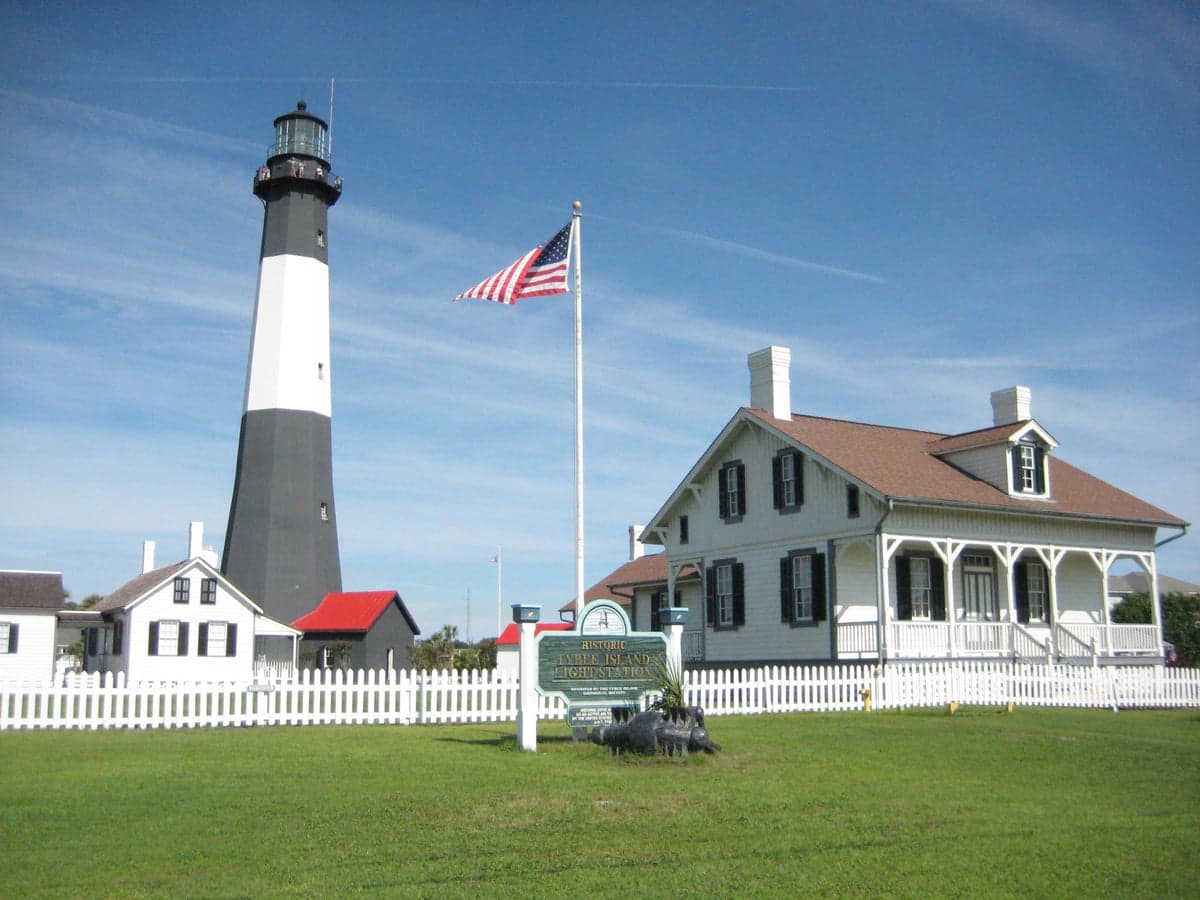
Photo: Wikipedia
Political ClimatePolitical Climate in Tybee Island, GA
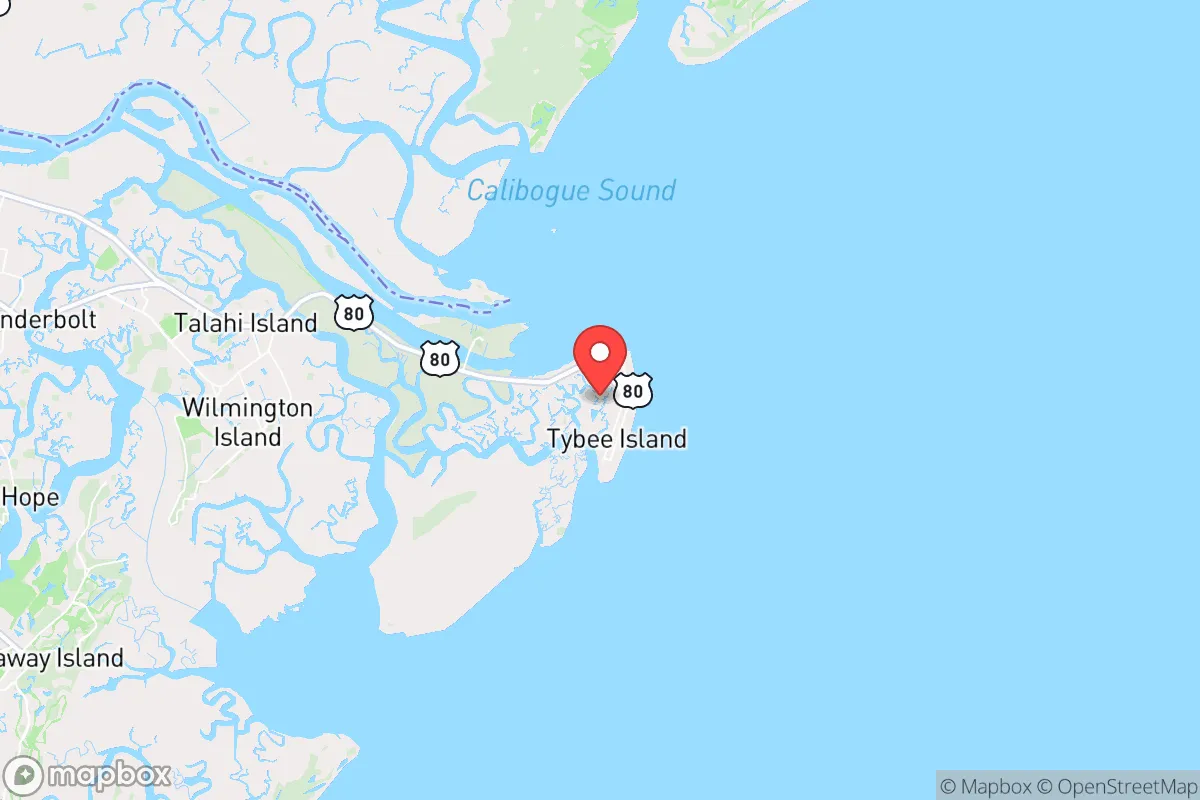
District shown is the primary district for this city’s centroid. Cities may span multiple districts.
Local Political AnalysisPolitical Analysis of Tybee Island, GA
Tybee Island has always been a bit of an outlier politically, but the overall trend here is concerning for anyone who values traditional freedoms. While the island itself has a more transient, vacation-oriented population that leans left, the surrounding Chatham County and the state of Georgia as a whole are solidly conservative, with a Cook PVI of R+8. The real story, though, is how the local government has started to drift away from that common-sense foundation, especially in the last few years, and it's something you notice more and more if you've been coming here as long as I have.
How it compares
To get a real feel for the political climate, you have to look at the contrast with the mainland. Head west to places like Richmond Hill or Pooler, and you'll find communities that still operate on the principle of "live and let live" — low taxes, minimal interference in your daily life, and a general trust that residents can make their own choices. Tybee, on the other hand, has seen a push for more regulations that feel like government overreach. The most obvious example is the ongoing battle over short-term rental restrictions. The city council has been chipping away at property rights, limiting how often you can rent out your own home, which is a direct hit on personal freedom and the local economy. It's a classic case of a vocal minority trying to dictate how everyone else should live, and it's a far cry from the hands-off approach you see in the more conservative towns just a 20-minute drive away.
What this means for residents
For those of us who live here year-round, this shift means you have to be more vigilant about what the city is planning. The biggest red flag is the creeping influence of progressive ideology on local policy. It's not just about rentals; it's the general attitude that the government knows better than you do. You see it in the push for more fees, stricter building codes, and a tendency to prioritize the wants of tourists and newcomers over the rights of long-time property owners. If you value your ability to use your land as you see fit, or if you're tired of being nickel-and-dimed by local ordinances, this is a place where you need to pay close attention to every election and every city council meeting. The trajectory is clear: more rules, more control, and less personal liberty.
There are a few cultural distinctions that really drive this home. For one, the island has a strong "beach town" vibe that attracts a certain crowd, and that crowd often brings a more collectivist mindset. You'll hear talk about "sustainability" and "community good" that sounds nice on the surface, but it's usually a cover for more restrictions on individual action. The local paper and the city's social media are full of this language. It's a far cry from the old Tybee, where folks just minded their own business and didn't need a government permit to have a bonfire or park their boat. If this trend continues, I worry we'll lose the very character that made this place special — a place where freedom was the default, not something you had to fight for at a public hearing.

State Political ClimatePolitical Climate in Georgia
State Political AnalysisPolitical Environment in the State
Georgia has shifted from a reliably red state to a genuine battleground over the past two decades, with its 16 electoral votes now fiercely contested. The state’s political lean is a razor-thin purple, driven by explosive growth in the Atlanta metro area, which has pulled the state leftward, while the rest of the state remains deeply conservative. Over the last 10-20 years, the arc has been a steady march from solid Republican control to a 50-50 toss-up, with Democrats winning the presidency and both Senate seats in 2020-2021, only for Republicans to hold the governorship and legislature. For a conservative considering relocation, the key takeaway is that Georgia is a state where your vote matters more than almost anywhere else, but the cultural and policy battles are intensifying.
Urban vs. rural divide
The political map of Georgia is a stark tale of two Georgias. The Atlanta metro — including Fulton, DeKalb, Cobb, and Gwinnett counties — is the engine of Democratic power, with Fulton and DeKalb delivering margins of 70-80% for Democrats. Atlanta itself is a deep-blue urban core, but the real story is the suburbs: Gwinnett County, once a Republican stronghold, flipped blue in 2016 and hasn’t looked back, while Cobb County followed suit in 2020. Meanwhile, the rest of the state is overwhelmingly red. Rural south Georgia, places like Valdosta and Thomasville, vote 70-80% Republican, as do the exurban and small-town areas north of Atlanta, like Gainesville and Dalton. The divide is so sharp that statewide races are decided by a handful of counties: in 2020, Biden won Georgia by just 11,779 votes, almost entirely from Atlanta’s core and inner-ring suburbs. For a conservative, living in the Atlanta metro means constant exposure to progressive politics, while settling in a smaller city like Macon or Augusta offers a more reliably conservative environment, though even those cities are seeing gradual leftward drift.
Policy environment
Georgia’s state-level policy is a mixed bag for conservatives. The tax structure is relatively friendly: a flat income tax rate of 5.49% (down from 5.75% in 2024, with further cuts to 4.99% by 2029), and no estate or inheritance tax. Property taxes are moderate, though they vary widely by county — Forsyth County has low rates, while DeKalb County is significantly higher. The regulatory posture is generally pro-business, with a right-to-work law and a business-friendly court system. On education, the state has a robust school choice program, including the Georgia Special Needs Scholarship and a new education savings account (ESA) program passed in 2024, allowing parents to use state funds for private school or homeschooling. Healthcare policy is more mixed: the state has not expanded Medicaid, which keeps costs lower for taxpayers but leaves a coverage gap. Election laws have been a flashpoint: the 2021 Election Integrity Act (SB 202) tightened voter ID requirements, limited drop boxes, and restricted third-party ballot collection — measures conservatives see as necessary safeguards, but which progressors decry as suppression. Overall, the policy environment is better than deep-blue states, but not as free as Texas or Florida.
Trajectory & freedom
Georgia’s trajectory on personal freedom is a tug-of-war. On the positive side for conservatives, the state has expanded gun rights significantly: in 2022, Georgia became a permitless carry state (HB 218), allowing law-abiding adults to carry concealed firearms without a license. Parental rights were strengthened with the 2022 “Parents’ Bill of Rights” (SB 449), which requires schools to notify parents of medical services and prohibits instruction on sexual orientation in early grades. On the concerning side, the state has seen a push for medical autonomy restrictions: the 2019 “Heartbeat Bill” (HB 481) banned abortion after six weeks, which was a major win for pro-life advocates, but the law has been tied up in court and is currently blocked. Property rights are generally strong, with no statewide rent control and limited zoning restrictions outside Atlanta. However, the state’s tax burden is creeping up: the gas tax was suspended in 2022 but reinstated in 2023, and local sales taxes can push the combined rate above 8% in some counties. The biggest freedom concern is the growing influence of Atlanta’s progressive policies — the city has implemented sanctuary city-like policies, refusing to cooperate fully with ICE, which creates tension with state law. For a new resident, the trajectory is that rural and exurban areas are becoming freer, while the Atlanta metro is slowly adopting more restrictive policies.
Civil unrest & political movements
Georgia has been a hotspot for political activism on both sides. The 2020 election cycle saw massive protests in Atlanta following the murder of George Floyd, with the city experiencing several nights of rioting and property damage, including the burning of the Wendy’s on University Avenue. The “Stop the Steal” movement was also active, with large rallies at the state capitol in 2020 and 2021. Immigration politics are a live wire: Atlanta’s sanctuary city policies have led to clashes with the state, and the 2024 “Georgia Criminal Alien Act” (SB 140) requires local law enforcement to cooperate with ICE, which has been challenged in court. Election integrity remains a flashpoint: the 2021 voting law sparked boycotts from Major League Baseball (moving the All-Star Game out of Atlanta) and corporate backlash, but most conservatives see it as a necessary reform. Organized activist movements include the Georgia Republican Assembly (a conservative grassroots group) and the Georgia Democratic Party’s coordinated campaign machine, which has been highly effective in turning out new voters from the growing minority and suburban populations. A new resident in Atlanta will see frequent protests at the capitol, while in rural areas, the political climate is quieter but more intense in terms of local activism.
Projection
Over the next 5-10 years, Georgia is likely to become more competitive, with a slight leftward tilt driven by demographic shifts. The Atlanta metro continues to attract young, diverse, and college-educated migrants from other states, while rural areas are losing population. Gwinnett County alone added 100,000 new residents between 2010 and 2020, most of whom are non-white and lean Democratic. The state’s Hispanic population is growing rapidly, particularly in the Dalton area and metro Atlanta, and this group is trending Democratic. However, the in-migration of conservatives from blue states (especially California and New York) into exurbs like Forsyth County and Cherokee County is also significant, and these voters are solidifying Republican control in those areas. The net effect is that statewide races will remain toss-ups, with the legislature staying Republican due to gerrymandering. A conservative moving in now should expect that the state will not become reliably red again, but that Republican governance at the state level will continue to protect key freedoms. The real battleground will be local: county commissions, school boards, and city councils will determine the day-to-day experience.
For a conservative considering Georgia, the bottom line is that you get a state with low taxes, strong gun rights, and school choice, but you also get a highly competitive political environment where every election is a fight. If you live in the Atlanta metro, you will be surrounded by progressive culture and policies, but your vote will matter enormously. If you choose a smaller city or rural area, you’ll find a more traditional conservative community, but you’ll still be subject to statewide trends. The best advice is to pick your county carefully — Forsyth County and Cherokee County are the safest bets for a conservative lifestyle, while Gwinnett County and Cobb County are rapidly shifting left. Georgia is not Texas or Florida in terms of conservative dominance, but it offers a unique opportunity to be part of a state that is genuinely up for grabs, where your involvement can make a real difference.
* Values derived from national, state, county, city and local statistics and may differ in a specific area. Last updated: 2026-04-23T05:28:25.000Z
Narrative content on this page is AI-generated and may contain mistakes. Verify any details that matter before acting on them.
ReloMaps may earn a commission from affiliate links at no extra cost to you.

