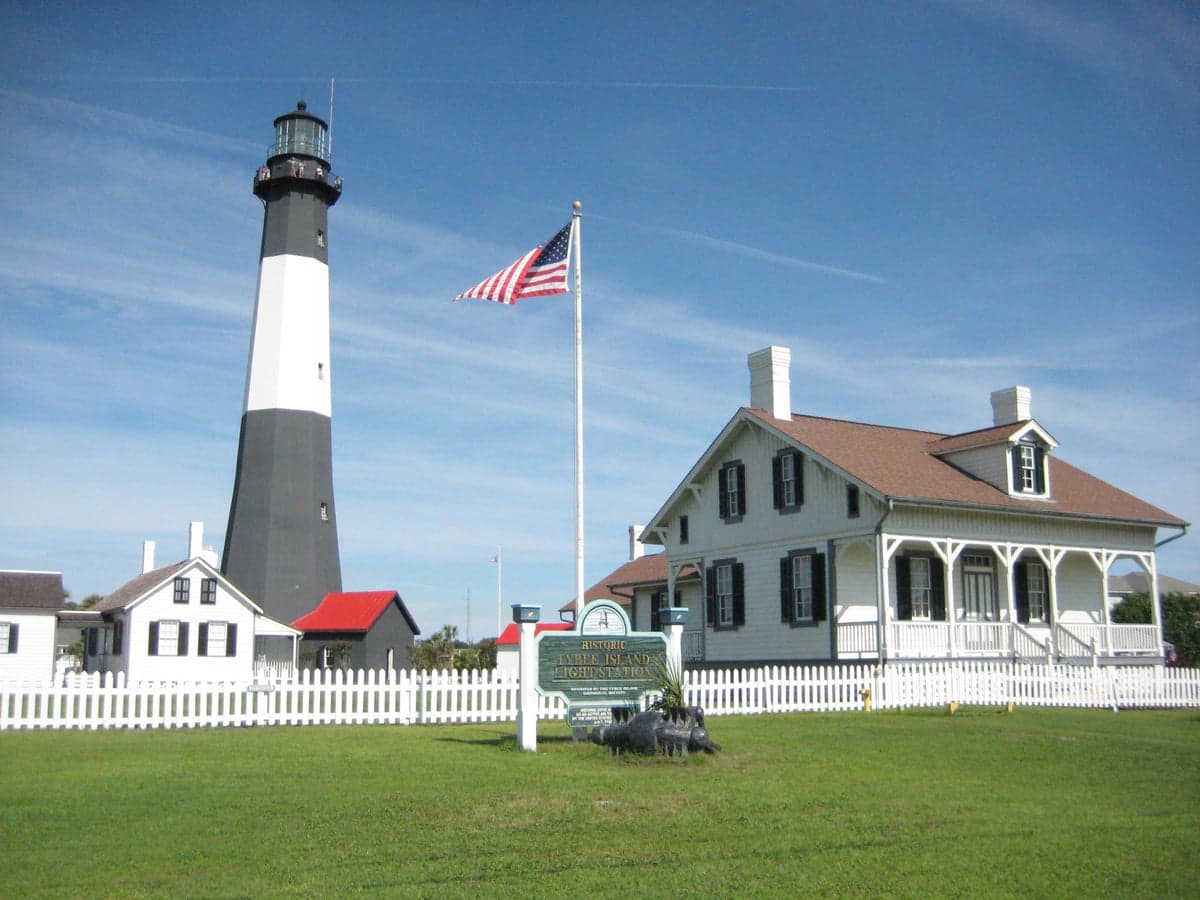
Photo: Wikipedia
Personal Sovereignty in Tybee Island, GA
Viable for self-reliance. Generally workable, though some barriers may limit total independence.
What does Personal Sovereignty tell us?
Personal Sovereignty measures your capacity for self-reliance and independence with minimal government friction. Higher scores mean fewer barriers between you and the way you want to live... but it assumes you have the space you need and good neighbors.
What does this tell us?
Personal Sovereignty measures your capacity for self-reliance and independence with minimal government friction. Higher scores mean fewer barriers between you and the way you want to live... but it assumes you have the space you need and good neighbors.
State Policy
Energy independence: Importer (12% of energy produced in-state)
Personal Liberty
Homesteading

Personal Liberty Analysis
Tybee Island, Georgia, offers a mixed bag for those prioritizing personal sovereignty, where the state’s generally pro-liberty legal framework clashes with the practical constraints of a small, densely developed barrier island. While Georgia’s constitutional carry law, low property taxes, and limited state-level overreach provide a solid baseline for autonomy, Tybee’s local ordinances, HOA-heavy neighborhoods, and vulnerability to federal emergency management mandates create friction for anyone seeking true self-reliance. For a single individual or parent with a survivalist mindset, the island is a place where you can legally keep a firearm in your truck and homeschool your kids without state interference, but you’ll struggle to raise livestock, drill a well, or ignore FEMA flood maps. The key takeaway: Tybee offers strong personal liberties on paper, but the physical and regulatory environment demands constant vigilance against creeping government control.
Tax burden and regulatory posture: How Georgia’s low-tax philosophy plays out on a flood-prone island
Georgia ranks among the more tax-friendly states for conservative-leaning relocators, with a flat income tax rate of 5.49% (as of 2026) and no state-level estate or inheritance tax. Tybee Island property taxes are assessed at roughly 0.8% of market value, which is below the national average, but homeowners must contend with mandatory flood insurance premiums that can run $2,000–$5,000 annually depending on elevation—a de facto regulatory tax imposed by the National Flood Insurance Program. The island’s zoning code is notably restrictive for a small town: minimum lot sizes are typically 5,000 square feet, but most parcels are already built out, and new construction must comply with strict elevation and setback rules that effectively limit expansion. The city council has also shown a willingness to impose short-term rental moratoriums and noise ordinances, reflecting a local regulatory posture that can feel intrusive to those accustomed to rural Georgia’s laissez-faire attitude. For a prepper, the property tax burden is manageable, but the combination of FEMA-mandated insurance and local zoning creates a layer of government overreach that erodes the financial autonomy of owning land here.
Self-defense and gun law specifics: Constitutional carry and the reality of island living
Georgia’s constitutional carry law, enacted in 2022, allows any legal resident 21 or older to carry a concealed firearm without a permit—a significant win for personal sovereignty. Tybee Island does not have its own gun control ordinances beyond state law, so you can legally carry in most public spaces, including the beach and parks, though federal law prohibits firearms in the nearby Fort Pulaski National Monument. The island’s police department is small (roughly 15 officers) and response times can stretch to 10–15 minutes during peak tourist season, making personal defense a practical necessity rather than a theoretical right. However, the dense, tourist-heavy environment means that situational awareness is critical: a firearm is only useful if you can access it quickly in a crowd, and the island’s narrow streets and limited cover make defensive scenarios more complex than in open rural areas. For parents, Georgia law protects the right to use force in defense of a child, and the state’s Stand Your Ground statute applies on Tybee, but the high volume of transient visitors increases the likelihood of confrontations. Overall, the legal framework is strong, but the physical environment demands a higher level of tactical thinking than most suburban or rural settings.
Self-reliance and homesteading viability: Lot sizes, zoning, and off-grid feasibility on a barrier island
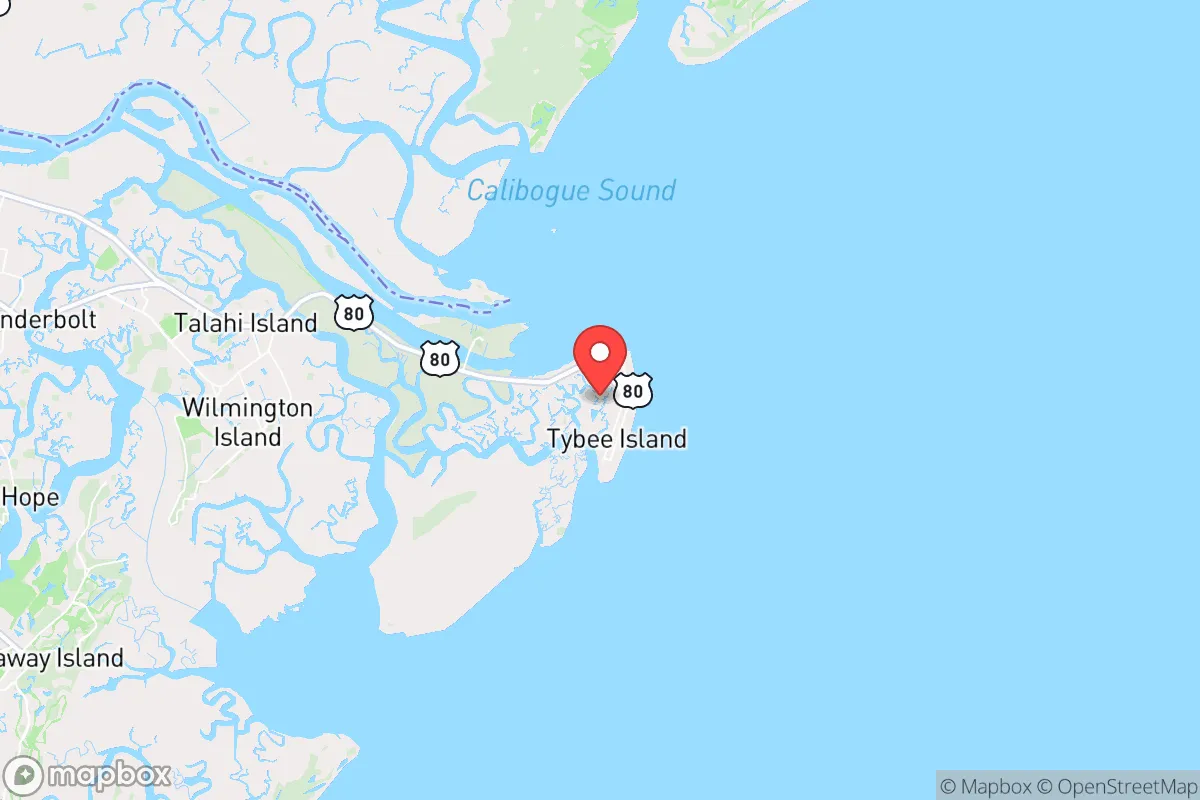
Tybee Island is fundamentally hostile to traditional homesteading. Minimum lot sizes of 5,000 square feet are standard, but most residential lots are smaller, and the island’s zoning code explicitly prohibits keeping livestock—no chickens, goats, or bees—within city limits. The water table is high and saline, making well drilling impractical for most properties, and the city mandates connection to municipal water and sewer systems, eliminating any realistic off-grid water solution. Rainwater collection is technically allowed but limited by roof space and the island’s average 48 inches of annual rainfall, which is insufficient for year-round self-sufficiency without large cisterns that violate setback rules. Solar panels are permitted but must comply with historic district guidelines in certain zones, and net metering with Georgia Power is available but subject to utility approval. For a prepper, the island’s reliance on a single causeway (U.S. 80) for evacuation and supply chain access is a critical vulnerability—any hurricane threat or infrastructure failure effectively traps residents. The closest viable homesteading alternative is on the mainland, in areas like Chatham County’s rural west end or Bryan County, where lot sizes of 1–5 acres are common and livestock ordinances are more permissive. On Tybee, self-reliance means stockpiling supplies, maintaining a robust emergency kit, and accepting that you are dependent on municipal systems and mainland logistics for survival.
Personal liberties: Parental rights, medical autonomy, speech, and property protections
Georgia’s legal environment strongly supports parental rights, with a 2023 law affirming parents’ authority over their children’s education, healthcare, and religious upbringing. Homeschooling is straightforward—parents file a declaration of intent with the local school district and provide a basic curriculum, with no state testing requirements for most families. Medical autonomy is more nuanced: Georgia has not expanded Medicaid, and the state’s 2019 heartbeat abortion law restricts reproductive choice, but for conservative parents, this aligns with their values. Vaccine mandates are not enforced at the state level, and Tybee’s local government has not imposed any COVID-era mandates since 2022, giving families control over medical decisions. Free speech is protected under Georgia’s broad interpretation of the First Amendment, and Tybee’s public beach and pier are traditional public forums where political expression is unrestricted. Property rights are generally strong, with Georgia’s eminent domain laws requiring just compensation and public use, but Tybee’s overlay of federal floodplain regulations effectively limits what you can do with your land—building a storm shelter or adding a second story may require costly elevation certificates and FEMA approval. For a parent concerned about government overreach, the state-level protections are reassuring, but the island’s local and federal entanglements create a persistent low-level erosion of property autonomy.
In the broader context of personal sovereignty, Tybee Island ranks as a moderate option for conservative-leaning individuals—stronger than coastal California or New York, but weaker than rural Georgia or the Florida Panhandle. The state’s constitutional carry, low taxes, and parental rights provide a solid foundation, but the island’s density, zoning restrictions, and floodplain bureaucracy create a regulatory ceiling that limits true self-reliance. For a single prepper or survivalist parent, the island offers a defensible, community-oriented lifestyle with legal protections for firearms and family autonomy, but it demands a proactive approach to stockpiling, emergency planning, and navigating local ordinances. If maximum sovereignty is the goal, look inland to counties like Toombs or Tattnall, where land is cheap, zoning is minimal, and the nearest HOA is a hundred miles away. But if you value beach access and a tight-knit community willing to push back against overreach, Tybee provides a workable—if imperfect—base for personal freedom.

* Values derived from national, state, county, city and local statistics and may differ in a specific area. Last updated: 2026-04-23T05:28:25.000Z
Narrative content on this page is AI-generated and may contain mistakes. Verify any details that matter before acting on them.
ReloMaps may earn a commission from affiliate links at no extra cost to you.

