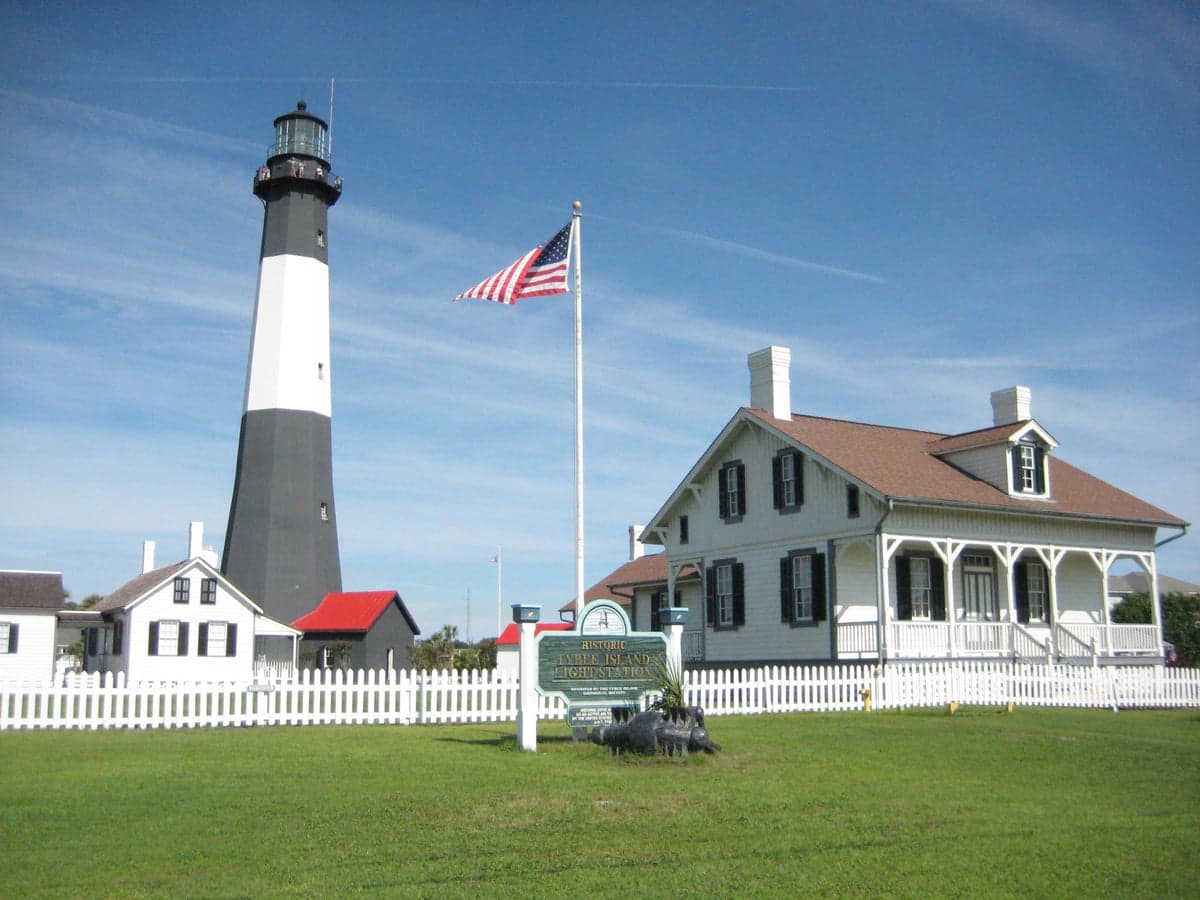
Photo: Wikipedia
Strategic Assessment of Tybee Island, GA
Meaningful friction. Expect exposure to either population pressure, blast zones, or natural disaster risk. Consider buying a retreat property.
What does the Strategic Assessment tell us?
Our Strategic Assessment grades tactical survivability of an area. Major population centers, military targets, fallout zones, natural disasters, and border exposure all drive risk — lower exposure means a more defensible position in a crisis.
This is heavily inspired by Joel Skousen's Strategic Relocation book. Highly recommended you checkout the book ($)What does this tell us?
Our Strategic Assessment grades tactical survivability of an area. Major population centers, military targets, fallout zones, natural disasters, and border exposure all drive risk — lower exposure means a more defensible position in a crisis.
This is heavily inspired by Joel Skousen's Strategic Relocation book. Highly recommended you checkout the book ($)Strategic Pillars

Key Distances
Regional Safe Places
Below is our recommended "safe zones" in Georgia and the surrounding area based on our strategic heuristics. For most people, it's unrealistic to live in a “safe zone” full-time due to work, family or other personal reasons. They tend to be more rural. However, many of these areas are perfect for second homes and retreat properties that double as a vacation home or even a short-term rental.
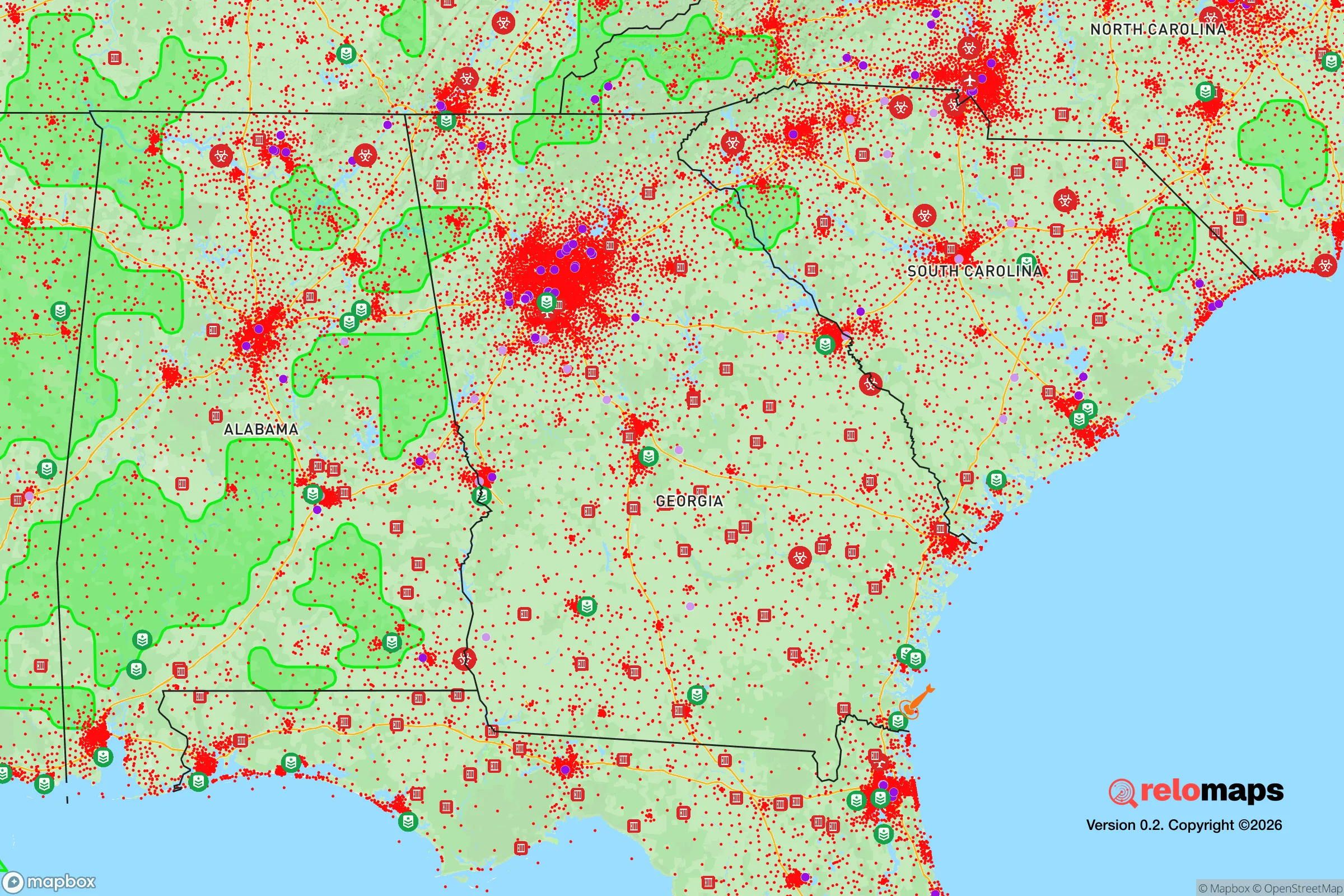
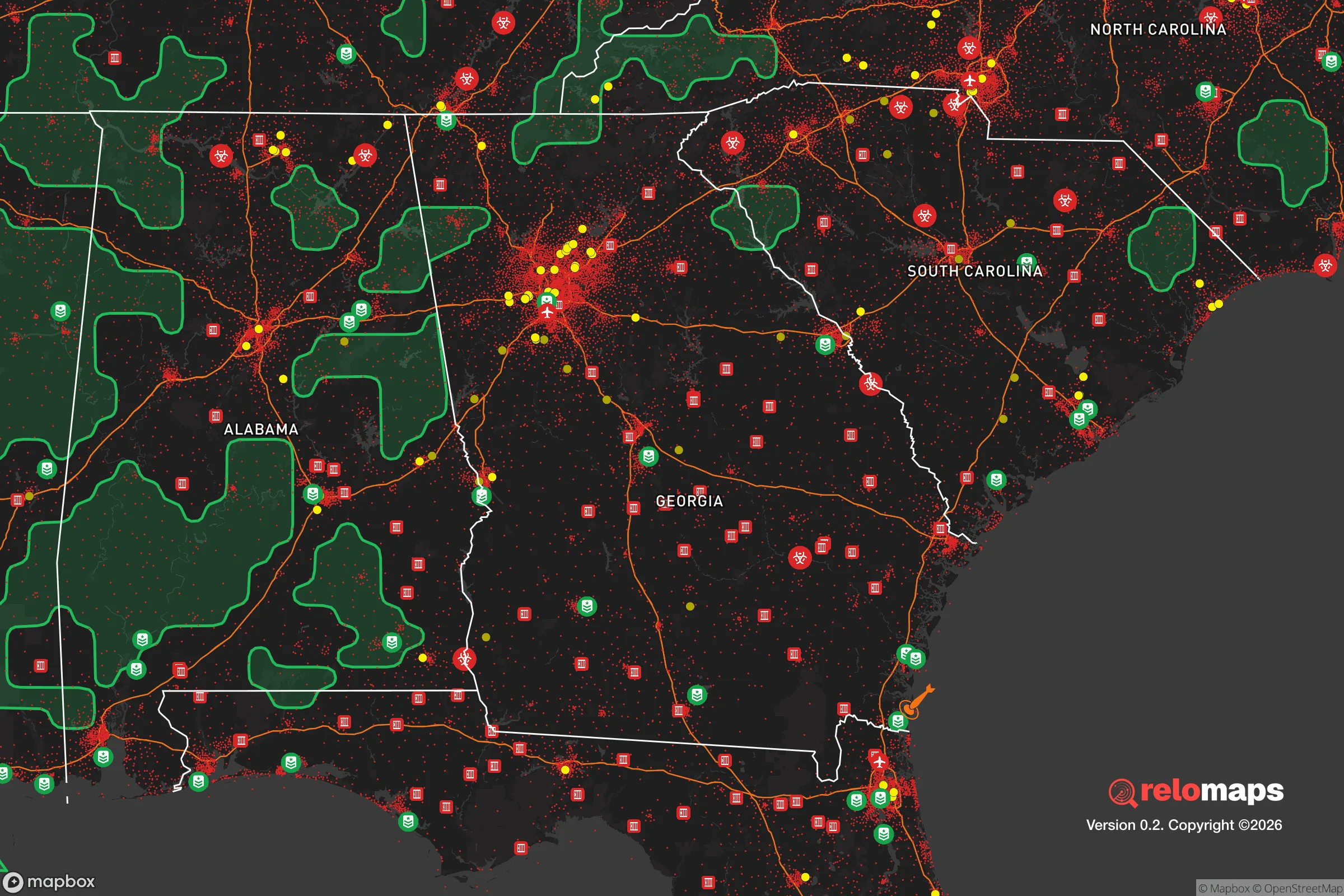


Important Note: For informational purposes only. This does not mean nothing bad ever happens in the green zones. Please use common sense. This is based on public data and modeled with AI. We tried to take a conservative approach but mistakes happen. We update this regularly as new information becomes available.
Solar Generator Recommendations
Backup power matters more here than in safer locations. We've picked three solar generators across budgets and capacity tiers — start with the budget unit if you only need a few essentials, or step up if you want to run a fridge and HVAC for days at a time.

Jackery Portable Power Station Explorer 300
Budget OptionPower on the Go: Weighing only 11 lbs, it's convenient to set up and store with book-sized foldable solar panels

BLUETTI Portable Power Station AC180
Designed for both indoor and outdoor scenarios, AC180 is highly capable as it has a robost capacity and continuous output power.

EF ECOFLOW DELTA Pro Ultra Power Station
Upgraded PickEcoFlow DELTA Pro Ultra is a whole-home energy system designed to grow with your family. Integrated with the Smart Home Panel 2, it scales to meet your evolving energy needs — keeping your home powered, intelligent, and secure through every stage of life.
We earn a commission, at no additional cost to you.
Strategic Assessment Analysis
Tybee Island, Georgia, presents a complex strategic picture for the conservative prepper or survivalist. Its primary advantage—proximity to the deep-water Port of Savannah—is also its greatest liability. While the island offers a defensible, insular geography and a tight-knit community, it sits directly in the fallout shadow of one of the nation’s busiest container ports, a major chemical corridor, and a sprawling military logistics hub. For a relocator prioritizing long-term resilience over coastal recreation, Tybee demands a sober, risk-adjusted assessment.
Geographic position and natural defensive advantages
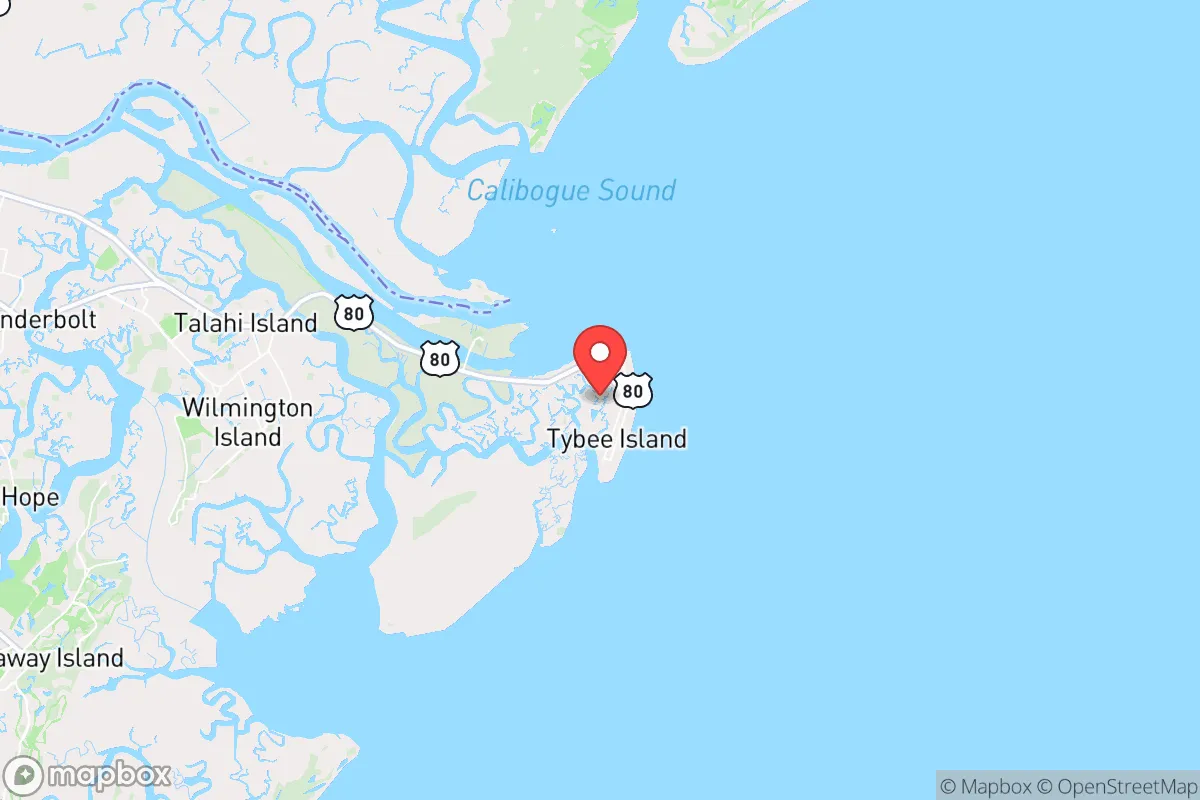
Tybee Island occupies the northernmost of Georgia’s barrier islands, roughly 18 miles east of downtown Savannah. Its location at the mouth of the Savannah River provides a natural chokepoint: access is limited to a single two-lane causeway (U.S. Highway 80) that crosses the Lazaretto Creek and the Bull River. In a grid-down or civil unrest scenario, this single point of entry and exit is both a blessing and a curse. It can be monitored and defended with minimal manpower, but it also means any disruption—a storm surge, a bridge failure, or a roadblock—completely isolates the island. The island itself is only about 3 miles long and 0.5 miles wide, with a permanent population of roughly 3,000. That density is low enough to avoid the chaos of a city but high enough that resources will deplete quickly in a crisis. The surrounding marshlands and tidal creeks offer natural barriers to foot traffic, making overland approach difficult for anyone unfamiliar with the terrain. For a small, prepared group, Tybee’s geography is defensible—provided you control the causeway.
Risks, exposures, and proximity to fallout-relevant landmarks
The most significant strategic liability is Tybee’s proximity to the Port of Savannah, the third-busiest container port in the United States. The port complex, including the Garden City Terminal and the Ocean Terminal, handles over 5 million TEUs annually and is a critical node in the national supply chain. In a major economic disruption, war, or terrorist event, this port becomes a high-value target. A conventional strike, EMP, or even a large-scale cyberattack on port operations would ripple directly into Tybee’s backyard. Additionally, the Savannah River is lined with chemical storage facilities, oil terminals, and the Elba Island LNG export terminal, located just 10 miles upriver. A catastrophic release or explosion at any of these sites could render the island uninhabitable for weeks or months, depending on wind patterns. Tybee also lies within 50 miles of Hunter Army Airfield and Fort Stewart, major military installations that could become staging areas or targets themselves. For the survivalist, being near military assets is a double-edged sword: they provide a potential security buffer, but they also attract the kind of attention you want to avoid. Finally, the island’s low elevation (average 3–6 feet above sea level) makes it vulnerable to hurricane storm surge. A Category 3 or higher storm would likely inundate the entire island, forcing a mandatory evacuation that would be impossible to execute safely if the causeway is already compromised.
Practical resilience for a relocator: food, water, energy, and defensibility
For a single individual or family planning to ride out a crisis on Tybee, the practical challenges are steep. Fresh water is the most immediate concern. The island relies entirely on groundwater wells and a municipal system that is powered by the grid. In a prolonged power outage, water pressure fails within hours. A private well with a hand pump or a large rainwater catchment system is non-negotiable. The island’s sandy soil does not retain surface water, so natural sources are limited to the ocean and brackish creeks—both requiring desalination or advanced filtration. Food storage is equally critical. Tybee has one small grocery store (the Tybean Market) and a handful of restaurants. In a panic event, shelves empty in hours. There is no significant agricultural land on the island; the soil is too saline and sandy for serious gardening. Any long-term food strategy requires stockpiling or a boat-based resupply from the mainland. Energy resilience is achievable but expensive. Solar panels are viable given the coastal sun exposure, but they must be hardened against hurricane-force winds and salt corrosion. A backup generator with a 500-gallon buried propane tank is the standard recommendation for island preppers. Defensibility is the one bright spot. The single causeway can be monitored with a simple observation post. The island’s small footprint means a coordinated neighborhood watch or community defense group can cover the entire perimeter. However, the same geography that makes defense easy also makes escape difficult. If the causeway is blocked or destroyed, the only exit is by boat—and Tybee has no deep-water marina capable of handling large vessels. A small skiff or kayak is essential for anyone serious about a bug-out option.
In the overall strategic picture, Tybee Island is a high-risk, moderate-reward location for the conservative prepper. It offers a defensible, isolated community with a single point of control, but it is dangerously exposed to the fallout from Savannah’s port, chemical infrastructure, and military installations. The island’s low elevation and hurricane vulnerability add a natural-disaster layer that cannot be mitigated by prepping alone. For a relocator who values coastal living and is willing to invest heavily in water, food, and energy independence—and who maintains a boat-based escape plan—Tybee can work as a short-to-medium-term refuge. But for those seeking a truly resilient, self-sufficient homestead with minimal external risk, the Georgia coast offers better options further south, away from the port and the chemical corridor. Tybee is a place to know, not a place to bet your family’s future on.

* Values derived from national, state, county, city and local statistics and may differ in a specific area. Last updated: 2026-04-23T05:28:25.000Z
Narrative content on this page is AI-generated and may contain mistakes. Verify any details that matter before acting on them.
ReloMaps may earn a commission from affiliate links at no extra cost to you.

