Photo: Wikipedia
Quality of Life in Troy, MO
A high quality of life with strong walkability, manageable living costs, healthy neighborhood signals, and solid amenity access.
What does Quality of Life tell us?
Quality of Life blends cost of living, nearby amenities, socioeconomic signals, and neighborhood character. City-level scores represent the whole municipality; individual neighborhoods can differ.
What does this tell us?
Quality of Life blends cost of living, nearby amenities, socioeconomic signals, and neighborhood character. City-level scores represent the whole municipality; individual neighborhoods can differ.
Cost of Living
16% below national average
The Real Cost of Living in Troy, MO for 2026
| Tier | Individual | Family (4) |
|---|---|---|
| Survival | $17k | $32k |
| Comfortable | $41k | $61k |
| Luxury | $88k+ | $136k+ |
| Elite (Top 5%) | $103k+ | $160k+ |
125%
The Area Signal
A metric tracking the socioeconomic signals of the area.
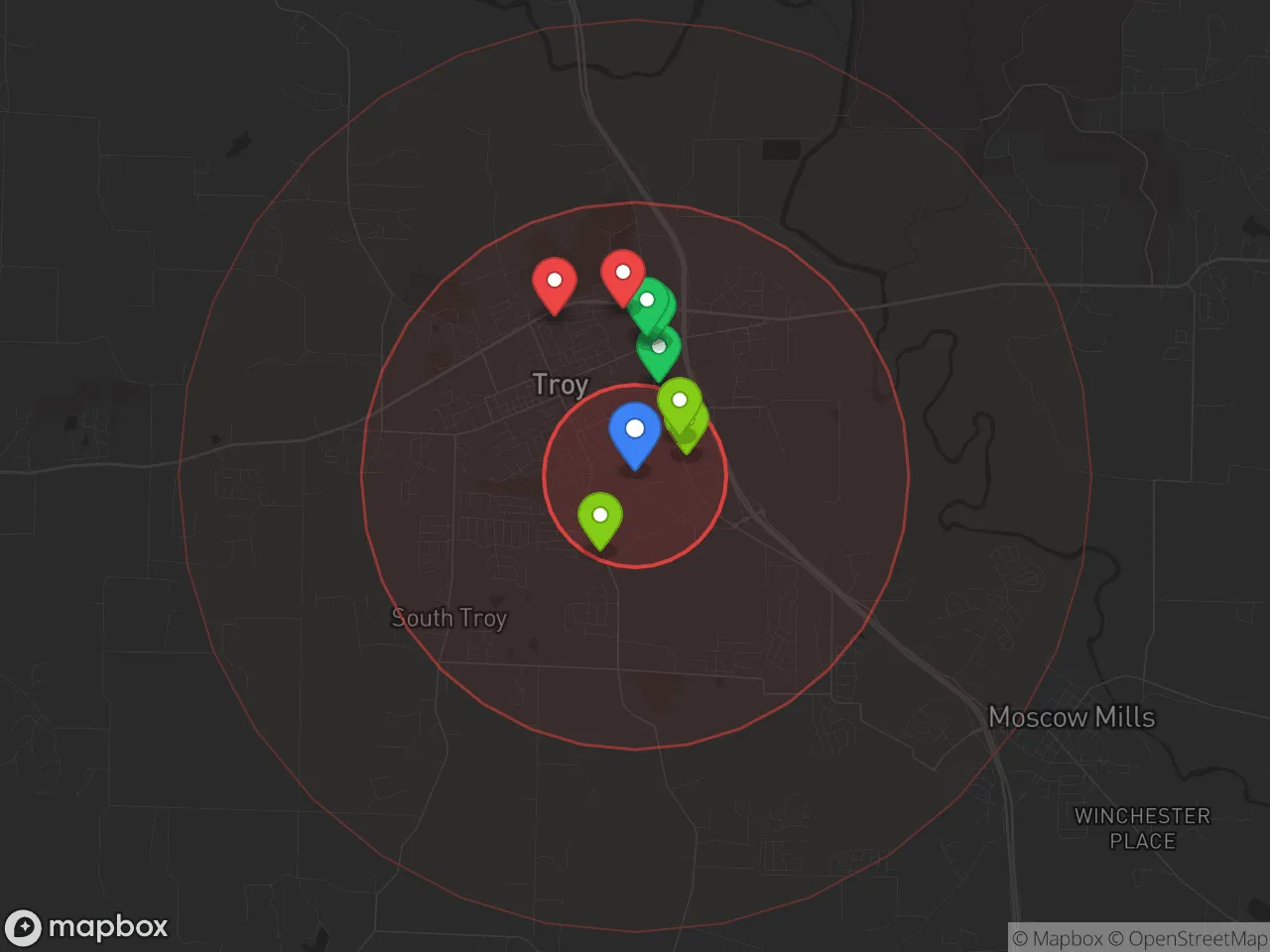
Hobbies
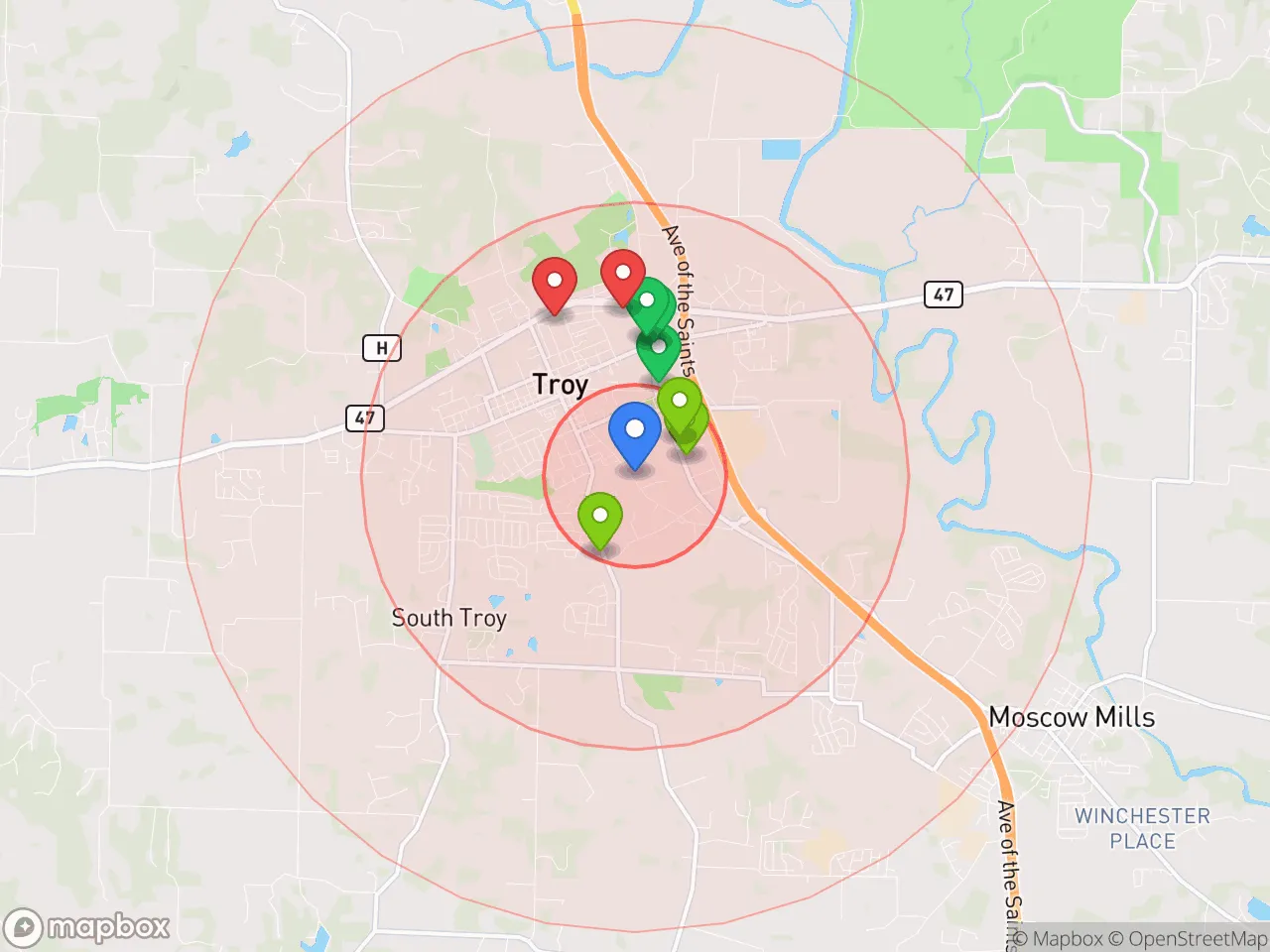
Explore the areaGroceries
0 within 10 miles
Gas
0 within 10 miles
Hospital
0 within 20 miles
Airport
MCI — Kansas City International
Post Office
Critical Amenities
Quality-of-Life Analysis
Troy, Missouri, presents a quality-of-life profile defined by small-town affordability within commuting distance of St. Louis’s economic engine. With a cost-of-living index of 84 (16% below the national average), the area attracts a mix of young families seeking starter homes, tradespeople, and retirees drawn to the slower pace of Lincoln County. The median household income hovers near the state average, and the population skews slightly older than the national median, reflecting a community where stability and homeownership are central values.
Cost of living, housing affordability, and how Troy compares to nearby St. Charles and Warrenton
Troy’s housing market remains one of the most accessible in the St. Louis metro area. The median home value of $212,100 is roughly $100,000 less than in St. Charles County suburbs like O’Fallon or St. Peters, making it a practical choice for buyers priced out of those markets. Median rent of $1,051 is similarly below the regional average, though rental inventory is tight. The overall cost-of-living index of 84 is driven largely by housing and transportation costs; utilities and groceries are close to national norms. However, the trade-off for lower prices is a longer average commute of 31.95 minutes — a figure that exceeds the national average by about 5 minutes, as many residents drive west on Highway 61 to jobs in St. Charles, Wentzville, or even downtown St. Louis (about 50 miles east). Property taxes in Lincoln County are moderate, and Missouri’s state income tax is a flat 4.95%, which keeps net take-home pay competitive for middle-income earners.
Local amenities, schools, and what daily life is like for families and retirees
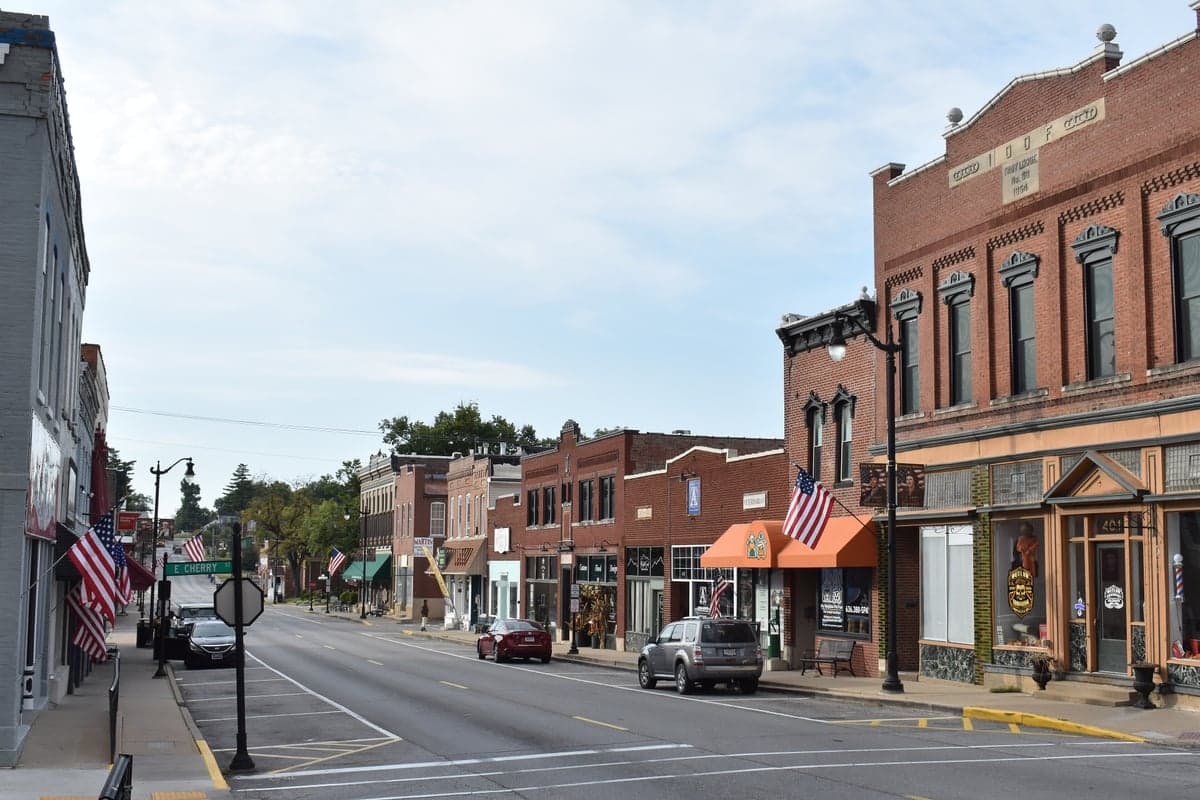
Daily life in Troy centers on a compact historic downtown with a county courthouse, a handful of locally owned restaurants, and seasonal events like the Troy Fair and the Lincoln County Farmers Market. For everyday shopping and services, residents drive to the Troy Square shopping center or head 15 minutes east to Warrenton for a Walmart Supercenter and larger grocery stores. The Lincoln County R-III School District serves Troy with four elementary schools, one middle school, and Troy Buchanan High School (enrollment ~1,500), which maintains a graduation rate near 90% and offers several Advanced Placement courses. Outdoor recreation is a strong draw: Cuivre River State Park, 10 minutes north, provides 6,300 acres of hiking, fishing, and camping, while the nearby Mississippi River access points support boating and kayaking. Healthcare is handled locally by the Lincoln County Medical Center (a 25-bed critical access hospital) and a cluster of clinics; for specialist care, residents typically travel to St. Charles or St. Louis. The pace is distinctly unhurried — most errands can be done in 15 minutes, and traffic congestion is rare outside of school drop-off and pickup times.
Troy is best suited for those who prioritize space, affordability, and a tight-knit community over urban convenience. First-time homebuyers, remote workers who can tolerate the commute a few days a week, and retirees seeking a lower cost of living will find the most value here. Professionals who require a short daily commute or crave walkable urban amenities — restaurants, nightlife, cultural institutions — will likely feel isolated. For families willing to trade 30 minutes in the car for a yard and a lower mortgage, Troy offers a stable, safe, and genuinely affordable slice of Missouri life.

Crime in Troy, MO
Lower crime rates than 87% of comparable U.S. locations.
Violent CrimeViolent Crime Analysis
Property CrimeProperty Crime Analysis
Crime Analysis
Troy, Missouri, reports a violent crime rate of 102.8 incidents per 100,000 residents and a property crime rate of 842.1 per 100,000, placing it well below national averages for both categories. These figures paint a picture of a community that is statistically safer than many comparable towns in the St. Louis metro area, though property crime remains a more common concern for residents. The overall safety profile is shaped by Troy’s position as a small city (population roughly 12,000) within Lincoln County, where local law enforcement and a conservative judicial environment contribute to lower crime rates than those seen in the urban core of St. Louis.
Crime in context
When compared to national benchmarks, Troy’s violent crime rate is roughly 70% lower than the U.S. average of about 380 per 100,000, and its property crime rate sits approximately 25% below the national figure of 1,100 per 100,000. These numbers are also significantly better than those of St. Louis City, which consistently ranks among the most dangerous cities in the country. However, Troy’s property crime rate is slightly above the Missouri state average of roughly 800 per 100,000, indicating that theft and burglary are the most pressing local issues. The contrast with larger metro areas is stark: in jurisdictions with progressive district attorneys and lenient sentencing policies—such as St. Louis City and St. Louis County—crime rates are substantially higher, as offenders face fewer consequences and are more likely to reoffend. Troy benefits from being outside that immediate orbit, with Lincoln County’s judicial system prioritizing public safety and victim accountability.
What residents experience
For those living in Troy, the day-to-day reality is one of low fear of violent crime. Incidents like assault, robbery, and homicide are rare, and most residents feel safe walking downtown or letting children play in their yards. Property crime, however, is the primary nuisance: vehicle break-ins, package theft, and occasional burglaries of unoccupied homes are the most frequently reported offenses. The Troy Police Department maintains a visible presence, and community engagement through neighborhood watch programs is active. Because the local justice system is not influenced by the progressive ideologies that have weakened law enforcement in nearby large cities, offenders are more likely to face meaningful consequences, which acts as a deterrent and keeps recidivism lower.
Neighborhood-level variation in Troy is modest but worth noting. The historic downtown core and newer subdivisions on the town’s periphery tend to have the lowest crime rates, while areas closer to Highway 61—which sees higher traffic and transient populations—experience slightly elevated property crime. Overall, Troy offers a safe environment that stands in favorable contrast to the high-crime, soft-on-crime policies plaguing many St. Louis-area communities.
* Values derived from national, state, county, city and local statistics and may differ in a specific area. Last updated: 2026-11-05T20:26:50.000Z
Narrative content on this page is AI-generated and may contain mistakes. Verify any details that matter before acting on them.
ReloMaps may earn a commission from affiliate links at no extra cost to you.

