Photo: Wikipedia
Demographics of Troy, MO
Affluence Level in Troy, MO
A middle-class area roughly in line with national averages across income, home values, education, and employment.
People of Troy, MO
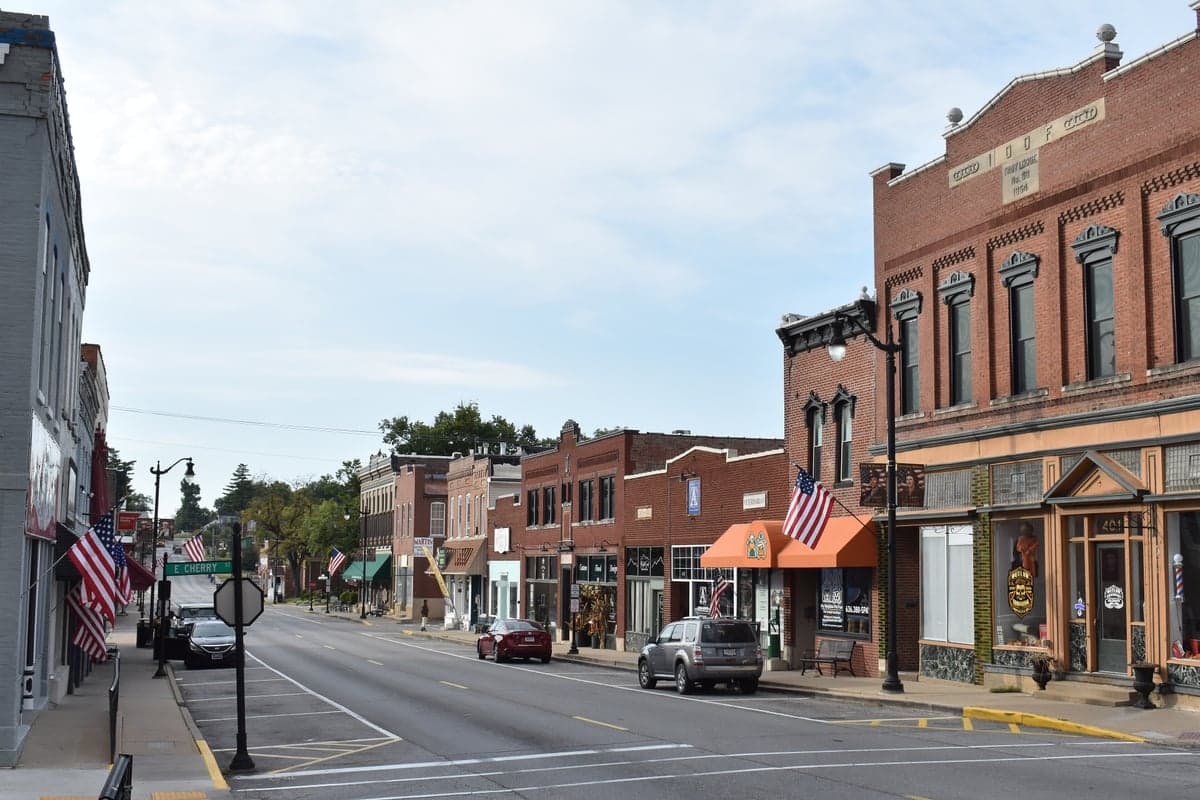
The people of Troy, Missouri, today form a predominantly white, family-oriented community of 13,467 residents, characterized by a strong sense of local identity and a notably low foreign-born population of just 0.5%. With 91.8% of residents identifying as white and a college attainment rate of 13.1%, the city’s demographic profile reflects its roots as a rural county seat and its more recent role as a bedroom community for workers commuting to St. Louis and St. Charles County. The population is overwhelmingly native-born, with small Hispanic (2.9%) and Black (1.2%) communities, and even smaller East/Southeast Asian (0.5%) and Indian (0.0%) populations, giving Troy a cultural character that remains deeply tied to its Midwestern, small-town heritage.
How the city was settled and grew
Troy was founded in 1819 as the seat of Lincoln County, drawing its earliest settlers—primarily of English, German, and Scots-Irish descent—via land grants and the promise of fertile farmland along the Cuivre River. The original population clustered around the courthouse square in what is now Downtown Troy, where merchants, lawyers, and tradesmen built the town’s commercial and civic core. A second wave of German immigrants arrived in the mid-19th century, many settling in the West Troy area, where they established farms, churches, and small businesses that anchored the community for generations. The arrival of the railroad in the 1870s spurred modest growth, with new residents—mostly from other parts of Missouri and the Midwest—filling the East Troy neighborhood, which developed around the depot and its associated grain elevators and warehouses. Through the early 20th century, Troy remained a quiet agricultural service center, with population growth driven by natural increase and slow in-migration from surrounding rural areas.
Modern era (post-1965)
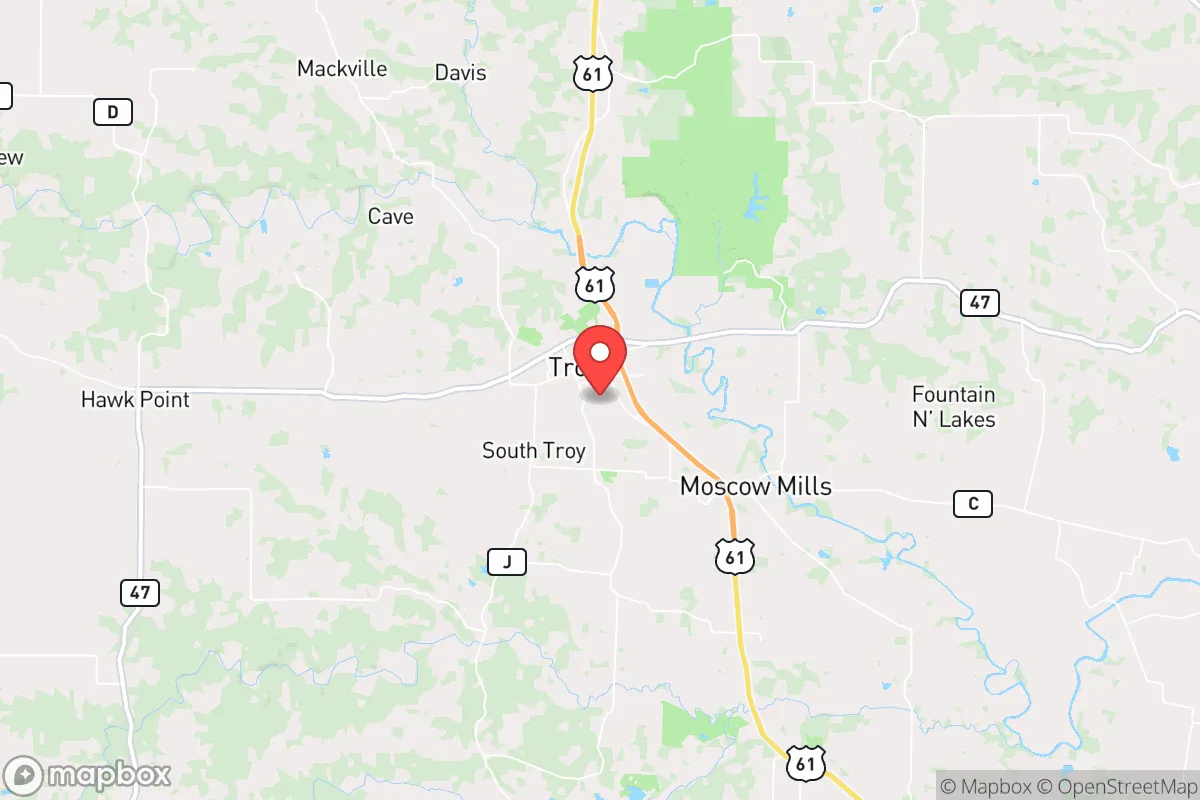
The post-1965 era brought significant change as Troy began absorbing domestic in-migration from the St. Louis metropolitan area, a trend that accelerated after the completion of Highway 47 and later the expansion of Highway 61. Suburbanization drew families—overwhelmingly white and middle-class—seeking affordable housing and a slower pace of life within commuting distance of St. Louis. These newcomers concentrated in newer subdivisions such as Indian Hills and Woodland Trails, which sprouted on the city’s northern and western edges, while established neighborhoods like Downtown Troy and West Troy retained their older, longer-settled populations. The foreign-born share remained negligible throughout this period, and the small Hispanic and Black communities that did form tended to settle in the South Troy area, near rental housing and service-sector jobs. The city’s racial and ethnic composition shifted only marginally: the white share declined from roughly 98% in 1990 to 91.8% today, with the Hispanic population growing from near zero to 2.9%, primarily through domestic migration from other parts of Missouri rather than international immigration.
The future
Troy’s population is projected to continue growing slowly, driven by ongoing suburban spillover from the St. Louis region, but its demographic profile is likely to remain predominantly white and native-born. The Hispanic share may increase modestly as families move from larger metro areas for lower housing costs, but the foreign-born population is expected to stay below 2% given the area’s limited economic draw for international migrants. New development is concentrating in master-planned subdivisions on the city’s northern fringe, such as Prairie View Estates, which are attracting younger families and some retirees, while older neighborhoods like West Troy and East Troy are seeing gradual turnover as longtime residents age out. The college attainment rate, at 13.1%, is unlikely to rise sharply without a major employer shift, meaning the cultural identity will remain grounded in blue-collar and service-sector values. Over the next 10–20 years, Troy will likely become slightly more diverse at the margins—primarily through Hispanic growth—but will retain its character as a predominantly white, family-centric exurb.
For someone moving in now, Troy offers a stable, affordable community where the population is slowly diversifying but remains overwhelmingly native-born and white. The city is becoming a more connected exurb of St. Louis, with new subdivisions absorbing suburban spillover, while its historic neighborhoods preserve a small-town feel. The low foreign-born share and modest college attainment rate mean the cultural and political landscape will likely stay conservative and community-oriented, making it a predictable choice for families seeking a quiet, low-cost base within commuting distance of a major metro area.

* Values derived from national, state, county, city and local statistics and may differ in a specific area. Last updated: 2026-11-05T20:26:50.000Z
Narrative content on this page is AI-generated and may contain mistakes. Verify any details that matter before acting on them.
ReloMaps may earn a commission from affiliate links at no extra cost to you.

