Photo: Wikipedia
Demographics of Trinidad, CA
Affluence Level in Trinidad, CA
An upper-middle-class area. Household wealth, education levels, and homeownership run ahead of national benchmarks.
People of Trinidad, CA
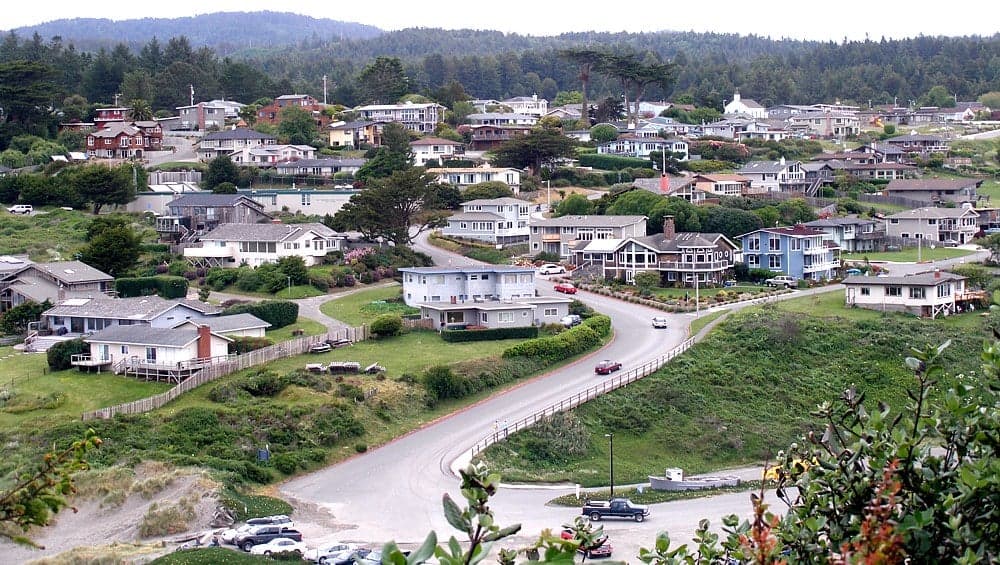
The people of Trinidad, California, today form a small, tightly-knit coastal community of just 424 residents, characterized by an overwhelmingly White population (77.6%) with a notable Hispanic minority (16.3%) and no foreign-born residents. The city is distinctly educated, with 66.8% holding a college degree, and its identity is shaped by a blend of historic fishing families, second-home owners, and retirees drawn to its dramatic oceanfront setting. Unlike many California towns, Trinidad has seen minimal demographic diversification, remaining a predominantly White, native-born enclave with a quiet, insular character.
How the city was settled and grew
Trinidad’s human history begins with the Yurok people, who inhabited the coastal bluffs and sheltered coves for millennia, using the area as a seasonal fishing and trading site. Spanish explorers landed in 1775, naming the bay "Trinidad" after the Holy Trinity, but no permanent settlement took root until the California Gold Rush of 1849. The first American settlers arrived by sea, establishing a small port town to supply inland mining camps. The original village clustered around what is now Main Street and the Trinidad Pier, where Irish and Yankee fishermen built wharves and warehouses. By the 1870s, a small community of Portuguese and Italian immigrants joined them, settling in the Stagecoach Hill area above the harbor, drawn by the abundant salmon and Dungeness crab fisheries. The town incorporated in 1870, but growth remained slow; the rugged coastline and lack of rail access limited expansion. Through the early 20th century, Trinidad’s population hovered around 200, sustained by fishing, logging, and a modest tourist trade. The Scenic Drive neighborhood, with its Victorian-era cottages, became home to the families of merchant sailors and timber workers.
Modern era (post-1965)
The post-1965 era brought significant change, though not through immigration. The Hart-Cellar Act had little effect on Trinidad, as the city’s foreign-born population remains zero today. Instead, domestic in-migration reshaped the town. Starting in the 1970s, artists, writers, and back-to-the-land types from the San Francisco Bay Area discovered Trinidad’s rugged beauty, buying up historic homes in Trinidad Head and the Elk Head bluff area. These newcomers—overwhelmingly White, college-educated, and often affluent—began converting seasonal cabins into permanent residences. By the 1990s, the fishing industry had collapsed due to overfishing and regulations, pushing out many of the Portuguese and Italian families who had worked the harbor. Their homes in Stagecoach Hill were gradually purchased by retirees and remote workers. The Hispanic population, now 16.3%, is largely composed of service workers and their families who commute from nearby McKinleyville and Arcata, as Trinidad itself offers little affordable housing. They do not concentrate in a single neighborhood but are dispersed across the town’s rental units, particularly along Patricks Point Drive. The Black and Asian populations remain at zero, reflecting the city’s persistent lack of racial diversity.
The future
Trinidad’s population is trending older and wealthier, with little prospect of significant diversification. The median age is likely above 55, and the high cost of housing—driven by second-home buyers and vacation rentals—prices out younger families and workers. The city’s zoning restricts new development, so the population is expected to remain below 500 for the foreseeable future. The Hispanic share may grow slightly as service workers seek housing in the broader Humboldt County area, but they will likely continue to live outside the city limits. The White, college-educated majority will persist, drawn by the area’s natural beauty and quiet lifestyle. New residents are most likely to settle in the Luffenholtz Beach area, where newer homes and vacant lots offer opportunities for custom builds. The cultural identity of Trinidad is becoming less a working fishing port and more a serene, nature-oriented retreat for affluent retirees and remote professionals.
For someone moving in now, Trinidad offers a stable, homogeneous, and highly educated community with a strong sense of place—but it is not a place of demographic change or economic opportunity. It is best suited for those seeking solitude, coastal beauty, and a like-minded social circle, rather than diversity, career growth, or a family-friendly school system. The city’s future is one of careful preservation, not expansion.

* Values derived from national, state, county, city and local statistics and may differ in a specific area. Last updated: 2026-10-29T04:50:54.000Z
Narrative content on this page is AI-generated and may contain mistakes. Verify any details that matter before acting on them.
ReloMaps may earn a commission from affiliate links at no extra cost to you.

