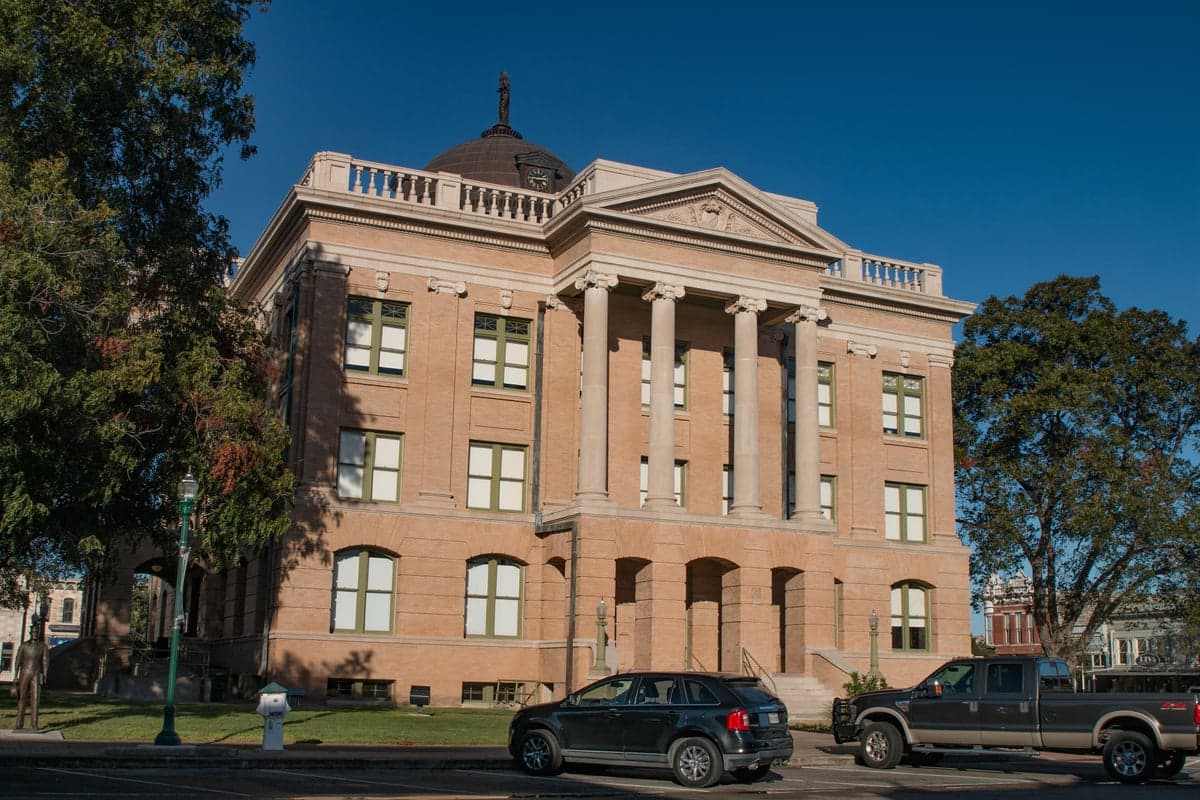
Photo: Wikipedia
Quality of Life in Williamson County
A livable area that tracks near national norms for affordability, walkability, and neighborhood health.
What does Quality of Life tell us?
Quality of Life measures an area by evaluating factors like cost of living, nearby amenities, country club access, airport proximity, socioeconomic signals and neighborhood character. For large states, this is a general average — quality of life can vary dramatically between metro areas, suburbs, and rural communities within the same state.
What does this tell us?
Quality of Life measures an area by evaluating factors like cost of living, nearby amenities, country club access, airport proximity, socioeconomic signals and neighborhood character. For large states, this is a general average — quality of life can vary dramatically between metro areas, suburbs, and rural communities within the same state.
Cost of Living
48% above national average
91%
The Real Cost of Living in Williamson County for 2026
| Tier | Individual | Family (4) |
|---|---|---|
| Survival | $27k | $52k |
| Comfortable | $81k | $118k |
| Luxury | $168k+ | $261k+ |
| Elite (Top 5%) | $198k+ | $307k+ |
Quality-of-Life Analysis
Williamson County, Texas, offers a broad quality-of-life spectrum that ranges from the dense, amenity-rich suburbs of Austin to quiet, unincorporated rural communities, attracting everyone from tech commuters to long-time farming families. The county’s overall cost of living index sits at 148 (100 = U.S. average), with a median home value of $414,600 and median rent of $1,720, but these figures mask significant variation between its largest towns and its smaller, more affordable pockets. The average commute of 27.9 minutes reflects the county’s role as a major employment hub in its own right, though residents in the far northern reaches often face longer drives to jobs in Round Rock or Austin.
Largest town(s) & population centers
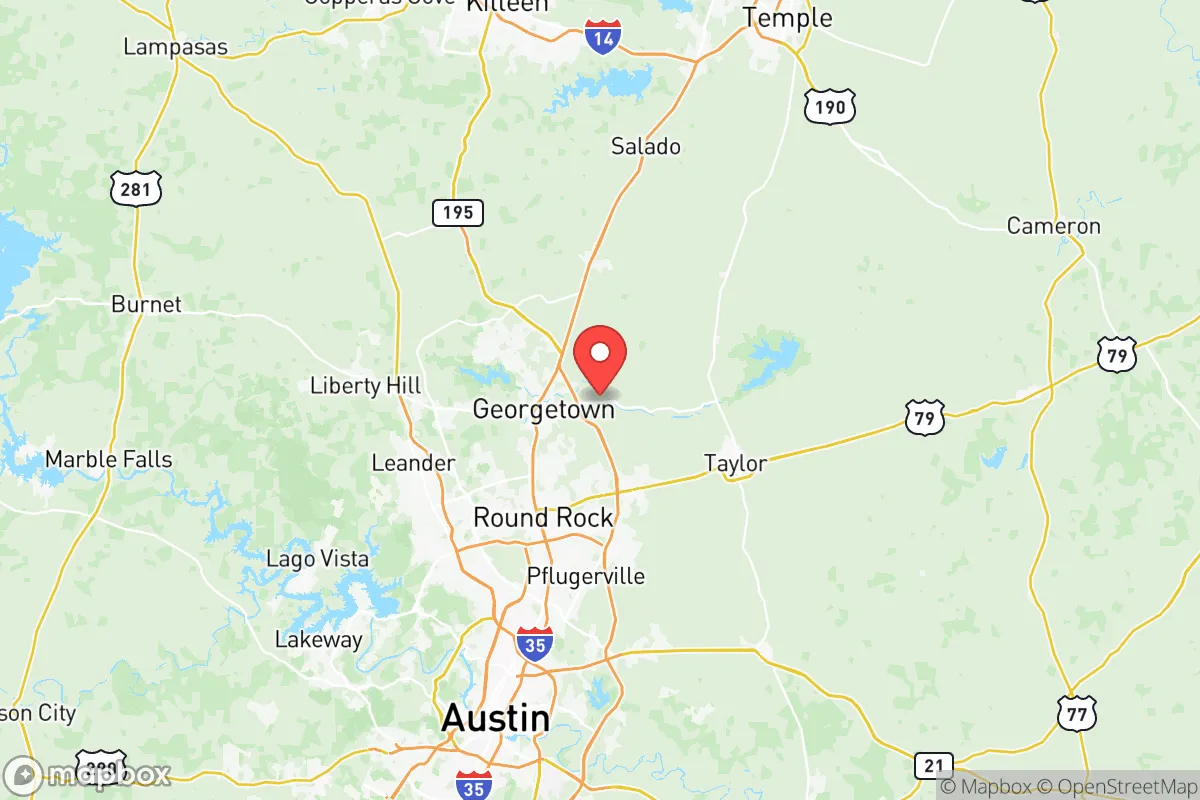
Round Rock and Georgetown are the county’s two largest cities, each with populations exceeding 75,000, and they function as the primary economic and retail anchors. Round Rock is home to Dell Technologies’ global headquarters and the massive Kalahari Resorts & Conventions, giving it a fast-paced, job-driven character with a median home value near $430,000. Daily life here centers on the Round Rock Independent School District, the Round Rock Premium Outlets, and the Dell Diamond minor-league baseball stadium. Georgetown, the county seat, offers a more historic downtown anchored by the Georgetown Square and Southwestern University, with a slightly lower median home value around $400,000. Both cities have extensive trail systems along Brushy Creek and the San Gabriel River, and their combined population makes up roughly 60% of the county’s residents.
Smaller towns & rural pockets
Beyond the major centers, Williamson County contains several distinct smaller communities. Taylor, in the eastern part of the county, retains a working-class, agricultural feel with a historic downtown and a median home value near $310,000 — notably lower than the county average. Hutto, once a small farming town, has rapidly suburbanized but still maintains a small-town core around Hutto City Hall and Copperas Cove-style neighborhoods. Florence, in the far northwest, is a true rural community with a population under 2,000, where homes often sit on acreage and the nearest major grocery store is a 20-minute drive to Georgetown. Granger, near the Granger Lake reservoir, is an unincorporated area popular for weekend fishing and hunting, with very limited commercial services. These smaller towns offer a slower pace and lower density, but residents trade off access to the county’s top-tier retail and healthcare.
Cost & lifestyle range
The cost of living varies dramatically across the county. At the high end, Brushy Creek and Teravista neighborhoods in Round Rock, along with Sun City in Georgetown (an active-adult 55+ community), see median home values exceeding $500,000 and monthly rents above $2,000. These areas offer gated subdivisions, golf courses, and proximity to the SH 45 toll road for quick Austin access. At the lower end, Taylor and Florence have median home values around $310,000 and $280,000 respectively, with rents often below $1,400. The lifestyle trade-off is clear: higher-cost areas provide walkable retail, top-rated schools (Round Rock ISD and Georgetown ISD both rank in the top 20% of Texas districts), and commute times under 25 minutes, while lower-cost areas offer larger lots, less traffic, and a more self-sufficient, rural lifestyle. The county’s property tax rates are relatively uniform (around 2.1% to 2.4% of assessed value), so the biggest cost driver is home price itself.
Williamson County suits a wide range of residents, from corporate professionals working at Dell or Apple’s Austin campus who want a short commute and strong schools, to retirees seeking the active-adult amenities of Sun City, to families who prioritize land and quiet over urban convenience. The county’s growth — over 30% population increase since 2020 — means that even its rural pockets are gradually suburbanizing, but for now, the spectrum from Taylor’s farm-to-table restaurants to Florence’s hay fields remains intact. Those who thrive here are typically comfortable with a car-dependent lifestyle and value the combination of Texas Hill Country scenery with access to one of the fastest-growing metro areas in the United States.

Crime in Williamson County
Crime rates similar to the national median for U.S. locations.
Violent CrimeViolent Crime Analysis
Property CrimeProperty Crime Analysis
Crime Analysis
Williamson County, Texas, maintains a safety profile that is significantly better than both the state and national averages, though residents should remain aware of specific crime trends and jurisdictional variations. With a violent crime rate of 345.1 per 100,000 residents and a property crime rate of 1,794.2 per 100,000, the county offers a generally secure environment compared to nearby urban centers. However, the county's rapid growth and the policies of its elected officials in certain cities create meaningful differences in public safety outcomes that prospective residents should evaluate carefully.
Crime in context
Williamson County's violent crime rate of 345.1 per 100,000 is notably lower than the Texas state average of approximately 447 per 100,000 and well below the national average of roughly 380 per 100,000. Property crime in the county, at 1,794.2 per 100,000, also undercuts the Texas average of about 2,350 per 100,000 and the national figure near 1,950 per 100,000. These figures place Williamson County among the safer large counties in the state, comparable to suburban counties like Collin and Denton, and far safer than urban counties such as Harris (Houston) or Dallas, where violent crime rates can exceed 600 per 100,000. The county's relatively low crime rates reflect its affluent suburban character, strong local economies, and generally conservative law enforcement policies in its unincorporated areas and smaller municipalities.
What residents experience
Daily life in Williamson County is shaped by a patchwork of local jurisdictions, each with its own law enforcement approach and crime dynamics. Cities like Round Rock, Cedar Park, and Georgetown consistently report lower crime rates than the county average, benefiting from well-funded police departments and community-oriented policing strategies. These communities are popular with families and professionals seeking safe suburban environments. In contrast, Taylor and Hutto, while still safer than state averages, experience slightly elevated property crime rates, particularly theft and vehicle burglary, linked to their proximity to major highways and ongoing development. Austin's northern fringe, which spills into Williamson County, can bring spillover crime from the city's more problematic areas, especially property crimes like package theft and car break-ins.
A critical concern for residents is the influence of progressive prosecutorial policies in certain parts of the county. While Williamson County as a whole has historically elected conservative district attorneys who prioritize public safety and victim rights, the proximity to Travis County (Austin) and its increasingly progressive justice system raises legitimate worries. Travis County's district attorney has implemented policies such as reduced bail requirements, diversion programs for repeat offenders, and reluctance to prosecute certain property crimes, which directly contributes to higher recidivism and more criminals on the street. This ideological approach, while sympathetic to offenders, undermines public safety and creates a negative environment for victims seeking justice. Residents in southern Williamson County communities near the Travis County line should be particularly vigilant, as these policies can lead to increased criminal activity spilling across jurisdictional boundaries.
Neighborhood-level variation
Within Williamson County, safety varies considerably by neighborhood and city governance. Master-planned communities like Brushy Creek and Avery Ranch (in Cedar Park) feature private security patrols and neighborhood watch programs that drive crime rates well below county averages. Older, more established areas of Georgetown's historic district remain very safe, while newer developments on the county's eastern edge near Granger and Thrall may experience higher rates of agricultural theft and burglary due to lower population density and fewer patrol resources. Prospective residents should research specific city council and district attorney races, as local elections directly determine whether a community maintains tough-on-crime policies or drifts toward the progressive leniency that has proven detrimental in neighboring Travis County. For families and individuals prioritizing safety, Williamson County's northern and western suburbs offer the most secure environments, while areas near the Austin border warrant closer scrutiny of local law enforcement and prosecutorial practices.
* Values derived from national, state, county, city and local statistics and may differ in a specific area. Last updated: 2026-06-15T19:32:56.000Z
Narrative content on this page is AI-generated and may contain mistakes. Verify any details that matter before acting on them.
ReloMaps may earn a commission from affiliate links at no extra cost to you.

