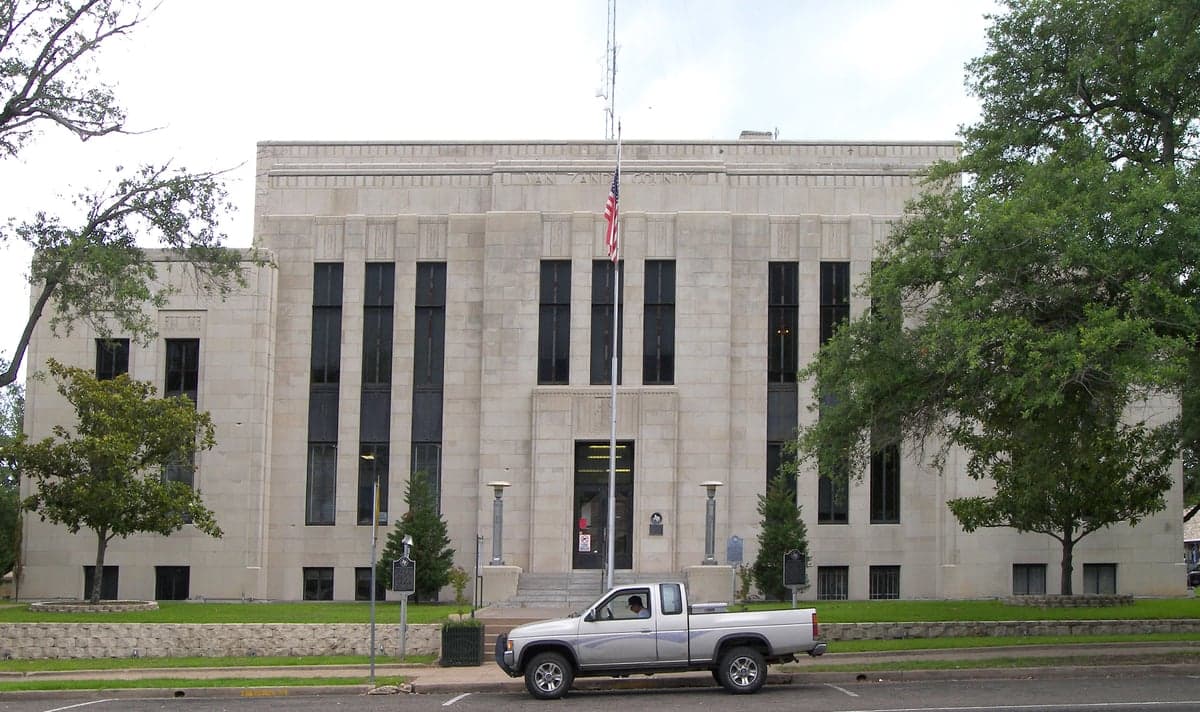
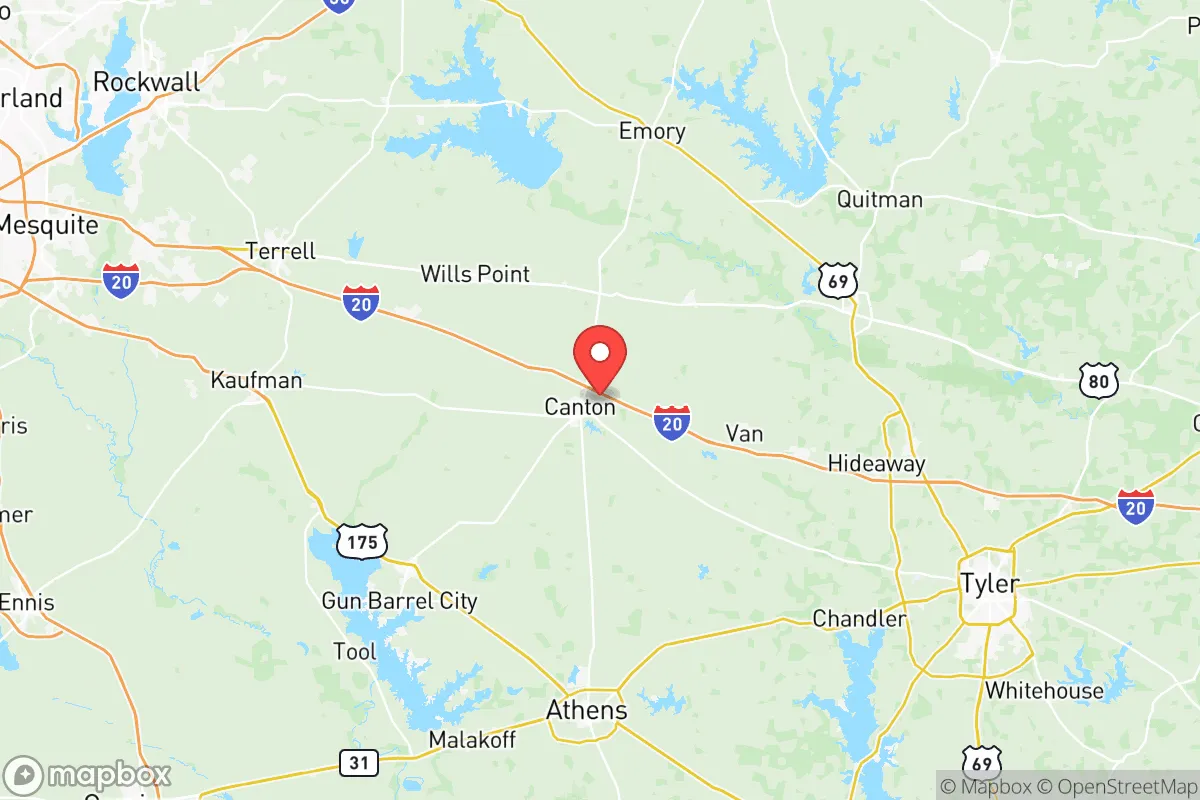
Photo: Wikipedia
Find The Best Places To Live in Van Zandt County
PRO TIP! You can paste a Zillow or Redfin link to get info on that property.
Best Places to Live in Van Zandt County
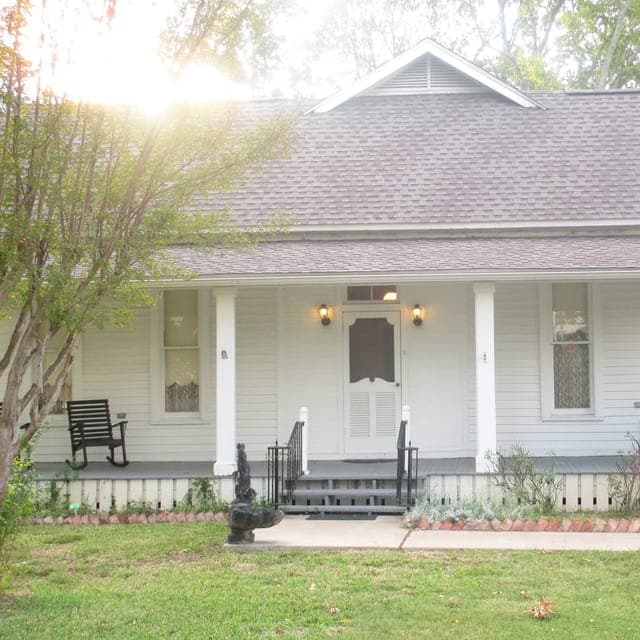
Cities & Towns in Van Zandt County
Cities in Van Zandt County
What It's Like Living in Van Zandt County, TX
Van Zandt County offers a slower, more self-reliant pace of life than the booming Dallas-Fort Worth metroplex just an hour to the west, and its residents tend to like it that way. With a population of just over 61,000 spread across small cities like Canton, Wills Point, Grand Saline, and Edgewood, plus vast stretches of piney woods and farmland, the county feels like a place where people know their neighbors and Friday nights belong to the high school football team. It’s a fit for those who value space, quiet, and a strong sense of local identity over urban convenience.
Daily Rhythm: What Life Actually Looks Like
Most mornings in Van Zandt County start early. People commute an average of 37 minutes each way, often to jobs in Tyler or the eastern edge of the Dallas-Fort Worth metroplex, but the drive is through open countryside rather than bumper-to-bumper freeways. For those who work locally, the biggest employers include the school districts, the county government, and a handful of manufacturing and logistics firms around Canton and Wills Point. After work, life tends to center on home and property—mowing a few acres, tending a garden, or working on a project in the shop. Weekend mornings mean breakfast at a local diner like the Dairy Palace in Canton or the Wills Point Café, followed by errands at the Brookshire’s or the local hardware store. The median home value of $199,500 and a cost of living index of 80 (well below the national average of 100) mean that a median household income of $68,274 stretches further here than in most of Texas, making it a realistic option for families and single individuals who want to own a home without being house-poor.
Sports, Community, and the Big Events
High school sports are the social calendar in Van Zandt County. The Canton Eagles, Wills Point Tigers, Grand Saline Indians, and Edgewood Bulldogs all draw big crowds on Friday nights in the fall, and the rivalries between these small towns run deep. The county doesn’t have any professional or major college sports teams, but many residents are passionate fans of the Dallas Cowboys, Texas Rangers, or the University of Texas Longhorns—you’ll see plenty of burnt orange on game days. The biggest event by far is First Monday Trade Days in Canton, one of the largest flea markets in the world, which draws hundreds of thousands of visitors the weekend before the first Monday of each month. It transforms the town into a bustling hub of vendors, food trucks, and antique hunters, and it’s a major economic driver for the county. For outdoor recreation, the Lake Tawakoni State Park near Wills Point offers fishing, hiking, and camping, while the Sabine River provides spots for kayaking and tubing. Local music venues are few, but you’ll find live country and classic rock at places like the Rusty Spur in Canton or the VFW halls in the smaller towns.
Pros and Cons of Living Here
Longtime residents love the space and the quiet. The county feels safe in a way that many suburban transplants appreciate—though the violent crime rate of 346.3 per 100,000 is slightly above the national average, most incidents are concentrated in specific areas, and the overall sense of security in the small towns and rural neighborhoods is high. People also value the lack of traffic compared to the metroplex, the affordability, and the fact that you can still buy a decent home on a few acres for under $200,000. The median age of 42.1 reflects a population that skews older and more settled, which means fewer nightlife options but also quieter streets.
What frustrates residents? The biggest complaint is the lack of amenities. There’s no major hospital in the county—the closest are in Tyler or Terrell—and shopping for anything beyond groceries and hardware means a 30- to 45-minute drive. Only 18.2% of adults hold a college degree, which limits the local job market to mostly blue-collar and service roles; professionals often have to commute. The weather is typical East Texas: hot and humid summers, mild winters, and a risk of severe storms and tornadoes in the spring. The county’s identity is deeply conservative and church-oriented, which is a draw for many but can feel isolating for those who don’t share those values. And while the commute is manageable, it does eat into family time—especially for those driving to Dallas or Fort Worth daily.
Who Fits In—and Who Might Not
Van Zandt County works best for people who want a rural or small-town lifestyle with a strong community feel. It’s popular with families raising kids who want them to have space to roam and a slower childhood, and with retirees who want affordable land and a lower cost of living. Single individuals will find the social scene limited to church groups, community events, and the occasional bar or diner—it’s not a place for singles looking to date or find a bustling nightlife. The county’s cultural quirks include a deep pride in local history (the salt mines in Grand Saline are a point of pride) and a general suspicion of rapid growth or outside influence. If you’re looking for a place where you can have a garden, know your mail carrier’s name, and not worry about rush hour, Van Zandt County delivers. If you need walkable neighborhoods, diverse dining, or a fast-paced career scene, you’ll likely feel the distance from the city more acutely.

* Values derived from national, state, county, city and local statistics and may differ in a specific area. Last updated: 2026-10-21T02:54:28.000Z
Narrative content on this page is AI-generated and may contain mistakes. Verify any details that matter before acting on them.
ReloMaps may earn a commission from affiliate links at no extra cost to you.

