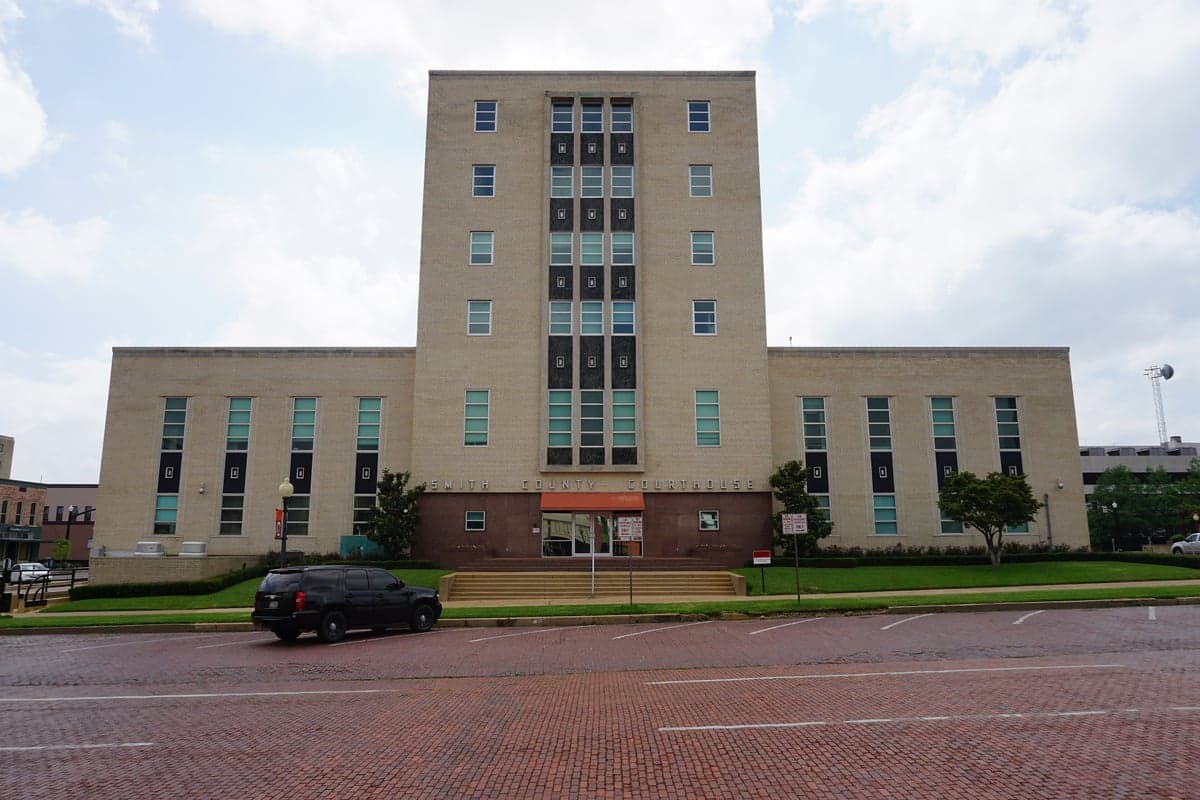
Photo: Wikipedia
Quality of Life in Smith County
A livable area that tracks near national norms for affordability, walkability, and neighborhood health.
What does Quality of Life tell us?
Quality of Life measures an area by evaluating factors like cost of living, nearby amenities, country club access, airport proximity, socioeconomic signals and neighborhood character. For large states, this is a general average — quality of life can vary dramatically between metro areas, suburbs, and rural communities within the same state.
What does this tell us?
Quality of Life measures an area by evaluating factors like cost of living, nearby amenities, country club access, airport proximity, socioeconomic signals and neighborhood character. For large states, this is a general average — quality of life can vary dramatically between metro areas, suburbs, and rural communities within the same state.
Cost of Living
7% below national average
114%
The Real Cost of Living in Smith County for 2026
| Tier | Individual | Family (4) |
|---|---|---|
| Survival | $19k | $36k |
| Comfortable | $43k | $63k |
| Luxury | $130k+ | $201k+ |
| Elite (Top 5%) | $153k+ | $237k+ |
Quality-of-Life Analysis
Smith County, Texas, offers a genuine quality-of-life spectrum that stretches from the urban-suburban density of Tyler outward to small agricultural hamlets and open countryside. This variety means a single county can accommodate young professionals seeking city amenities, families wanting good schools in smaller towns, and retirees looking for quiet land. With a cost-of-living index of 93 (100 is the U.S. average), median home value of $220,800, median rent of $1,197, and an average commute of roughly 23 minutes, the county balances affordability with reasonable access to jobs and services—though the experience shifts notably depending on which part of the county you choose.
Largest town(s) & population centers
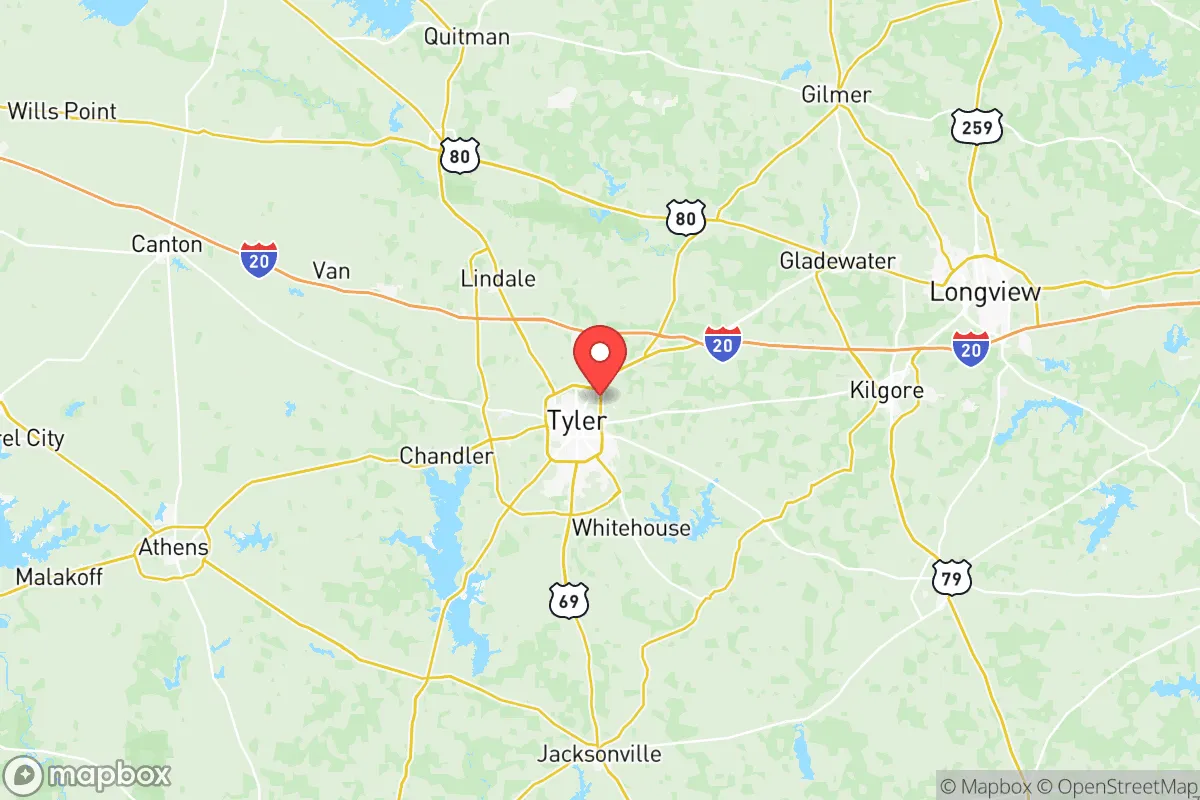
Tyler is the county seat and dominant population center, home to roughly 105,000 residents. Daily life there is defined by a full-service regional economy anchored by healthcare (UT Health Tyler, Christus Trinity Mother Frances), higher education (Tyler Junior College, UT Tyler), and retail along South Broadway Avenue. Tyler offers multiple grocery chains, a regional mall, diverse dining, and cultural venues like the Tyler Symphony and the Discovery Science Place. Commute times within the city are short—typically under 20 minutes—and the bus system (Tyler Transit) provides basic coverage. The secondary population center is Whitehouse (pop. ~8,000), a fast-growing suburb south of Tyler where residents trade longer commutes (about 15–25 minutes to downtown Tyler) for newer subdivision housing and strong school ratings. Whitehouse feels more suburban than urban, with strip centers and a commuter-oriented feel.
Smaller towns & rural pockets
Beyond Tyler and Whitehouse, the county contains a ring of smaller incorporated towns and unincorporated communities. Lindale (pop. ~5,500) lies northeast of Tyler along I-20 and has a historic downtown, a growing industrial base, and a rural-suburban mix. Bullard (pop. ~3,000), straddling the Smith-Cherokee county line, is known for its highly rated Bullard ISD and lake proximity (Lake Palestine). Troup (pop. ~2,000) in the southeastern corner feels like a classic East Texas timber town, with slower pace and older housing stock. Overton (pop. ~2,500) on the northwestern edge is more working-class, with oil-and-gas history and affordable home prices. Arp (pop. ~900) and Winona (pop. ~700) are tiny bedroom communities where most residents commute to Tyler. Unincorporated areas like Flint and New Harmony remain largely rural, with acreage lots, few services, and a strong do-it-yourself lifestyle. These pockets offer the lowest housing costs and largest lot sizes in the county.
Cost & lifestyle range
The cost-of-living index of 93 masks meaningful variation across Smith County. At the higher end, Tyler’s established neighborhoods (e.g., the Azalea District, Hollytree) have median home values well above the county average—often $350,000–$500,000. Bullard and parts of Whitehouse also command premiums due to school demand, with values typically $250,000–$350,000. Rent in Tyler averages $1,197, but newer complexes near UT Tyler can exceed $1,400. At the lower end, Overton, Arp, and Troup offer median home values often below $180,000, and rent can drop to $800–$1,000 for older duplexes or houses. Rural properties on 2–10 acres in the Flint area sell for $200,000–$300,000, offering space without high mortgage burdens. Lifestyle choices reflect these differences: Tyler residents have walkable pockets and city amenities; Lindale and Bullard residents trade convenience for schools or lake access; and those in Overton or rural pockets accept longer drives to grocery stores for quieter, lower-cost living. The average 23-minute commute across the county holds for most areas except the rural fringes, where it can stretch to 35–40 minutes.
Smith County suits a broad cross-section of residents because the spectrum is real, not theoretical. Young professionals and students naturally cluster in Tyler for jobs and education. Families prioritizing schools gravitate to Whitehouse or Bullard. Retirees and remote workers find affordable acreage in Overton or rural Flint. Anyone seeking a low-cost, low-hassle rural life can find it in the county’s southeastern or northwestern corners. The trade-offs are clear: fewer amenities in the small towns, higher prices in Tyler—but the overall financial math (COL 93, median home $220,800) keeps the entire county accessible compared to Texas metros like Dallas or Austin.

Crime in Smith County
Crime rates similar to the national median for U.S. locations.
Violent CrimeViolent Crime Analysis
Property CrimeProperty Crime Analysis
Crime Analysis
Smith County, Texas, presents a mixed safety profile where property crime rates significantly exceed national averages, while violent crime remains slightly below the national benchmark. The county's overall crime rate of 2,123.2 per 100,000 residents is driven primarily by theft and burglary, with the city of Tyler accounting for a disproportionate share of reported incidents. Residents in unincorporated areas and smaller towns like Whitehouse and Bullard generally experience lower crime rates than those in Tyler's urban core, though property crime remains a concern countywide.
Crime in context
Smith County's violent crime rate of 342.3 per 100,000 sits just below the national average of 380 per 100,000, but its property crime rate of 1,780.9 per 100,000 is substantially higher than the U.S. average of 1,954 per 100,000. Compared to Texas statewide figures, Smith County's violent crime rate is roughly on par with the state's 2023 average of 350 per 100,000, while property crime is notably elevated. The city of Tyler, the county seat and largest municipality, reports higher crime concentrations, particularly in its central and eastern neighborhoods. Smaller communities like Lindale and Troup show significantly lower incident rates, often 30-40% below the county average. The Smith County Sheriff's Office and Tyler Police Department have emphasized community policing and targeted enforcement in high-crime corridors, but property crime—especially vehicle burglary and package theft—remains persistent.
What residents experience
For most Smith County residents, the primary safety concern is property crime rather than violent victimization. Larceny-theft accounts for nearly 60% of all reported crime, with vehicle break-ins and residential burglary being the most common complaints. Violent crime, while less frequent, is concentrated in specific areas: Tyler's north side and parts of the downtown district see elevated rates of aggravated assault and robbery. The county's judicial landscape is a significant factor in public safety perception. Smith County falls under the 7th Administrative Judicial Region, and local district attorneys have historically taken a tough-on-crime stance, with high conviction rates and strong prosecution of repeat offenders. However, residents should be aware that progressive prosecutorial policies in nearby larger metro areas—such as Dallas County and Harris County—can indirectly affect Smith County through criminal migration patterns. Offenders released under lenient policies in those jurisdictions sometimes relocate to smaller counties, contributing to property crime spikes. The Smith County District Attorney's office has maintained a conservative approach, prioritizing victim restitution and mandatory minimum sentences for violent offenders, which helps keep violent crime rates lower than in more liberal jurisdictions.
Neighborhood-level variation in Smith County is pronounced. Whitehouse and Bullard are consistently ranked among the safest communities in the county, with violent crime rates below 150 per 100,000 and property crime rates under 1,200 per 100,000. Tyler's historic districts and newer suburban developments on the south side also report lower incident rates, while older neighborhoods near the city center and industrial areas see higher crime. The county's rural areas, including communities like Winona and Arp, experience very low violent crime but remain vulnerable to agricultural theft and trespassing. For prospective residents, choosing a home in the southern or western parts of the county, particularly in the Bullard Independent School District or Whitehouse Independent School District, correlates with significantly lower crime exposure. The Smith County Sheriff's Office provides online crime mapping tools that allow residents to check specific addresses, and neighborhood watch programs are active in most suburban subdivisions.
* Values derived from national, state, county, city and local statistics and may differ in a specific area. Last updated: 2026-06-20T14:34:31.000Z
Narrative content on this page is AI-generated and may contain mistakes. Verify any details that matter before acting on them.
ReloMaps may earn a commission from affiliate links at no extra cost to you.

