Photo: Wikipedia
Political ClimatePolitical Climate in Presidio County
Showing district-level results — no local-only data available.
Local Political AnalysisPolitical Analysis of Presidio County
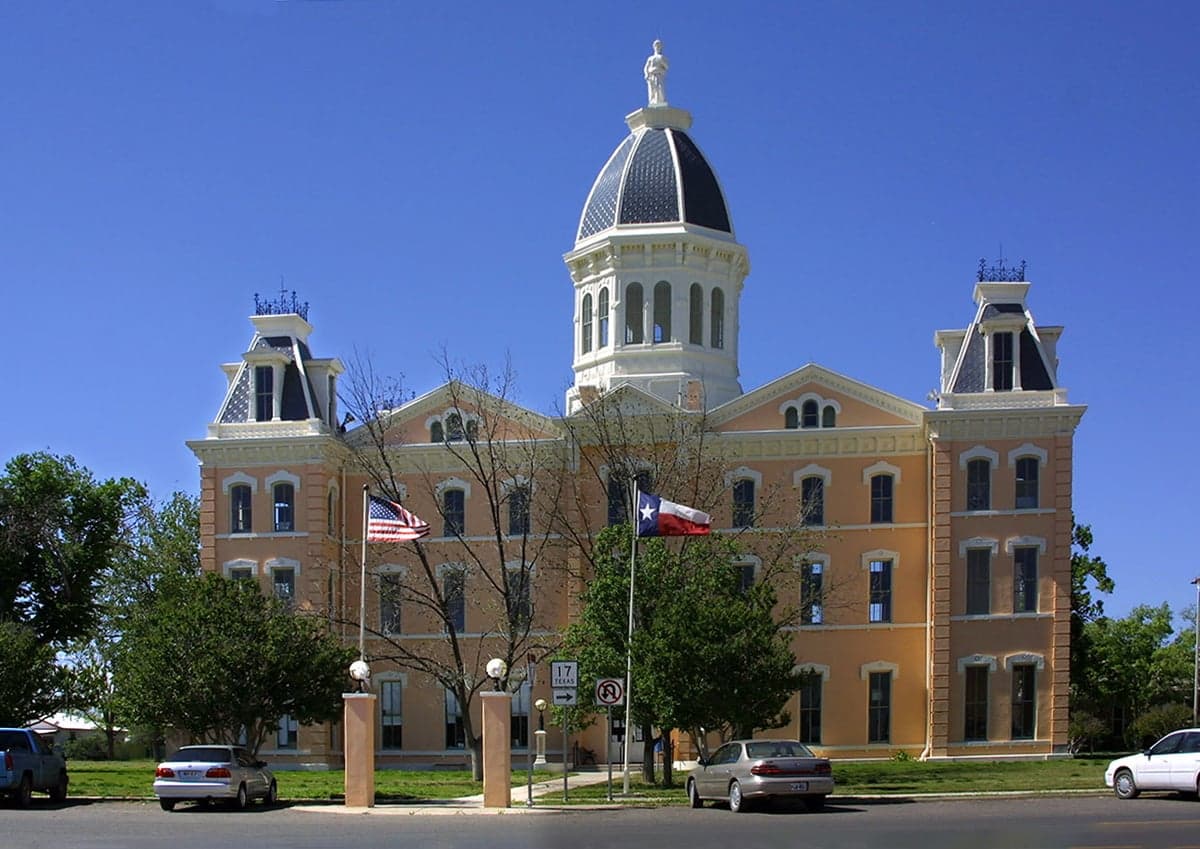
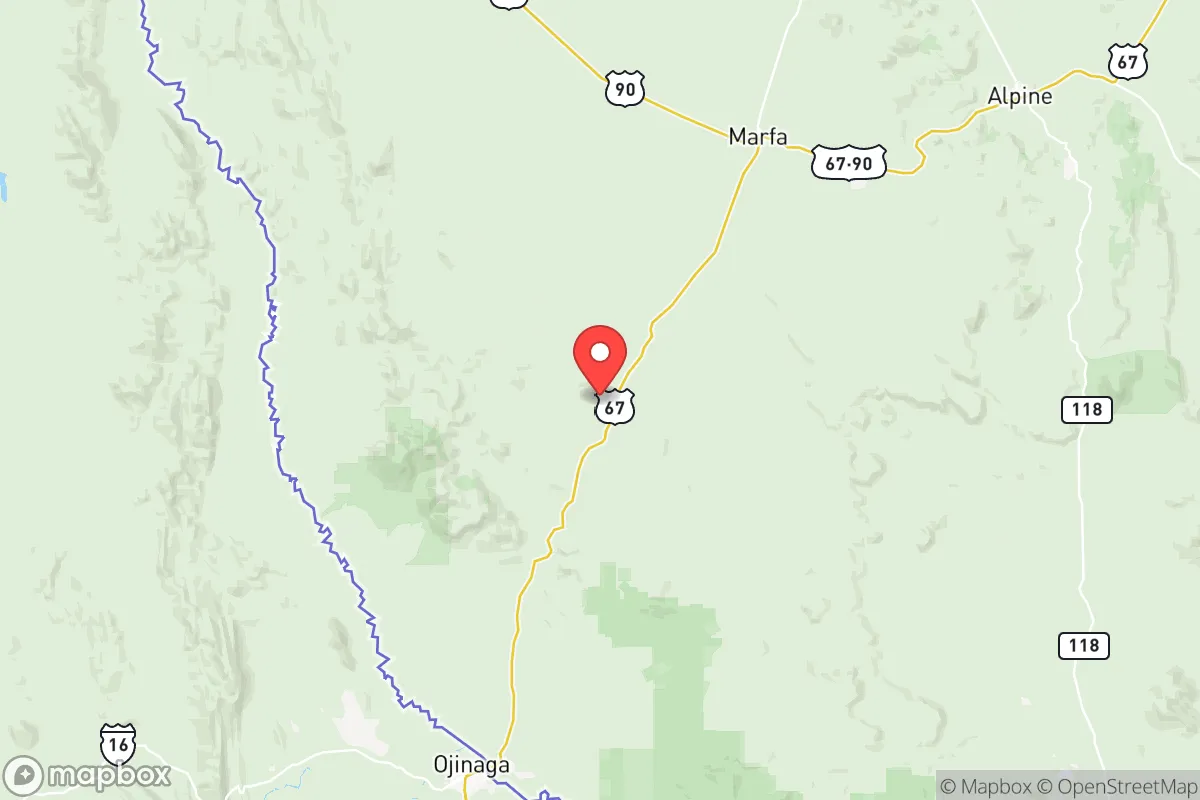
Presidio County, Texas, is a fascinating political outlier in the Lone Star State. While the county as a whole carries a Cook PVI of R+7—meaning it leans Republican by seven points more than the national average—this number masks a deep internal divide. The county is split between the reliably conservative ranching communities of the high plains and the more Democratic-leaning border towns like Presidio itself, creating a dynamic that feels less like a monolith and more like a tug-of-war between two very different worlds.
How it compares
At first glance, Presidio County’s R+7 rating makes it appear more Republican than Texas overall, which sits at R+4. But that’s a surface-level read. The real story is the county’s trajectory. In 2020, Donald Trump won the county by a narrow margin, but the shift toward the GOP has been slower here than in many other rural West Texas counties. The county seat, Marfa, is a well-known cultural and artistic hub that leans noticeably more liberal than its surroundings, often swinging blue in local and national elections. Meanwhile, the town of Presidio, directly on the border, has a strong Democratic base driven by its majority-Hispanic population and labor-focused economy. The swing precincts are in the rural stretches between these towns, where independent ranchers and oil-patch workers tend to vote Republican but are not as reliably red as in neighboring Brewster or Jeff Davis counties. So while the county is technically redder than the state, the margin is thin and the internal variation is stark.
What this means for residents
For conservative residents, the county’s lean means that local offices—like the county judge and commissioners—tend to be held by Republicans, and the tax and regulatory environment reflects that. There’s a general resistance to state-level mandates on land use and water rights, which plays well with the ranching community. For liberal residents, especially in Marfa and Presidio, the political climate can feel like a constant negotiation. They have enough local clout to influence school board decisions and cultural policy, but they often find themselves on the losing end of county-wide votes on issues like property tax caps or law enforcement funding. The practical result is a community where political compromise isn’t optional—it’s survival. Both sides have to work together on infrastructure, emergency services, and the perennial challenge of attracting economic development to a remote, sparsely populated region.
One of the most telling cultural distinctions is the county’s relationship with the border. In Presidio, the conversation is about daily cross-border commerce, family ties, and the practical realities of living in a port of entry. In Marfa, the conversation is more about tourism, art, and the tension between preserving the area’s character and accommodating growth. This split means that while the county votes red on paper, its policy priorities are often shaped by a coalition of pragmatic conservatives and progressive locals who agree on issues like maintaining public lands access and supporting small-scale agriculture. The near-term future likely holds more of the same: a slow, steady drift rightward in the rural precincts, offset by a growing liberal presence in Marfa, keeping Presidio County one of the most politically interesting places in Texas to watch.

State Political ClimatePolitical Climate in Texas
State Political AnalysisPolitical Environment in the State
Texas has been a reliably Republican state for the past three decades, with a Cook Partisan Voting Index of R+4, but the political reality on the ground is far more nuanced than a single number suggests. The state’s dominant coalition has historically been built on a foundation of socially conservative values, low-tax orthodoxy, and a business-friendly regulatory environment, anchored by the sprawling suburbs of Houston, Dallas-Fort Worth, and San Antonio. However, the last 10-20 years have seen a dramatic trajectory shift: the GOP’s margins have been steadily eroding as explosive population growth in the urban cores and a massive influx of out-of-state transplants, particularly from California and the Northeast, have turned once-safe red counties into battlegrounds. In 2024, Donald Trump still carried Texas by roughly 14 points, but that’s a far cry from the 26-point margins Republicans enjoyed in the early 2000s, and Democrats have flipped suburban counties like Tarrant (Fort Worth) and Hays (south of Austin) in recent cycles.
Urban vs. rural divide
The political map of Texas is a textbook study in the urban-rural chasm. The state’s five largest metros—Houston, Dallas-Fort Worth, San Antonio, Austin, and El Paso—drive the Democratic vote, with Harris County (Houston) and Dallas County alone accounting for nearly a third of the state’s population. Austin’s Travis County is the bluest urban core in the South, routinely voting 70%+ Democratic, while El Paso County, with its heavily Latino population, has been reliably blue for decades. Meanwhile, the vast rural and exurban expanse—places like the Panhandle around Lubbock and Amarillo, East Texas timber country, and the oil-rich Permian Basin anchored by Midland and Odessa—votes overwhelmingly Republican, often by 70-80% margins. The real battleground is the rapidly growing suburban ring: Collin County (north of Dallas) was once a GOP stronghold but is now trending purple, while Williamson County (north of Austin) flipped to Democrats in 2020 and hasn’t looked back. The political future of Texas will be decided in these sprawling, master-planned communities where transplants and young families are reshaping the electorate.
Policy environment
Texas operates under a policy framework that is unmistakably conservative, with no state income tax as its crown jewel, a regulatory posture that prioritizes business expansion, and a legal climate that heavily favors employers and property owners. The state’s education policy has been a flashpoint: the 2023 school voucher push, championed by Governor Greg Abbott, failed to pass the House but remains a top priority, while the curriculum has been shaped by laws like HB 3979 (the "critical race theory" law) that restrict how race and history are taught in public schools. Healthcare policy is defined by the state’s refusal to expand Medicaid under the Affordable Care Act, leaving roughly 1.5 million Texans in the coverage gap, though the state has invested in rural hospital support and telemedicine. Election laws have tightened significantly: SB 1 (2021) restricted mail-in voting, added ID requirements, and banned 24-hour and drive-through voting, changes that critics argue disproportionately affect urban and minority voters. The state’s abortion law, SB 8 (2021), effectively banned the procedure after six weeks and created a unique private enforcement mechanism, while the trigger law (HB 1280) enacted a near-total ban after the Dobbs decision.
Recent policy direction
The last three legislative sessions have pushed Texas decisively toward a more assertive conservative posture across nearly every dimension a relocator might weigh. On gun and self-defense law, Texas became a permitless carry state in 2021 (HB 1927), allowing most adults to carry a handgun without a license or training. Parental and education rights have been expanded through laws like HB 18 (2023), which requires public school libraries to restrict "sexually explicit" material and gives parents more power to challenge books and curriculum. Speech and privacy saw a major shift with the passage of HB 20 (2023), which prohibits social media platforms from moderating content based on "viewpoint," effectively creating a free-speech mandate for large platforms. Medical and bodily autonomy has moved in the opposite direction of many blue states: gender-affirming care for minors was banned in 2023 (SB 14), and the state has aggressively investigated parents and doctors who leave Texas for such care. Property rights remain strong, with no state-level rent control and a robust homestead exemption, though rising property taxes have prompted the legislature to pass a $18 billion tax cut package in 2023 (SJR 2). Voting and ballot access have been restricted under SB 1, but early voting hours remain generous, and voter turnout in 2024 hit record highs despite the new laws.
Civil unrest & political movements
Texas has been a stage for some of the most visible political flashpoints in the country. The 2020 George Floyd protests in Austin and Houston were among the largest in the nation, leading to significant police reform debates and a lasting shift in the political culture of those cities. Immigration politics are a constant, live-wire issue: Governor Abbott’s Operation Lone Star, launched in 2021, has deployed thousands of state troopers and National Guard members to the border, bused migrants to Democratic-led cities like New York and Chicago, and installed razor wire and buoys in the Rio Grande—actions that have triggered ongoing legal battles with the Biden administration. The "secession" or "Texit" movement, while fringe, has gained a louder voice through the Texas Nationalist Movement, though polling consistently shows it has support from less than 20% of Texans. Election integrity controversies have been a recurring theme: the 2020 and 2022 cycles saw high-profile audits in Harris and Dallas counties, and the state’s new election laws have been challenged in court multiple times. A new resident would notice the ubiquity of political signage, the intensity of local party activism, and the fact that even non-political conversations can quickly turn to property taxes, school funding, or the border.
Projection
Looking five to ten years out, Texas is on a trajectory toward becoming a true battleground state, driven by demographic shifts that show no signs of slowing. The state is adding roughly 1,000 new residents per day, and the vast majority are settling in the urban and suburban counties that lean Democratic or are trending that way. The Latino electorate, which makes up about 40% of the population, is not monolithic—South Texas border counties like Hidalgo and Cameron have shifted right in recent cycles—but younger Latino voters are increasingly aligning with the Democratic coalition. If current trends hold, the Cook PVI could move from R+4 to R+2 or even a toss-up within a decade, though the state’s gerrymandered congressional map and voter ID laws will continue to give Republicans a structural advantage. A relocator moving in now should expect to find a state where the political conversation is becoming more polarized, where local elections in suburban counties are increasingly competitive, and where the policy environment will likely remain conservative at the state level even as the electorate inches leftward.
For a new resident, the bottom line is that Texas offers a policy environment that is unmistakably conservative on taxes, regulation, and social issues, but the political culture varies dramatically depending on where you land. If you’re a conservative, you’ll find a state government that largely reflects your values, with low taxes, strong gun rights, and a business-friendly climate. If you’re a liberal, you’ll find vibrant, politically active urban centers where your vote carries weight, but you’ll also face state-level policies that may feel restrictive on issues like abortion, voting access, and education. The key practical takeaway is to choose your community carefully: the difference between living in Austin versus Lubbock, or in a Collin County suburb versus a Harris County neighborhood, is as stark as the difference between living in two different states. Texas is not a monolith, and its political future is being written by the very people moving here today.
* Values derived from national, state, county, city and local statistics and may differ in a specific area. Last updated: 2026-07-12T15:21:18.000Z
Narrative content on this page is AI-generated and may contain mistakes. Verify any details that matter before acting on them.
ReloMaps may earn a commission from affiliate links at no extra cost to you.

