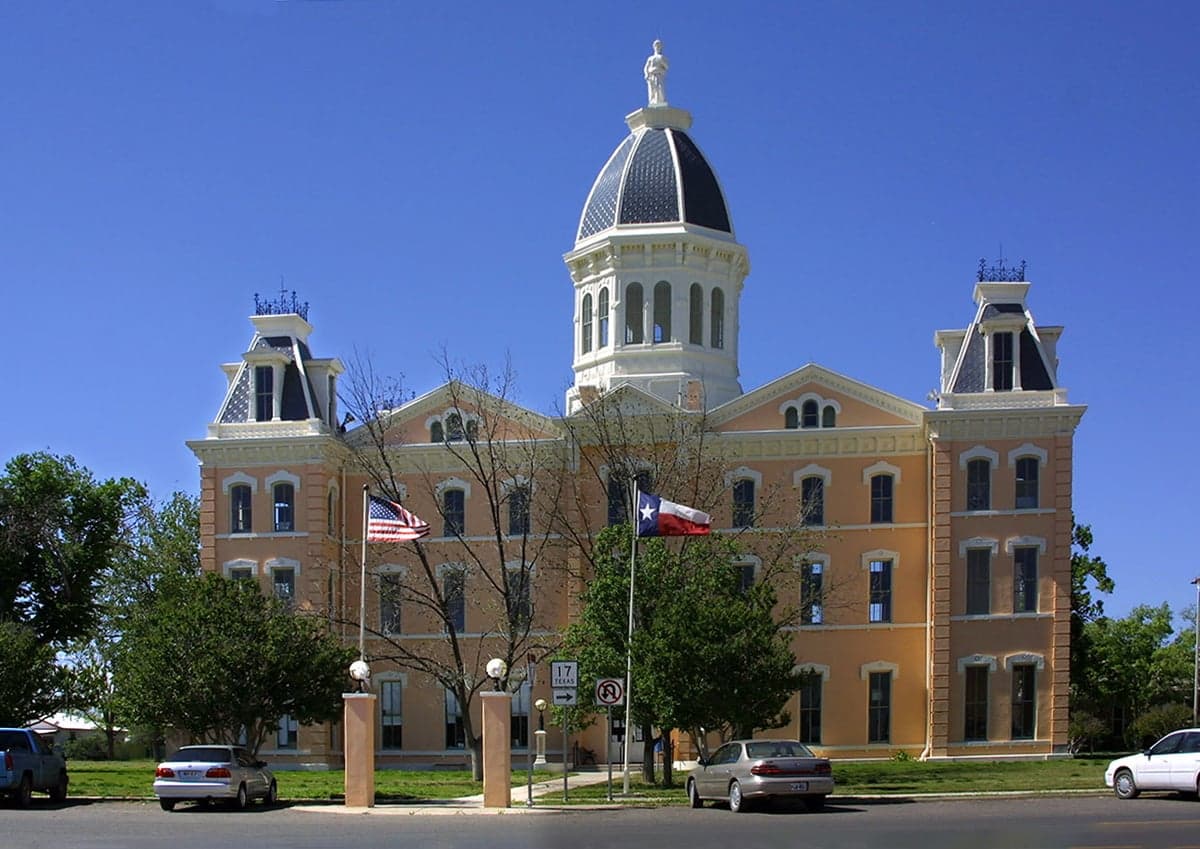
Photo: Wikipedia
Quality of Life in Presidio County
A livable area that tracks near national norms for affordability, walkability, and neighborhood health.
What does Quality of Life tell us?
Quality of Life measures an area by evaluating factors like cost of living, nearby amenities, country club access, airport proximity, socioeconomic signals and neighborhood character. For large states, this is a general average — quality of life can vary dramatically between metro areas, suburbs, and rural communities within the same state.
What does this tell us?
Quality of Life measures an area by evaluating factors like cost of living, nearby amenities, country club access, airport proximity, socioeconomic signals and neighborhood character. For large states, this is a general average — quality of life can vary dramatically between metro areas, suburbs, and rural communities within the same state.
Cost of Living
60% below national average
83%
The Real Cost of Living in Presidio County for 2026
| Tier | Individual | Family (4) |
|---|---|---|
| Survival | $7k | $13k |
| Comfortable | $24k | $35k |
| Luxury | $52k+ | $81k+ |
| Elite (Top 5%) | $102k+ | $157k+ |
Quality-of-Life Analysis
Presidio County, Texas, offers a quality-of-life spectrum that ranges from the historic border town of Presidio to the remote, high-desert landscapes of the Chinati Mountains, attracting everyone from cross-border commuters and artists to ranchers and retirees seeking extreme affordability. The county's character is defined by its vast, open spaces, a deeply rooted border culture, and a cost of living that is among the lowest in the nation, with a composite cost-of-living index of just 40 (compared to the US average of 100). The type of person drawn to Presidio County typically values solitude, wide-open horizons, and a slower pace, but the specific daily experience varies dramatically depending on whether one lives in the county's sole population center, a smaller community, or a remote rural homestead.
Largest town(s) & population centers
The county's primary population center is the city of Presidio, which sits directly on the Rio Grande across from Ojinaga, Chihuahua, Mexico. With a population of roughly 4,000, Presidio is the commercial and governmental hub, housing the county courthouse, the Presidio Independent School District, and the majority of local retail and services. Daily life here is defined by its binational character; many residents cross the border regularly for work, shopping, or family, and Spanish is widely spoken. The average commute in the county is approximately 27 minutes, a figure that reflects the long drives between Presidio and outlying areas, as well as the commute to the port of entry. Housing is exceptionally affordable, with a median home value of $123,100 and a median rent of just $445, making Presidio one of the most affordable incorporated towns in Texas. The town offers basic amenities like grocery stores, a hospital, and schools, but lacks the retail and entertainment options found in larger cities like Odessa or El Paso, which are both over two hours away.
Smaller towns & rural pockets
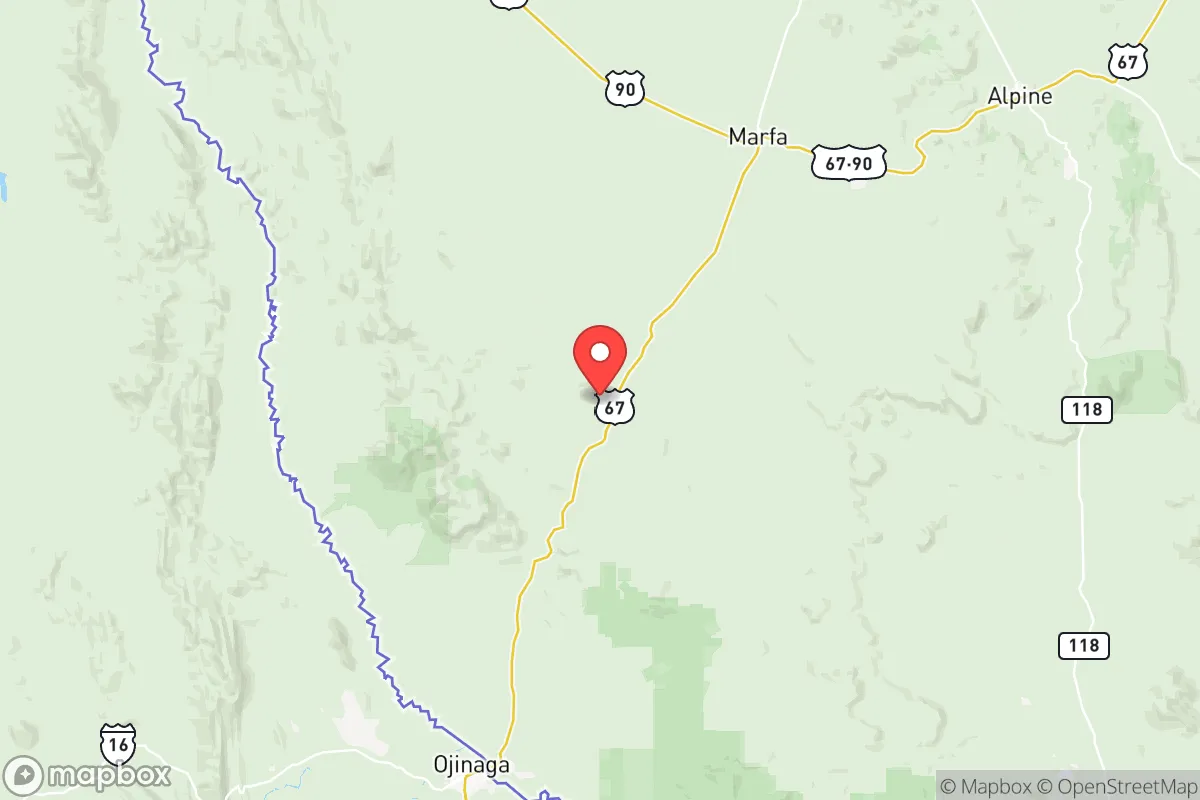
Beyond Presidio, the county is dotted with smaller communities and vast, unincorporated rural areas. The most notable smaller town is Marfa, a globally recognized arts destination located in the northern part of the county. Marfa's population hovers around 2,000, but its cultural footprint is immense, driven by the Chinati Foundation and the Marfa Lights. Daily life in Marfa is a stark contrast to Presidio; it is a hub for artists, writers, and tourists, with galleries, boutique hotels, and upscale dining that are absent elsewhere in the county. Further south, the unincorporated community of Redford offers an even more remote and quiet existence, with a small population and a strong sense of isolation. The rural pockets stretching between Marfa and Presidio, including areas along Highway 67 and the Chinati Mountains, are home to working ranches and off-grid homesteads where residents must be self-sufficient, often relying on generators, well water, and long drives for supplies.
Cost & lifestyle range
The cost of living and lifestyle options in Presidio County span a wide range, anchored by the extreme affordability of Presidio and the premium pricing of Marfa. In Presidio, the median home value of $123,100 and median rent of $445 reflect a market driven by low demand and a local economy tied to border trade and agriculture. At the other end of the spectrum, Marfa's real estate market is significantly more expensive, with median home values often exceeding $300,000, driven by demand from second-home buyers and the art tourism industry. The lifestyle in Presidio is practical and family-oriented, while Marfa offers a more cosmopolitan, if still small-town, experience with art openings, film festivals, and a vibrant food scene. The rural areas between these towns offer the lowest land costs, with undeveloped acreage available for under $1,000 per acre, but require a high degree of self-reliance and a tolerance for long commutes to basic services.
Who thrives in Presidio County? The county is best suited for individuals and families who prioritize affordability, space, and a slower pace over urban convenience and job diversity. It attracts border workers and retirees in Presidio, artists and cultural tourists in Marfa, and ranchers and off-grid homesteaders in the rural expanses. The trade-off for the lowest cost of living in Texas is a significant distance from major metropolitan amenities, making it an ideal choice for those who value solitude, cultural richness, and financial freedom above all else.

Crime in Presidio County
Crime rates similar to the national median for U.S. locations.
Violent CrimeViolent Crime Analysis
Property CrimeProperty Crime Analysis
Crime Analysis
Presidio County, Texas, presents a mixed safety picture that diverges sharply between its two main population centers, Presidio and Marfa, and the vast, sparsely populated ranchlands that surround them. With a violent crime rate of 345.1 per 100,000 residents and a property crime rate of 1,794.2 per 100,000, the county’s overall statistics mask significant internal variation. The county’s remote border location and small population base mean that a handful of incidents can disproportionately sway annual figures, making year-over-year trends more volatile than in larger urban areas.
Crime in context
Presidio County’s violent crime rate of 345.1 per 100,000 sits roughly 15% below the Texas state average of approximately 410 per 100,000, but remains notably higher than the national median for rural counties. Property crime at 1,794.2 per 100,000 is about 10% lower than the Texas average of roughly 2,000 per 100,000. These figures place Presidio County in a middle tier among Texas’s 254 counties — safer than high-crime urban hubs like Houston or Dallas, but riskier than many neighboring rural counties in the Permian Basin. The county’s location along the U.S.-Mexico border introduces unique public safety dynamics, including drug trafficking and human smuggling operations that occasionally spill into local crime statistics. The 83rd Judicial District, which covers Presidio County along with Brewster and Jeff Davis counties, handles felony cases; the district attorney’s office has historically taken a moderate approach to border-related offenses, though recent elections have shifted the ideological balance of local courts.
What residents experience
Daily life in Presidio County varies dramatically by location. In Marfa, the county seat and an arts destination, residents report a relatively low incidence of violent crime, with most public safety concerns revolving around property crimes like vehicle burglaries and theft from art installations. The Marfa Police Department maintains a visible presence in the compact downtown area. In Presidio, the larger town directly across the Rio Grande from Ojinaga, Mexico, residents face a higher likelihood of drug-related incidents and cross-border vehicle theft. The Presidio Police Department and U.S. Border Patrol work in tandem here, and the town’s violent crime rate is estimated to be roughly double that of Marfa, though exact precinct-level data is limited. The unincorporated community of Redford, with fewer than 100 residents, experiences virtually no reported crime, while Ruidosa and Candelaria, tiny settlements further up the river, see occasional border security incidents but negligible local crime. The county’s progressive district attorney, elected in 2022 as part of a broader shift in West Texas border counties, has emphasized alternatives to incarceration for low-level drug offenses — a policy that critics argue reduces accountability and may contribute to repeat property crimes in Presidio, while supporters point to declining jail populations.
Neighborhood-level variation is most pronounced in Presidio itself, where the older colonia areas near the port of entry experience higher rates of burglary and auto theft compared to the newer subdivisions east of Highway 67. Marfa’s historic district and the Barrio de los Chisos see occasional vandalism and petty theft, but violent confrontations are rare. For prospective residents, the safest choice within the county is typically Marfa’s central neighborhoods or any of the remote ranch properties outside town limits, where the primary safety concern is traffic on Farm-to-Market roads rather than interpersonal crime. The county sheriff’s office, which covers unincorporated areas, maintains a response time of 20-40 minutes for most rural calls, compared to under 10 minutes within Marfa and Presidio town limits.
* Values derived from national, state, county, city and local statistics and may differ in a specific area. Last updated: 2026-07-12T15:21:18.000Z
Narrative content on this page is AI-generated and may contain mistakes. Verify any details that matter before acting on them.
ReloMaps may earn a commission from affiliate links at no extra cost to you.

