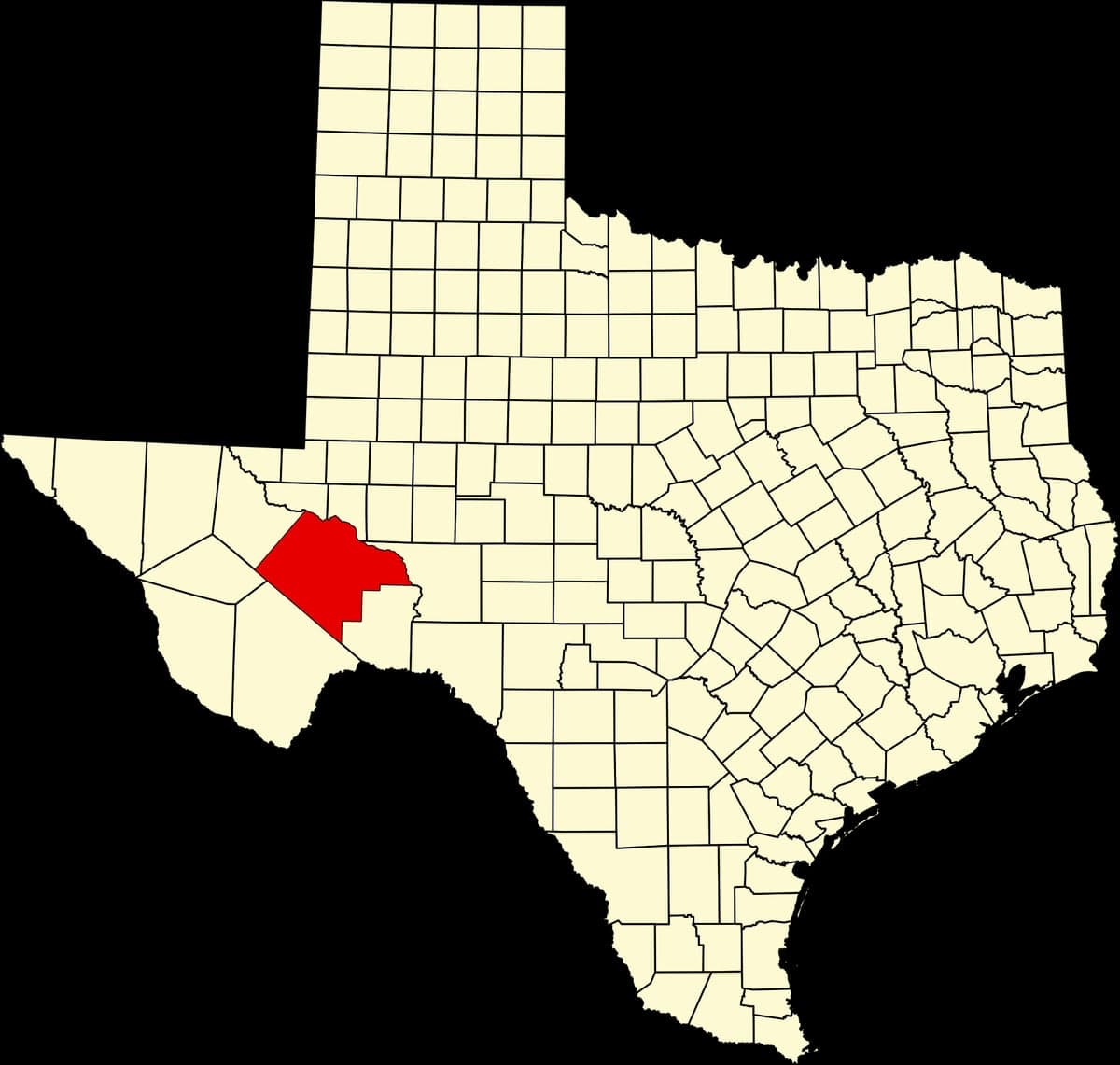
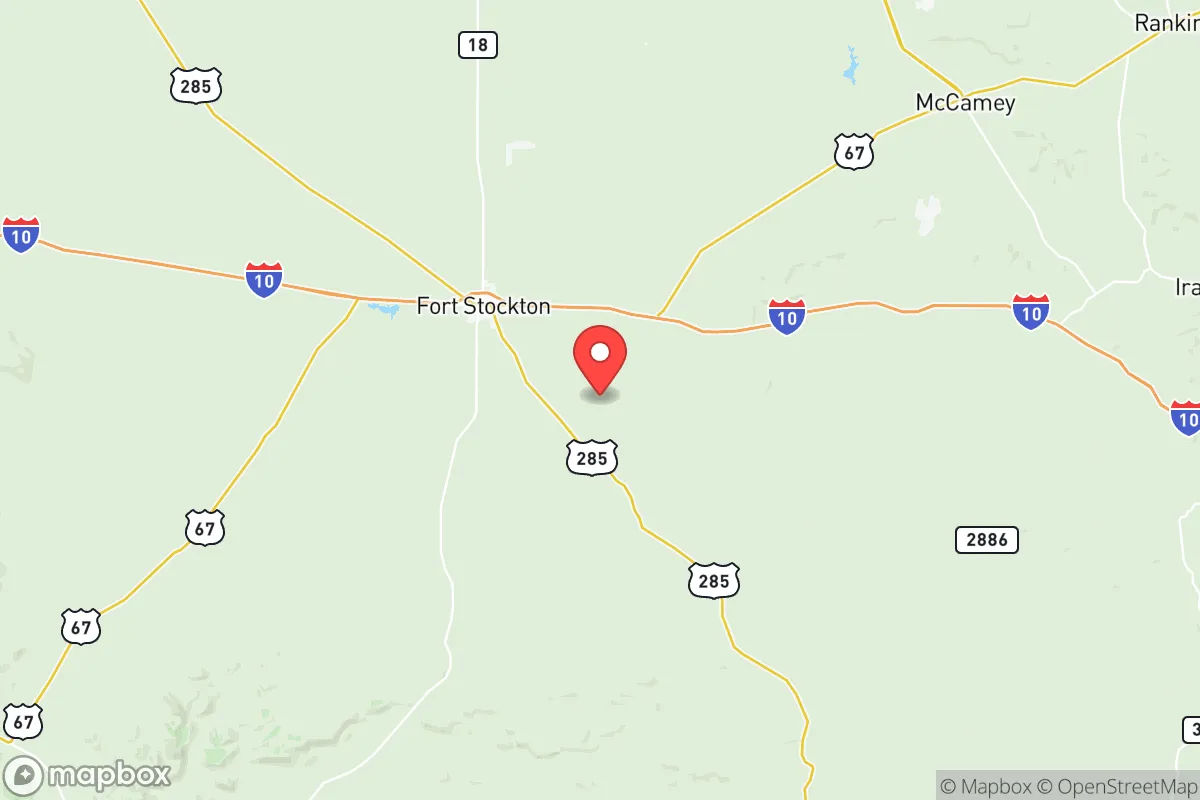
Photo: Wikipedia
Quality of Life in Pecos County
A livable area that tracks near national norms for affordability, walkability, and neighborhood health.
What does Quality of Life tell us?
Quality of Life measures an area by evaluating factors like cost of living, nearby amenities, country club access, airport proximity, socioeconomic signals and neighborhood character. For large states, this is a general average — quality of life can vary dramatically between metro areas, suburbs, and rural communities within the same state.
What does this tell us?
Quality of Life measures an area by evaluating factors like cost of living, nearby amenities, country club access, airport proximity, socioeconomic signals and neighborhood character. For large states, this is a general average — quality of life can vary dramatically between metro areas, suburbs, and rural communities within the same state.
Cost of Living
30% below national average
166%
The Real Cost of Living in Pecos County for 2026
| Tier | Individual | Family (4) |
|---|---|---|
| Survival | $16k | $29k |
| Comfortable | $28k | $41k |
| Luxury | $122k+ | $190k+ |
| Elite (Top 5%) | $145k+ | $224k+ |
Quality-of-Life Analysis
Pecos County, Texas, offers a spectrum of quality-of-life options that range from the modest commercial hub of Fort Stockton to the unincorporated, wide-open spaces of Bakersfield and Coyanosa. The county’s character is defined by its position in the Trans-Pecos region, where the Chihuahuan Desert meets working ranches and oilfield infrastructure. People drawn here typically fall into two camps: those seeking affordable, quiet small-town living with basic amenities, and those working in energy or agriculture who value low costs and minimal congestion over urban convenience.
Largest town(s) & population centers
Fort Stockton is the county seat and by far the largest population center, home to roughly 8,500 residents. Daily life here revolves around a compact set of local employers: the Pecos County Memorial Hospital, the Fort Stockton Independent School District, and oilfield service companies like Schlumberger and Halliburton. Interstate 10 and U.S. Highway 285 intersect here, giving residents direct access to Midland (about 90 minutes north) and San Angelo (about two hours east). The town has a Walmart Supercenter, a handful of chain restaurants, and a small regional airport. Housing is affordable—the median home value in the county is $142,900, well below the Texas median of roughly $300,000—and the overall cost of living index sits at 70, meaning everyday expenses are about 30% below the national average. Fort Stockton offers the most amenities in the county, but it remains a quiet, slow-paced town with limited nightlife or cultural options.
Smaller towns & rural pockets
Outside Fort Stockton, the county’s smaller communities are sparsely populated and primarily serve as residential bases for ranch and oilfield workers. Iraan, about 45 miles northeast of Fort Stockton, is a tight-knit town of roughly 1,200 people centered on the Iraan-Sheffield Independent School District and local oil production. Sheffield, just south of Iraan, is an unincorporated community with fewer than 100 residents, offering little more than a post office and a few homes. Coyanosa, in the county’s far west, is a census-designated place of about 150 people, where housing is extremely basic and the nearest grocery store is a 30-minute drive to Fort Stockton. Bakersfield, another unincorporated area, sits along U.S. 385 and consists of scattered ranch homes and a handful of oilfield-related businesses. These rural pockets offer the lowest housing costs in the county—some older homes can be found for under $80,000—but come with long drives for groceries, healthcare, and schooling.
Cost & lifestyle range
The cost of living across Pecos County is uniformly low, but the lifestyle range is significant. At the high end of amenities, Fort Stockton provides the county’s only hospital, full-service grocery stores, and a median rent of $973 per month. The average commute here is just 17 minutes, reflecting the town’s compact layout. At the low end, rural communities like Coyanosa and Bakersfield offer home prices that can dip below $70,000, but residents face commutes of 30 to 45 minutes to reach Fort Stockton for most services. The trade-off is privacy and space: a home on a 5-acre lot in the Bakersfield area might cost the same as a 1,200-square-foot house in Fort Stockton. For those working in the oilfields near Iraan or Sheffield, the commute to work may be shorter than the drive to a grocery store, making self-sufficiency and bulk shopping a necessity.
Who thrives in Pecos County? People who value affordability, quiet, and a slower pace—and who do not require urban entertainment, diverse dining, or extensive shopping—will find the county a good fit. It works well for oilfield and ranch workers who want a low-cost base near their jobs, retirees on fixed incomes seeking a low-stress environment, and families who prioritize a small school system and short commutes over cultural amenities. Those who need frequent access to big-city hospitals, airports, or professional services will likely find the isolation challenging, especially in the rural pockets beyond Fort Stockton.

Crime in Pecos County
Crime rates similar to the national median for U.S. locations.
Violent CrimeViolent Crime Analysis
Property CrimeProperty Crime Analysis
Crime Analysis
Pecos County, located in West Texas, presents a mixed safety picture with violent crime rates below the national average but property crime rates that exceed both state and national benchmarks. The county's vast, rural geography creates a different risk profile than urban Texas, with crime concentrated in its small population centers rather than spread evenly across the landscape. Understanding where crime occurs and how local law enforcement and judicial approaches differ is essential for anyone evaluating relocation to this region.
Crime in context
Pecos County's violent crime rate of 342.3 per 100,000 residents sits notably below the national average of approximately 380 per 100,000, offering a relative safety advantage for residents concerned about personal security. However, the property crime rate of 1,780.9 per 100,000 significantly exceeds both the Texas state average (around 2,200 per 100,000) and the national average (roughly 1,950 per 100,000), meaning theft, burglary, and vehicle crime are more common concerns. The county's largest town, Fort Stockton, accounts for the majority of reported incidents due to its role as a regional hub along Interstate 10, where transient traffic contributes to property crime. Smaller communities like Bakersfield and Coyanosa report far fewer incidents, though their populations are too small for statistically reliable year-over-year comparisons.
What residents experience
Daily life in Pecos County involves navigating a justice system shaped by the 83rd Judicial District, which covers the county and operates under a conservative legal philosophy. The district attorney's office in Fort Stockton has maintained a reputation for prioritizing victim rights and public safety over progressive sentencing reforms, meaning offenders face meaningful consequences rather than diversion programs that can lead to repeat offenses. This approach contrasts sharply with larger Texas metro areas like Houston or Dallas, where liberal district attorneys have implemented policies that critics argue reduce accountability and increase recidivism. For Pecos County residents, this translates into a lower likelihood of encountering repeat property criminals on the street, though the sheer volume of transient offenders along I-10 remains a challenge. The Pecos County Sheriff's Office and Fort Stockton Police Department maintain visible patrols, but the county's 4,764 square miles mean response times in remote areas can exceed 30 minutes.
Neighborhood-level variation
Crime is not uniform across Pecos County. Fort Stockton sees the highest concentration of both violent and property crime, particularly near the interstate corridor and older commercial districts. The historic downtown area and newer residential subdivisions on the city's west side report fewer incidents. Sheffield, a small unincorporated community roughly 40 miles north of Fort Stockton, experiences minimal crime due to its tiny population and lack of commercial targets. Imperial, another unincorporated area, similarly benefits from low population density. For those considering relocation, properties in outlying areas offer significantly lower crime exposure than Fort Stockton proper, though at the cost of longer commutes and reduced access to services. The county's conservative judicial philosophy provides a consistent deterrent effect across all jurisdictions, a factor that should reassure prospective residents concerned about the soft-on-crime trends visible in many urban Texas counties.
* Values derived from national, state, county, city and local statistics and may differ in a specific area. Last updated: 2026-10-10T16:29:27.000Z
Narrative content on this page is AI-generated and may contain mistakes. Verify any details that matter before acting on them.
ReloMaps may earn a commission from affiliate links at no extra cost to you.

